This weekend, it is the start of Toonik Tyme, a celebration of the start of Spring in the North.
It includes outdoor events: ski, snowmobile and dogsled races and the sharing of traditional food and crafts.
Last night, at the Visitors Centre, we went to see two classic NFB films, Land of the Long Day (1952) and People of the Ice (2003). The latter featured Sheila Watt-Cloutier and is a documentary on the effects of global warming on the Arctic environment and the Inuit culture. The film is now sixteen years old, pre-dating the argument in her book, The Right to be Cold.
Next week, Wayne Johnston comes to town. He will talk on Ten Cities: the past becomes the present. He will look at the relationship between place and memory through writing and drawing. In preparation, I picked up his novel, The Navigator of New York at the Iqaluit library.
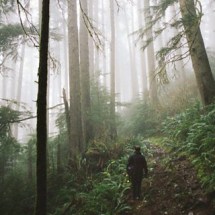 From my brother, I received another BBC podcast, Here be Dragons. It explores the relationship between poetry and maps. The most obscure was the idea of using a city map of Havana to navigate the landscape of the Isle of Angelsey.
I did manage to finish Rubinstein’s book Born to Walk. While I enjoyed the chapter on Creativity, I found the book overall, very uneven.
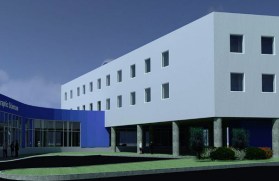 This week, I received an email about the expansion of the COGS campus. While the additional infrastructure will provide a short term economic boost to the village of Lawrencetown. There were no details on the impact on the curriculum, research and teaching, or the relationship to the larger community, and rural economic development. It continues to amaze me at the lack of connectivity with place.
In a different context, to quote Sheila Watt-Cloutier:
“A great disconnect has grown between our communities, our economies and our environment. This has resulted in rapid climate change that now spirals out of control and fundamentally threatens the world. Those who have traditionally lived closest to the land, and who today maintain the strongest connections to nature, are now at risk of becoming just a footnote in the history of globalization.” p.323.
I would add that we need to demonstrate much more holistic, inclusive thinking, especially from our educational institutions.
Acknowledgements
To Heather and Edward willing participants in the journey.

 Ernest Blair Experiment