Posted in Uncategorized

Canning drive

One of my favourite cafes, up the Valley, is the ArtCan Kitchen and Studios Cafe in Canning.

In particular, I enjoy the drive across the dykes from Wolfville. Even though we checked the open hours online, we discovered they are closed until March.

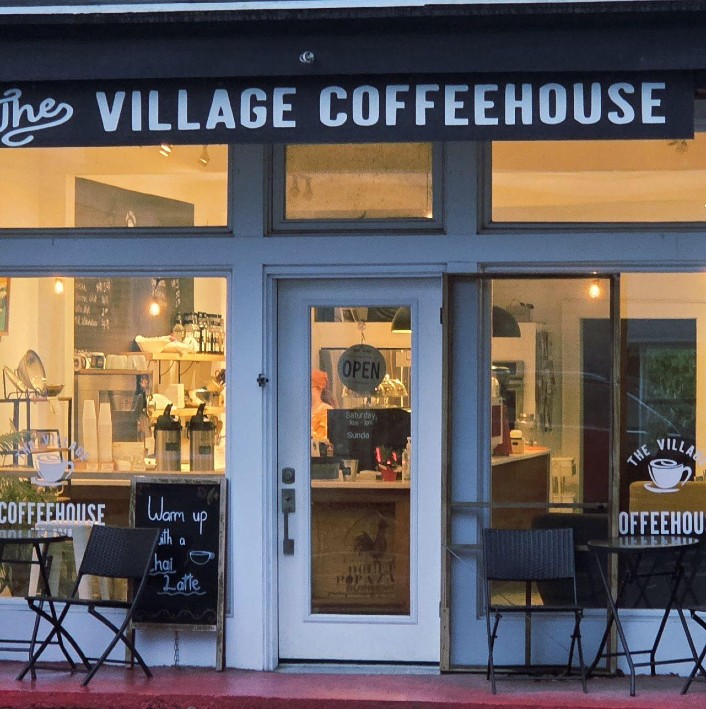
Instead, we stopped for coffee at The Village Coffee House next door.

Given early January, we were able to pickup the Grapevine, January 2026, Issue 23-01. It includes a short feature on Community Halls: the heartbeat of rural life, by Jane Baskwill. She focuses on Paradise, Centrelea and Inglisville.

Afterwards, we took a stroll down Main Street to the Merritt Gibson Memorial Library. It was open. We were able to sign out books for three weeks.

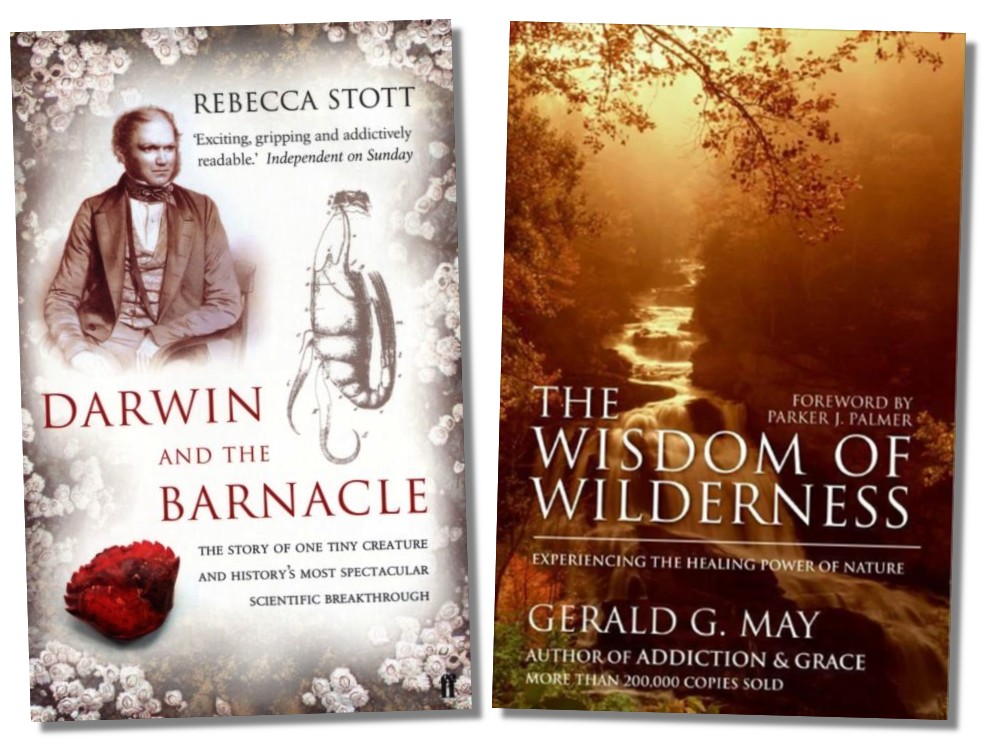
My choice was Rebecca Stott’s “Darwin and the Barnacle“. Heather’s choice was Gerald May’s “The Wisdom of Wilderness“.

We shall have to return before January 31st for our next selection.

Acknowledgements

Heather shared the drive. We took a slow drive back to Middleton, via Berwick, Aylesford, Kingston, along Highway #1.

Edward added the graphics and the links. Thank you.

References

Jane Baskwill, 2026, Community Halls: the heartbeat of community life, Grapevine January 2026, p.5.
Rebecca Stott, 2003, Darwin and the Barnacle, Faber and Faber.
Gerald G. May, 2006, The Wisdom of Wilderness, Harper Collins.

Posted in Uncategorized

A Drive to Digby

One of my early January tasks is to arrange for the printing (hard copy) of my blog posts from the previous year. This is usually undertaken by Integrity Printing, Bridgetown. Unfortunately, they closed down in 2025.

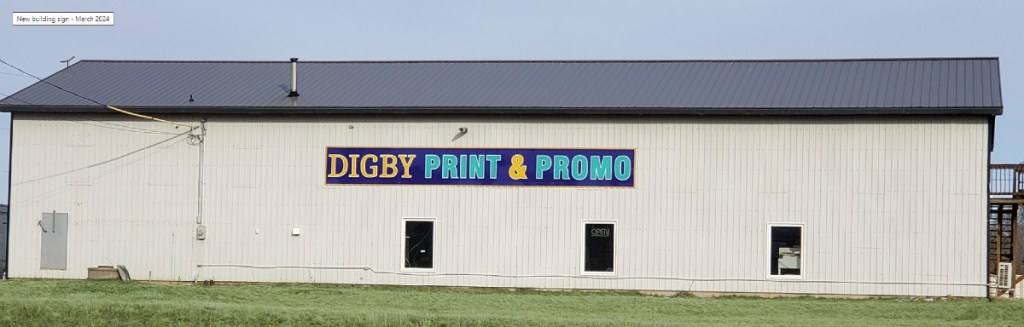
Instead, I contacted Digby Print and Promo. It seems like years since we made the run to Digby.

They will produce for me, Volume 10 – 2025. This gives me ten years of hard copy. Time, again, to consider a review of the underlying themes.

On our return journey, we stopped at Endless Shores in Bridgetown. I wanted to see if they still sell Rural Delivery.

2026 is the fiftieth year of this publication by Dirk van Loon. The reason for my interest is that John Wightman had loaned me Volumes 50 #5 and 50 #6. No luck ! Time to consider a subscription renewal.

At Endless Shores, I did find a copy of Thoreau’s “Canoeing in the Wilderness“.

He recorded his travels in The Maine Woods (1864), the latter half of which was to be split into a separate book; ‘Canoeing in the Wilderness’.

I had not realized that Thoreau born in 1817 in Concord, Massachusetts. He died in 1862. Aged 45 years.

Time to consider this Summer, Canoeing in the Wilderness in the Nova Scotia Woods.

Reference

Henry David Thoreau, 2020, Canoeing in the Wilderness, Arcturus Publishing, London.
Henry David Thoreau, 1988, The Maine Woods, Penguin-Random House

Acknowledgements

Heather shared the Digby drive. Edward added the graphics.

Posted in Uncategorized

Re-inventing Lawrencetown

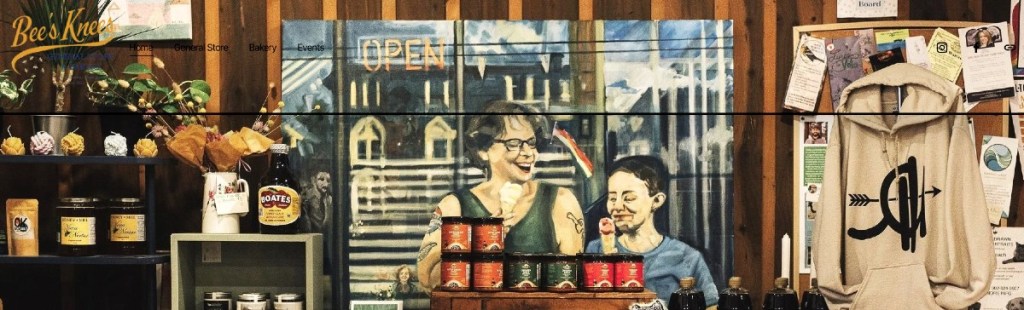
After a week away in Pictou County, we were happy to return to Annapolis County. On Saturday afternoon, we stopped at Bee’s Knees in Lawrencetown. Besides the coffee and sausage rolls, we found that there was live music.

The store has an excellent reputation for its bakery. It also offers books by local writers, and crafts by local artists (see posts Local Geography and Wild Mind/ Wild Earth).


Today, I picked up a copy of the Annapolis Valley Register (Thursday, December 18, 2025). I wanted to read Anne Crossman’s last official column.

To my surprise, I found an article on ‘Student housing stock growing’ (p. A4). It caught my eye, with an aerial photograph of the NSCC (COGS) campus. It showed two multi-unit apartment buildings, next to the campus’.

Student Housing Nova Scotia purchased four buildings in Lawrencetown and three in Kingston with $6.9 m in loan from the province Community Housing Acquisition Program and $530,000 from the national Community Housing Capital Fund’ (see Gemini AI inquiry HERE and Four-Campus NSCC Housing Construction article HERE).

NSCC Ivany campus student housing under construction in October 2023. Credit: NSCC

These investments in Lawrencetown and Kingston to support student accommodation at the NSCC campuses in Lawrencetown, Middleton and Kentville raise a number of questions.

As a retired faculty member from both the Lawrencetown campus and the Middleton campus, my interests concern both technical education and applied research .

  1. A few years ago the 38-bed residence at COGS that opened in 2022 was designed to support short industry-led courses in Geomatics and Geographic Information Sciences. Is that still true? I think not.
  2. Years ago, students came from other parts of Canada and also from overseas. Of the programs offered at COGS how many of of the courses require a residency requirement? How many can be delivered online?
  3. Given the reputation of the COGS campus, the Middleton campus and the Kentville campus, what programs are planned? What is the market demand for well-trained technically skilled graduates? Historically, we had three departments at COGS: Surveying, Cartography and Planning, Computer Programming.
  4. What exists today (2026)? What can be delivered online?
  5. At the Middleton campus, we established the Applied Geomatics Research Group (AGRG). What has been the impact of new technology (eg. drones, Lidar, AI)?

Access to student accommodation is important in rural Nova Scotia, for students and the community. Likewise important is access to ‘state of the art’ technology. The NSCC (COGS) has a long tradition of working with global suppliers of geographic technologies.

May that tradition continue.

Interestingly, Jason Clark is NSCC Principal for all three campuses: Lawrencetown, Middleton and Kentville. May we look forward to a comprehensive and integrated approach to technical education at the NSCC in the Annapolis Valley?

Dr. Bob Maher is Geographer Emeritus at NSCC (COGS) (see posts Community Engagement, Co-operative Projects and AI chat GPT).

Thank you, Edward for your contribution. Edward was Remote Sensing instructor at COGS; before, he and Anne owned The Inside Story in Greenwood.

Posted in Uncategorized

The Search for a New Way

Over Christmas, Heather and I were in New Glasgow and Pictou.

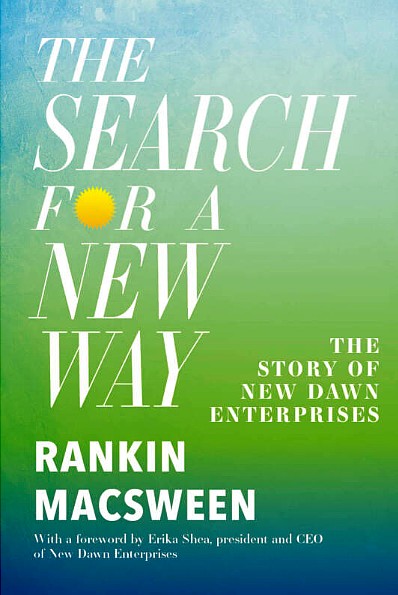
For “light reading” about place, I picked up Rankin MacSween’s book, “The Search for a New Way” at Cole’s in the Highland Mall.

It is the story of New Dawn Enterprises in Cape Breton.

With that in mind, we decided to visit the DeCoste Centre and Library in Pictou. At the Centre, there was a remarkable display of quilts by Deb Plestid. This led to a request at the Library desk. I was able to sign out Sheree Fitch “Sing in the Spring !“, with artwork by Deb Plestid.

Afterwards, I was able to sign out two other books, both by Roland Sherwood, “Pictou’s Past” and “Pictou Pioneers”. Because of the excellent library system in Nova Scotia, I can return the books to my local library in the Annapolis Valley.

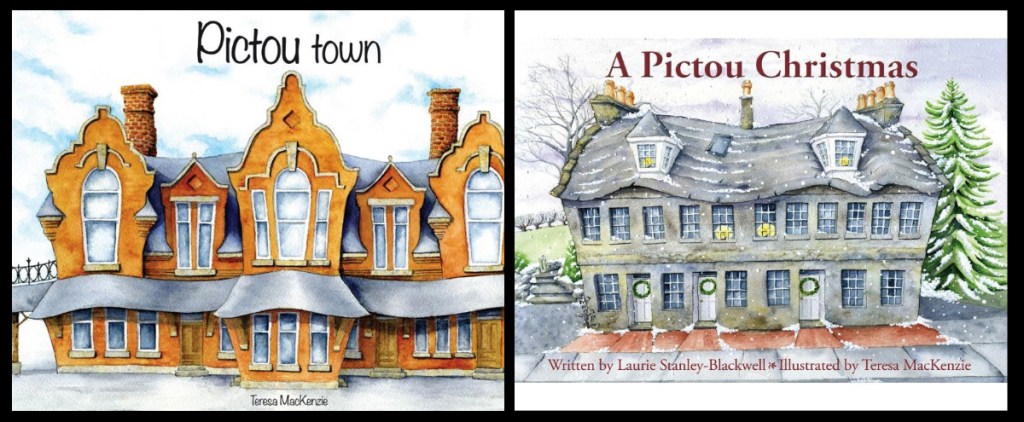
After the DeCoste Centre, we stopped for a coffee at Mrs MacGregor’s Shortbreads on Water Street. For our grandchildren, we picked up two books illustrated by Teresa MacKenzie “Pictou Town” and “A Pictou Christmas“. Pictou Town is a souvenir edition.

To honour the 250th Hector Anniversary, The Pictou Bee Press is proud to publish Teresa MacKenzie “Pictou Town”. Teresa MacKenzie is curator of the McCulloch House and Genealogy Centre in Pictou.

Rankin MacSween examines New Dawn’s decades-long search for a better, more humane, more truthful way to build local communities and regional economies through people-centred community development.‘’ MacSween provides the most thorough history ever written of Canada’s oldest community-development corporation.

The search continues today, in Cape Breton, Pictou County, as well as in the Annapolis Valley.

References

Rankin MacSween, 2023, The Search for a New Way: The Story of New Dawn Enterprises, Nimbus Publishing.
Sheree Fitch, 2022, Sing in the Spring, Nimbus Publishing.
Roland Sherwood, 1973, Pictou Pioneers, Lancelot Press.
Roland Sherwood, 1988, Pictou’s Past, Lancelot Press.
Teresa MacKenzie, 2023, Pictou Town, Pictou Bee Press, Pictou, NS.
Laurie Stanley-Blackwell, 2023, A Pictou Christmas, Pictou Bee Press, Pictou, NS. Illustrated by Teresa Mackenzie.

Acknowledgements
Thanks to Edward for the previous blog post (Has Your Map Generated 38,000+ Views?). Glad that he is closer to home.

Posted in Uncategorized

Has Your Map Generated 38,000+ Views?

My Nova Scotia Plein Air Map is focused on only THREE outdoor art groups in Nova Scotia yet has now over 38,000+ map views. Imagine if this can be scaled to all art groups globally!

The Plein Air Art and Urban Sketching movements are described as the largest in art history, with participants ranging from casual hobbyists to professionals. A reasonable, though unverified, estimate for the combined global community of regular plein air painters and urban sketchers is likely in the hundreds of thousands (ref Gemini AI).

Since retirement, I have chosen to spend much of my time painting outdoors in watercolours — en plein air. Here is a selection of nine paintings I created in 2025.

TOP (l to r)
The Pink Piano (Lower Sackville, NS). The Hydrostone (Halifax, NS). Planters Ridge (Annapolis Valley, NS)
MIDDLE (l to r)
Farrell Estuary (Parrsboro, NS). Cochrane Rd Trail (Port Greville, NS). Fisherman’s Cove (Eastern Passage, NS)
BOTTOM (l to r)
Joshua Citrus (Arcadia, FL). Prospect (NS). Fox River Estuary (Fox River, NS)

My painting partner, Anne, has selected her nine oil paintings for this 2025 matrix.

Top (l to r)
Still Life (Lunenburg, NS). Planters Ridge (Annapolis Valley, NS). Manatee Mangrove (Palmetto, FL).
Middle (l to r)
Celery Fields (Sarasota, FL). Herring Cove (NS). Carmel (PEI).
Bottom (l to r)
Twin Oaks Road (Middleton, NS). Bear River (NS). French River (PEI).

As a plein air painter who is also interested in the geography of art and its related GIS opportunities, I await a benefactor (ESRI?) to join and help create a global map — a global map that, together, addresses regional interests and a map that bypasses the many limitations of Google’s My Maps.

My Google Maps (a work in progress):
Plein Air Map (updated annually)
Footsteps East (includes the geography of Canada’s “Group of Seven” artists)

See previous posts of our art geography in this blog:
Footsteps East  our 5,000 km plein air journey (from NS to northern Lake Superior)
Mapping Nova Scotia Artists’ Plein Air Sites

Nova Scotia Plein Air Websites:
wedlerfineart.com
Plein Air Artists Annapolis Valley
Plein Air Artists HRM
Halifax Urban Sketchers
Urban Sketchers Halifax

Posted in Uncategorized

Buy Local

We had a busy morning. We wanted to send a parcel to each of the three families in Whitehorse, Yukon ; Port Moody, BC ; and Peterborough, Ontario.

This led to a morning visit to Valley Flaxflour in Middleton.

Traditional and historically important Canadian seeds and grains, including flax, oats, buckwheat and corn are blended to make award -winning Pancakes and Cookie Mix ( Taste of Nova Scotia Product of the 2016 Year).

In the spirit of the Ernest Blair Experiment, I checked the books in the basement. There, I found a copy of Ernest Buckler ‘The Mountain and the Valley’, as well as a Eric Blair (George Orwell) book.

This led to my blog title, the ‘Ernest Blair Experiment’. It’s never too early to introduce family reading (for interest, check out the posts The Mountain and the Valley and EBLES Meeting).

After Valley FlaxFlour, stopped again at the post office. Hope our parcels arrive on time.

In a couple of days, Heather and I will make the run to New Glasgow for the Christmas Day celebrations.

Acknowledgements

Thanks to Howard Selig for his help in selecting the Valley Kitchen products, and packing the Canada Post boxes. Edward added the graphic and links.

Posted in Uncategorized

Horoscope

Yesterday, my horoscope in the Chronicle Herald, December 10th for Aquarius.

What worked before won’t work going forward. It’s time to change your approach or way of thinking.

I sent an email to Edward (who shares the same birthday as me). How about?

A Centre of Landscape Change and Monitoring

I wonder whether we should retire COGS (Centre of Geographic Sciences). Instead focus on monitoring the land use, whether agriculture, forestry, mining or fisheries. We have the technology e.g. LiDAR, drones, satellite and aerial photography. It could include climate monitoring.

This thought relates to my latest reading and postWhy we remember’ by Charan Ranganath.

Let’s remember what caused us to convert from NSLSI to COGS. Clearly, it was related to changes in technology, e.g. computers, GIS software and now drones and AI.

However, the objective remains the same. How does society manage its relationship to the global environment?


Connecting the resource and monitoring dots …
On the radio, I heard that the Bragg family is bidding on the purchase of the Scott Paper forested lands. I hope this will lead to reforestation. Perhaps, at the same time, they can clean up the debris from Tropical Storm Fiona.

These thoughts remind me of the days when Andrew, our son, would head west for the Summer to be part of the tree planting crews.

Posted in Uncategorized

Three Book Places

In the Annapolis Valley, there is always the opportunity to visit a bookstore. This week, we stopped at MareGold in Annapolis Royal.

Many subjects match our interests.

I found Charan Ranganath‘s New York Times bestseller, ‘Why We Remember’ with the subtitle ‘Unlocking Memory’s Power to Hold on to What Matters.’

At The Inside Story, Heather found ‘A Dune Adrift’, subtitled, “The Strange Origins and Curious History of Sable Island”, by Marq de Villiers and Sheila Hirtle

This allowed Heather to return to her memories of working for Parks Canada on the island.

My third pick is not really a bookstore but rather the Library at COGS (read posts COGS Visit and Community Engagement). The Librarian orders new books a couple of times a year.

I found on the new bookshelf, Jon Anderson’s ‘Literary Atlas‘, subtitled ‘Plotting a New Literary Geography’.

Anderson is Professor of Human Geography at Cardiff University, UK.

Between the three books, we should be able to get through the darkest days of Winter.

References

Charan Ranganath, 2024, Why we remember: Unlocking memory’s power to hold on to what matters, Anchor Canada

Marq de Villiers and Sheila Hirtle, 2004, A Dune Adrift: The Strange Origins and Curious History of Sable Island, MacClelland and Stewart Ltd, Toronto.

Jon Anderson. 2025, Literary Atlas: Plotting a new Literary Geography, Routledge, London.

Acknowledgements

Edward added the graphics. I still remember the time when he and Anne owned The Inside Story. Russell and Geoff manage a remarkable collection of diverse books at MareGold. Chelsea and Andrew maintain the collection at the COGS Library.

Posted in Uncategorized

It is Time

This weekend, we made a pre-Christmas run to New Glasgow.

While there, I took the opportunity to read Janet Wallace’s book ‘It is Time‘. She had given Sandy (Heather’s sister) a signed copy.

It is the story of the Scott Paper Mill in Pictou. In many ways, it is a continuation of Joan Baxter’s book ‘The Mill – fifty years of Pulp and Protest’ (see post From Pugwash and Pictou to Paradise)

Janet Wallace was at New Glasgow High School around the same time, as Heather and Sandy. The book is a beautiful combination of art and the science behind the eventual closure of the mill. In Wallace’s language it represents ‘a chance to change’.

The story behind Scott Paper and the relationship to the government of Nova Scotia continues to apply today. We see various schemes related to the mining of our landscape, and the removal of the forests. From my perspective, ‘will we ever learn’.

We need to invest in the people of Nova Scotia: the artists, writers, scientists, educators, and the appropriate technology, ie. the ‘creative rural economy’.

Acknowledgements.

Sandy for sharing the book. Edward for his contribution. The voices of Janet and Joan for recognizing ‘the chance to change’. Long overdue.

References.

Janet Wallace, 2023, It is Time: A Chance to Change, Stones’Throw Publications.
Joan Baxter, 2017, The Mill: Fifty years of Pulp and Protest, Pottersfield Press.

Posted in Uncategorized

Chronicle Herald, December 19,2016

Sorting through my papers, I found this article that I wrote for the Chronicle Herald, titled:

Sustaining on Traditional Valley Values

Paul Colville and his wife, Ruth, immigrated (sic) to Nova Scotia in the early ‘70s. They farmed the land on Delusion Road and over the years developed ColdSpring Farm – a certified organic vegetable/free range poultry operation. They were year-round vendors at the Halifax Farmers’ market for over twenty years.

Paul and Ruth have lived on North Mountain overlooking the Bay of Fundy, and above the town of Middleton for more than 40 years. Over that period, as he farmed the land and fixed up the buildings, Paul wondered about the original owners of the property.

His book, The View from Delusion Road: a Settler’s Story“, is a fictional recreation of a real place and real events from a hundred years ago.

Paul has recreated dialogue between the settlers, Joseph and Jane Bent.

Not me, I want to be independent. I want to be on the land. My land. I want to build a farm and provide for myself and my family.

I don’t mind working the forge. Or picking apples or whatever it takes to earn hard money. My father used to say ‘When you hear opportunity knock, be ready with hard money to unlock the door.

(That sounds like Paul’s credo)

The events described in the book cover the decade 1860-70. Events include the 1864 election, the birth of the Windsor-Annapolis-Royal Railway, the Confederation of Canada, and the Saxby Gale. Paul’s research under the mentorship of historian Barry Moody covers these events and their impact on Joseph and Jane Bent. Paul also benefited from conversations with Linda Bent, who has maintained the family history of the Bent and Mosher families.

His Settlers Story is enhanced by the Foreword from Barry Moody and the Afterword from Linda Bent.

This creative work of fiction shows that each of us occupies a ‘place in space’. To use a term from author Gary Snyder’s “A Place in Space: Ethics, Aesthetics and Watersheds, New and Selected Prose”, it also illustrates a ‘place in time’. “The View from Delusion Road” uncovers the stories behind Delusion Road, the term Bluenosers, and details about the different settler groups — the Baptists, the Irish Catholics.

We can step forward in time and ask questions about the back-to-the-land in the 1970’s or the Buddhists in Nova Scotia.

Paul has made a contribution to our understanding of the local history and geography. He also offers an approach that marries fiction and non-fiction. As a geographer, I wanted to see a map of Port George, Moshers Corner and beyond. But later, I realized that a modern map would not be as effective as Paul’s story map.

The next challenge for Paul is to write the recent history with his own View from Delusion Road. Certainly, I recall living in Clarence when Paul was the local chimney sweep. Our conversations were about the survey school in Lawrencetown and its impact on the local communities and the residents.