This Wednesday, John Wightman invited me along as a guest on a field trip to the Pockwock watershed. The trip was organized by the Western Region Stakeholders Interaction committee. The partners were WestFor Management, Halifax Water, Elmsdale Lumber, the forWater Research network and Dalhousie University.
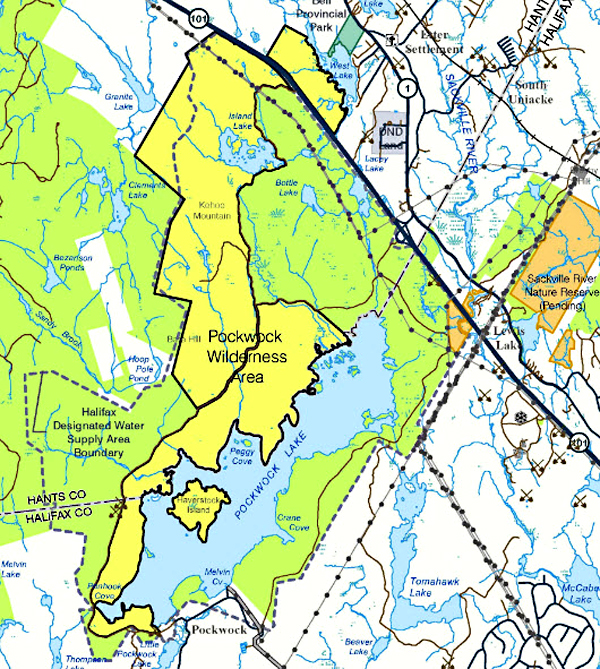
We left Bridgetown at 8 am, met the other members of the field trip at the firestation in Mount Uniacke. From there we crossed Highway 101 into the Pockwock watershed, the watersupply for the City of Halifax. In the watershed, we visited three sites: road and bridge construction, commercial thinning and group selection. David Foster, Ph.D student at Dalhousie University, School of Resource and Environmental Studies (SRES) produced an excellent twenty page guide detailing his research as well the role and contribution of the partner organizations. In total, there were approximately forty participants on the trip.
Besides reconnecting with Peter Duinker (Dalhousie University), Peter Neily (NS Lands and Forestry) and Peter Jones (previously with Bowater Mersey). I had the opportunity to see forest management collaboration in action.
Given the delays in the Lahey report implementation, I was encouraged by this obvious collaboration to secure a sustainable watershed future for Pockwock.
After a long day in the field, John dropped me off in Paradise around 6 pm.
Peter Duinker defined the key research question.
“What approaches to managing the watershed forest, focused mainly on harvest system and regeneration techniques, have the greatest potential to reduce the flow of terrestrial carbon into the lake?”
This same week, Heather and I received notice of aerial spraying around her family property near Big Lake, Cumberland County.
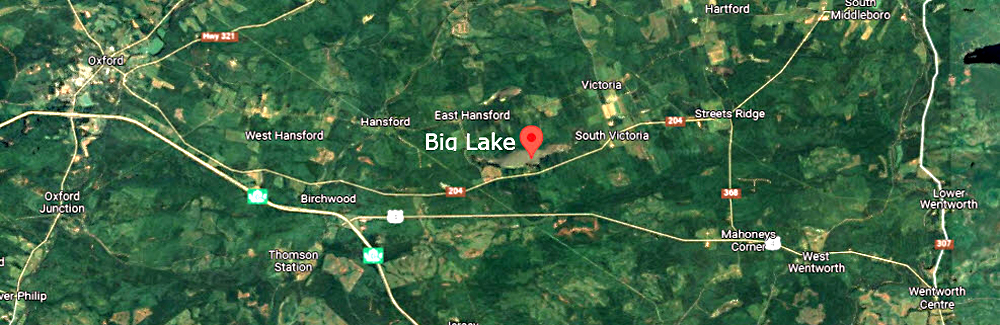
Obviously the clearing cutting / spraying option is not relevant to the Pockwock watershed however other parts of the province remain at risk.
Earlier this week, Niki Toomey at NSCC contacted me about their forthcoming 25th Anniversary. She was interested in the history behind the technical institutes that became incorporated into the community college.
I did pull out the PDF that Heather and myself wrote and researched on the Story of COGS: a Nova Scotia experiment in Technical Education.
It was written in 2014 and is still worth re-reading. Especially, within the context of the type of collaboration demonstrated in the Pockwock watershed project
Acknowledgements
John Wightman for inviting me to join the field trip. Jillian Weldon-Genge for driving the forest roads of Pockwock. The quality of the presentations in the field from industry, government and the academic community was noteworthy. Edward added the links and graphics.
References
David Foster, September 2021, Field Tour handbook for the Pockwock Watershed, 20 pages.
Bob Maher and Heather Stewart, 2014, The Story of COGS, 42 pages.

 Ernest Blair Experiment
Hi Bob, sounds very interesting. Are you and Heather involved with the XR spraying protest and encampments starting Monday? Have you advised Nina about the spraying near Big Lake? Jane
Sent from my iPad
>
LikeLike
Yes, we are in touch with Nina.
Active participation depends on a host of factors.
Bob
LikeLike