
Last week, we held a meeting of the Ernest Buckler Literary Event Society (EBLES) committee at Anne Crossman’s, under the linden tree. We discussed plans for the next event, likely in West Dalhousie, 2023.

Jane Borecky returned Roger Deakin’s Waterlog: A Swimmers journey through Britain. Later at home, I checked through the index, and found and re-read #23 Orwell’s Whirlpool. Deakin describes his visit to Jura.
”Whirlpools and wild places are inextricably linked with our capacity for creativity“, as Orwell demonstrated when he chose to come to Jura to write his last novel.

Meanwhile, I had finished reading George Orwell’s Selected Writings. Besides excerpts from his life in Burma, Spain and Marakesh, it includes essays on the English class system, Boys’ Weeklies and Charles Dickens.
We headed up to New Glasgow on Friday. I was happy to find the latest issues of Canadian Geographic and Saltscapes. Under Canadian Geographic, People and Culture, five Canadian artists address increasingly threatened landscapes.
”A century after the Group of Seven became famous for an idealized vision of Canadian Nature, contemporary artists are incorporating environmental activism into work that highlights Canada’s disappearing landscapes.”
I forwarded the link to Edward and Anne Wedler. Meanwhile, Patrick emailed me a link to the Radical Landscapes exhibition in Liverpool, UK.
On Saturday, we took a road trip from New Glasgow to South Victoria, through Oxford, Pugwash, Tatamagouche, River John and home.
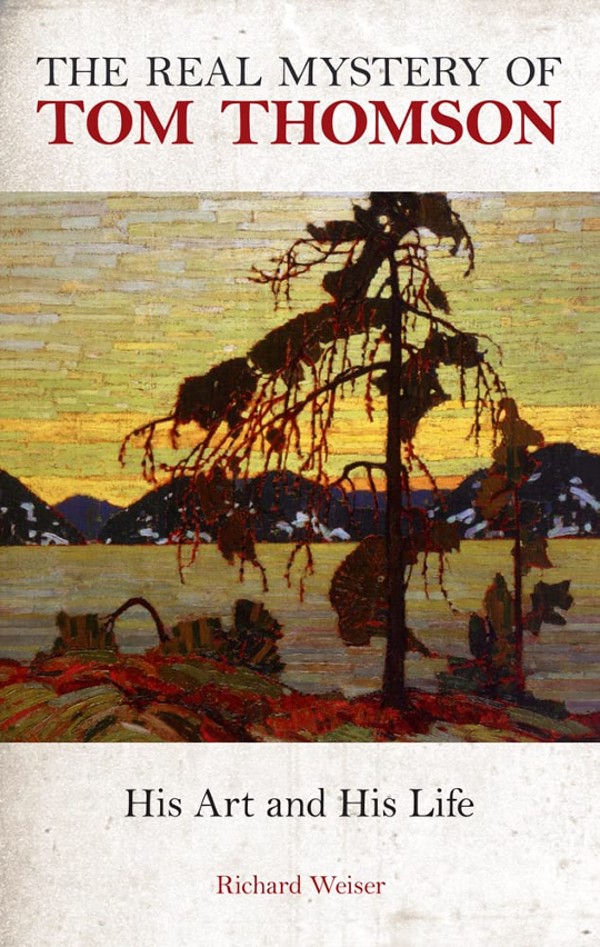
We stopped at Masstown market. Again, I found a book; The Real Mystery of Tom Tomson: His Art and His Life. Again, I forwarded the information to Edward. I thought it would be relevant to their journey, following in the footsteps of the Group of Seven.
As we drove from Oxford to South Victoria to Pugwash, we noticed significant changes in land use, both the forestry and even the roadside weeds. It would be a fascinating geographical study to map the changes in the demography and the landscape. Since we had both Heather and John Stewart in the car, we had an ongoing commentary on the changes that have taken place in the last fifty (plus) years.
Eventually, we arrived in River John for Sandy Stewart’s (Heather’s sister) birthday party. Sandy had been busy painting a new sign for the community of Melville.

Here are my questions.
If you are an artist painting landscapes, how do you separate your art from your life?
The same question applies to writers.
How do you separate your writing from your life? This certainly applies to George Orwell. I think the same applies to Roger Deakin. Hence, once back home, I pulled Roger Deakin’s book off the shelf, Notes from Walnut Tree Farm.
Acknowledgements
Heather and John Stewart accompanied me down memory lane. Sandra Stewart provided a painting of her place. Edward and Anne’s planned adventure brought the Group of Seven into focus. Plus a contribution from Patrick Maher (this week) at a conference in Ambleside, the Lake District.
References
Roger Deakin, 2000, Waterlog: a swimmer’s journey through Britain, Vintage Books.
Roger Deakin, 2008, Notes from Walnut Tree Farm, Penguin.
Richard Weiser, 2018, The Real Mystery of Tom Tomson, Dragon Hill.
George Bott (Ed), 1958, George Orwell: Selected Writings, Heinemann
Postscript
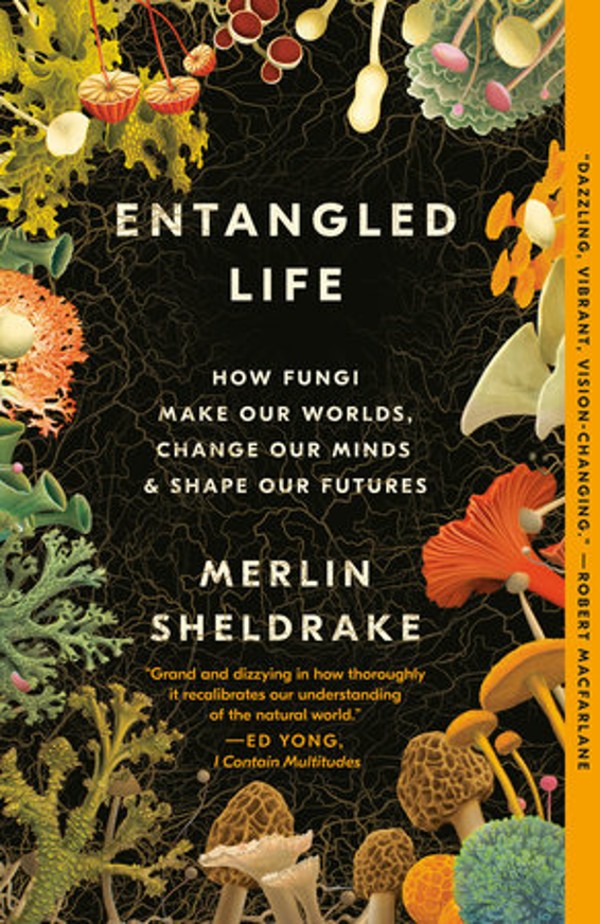
Just started Merlin Sheldrake’s book, Entangled Life: how fungi make our worlds, change our minds and shape our futures.
Merlin Sheldrake, 2021, Entangled Life, Random House.

 Ernest Blair Experiment
In answer to your question. You don’t. Your painting is your response to life.
P
Sent from my iPad
>
LikeLike
Thank you. Absolutely, correct.
Rob
LikeLike