Today, Heather and I went to COGS to celebrate Esri Canada ‘GIS Day in Canada’.

The keynote speaker was Dianne Whalen, an award-winning Canadian filmmaker, photographer, author and public speaker. The topic was ‘500 days in the Wild’.
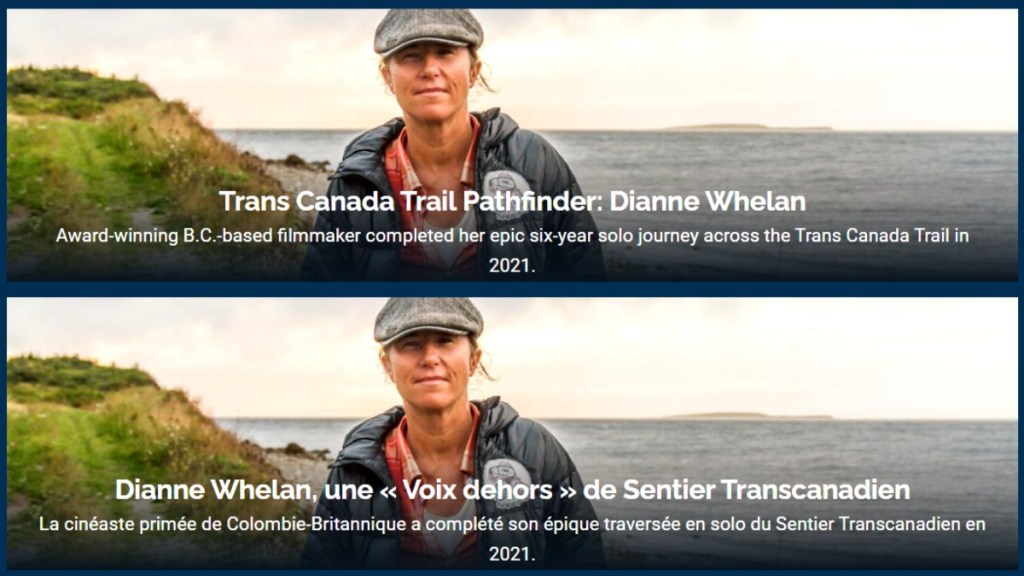
She described her experience travelling across the country on the Trans-Canada Trail. The longest trail in the world: 24,000 kilometers. It was completed over a period of six years, and included hiking, bicycling, canoeing and skiing.
It was a memorable presentation, with numerous insights into the history and geography of Canada. It is available online.
David MacLean made the GIS Day presentation available online in the AV Room at COGS. We witnessed Alex Miller, President of ESRI Canada, present the Roger Tomlinson, Lifetime Achievement award to Gord Rasmussen, City of Calgary and the Making a Difference award to Cynthia Bettio on the partnership between the community of Stouffville and the local school. Both are well deserved.
The rest of the day included ‘lightening talks’ on AEC, Land Management, Public Safety and Health, Transportation, Utility and Emergency Management, Climate Change and the Environment.
The most shocking aspect of the day was that Heather and I were the only live audience in the AV room. Dave MacLean was available to discuss any technology issues. Everyone else at COGS was, by definition, online. This raises the question. At what point in the learning environment can be totally online? In which case, what is the future of a small college in rural Nova Scotia?
The contrast between Diane Whalen’s description, insights and experiences travelling through the Canadian landscape, and our experience visiting COGS was palpable. What is the value of gathering people into the same (virtual) location, and comparing their sense of Geography?

 Ernest Blair Experiment