Sandra Barry from Middleton sent me a notice on the Elizabeth Bishop Society of Nova Scotia (EBSNS) Virtual Exhibit 2020 fundraiser. This year’s exhibit, Two Arts, is comprised of twelve Elizabeth Bishop inspired drawings by Natallia Pavaliayeva (NP) from Minsk, Belarus. Sandra curates the exhibition and also interviews the artist.
EBSNS
“Elizabeth Bishop is known as a poet of geography and place. How does your own sense of place influence your response to Bishop’s work ?”
NP
“This is one aspect of Bishop’s poetry that resonates powerfully with me. I love travelling very much – and I fully understand Bishop’s keenness for changing places, along with the opposite keenness to have a ‘home’, a place where she belongs to.”
From Sandra Barry’s curatorial statement :
“It was a difficult task to select only twelve images, but the idea of ‘home’ and ‘journey’ anchor the selection. Bishop once said that the poet carries home inside, and her sense of home comprised in a large part from elements and memories of Great Village and her childhood.”
From One Art, Elizabeth Bishop Letters, I was interested in her final collection of poems (1976). “It is to be called Geography III and looks like an old fashioned school book.” p.602.
“The poems in this small volume are some of the most important of her life: In the Waiting Room, Crusoe in England, The Moose, 12 O’Clock News, Poem, One Art, The End of March. They are also some of her most directly autobiographical poems, contemplation of her life as an artist.” p.96 Sandra Barry.
From here you can join the dots to Harry Thurston, Keeping Watch at the End of the World.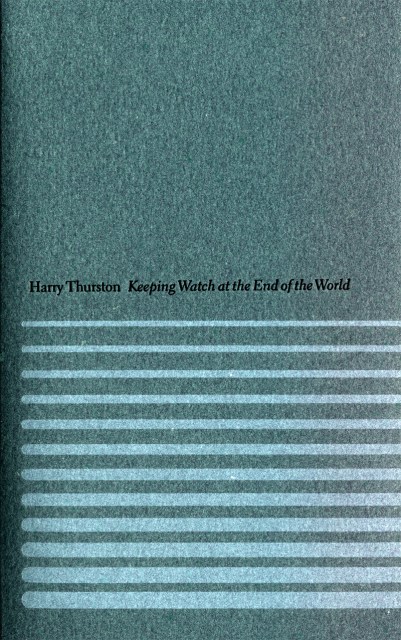 He has a poem ‘Geography: on first discovering Elizabeth Bishop in a Used Bookstore in Manhattan’. Dedicated to Sandra Barry. It starts:
“Geography III
(So plain but for the oddity
of Roman numerals),
I lift it down and begin,
by chance, From narrow provinces … “.
p.100
Thurston lives in Tidnish, Nova Scotia.
Andrew Spacey (online) provides an analysis of the poem ‘One Art’
“Elizabeth Bishop’s poem One Art is in the form of a villanelle, a traditional repetitive poem of nineteen lines. In it she meditates on the art of losing, building up a small catalogue of losses which includes house keys and a mother’s watch, before climaxing in the loss of houses, land and a loved one.”

Postscript
This week with the rain showers we are seeing more flowers. On my walks with Siqsiq along the Annapolis River, I found the Pink Lady’s Slipper Orchid (Cypripedium acaule).
1-2-3
One Art, Two Arts, Geography III
Acknowledgements
Sandra Barry for her curatorial work on the EBSNS web site and blog. Edward Wedler for his artwork. Heather Stewart for her love and support.
References
Robert Giroux (Ed.), 1994. One Art, Elizabeth Bishop Letters. Farrar, Strauss and Giroux.
Sandra Barry, 2011. Elizabeth Bishop: Nova Scotia’s Home-made poet. Nimbus Publishing.
Harry Thurston, 2015. Keeping Watch at the End of the World. Gaspereau Press.
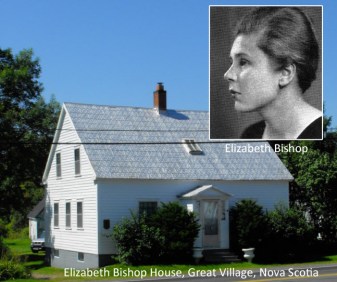 At the end of last week, we decided to take a trip along the Parrsboro shore, primarily to check out the Fundy Geological Museum. On our way home, we stopped at
  At the church, I picked up a copy of the brochure Elizabeth Bishop’s Paris. This small brochure describes two visits to Paris in the mid-1930’s. Interestingly, it includes a map of central Paris, identifying locations visited by Bishop and Louise Crane. The map also shows the location of the first conference on Elizabeth Bishop in France. Elizabeth Bishop in Paris: Spaces of Translation and Translations of Space. 6-8 June 2018. The text was written by Jonathan Ellis, Sheffield University.
 by Bob Maher
 Ernest Blair Experiment