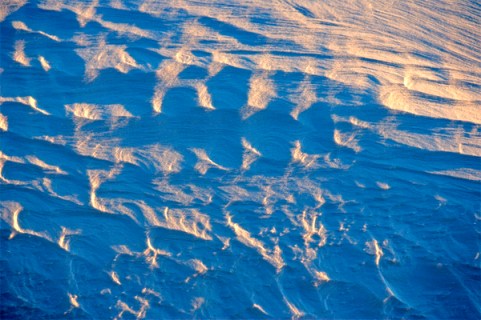
 ” During a blizzard, the snowfall is usually soft. A type of snow mound, uluangnaq, is formed. The (prevailing wind) then erodes the mound, thereby forming an uqaluruq – a drift with a tip that resembles a tongue (uqaq) – this is pointed and elevated from the ground – Uqalurait are formed by the uangnaq , (west- northwest wind)” p xxv
Abraham Ulayuruluk, Amitturmiut
“In Winter we used Uqalurait to tell us which direction to go. We would follow the direction of the Uqalurait.” p. xxv
Mariano Aupilarjuk, Aivilingmiut
“In the past, Inuit history was transmitted orally from generation to generation. The Inuit who shaped this project decided that, unlike other Arctic histories, this one should concentrate on the time before extensive contact with the Europeans.” p. xxvii
” The Steering Committee wanted this work to get to the heart of Inuit culture and give the reader a sense of the richness and completeness of life that countless generations lived on the land and the sea ice.” p. xxvii
“Most of the quotations represent life as Inuit lived it from the end of the nineteenth century into the early twentieth century.” p. xxvii
The book is divided into two parts: Inuit Identity and Regional Identity. Within these two parts, the emphasis is upon five themes: flexibility, sacrifice, social control, sharing and respect.
One final quotation, under Section 12. The Land.
” The living person and the land are actually tied together because without one the other does not survive and vice versa. You have to protect the land in order to receive from the land. If you start mistreating the land, it won’t support you …
In order to survive from the land, you have to protect it. The land is so important for us to survive and live on; that’s why we treat it as part of ourselves,” p. 118.
Mariano Aupilaarjuk, Aivilingmiut.
Reference
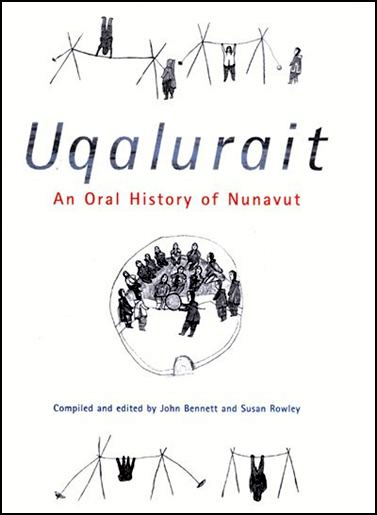
John Bennett and Susan Rowley (compiled and edited) 2004. Uqalurait. An Oral History of Nunavut. McGill Queens University Press.

 Ernest Blair Experiment