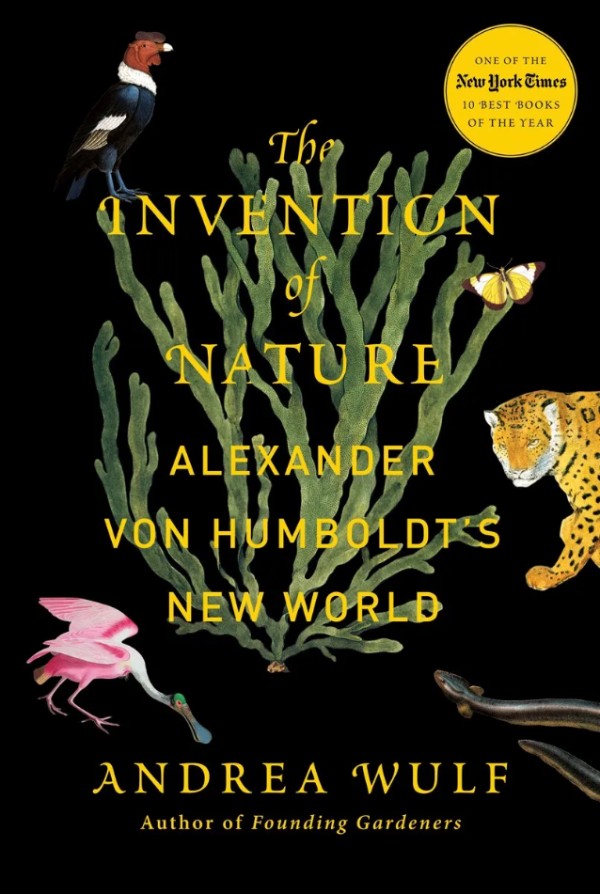
It is a significant biographical contribution on the life of Humboldt (1769-1859). Humboldt journeyed to America between 1799-1804. Later he travelled to Russia in 1829.
The book is divided into five parts: Emerging Ideas, Collecting ideas, Sorting ideas, Spreading ideas and Evolving ideas. Humboldt interacted with Darwin, Thoreau, George Perkins Marsh, Ernst Haeckel and John Muir.
Subsequently Wulf has authored books on Founding Gardens, Brother Gardens and also a BBC TV series ‘British Gardens in Time’.
This week, I plan to return the book to the Canning Library. Perhaps, they will have copies of her other books.
This book is a testament to the enduring value of libraries in today’s society. The subject, ‘the invention of nature’, remains significant today.
Postscript
Yesterday, late afternoon, we sat on the deck and watched a Sharp-shinned hawk monitor the activity along the Annapolis River flood plain — for almost an hour.
A treasured library acquisition that contributes to our knowledge of local place.
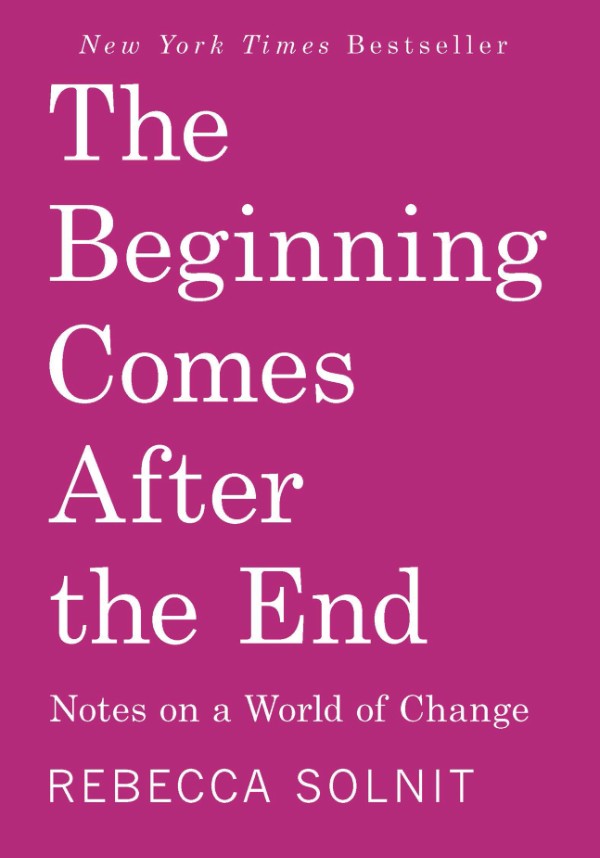
This weekend, I had the opportunity to read Rebecca Solnit’s ‘The Beginning comes after the End’ . Its subtitle is ‘Notes on a World of Change’.
From the back cover: ‘While the white nationalist and authoritarian backlash drives individualism and isolation, this new world embraces anti-racism, feminism, a more expansive understanding of gender, environmental thinking, scientific breakthroughs and Indigenous and non-Western ideas, pointing towards a more interconnected, relational world’.
This morning, I returned two books to the Middleton Library; Walter Isaacson’s book on Elon Musk and the poetry of Gerard Manley Hopkins (see It’s a Small World and A Celebration at Meier Point).
This week, I was running errands in Middleton. First stop was the Library. I wanted to learn more about the English poet, Gerard Manley Hopkins (see post A Celebration at Meier Point). The staff put out an inter-library loan request.
I checked the new books and found the biography of Elon Musk by Walter Isaacson; a huge tome, 670 pages.
After the Library, next stop MacDonald Museum’s local art exhibition. Then the Summerland Nurseries for a planter and a shrub for Mothers Day (Stewartstonian, Evergreen Azalea).
Friday, we drove through the Rawdon Hills to New Glasgow. I started to read about Elon Musk. Page 47-48 has a reference to Peter Nicholson. He was in charge of strategic planning at ScotiaBank. Musk was at Queens University in Kingston 1990-1991.
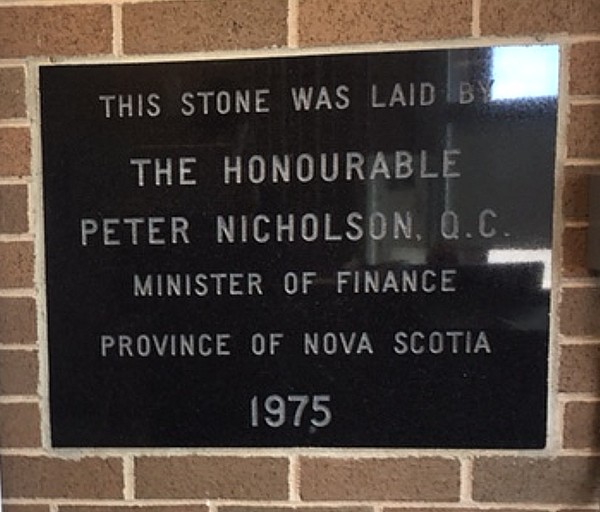
This rings a bell. At COGS in Lawrencetown, there is a stone with Nicholson’s name on it, commemorating the new building.
His previous books have covered lost roads and other treasures in the landscape (read previous posts Old Ways and Kings County).
On Tuesday, we stopped at ArtsPlace in Annapolis Royal. There were several displays on the theme : How trees influence Western Culture in the Modern Era; Wandering through Trees. Nature and Culture. And the response by local artists to the Long Lake Fire, Summer 2025.
How trees Influence Western Culture in the Modern Era, Information compiled by Doug Pope for the Robert Pope Foundation (Handout at the ArtsPlace Gallery).
Acknowledgements
Edward added the graphics and links. Much appreciated.
Postscript
Edward’s eleven-year old grandson, Tristan, from Saint Catharines, just celebrated his first anniversary with his YouTube Channel “United Mapping 01“, and has racked up about 370 YouTube shorts and almost 4,000 subscribers. As a reward, his mom updated his CapCut video editing software to Pro.
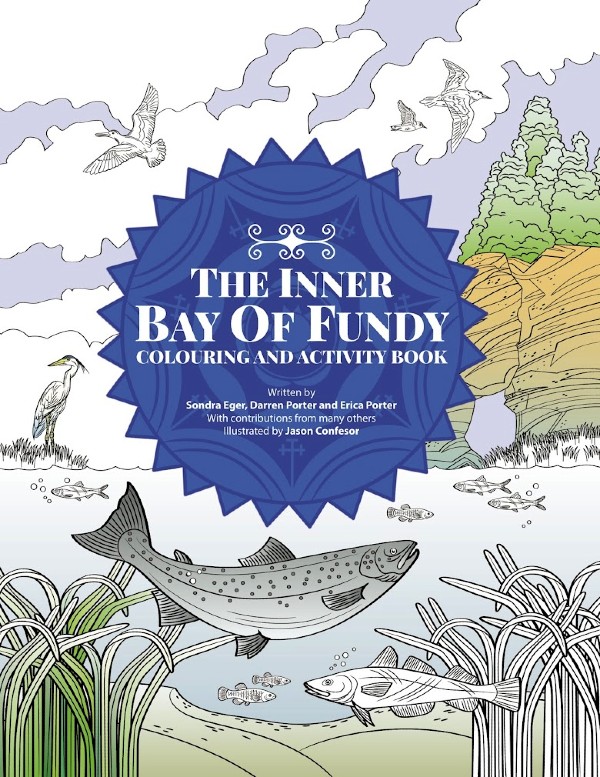
This Saturday found us at the ArtCan Cafe in Canning. Besides, the gallery and cafe, they often have a few books on sale by local authors (see also Canning Trip). This time, they included three books by Soren Bondrup-Nielsen, plus a recent publication on the Inner Bay of Fundy. The latter is a colouring and activity book. I picked up a copy for our grand-children. Indeed, I should have purchased three copies ( one per family)
The book is written by Sandra Eger, Darien Porter and Erica Porter
It fits well with the concept of books on local Geography. But it goes much further. It is written in both English and Mi’kmaw. It is an activity book with crosswords and colouring.
The geography is the Inner Bay of Fundy between Nova Scotia and New Brunswick. I can imagine extending it to the land geography that includes the watersheds flowing into the upper Bay of Fundy.
We also took advantage of our geography — time spent in Antigonish. We had been recommended to stop at the Curious Cat Tea and Books in the mall. We found four books; three for Heather and one for me. Still looking to find the fourth for our luggage.
My knowledge of St Francis Xavier University goes back to awareness of the Coady Institute.
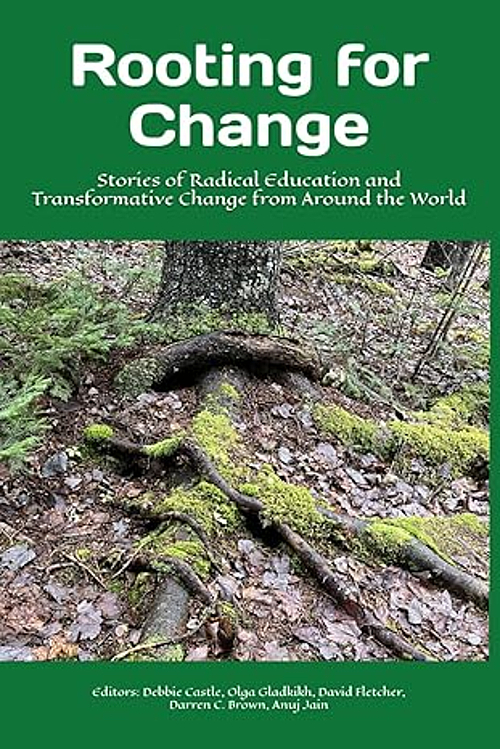
The book starts with an excellent quote from Rumi. “Yesterday I was clever, so I wanted to change the world. Today I am wise, so I am changing myself.“
With a lifetime of books in the basement, I am trying to determine which ones are ‘sustainable publications’ and those categories of books that are no longer necessary.
This set me thinking about newspapers and magazines. In the category of ‘sustainable’ I would include the weekly, Bridgetown Reader, and monthly, The Grapevine.
This week, we have learned that there will be a recount for the two Liberal ridings held by Zach Churchill and Carman Kerr (see Close Race).
For my last blog, I sent Edward three photographs from the Rotary Riverside Park in Middleton.
They showed the memorial tree placement,
the yoga stations
and the watch that Heather found on the trail and placed on a tree (shown circled). This is consistent with the treasure-hunting theme (see Treasure Hunting).
Acknowledgement
Heather, likewise, has a significant collection of sustainable publications. Edward added the photographs.
Saturday was a dreary wet day. In The Reader, I noticed a book signing at Endless Shores in Bridgetown. It was a good excuse for a short drive. We met Cate Wilding. She lives in Port Lorne and has written three novels.
While at the bookstore, I picked up a flier ‘Great Reading Ideas for the Holidays’. It features Allison Maher’s “The Last of Firsts“, DJ Wiseman’s “Cara Rosa” and Sheila Graham-Smith’s “The View from Errisbeg“.
This set me thinking, about the relationship between authors and landscape and goes back to my abiding interest in Ernest Buckler and ‘The Mountain and the Valley’ (read my post The Mountain and the Valley).
What is the relationship between ‘place’ and our perception of ‘geography’?
Given the physical location of COGS (The Centre of Geographic Sciences) in Annapolis County, would there be merit in a book on ‘The Geography of Annapolis County’? (see earlier post Geobiography and the Annapolis Valley)
How would I define Geography?
Going back to my days at the University of Birmingham, it would include: Physical Geography: Geomorphology, Biogeography, Climatology. Economic Geography: Transportation, Settlement Infrastructure, Land Use Resource Management: Agriculture, Forestry, Mining, Fishing. Historical Geography, Regional Geography plus the various methodologies: Cartography, GIS, and Remote Sensing.
Saturday evening, I shared my thoughts over a beer with John Wightman. In particular, I was interested in the different trajectories of the towns: Annapolis Royal, Bridgetown, and Middleton, and the lack of a coherent vision.
John, correctly, expressed a concern that today, rather than think in terms of a book, we need to think in terms of an ‘online electronic presence’.
This led me to Bridgetown on a rainy Sunday afternoon. I wanted to photograph the site of the new building at Mountain Lea Lodge.
Photo by Bob Maher
What are the implications for the economic development of Bridgetown? If the Liberal party was successful in the provincial election, would we see a new hospital in town? Could Bridgetown become a centre of excellence in the long-term care for the elderly and infirmed? Would this attract a new generation of healthcare professionals to the Annapolis Valley? Would they be interested in understanding the Geography of Annapolis County? Would this expand the course offerings and the student population at the Annapolis Campus of the NSCC?
This weekend, we visited New Glasgow. I took time out to visit the Coles bookstore at the Highland Mall.
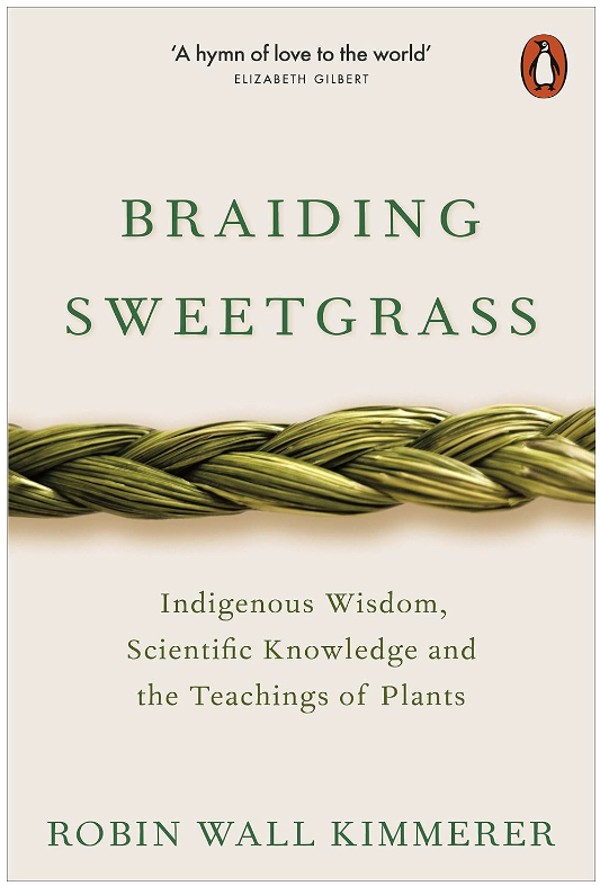
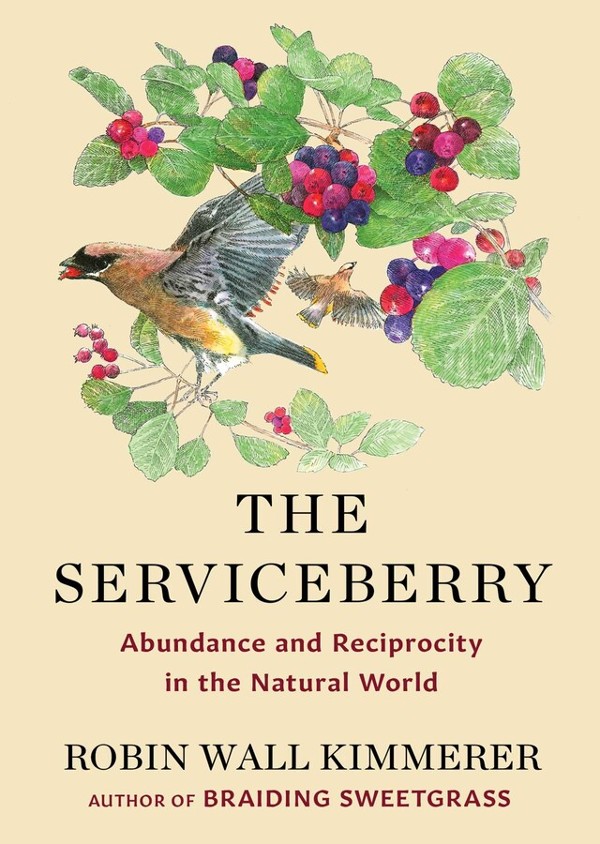
Fortuitously, I found a new book by Robin Wall Kimmerer, author of Braiding Sweetgrass.
The new book, The Serviceberry is a short but uplifting read on Abundance and Reciprocity in the Natural World.
As Kimmerer explains:
“ Serviceberries show us another model, one based on reciprocity rather than accumulation, where wealth and security come from the quality of our relationships, not from the illusion of self-sufficiency.”
We also enjoyed our Saturday evening with John watching PBS on the TV. It included ‘As Time Goes by’ and ‘Doc Martin’; both examples of community life in London and Southwest England. Given the programs come from Maine, it is easy to imagine the similarity of landscapes between rural Canada (Nova Scotia) and rural New England.
The emphasis, in both cases, is upon our sense of community.
Acknowledgements
Heather and I continue to enjoy the vibrant colours, especially the tamaracks, as we drive through the Rawdon Hills.
References
Robin Wall Kimmerer, 2024, The Serviceberry, Scribner/Simon&Schuster.
On Sunday we had a beautiful, blue sky day. Heather and I decided it was a day for a walk in Kejimkujik National Park.
Early, we headed down Highway #8. Our destination was the Peter Point Trail. It was a delightful six kilometer stroll. The trail was covered in pine needles. The yellow, orange and red deciduous leaves were stunning.
Afterwards, it was time for a different route home. We headed down to South Brookfield, where we turned east on Highway #268, and cross-country through Pleasant River-Compton-Hemford-New Germany. At. New Germany, we turned North on Highway #10 to Middleton.
Two observations on the day:
The colours on November 13 in rural Nova Scotia were fantastic because of the mix of hardwood tree species.
The landscape mosaic of rural Nova Scotia is remarkable. If only, we would follow the practices of sustainable forestry.
This weekend, I received an inter-library loan notice from the Middleton library.
Jack Dangermond at Esri had recommended Our Towns by Jim and Deborah Fallows. A 100,000-mile journey into the Heart of America. A quick glance took me to the chapter on Redlands, California (also see the video in my post West Dalhousie Visit).
Redlands is the home town of Jim Fallows. It is also the headquarters of Esri and home town of Jack and Laura Dangermond.
We went with our young family to Redlands in the late ’80s. I had spent the early ‘80s designing and delivering new programs at COGS. After a year with EMDI in Jakarta, we landed in Redlands. Heather took graduate courses in Biology at the University of California, Riverside.
Thank you Jack for the reference, and the opportunity to spend time in Redlands., your town.
Reference
James and Deborah Fallows, 2028, Our Towns, Pantheon Books.
Acknowledgements
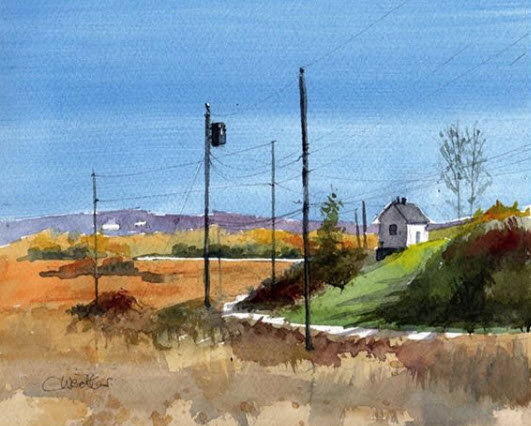
Head of Chezzetcook intertidal area painted in watercolour by Edward Wedler
Thank you , Edward. I know you were able to paint and capture the colours of the Nova Scotia landscape this weekend.