There is considerable discussion about ‘smart cities’, but what is the impact of these technologies on a rural lifestyle?

What needs should be addressed? One need is transportation, another is health care. At what point does technology-access, designed for an urban lifestyle, detract or destroy rural values? In Annapolis Royal, at the Library, we see the reality of an Innovation Lab, as part of a Community Hub. It gives everyone access to a range of modern communication technologies.
 This week, courtesy of the Internet, I received George Monbiot article on ‘dark money”. In return, this had me thinking about the money behind the Gordonstoun project. Is the Annapolis Valley ready for this type of colonization?
After our meeting at Burnbrae Farm (Morse Estate), I challenged myself to re-read Buckler’s The Cruelest Month. I think it answered my question. The setting is not likely the Morse Estate in Paradise, but rather Milford House on Highway #8 towards Kejimkujik National Park. What I had forgotten, was the quality of Buckler’s language and style. Now, I am charged to pull Ox Bells and Fireflies off the bookshelf.
 The other recent challenge was the French cooking at the Flying Apron (not really a challenge).
For the record, the menu included Salmon Rillette, Gougers, Coq Au Vin, and Creme Brûlée. All prepared by Chef Chris Velden. Each couple received a handout with the list of ingredients (and measures) and the method for preparation of each dish. Excellent!
Returning home, courtesy of the Internet, I received a review of Julia Blackburn Time Song: searching for Doggerland. This has prompted a new interlibrary loan request.
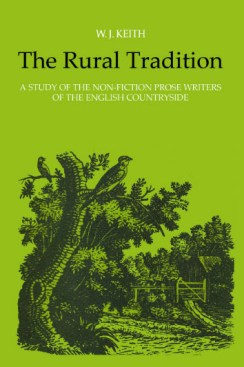 In attempting to understand ‘rural’. I pulled off the bookshelf, The Rural Tradition, written by W J Keith, Professor of English at the University of Toronto.
It is a study of non-fiction prose writers of the English countryside and includes chapters on such notables as Isaac Walton, Gilbert White and William Cobbett.
Keith, in his conclusion, asks the following question:
“Is country writing a thing of the past? In an age that can envisage hermetically sealed monster cities artificially protected from natural phenomena and a polluted atmosphere, that can seriously entertain the possibility that three quarters of the world’s animal species may be extinct by the end of the century, is it feasible to expect the survival of a literature centred upon the countryside and the rural way of life ?” p.258
Keith was writing in 1974.
Acknowledgements
Thanks to Rosemary Barron for the link to George Monbiot. To Frank Fox for the link to the review of Julia Blackburn’s book, and also for giving me a copy of Keith’s The Rural Tradition. To Heather Stewart for sharing the cooking experience at the Flying Apron. Edward for his graphics skills.
References
Ernest Buckler. 1963. The Cruelest Month. McClelland and Stewart
Ernest Buckler. 1968.Ox Bells and Fireflies. McClelland and Stewart.
W.J. Keith. 1974. The Rural Tradition. University of Toronto Press.
The Flying Apron website
Burnbrae Farm and Paradise Inn see link www.burnbraeparadise.ca

 Ernest Blair Experiment