Last week, it was the Esri User Conference in San Diego. For those of us unable to attend, it was possible to watch videos of the plenary session. Of particular interest, was the conversation between Jack Dangermond and Jane Goodall and EO Wilson. The emphasis was on citizen science and biodiversity. The same message could be found in the collaboration between Esri and National Geographic.
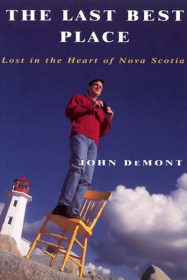 Before heading to Langley, BC via Calgary and Vancouver airport, there was time for some retrospective homework. On the plane, I had the time to read John DeMont The Last Best Place. John was a speaker at the EBLES event. The book provided a ‘Farewell to Nova Scotia’ experience.
Stepping out into the Vancouver traffic, I reminded myself of the need for street address systems. For example, in Langley, where is the intersection of 211 Street and 92 Avenue? Our minds have to adjust, from reading the landscape to an abstract coordinate system.
At Vancouver airport, out of the blue, I was contacted by John Rostron. It was about twenty years ago, when I was working at Royal Roads University, that John contacted me about establishing a new program at BIOTROP in Indonesia. This resulted in a link between COGS and BIOTROP. We designed a program linking Information Technology to Resource Management. Canadian graduates were hired to effect the technology transfer of GIS and other software. I look forward to receiving an update, after two decades. Will the programs mirror the conversations on citizen science described at the Esri User Conference?
Acknowledgements
Brent Hall for the Esri video links. John Rostron for making the BIOTROP connection. Edward Wedler for his graphics contribution. Nic and Laurel for their hospitality in Langley.
References
Esri User Conference 2019. Plenary videos
BIOTROP web site.
John DeMont. 1998. The Last Best Place: Lost in the Heart of Nova Scotia. Doubleday Canada

 Ernest Blair Experiment