This week, I was running errands in Middleton. First stop was the Library. I wanted to learn more about the English poet, Gerard Manley Hopkins (see post A Celebration at Meier Point). The staff put out an inter-library loan request.
I checked the new books and found the biography of Elon Musk by Walter Isaacson; a huge tome, 670 pages.
After the Library, next stop MacDonald Museum’s local art exhibition. Then the Summerland Nurseries for a planter and a shrub for Mothers Day (Stewartstonian, Evergreen Azalea).
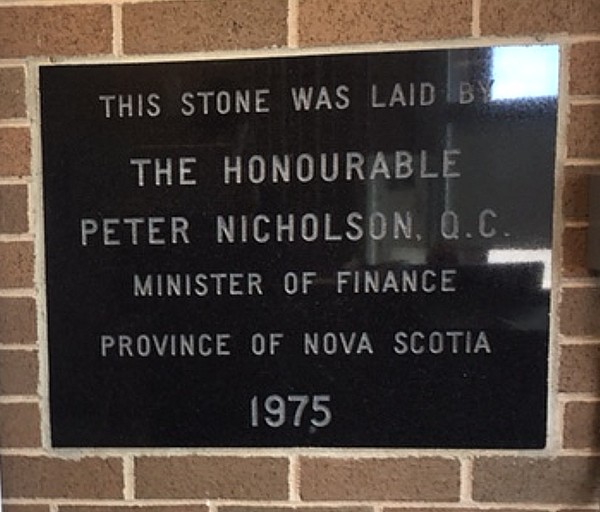
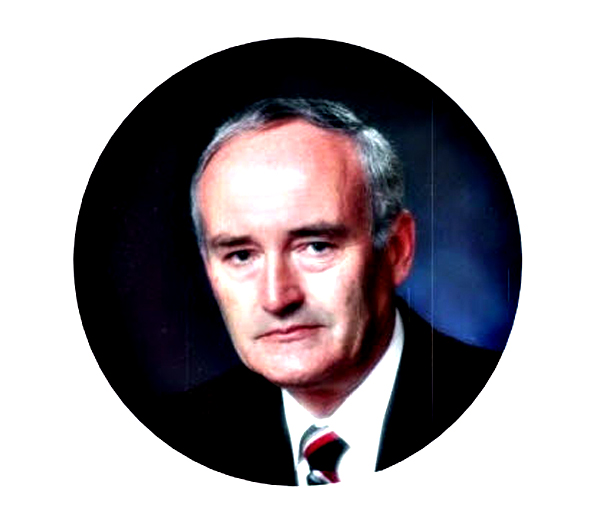
Friday, we drove through the Rawdon Hills to New Glasgow. I started to read about Elon Musk. Page 47-48 has a reference to Peter Nicholson. He was in charge of strategic planning at ScotiaBank. Musk was at Queens University in Kingston 1990-1991.
This rings a bell. At COGS in Lawrencetown, there is a stone with Nicholson’s name on it, commemorating the new building.
This weekend, we went to Windsor to see the Student Art Exhibition at Kings Edgehill School (KES), curated and organized by Sandy Stewart, Heather’s sister.
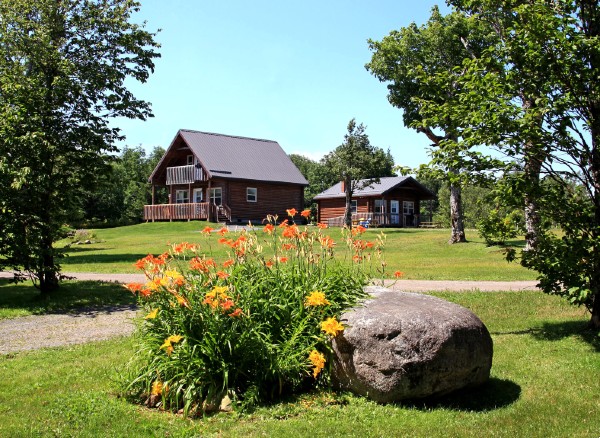
While in New Glasgow, we checked out accommodation for our family reunion this August. Traditionally, this would be at Pictou Lodge however after the hurricane, about two years ago, it remains closed.
Again, we noted the devastation to the forests in the region. It will take a concerted effort to repair the damage.
Earlier in the week, Edward stopped in, on his way back from Annapolis Royal. We were able to grab coffee at Bees Knees and take it down to the Annapolis River. It has been many months, with Edward away in Florida. It helped me set my direction for the CSRS keynote talk in June.
This week finished reading The Dome Chronicles (see post “The Secret”). I discovered that Garry Leeson’s home base is Harmony, on South Mountain, up behind the Canadian Forces Base, 14 Wing Greenwood.
Finally, Heather and I enjoyed Wednesday night movies at King’s Theatre in Annapolis Royal — Five Hundred Days in the Wild, Dianne Whelan’s six-year journey travelling the Trans Canada Trail,
and then Anthony Hopkins, One Life about saving Czechoslovakia refugee children in the Second World War.
Acknowledgements
Heather and I enjoyed both the Art Exhibition at KES with Sandy and the drive to Scotsburn with Jay. Edward and Simeon offered useful feedback.
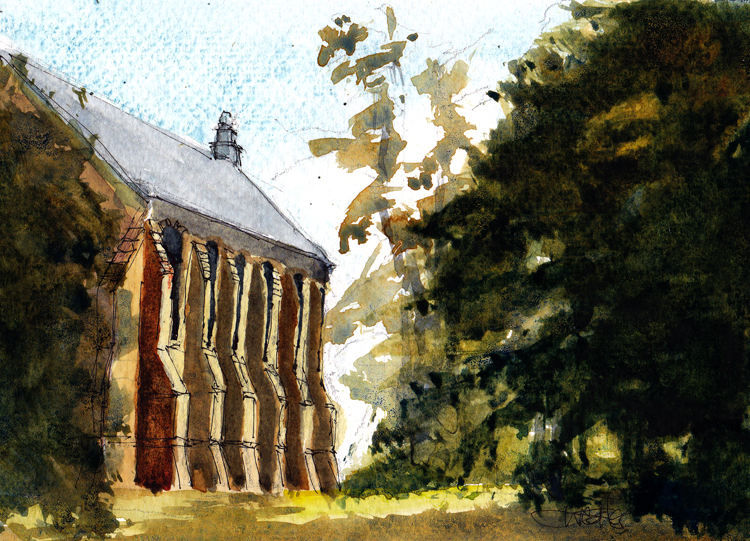
Edward once painted Convocation Hall at King’s Edgehill School en plein air, in watercolour.
Last weekend, I met with John Wightman to discuss the transition from the Nova Scotia Land Survey Institute (NSLSI) to the College of Geographic Sciences (COGS).
John reflected on the structure of the programs, and the need to fill the new building in Lawrencetown.
In 1980, there were three departments: Planning and Cartography, Computer Programming, and Survey Engineering.
John’s objective was to create a technical institute, similar to ITC in Enschede. By adding new technology and faculty, he hoped to develop a relationship with one of the universities in the region.
From a computer technology perspective, this led to programs in Scientific Computer Programming, Business Computer Programming, Computer Graphics, Geographic Information Systems, Remote Sensing, and Business Geographics. Planning and Cartography remained similar with new technology. Likewise, Survey Engineering added Marine Geomatics Engineering to Geomatics Engineering Technology.
On the weekend I met with Bruce Gillis, Lawyer. He was interested in sharing with me the Annapolis County Atlas, produced by the Annapolis County Planning Department in 1984. This proves to be a remarkable document in light of the state of county planning today, 2024 (forty years later).
Both of these meetings shed light on the trajectory of COGS over the last fifty years, and the opportunity to apply both GIS and Remote Sensing technology. Evidently, John had close ties with both the Canadian Centre for Remote Sensing (CCRS) as well as the GIS community through Roger Tomlinson.
Postscript
We went to Hampton Beach. There were a couple of local volunteers cleaning up the old rope and plastic. Apparently, there is a group from Halifax that has taken on this mission. Concern for our marine environment.
Acknowledgements
To John Wightman and Bruce Gillis for their memories of both NSLSI and COGS. Edward added the graphics.
References
Annapolis County Atlas, October 1984, Published by the Annapolis County Planning Department.
Esri visited COGS to recruit new employees. Their head office is in Redlands, California.
The three members of the recruiting team were from Halifax and Connecticut. I attended the opening session in the AV room, because of my interest in GIS education.
I worked in Redlands in 1989, after a year in Indonesia and before moving to Ontario, to design and deliver GIS training for staff at the Ontario Ministry of Natural Resources (OMNR).
Here are a couple of items that caught my attention.
Esri remains the world-leading GIS software company. They have 5,000 employees world-wide. They have eighteen R&D centres, one of which is in Ottawa. Esri purchased SpotOn in 2011. Both Derek Weatherbe and Jeff Sutherland work remotely for SpotOn.
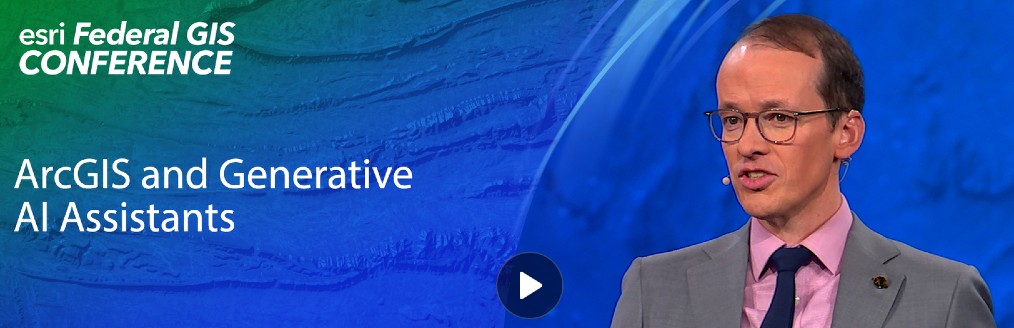
Jeff gave a technical presentation on Data Pipelines. This included a video on Generative AI Assistants (HERE is the link).
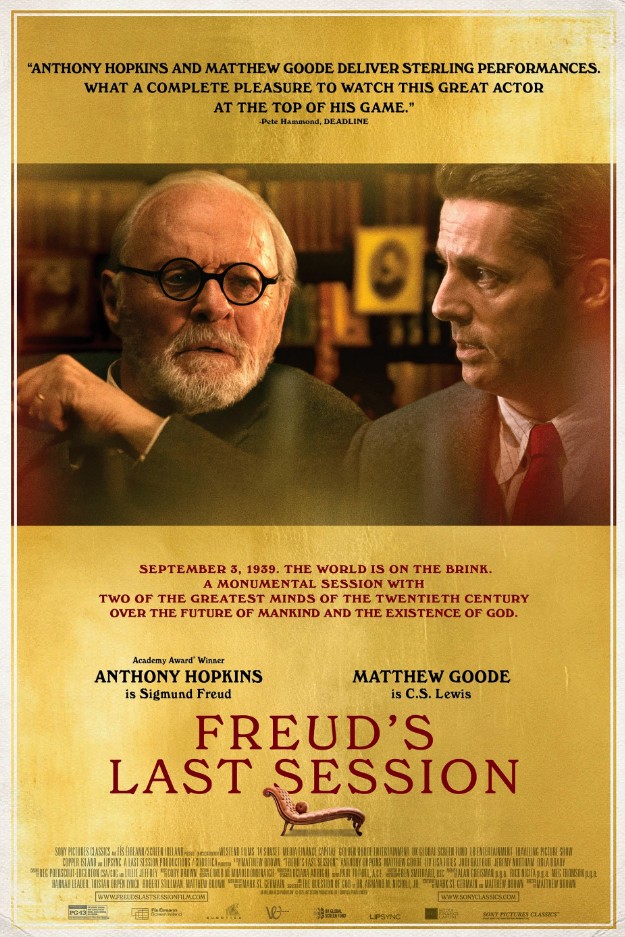
In the evening, Jeannie Shoveller offered us a drive to Annapolis Royal to see Freud ‘s Last Session
— a conversation between Sigmund Freud (Anthony Hopkins) and C.S. Lewis (Matthew Goode) set in London during the Second World War. C.S. Lewis is best known for The Chronicles of Narnia, and the Lion, the Witch and the Wardrobe.
It was an evening of contrasts. Jeannie used to babysit our children when we lived in Clarence. I am not sure if C.S. Lewis was on the reading list.
It was unsettling to watch a movie set in WWII, in a small community with its own theatre, at a time when the world is in a state of turmoil, given the war between Ukraine and Russia.
Postscript
In today’s Bridgetown Reader, I noticed a call for memories of Ride the Lobster. A uni-cycle relay race around Nova Scotia in 2008.
(Members of the Singapore and Nova Scotia teams are shown in this photo taken by Edward).
The brainchild of Edward Wedler. Doug Dockrill is preparing a book on the event.
Acknowledgements
Thanks to Derek Weatherbe for the invitation to the ESRI Technical presentation. Thanks to Jeannie for the invitation to Kings Theatre. Edward added the graphics and the links.
Today (Sunday), we took another micro-adventure to Annapolis Royal. The first stop was the French Basin trail; snow-covered but passable (see the video at Walking Paths). Afterward, we stopped at the Sissiboo cafe.
There, I found a copy of Matthew Rouse’s book ‘Will AI take my job?’ Apparently, Rouse wrote the book at the cafe.
This thought intersects with my research into the future of GIS (Geographic Information Systems) and RS (Remote Sensing) at COGS (Centre of Geographic Sciences). What will be the impact of AI (Artificial Intelligence) on that world?
With the availability of new sensors, drones, etc., how will we manage the deluge of geographic information? I can envisage a day when we may need to return to a new digital photogrammetry.
In the meantime, this week Esri will be at COGS recruiting new talent for their expanding business. I plan to attend, to see what skills are in demand from the 2024 graduates, aside from AI and digital photogrammetry.
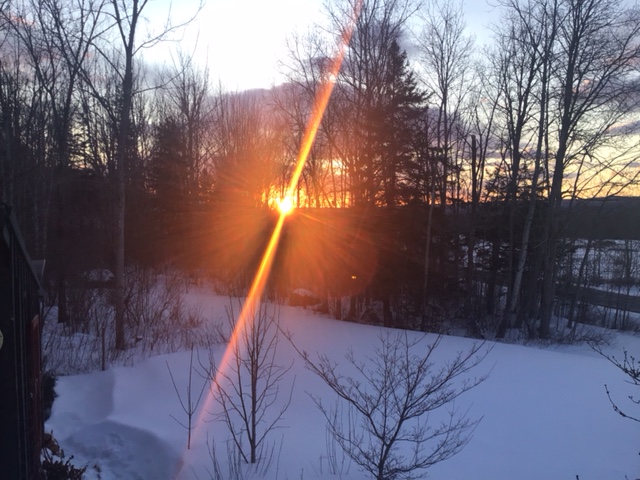
After Annapolis Royal, we ventured down to Lower Granville. We arrived home in time to take a sunset photograph.
Currently, I am preparing an abstract and undertaking background research.
I have divided the topic into three parts: a) the history from my perspective; b) current programs and projects at COGS; c) speculation on future technology and their application.
I have had the opportunity to discuss history with John Wightman. For the current programs, I am able to meet with faculty responsible for GIS, RS and data analytics. For future directions, I will connect with my network of contacts in the education community, industry and applied research.
Within this context, I consider the conversations by John Wightman with researchers at CCRS, as well as input from Roger Tomlinson and Ray Boyle to have happened between 1974 and1980. In 1980, I moved to Nova Scotia, with Heather and a young family, to teach in the Scientific Computer Programming (SCP) program. My relationship with COGS continued until 2011. There were several breaks, in Indonesia, California, England, Ontario and British Columbia, I retired as Senior Research Scientist at the Applied Geomatics Research Group (AGRG) in Middleton, at the Annapolis Valley campus of the NSCC.
Since my retirement, I have maintained my life-long interests in Geography and Geographic Information Science. This includes a blog, under the title ernestblairexperiment.wordpress.com, with over 550 posts to date.
Over the next few months, I will appreciate any feedback through my blog — in particular, the trends in teaching and research, both from a Remote Sensing and GIS perspective.
My plan is to provide Amy Mui at CSRS with an abstract, later this month.
Postscript
I should be remiss if I did not mention that my colleague and blog partner, Edward Wedler. He was a Remote Sensing instructor at COGS in the ‘80’s.
Micro-adventure: West Inglisville
Heather and I snowshoed up through our property to the West Inglisville road on South Mountain. We returned back down to Paradise on Hwy #201 and home. These were excellent conditions for snow-shoeing — fresh snow on a hard crust.
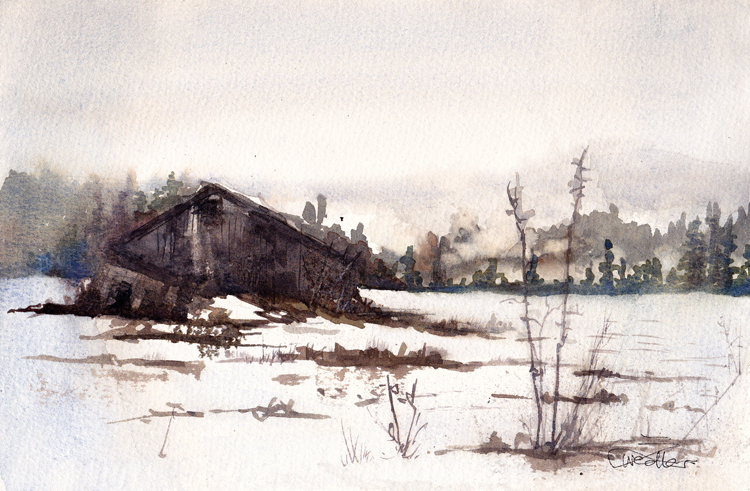
Abandoned Annapolis Valley Farmland, watercolour by Edward Wedler
Jonathan Murphy, founder of GoGeomatics Canada, for fun, asked Artificial Intelligence chatGPT
‘who is Bob Maher’?
Below is the response.
Dr. Robert Maher is a significant figure in the Canadian geospatial community, particularly known for his contributions to the College of Geographic Sciences (COGS) and the Applied Geomatics Research Group (AGRG). His importance to the geographic community stems from his extensive work in education, research, and application of geographic sciences.
Dr. Maher obtained his Ph.D. in Geography from the University of Western Ontario and later taught at Memorial University of Newfoundland in the Department of Geography, covering areas like Quantitative Methods, Computer Mapping, and Biogeography. In 1980, he joined the faculty at the Nova Scotia Land Survey Institute, which he helped transform into COGS. This transformation played a crucial role in developing the institute’s focus on geographic sciences, including Computer Programming, Cartography and Planning, and Surveying.
Between 1988 and 1999, Dr. Maher worked as a GIS consultant in Indonesia and for ESRI in the United States. He also collaborated with universities and government agencies across Canada. He returned to COGS in 2000 as the Senior Research Scientist in the AGRG, retiring from this position in 2011.
His work at COGS and AGRG involved significant developments in geographic education and applied research. During his tenure, the focus at COGS shifted towards applied geomatics research, highlighting the practical application of technology to real-world problems. This included cooperative projects with industry and government partners in various sectors like Forestry, Geology, and Health Sciences.
Dr. Maher has also been involved in writing “The Story of COGS,” a project documenting the history and development of the College of Geographic Sciences. This work includes research, interviews, and the compilation of materials and experiences from COGS’s inception as the Nova Scotia Land Survey Institute to its evolution into a hub for geographic sciences education and research.
In recognition of his contributions, Dr. Maher was appointed as Geographer Emeritus at COGS. This role reflects his ongoing commitment to geography and his efforts to maintain connections within the geographic community, emphasizing the importance of geographic education and the application of geographic sciences in various fields.
Dr. Maher’s work, particularly at COGS and within the broader geospatial community, has been instrumental in advancing geographic education and research in Canada. His contributions have helped shape the landscape of geographic sciences, making him a notable and respected figure in the field.
— ChatGPT
I forwarded it to Edward Wedler. His suggestion was that the response should reference my over 500 blog posts spanning several years. This is interesting, since the blogs are published under ernestblairexperiment.wordpress.com. The name comes from Ernest, for Ernest Buckler, and Blair, for Eric Blair (aka George Orwell) . Experiment – life is an experiment.
Today, I visited Integrity Printing in Bridgetown to request a hard copy of my 2023 blogs. Volume 8. This blog post will be #550.
Jon’s response from AI chat GPT raises a number of interesting questions about the impact of AI on Geography/ Geographic Information Systems.
In the letter from the President, Alex Miller, he describes the founding of Esri Canada in 1984. Forty years ago. I remember well; Alex’s visit to COGS
From COGS, he hired David Roscoe, John Houwelling and Eric Melanson. It has been an exciting journey.
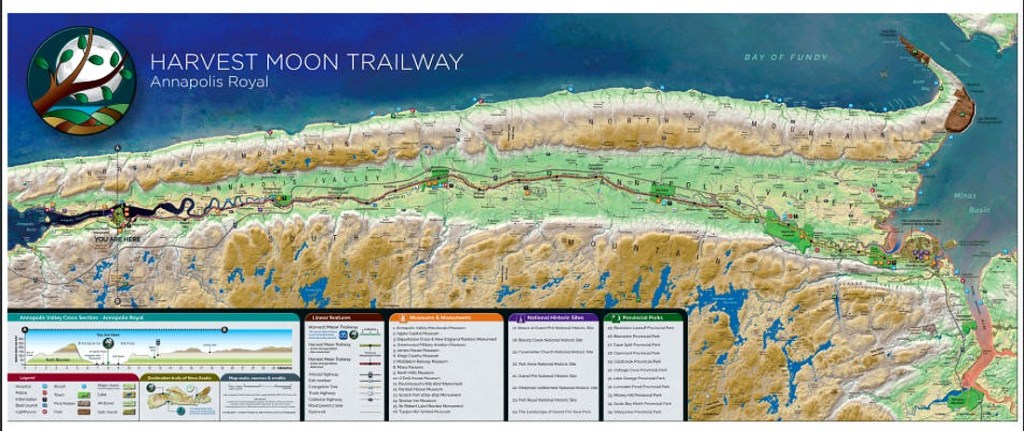
In the Esri 2024 calendar, the map for July shows the Harvest Moon Trailway through the Annapolis Valley (see Tourism Nova Scotia’s Harvest Moon Trailway LINK). The Map was designed and produced by Marcel Morin, Lost Art Cartography — another COGS graduate, living and working in Grand Pre, Nova Scotia (see the Recording of Marcel’s December 2023 meeting of the Blomidon Naturalists Society).
Acknowledgements
Jon Murphy, a COGS graduate, initiated the inquiry. Edward Wedler, retired COGS faculty, added value to the query.
Reference ESRI Canada 2024 Calendar, Forty Years, The Science of Where.
Monday night, we had heavy rain and winds. Consequently, the power was out in Annapolis Royal on Tuesday. At the junction of the town and along the Granville Ferry road several poles were down.
After lunch, the sky was misty. We decided it was time to walk up from our house on Highway #201, up South Mountain to the Inglisville Road. The circuit takes about two hours. The light was amazing. The Forest floor was a vibrant green of mosses, lichens and fungi.
Every weekend I receive Emergence Magazine. Last Sunday, there was an interview with James Bridle, entitled An Ecological Technology.
The podcast references his latest books: Ways of Being and New Dark Age. The podcast was a refreshing alternative to the discussion of AI in the popular media.
Before the snowfall, Heather and I increased our exploratory walks. In Middleton, we connected the CARP marsh trail to the old railway trail between Middleton and Nictaux.
Again, we extended the walk down to the Hampton Mountain chalets, to Dragonfly Lane. Then back on the Hampton Mountain road to the parking lot.
With the fresh snow, I would not recommend this trail. You need to see the ground to negotiate the brush and recent cuts. Even the ‘TOWER’ signs are starting to disappear from the trees.
This week, I shall be attending Maclean’s Fundamentals of GIS class (FunGIS). While the detailed technical information is challenging, it does provide an entré into the current technologies.
My plan, in the months ahead, is to understand the current remote sensing technologies (e.g. the use of drones, the availability of online imagery).
Acknowledgements
Heather has shared both the reading and the walking. Edward added his graphics touch.
The second walk was the new CARP Marsh Trail in Middleton. This suggest that our communities recognize the need for citizens to take local walks for health. Every community needs access to both short and long trails.
Last Saturday, at the Paradise craft market, I was able to pick up Barbara Bishop’s “Promises to Keep: A Story of Nova Scotia” (see Saltwire link). This traces stories of the Leonard family, going back to Wilmot, 1789.
From the back cover:
’All were touched by the Landing at the Head of the Tide in a place known as Paradise. To step into this book is to see how our common humanity is changeless – that we can face the worst, sacrifice everything, and still find our way.’
Acknowledgements
ESRI Canada offered the online seminar. Heather joined me on the two short walks. Barbara Bishop signed my copy of her book.
References
Barbara Bishop, 2016, Promises to Keep: A Story of Nova Scotia, etc Press Ltd. (see Saltwire link)