I have enjoyed the writing of Robert MacFarlane for several years.

This week, I received notice of a new web site: Emergence Magazine. It includes a podcast interview with the author: Speaking the Anthropocene.
RM. “Language and landscape are the two braids that have twined and untwined in my life, and in my writing to this point. I teach in a literature department but really, I think I’m a bit more of a geographer these days.”
EM. “In Landmarks, is the idea that the words assembled in your book are a possibility of how we can re-wild our contemporary language for landscape. You described that as being the hope, so to speak.”
In Landmarks, MacFarlane provides a series of glossaries for different landscapes: flatlands, uplands, waterlands, coastlands, underlands, northlands, edgelands, earthlands, woodlands.
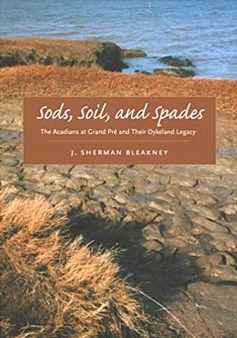 This discussion of the Language of Place took me back to my bookshelf. For Nova Scotia, I retrieved Sherman Bleakney’s book Sods, Soils and Spades: The Acadians at Grand Pre and their dykeland legacy. The word that triggered this search was aboiteau and its role in dykeland construction.
A second Nova Scotian author was Peter Sanger. In particular, I had enjoyed Spar: words in place ( check my blog Place in Words, October 31, 2018).
From time spent on Haida Gwaii, I found a back copy of Haida Laas, the newsletter of the Haida nation. (December 2015).
Thinking in Haida. With a slip of the tongue describes a Haida language class. The class is studying Massett Songs, a collection of songs and stories recorded by anthropologist John R. Swanson and translated by John Enrico.
“Xaad Kil is highly directional, the language is constantly creating a picture of motion and place. Xaad Kil prioritized things like wind direction, water currents and one’s own relative location to the ocean.
“ Lost in translation.
Xaad Kil (Haida) Sahgwii ltl
Literal English
Upstream- Direction I’m going.
Colloquial English
I’m going up town
Explanation
To get downtown from Gaaw, you must travel upstream along Gaaw Kaahli (Massett Inlet). That’s why we say uptown and not downtown like city people. Explained by Rev. Lily Bell.”
Here is my thesis: the language of Place is shaped by the specific geography, e.g. Nova Scotia or British Columbia. It is also shaped by the rules of the language, in this case, either Haida or English.
Regardless of the language, we need to understand the underlying processes, i.e. landscape ecology. In Nova Scotia, we are influenced by our position on the North American continent; the different air masses and ocean currents. These influences are changing within the context of the climate crisis.
I would love to believe that changing our language would help. In practice, we have to deepen our understanding of the landscape, it’s history, ecology and the associated processes.
Acknowledgements
Edward Wedler and Heather Stewart for their thoughtful conversations.
References
Emergence Magazine. emergencemagazine.org
J.Sherman Bleakney. 2004. Sods, soil and spades. McGill Queens Press.
Haida Laas.Newsletter of the Council of the Haida Nation. December 2015. p.8
Peter Sanger. 2002. Spar: words in place. Gaspereau Press
Robert Maher. ernestblairexperiment blog. October 31, 2018. Place in words.

 Ernest Blair Experiment
One thought on “The Language of Place”