Turtle Talk is a slim collection of ‘voices for a sustainable future’, published by New Society Publishers. It includes interviews by Christopher and Judith Plant with Gary Snyder, Peter Berg, Murray Bookchin and others. First published in 1990, with a Foreword by Kirkpatrick Sale. I found it hiding between Simple in Means: Rich in Ends and The Ecology of Wisdom (see the references, below). Deep Ecology is a large topic and won’t be discussed in this blog.
Sale tells the Lakota Sioux story of the creation of ‘Turtle Island’. Discussing the contributors:
“ What makes them special is that they are people not merely thinking but doing, despite the weight of the forces ranged against them – people who, it could be said, are sticking their necks out on behalf of all endangered species, including the human, including the living Earth itself. And it is the great lesson of the turtle, of course, that you can get ahead only when you stick your neck out.”
From Gary Snyder,
“The bioregional undertaking is to learn our region; to stay here and be at home in it, and to take responsibility for it, and treat it right.” p.14.
“ …you have people who say, “I’m not going to move” That’s where it gets new. People say “I’m going to stay here, and you can count on me being here in 20 years from now”. What that immediately does is make a politically-empowered community possible.” p.17.
From Peter Berg,
“The greatest shared value for the necessary upcoming ecological era is wilderness. Because wilderness already embodies systems, designs, purposes that are workable, are demonstratively eco-energetic – efficiënt in terms of energy and resources.” p.25.
“I think our working together to discover our own wildness, the wild Homo sapiens being within us, is very liberating, very exciting. It is the future from my point of view, and it’s pivotal in terms of human civilization.” p.29.
Finally, from Murray Bookchin:
“There’s a long tradition in New England and other parts of the United States, in which the town or the village is merely the nucleus of a much larger area, bringing the country and the town together.” p.130.
“We can decentralize our cities, we can use our land intelligently, ecologically, we can have people create new kinds of communities”. p.131.
It is a sobering thought to find this thin book, hidden away on the shelf. Also to realize that these interviews were recorded over thirty years ago.
What has changed? What is their relevance to today’s global predicament? Is there a sustainable future?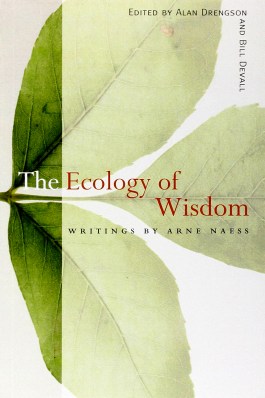
Many of those voices are no longer with us.
PS. Given that the libraries are closed. Please contact me, if you want to borrow any of these books.
Acknowledgements
Heather for her turtle talk, whether Blandings or Wood turtle.
Edward who has chosen Turtle Island (North America) as his home too. Plus his graphics contribution.
References
Christopher and Judith Plant, 1990. Turtle Talk: Voices for a Sustainable Future.
The New Catalyst Bioregional Series.
Bill Duvall, 1988. Simple in Means, Rich in Ends: Practicing Deep Ecology. Gibbs and Smith.
Alan Drengson and Bill Devall (Ed.), 2008. The Ecology of Wisdom: Writings of Arne Naess. Counterpoint Press.

 Ernest Blair Experiment