Today (Friday) we returned to the house in Paradise. We wanted to weed the front vegetable garden. This allowed us to find potatoes, tomatoes and onions. Later in the day, Lorie, our real estate agent was showing the house. Perhaps the visitors will realize the care and affection we have for #6326.
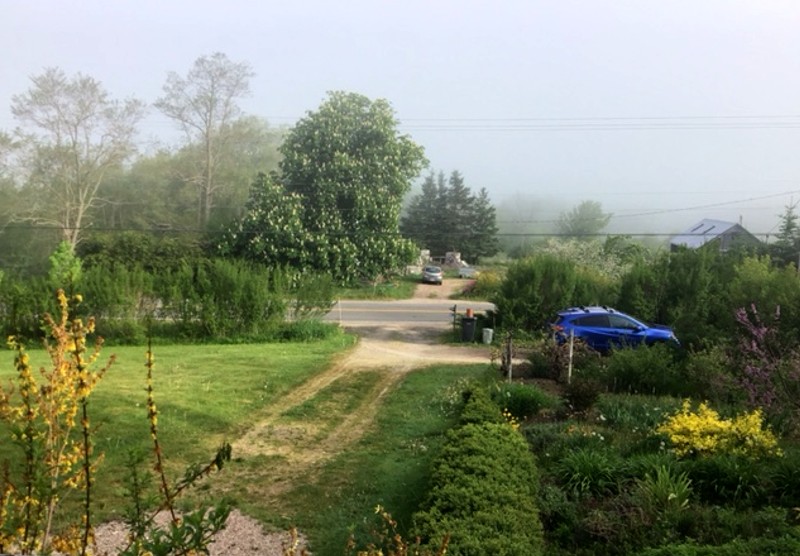
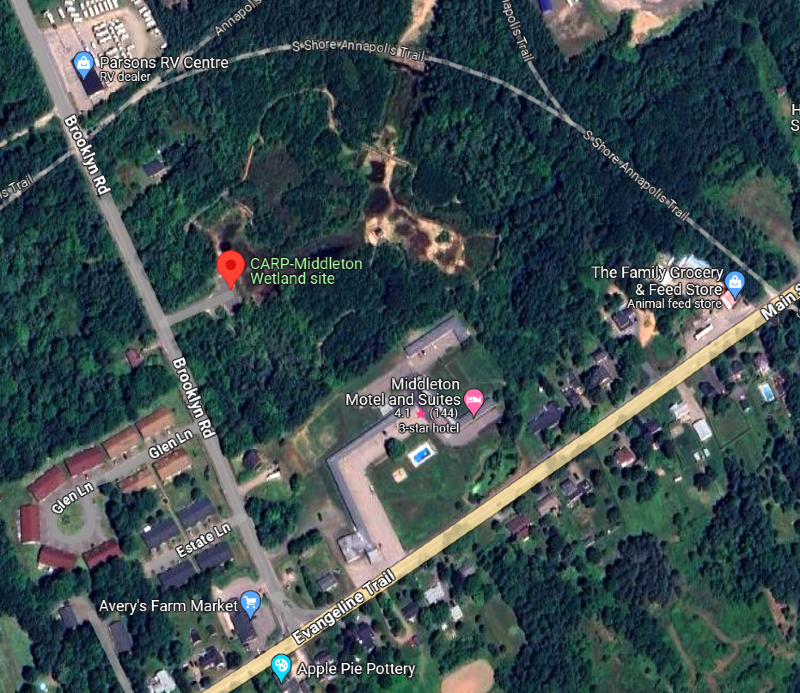
We decided to walk the Marsh/CARP trail in Middleton to loosen up limbs
Just as we were returning to the parking lot, Heather noticed a small purple flower.

It was Agalinis neoscotica. She had spent her graduate research at the University of Guelph on the genetics of this species.
Energized by our discovery, we went back to the Centennial Park by the elementary school. Again we found Agalinis neoscotica, along the abandoned rail line. This is the type location for this elusive species. It is the only plant with neoscotica as its species epithet (see previous posts, Brier Island , Biogeography, and Middleton False Foxglove)
These discoveries make us feel that Middleton is ‘our home’ too.
I am still thinking about economic development in rural Nova Scotia : the relationship between geography and economy. The most obvious context is the history of geographic information systems and the role of COGS.
For example, in Great Village, Nova Scotia there is the EB House; a writer’s retreat dedicated to Elizabeth Bishop (see post Geography III). Can we imagine a “Geographers Retreat” dedicated to the legacy of Roger Tomlinson? It could be in Lawrencetown or Paradise, supported by the Geographic Information System industry e.g. Esri and Esri Canada.
“The Power of Place” or in Greg Baeker’s terminology ‘the creative rural economy’.
Acknowledgements
Thank you Edward Wedler. His contribution : links, images and research demonstrates the value of collaborative research. Much appreciated.

 Ernest Blair Experiment