What is the importance of knowing the geography of your community?
What is the difference between rural and urban geography? In the rural environment, it is possible to understand the changes that happen in the local landscape.
What happens when communication is electronic, and it is not related to place?
With these questions in mind, what is the ‘definition of a ‘community college’? On top of that, what does it mean to manage a ‘centre of geographic sciences’ in a community college context, in a rural landscape?
This leads my thinking to CORAH. A Centre of Rural Aging and Health. What exactly is rural aging? Aging in Place? Where does technology fit into the picture? What is the relationship between health in a rural landscape, when compared to an urban landscape?
Certainly, there are many citizens who elect to live in a rural landscape, where it is easier to monitor the changes in the wildlife populations, old growth forests, agricultural practices. Human densities are lower. There are less of the trappings of the ‘built’ environment.
Recently, I have been exploring ‘hidden treasures’ (see posts Hidden Treasures, Landscape and Food, Treasure Hunt and Micro Adventure) in its various forms. Paul Colville informs me that there are painted rocks at the Margaretsville wharf.
Edward has challenged me to define the role of community in understanding our local geography, our sense of place. To complement the role of our educational institutions.
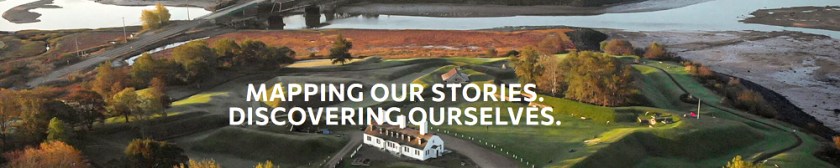
Many years ago, we instituted this relationship with MapAnnapolis.

Perhaps it’s time for a second thought, with CORAH in mind, as well as the changes in access to new technologies.
Certainly, Edward and myself would be happy to join others in the community to see what is possible. We have all the elements. We just need to continue the conversation.

 Ernest Blair Experiment