On Friday, Heather and I went to the Lower Granville Hall to hear Mark Borton’s presentation on ‘Where exactly was Poutrincourt’s Mill?’ (see Parks Canada’s Poutrincourt’s Mill). This was the opening of a six-day event including an art exhibit.
We plan to return on Tuesday evening for a slide show by Christine Igot.
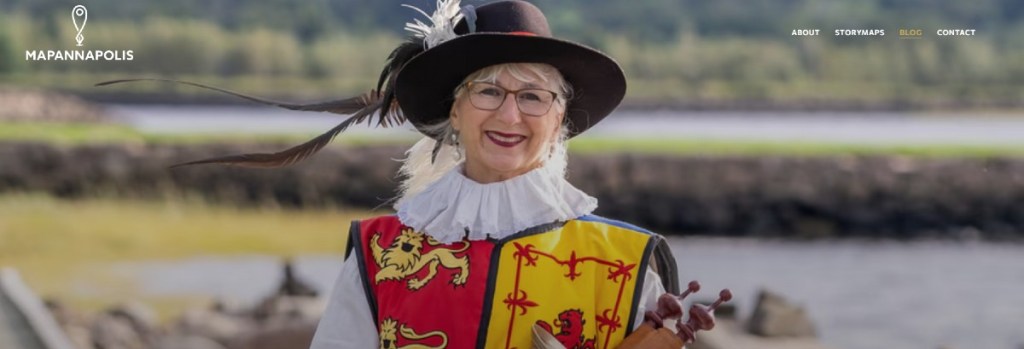
Same time 6 pm. Same location. ‘Pierre Dugua Sieur de Mons and Jean de Biencourt de Poutrincourt: Lives and Legacies.
Bust of Pierre Dugua Sieur de Mons sits at Fort Anne, Annapolis Royal, Nova Scotia.

Check the MapAnnapolis Blog post on Pierre Dugua Sieur de Mons.
The hall was packed, with many faces that I had not seen in a while. Besides Borton’s excellent presentation, I was impressed by the collaboration between Parks Canada, the County of Annapolis and the town of Annapolis Royal. The only presence, that I missed, was the First Nations.
Borton’s presentation raised many questions. Most were geographic in nature. According to documentation, Poutrincourt build the first grist mill on the Allain’s River in early 1607.
It is also, of interest, to understand the Nova Scotia culture at that time.
‘The winter of 1606-07 is a better one in Port Royal because of agricultural improvements, the friendship and alliance with Mi’kmaq and entertainments organized by the leaders of the settlement’.
If we play this forward to today.
What are the impacts of new technology coming from Europe (France and England) or the United States ?
How did it reflect (impact) agricultural land use?
What collaboration did we find between the French, English and Mi’kmaq?
Are there lessons that we can learn today in terms of new technology and to help us understand our relationship to the land?
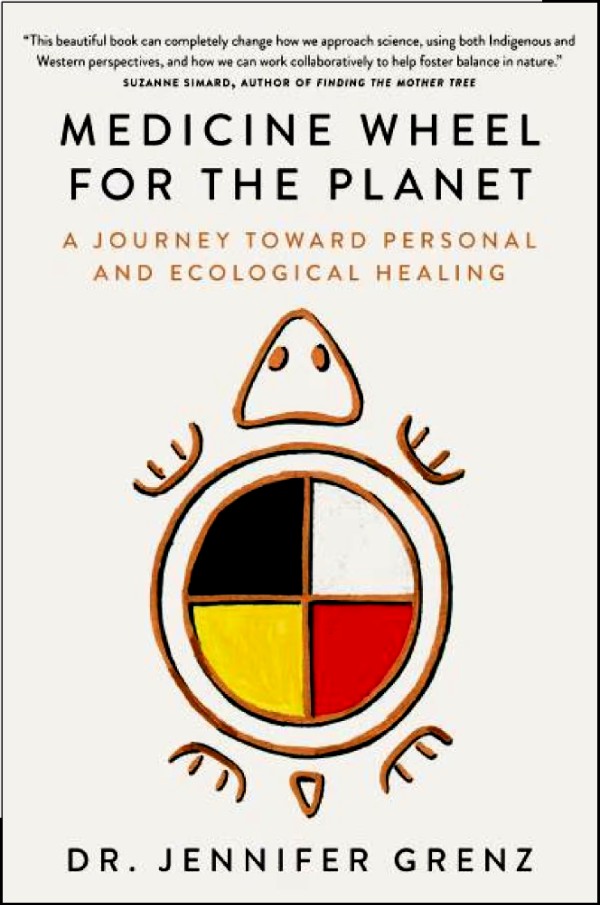
This takes me to Jennifer Grenz ‘s book Medicine Wheel for the Planet. A journey towards personal and ecological healing.
From Suzanne Simard:
“This beautiful book can completely change how we approach science, using both Indigenous and Western Perspectives, and how we can work collaboratively to help foster balance in nature.”
Postscript and Challenge
It occurs to me that it should be possible to use the latest geographic technologies to locate the mill site. We have these technologies in abundance in Annapolis County.
Reference
Jennifer Grenz, 2025, Medicine Wheel for the Planet: A Journey toward Personal and Ecological Healing, Vintage Canada.
Acknowledgements.
Brian Arnott introduced me to Mark Borton. Edward Wedler added the graphics and links.

 Ernest Blair Experiment