Posted in Event Review

No Carping

Edward is away, following in the footsteps of the Group of Seven. Thus, you will miss his handiwork. No graphics.

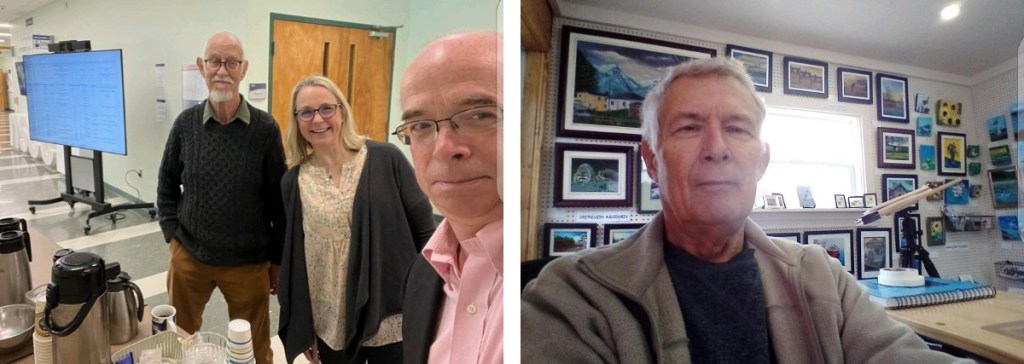
On Tuesday, Heather and I attended the Clean Annapolis River Project (CARP) annual general meeting held in Annapolis Royal. CARP has been in operation for thirty-three years. Back to the days, when we were seeking Heritage River status.

Besides presentations by Levi Cliche (Executive Director) and Mark Hebert (Board President) staff provided details on several key projects:

Annapolis estuary monitoring and research

Fish passage restoration and habitat enhancement

Habitat and Biodiversity Assessment tool

Living Labs

Annapolis Valley sand barrens stewardship

Wetlands restoration and recreation trail development in the town of Middleton

Natural infrastructure for Stormwater management

Agricultural stewardship

Annapolis River Guardians

CARP has a dozen staff, plus volunteers and numerous partnerships.

Their mission statement :

‘Enhancing the health of the Annapolis River watershed for current and future generations through science, leadership and community engagement.’

It was indeed refreshing to see their focus on the watershed. And to read the Introductory Guide to the Annapolis Valley Sand Barrens. Version 1.
From the Foreword by Sean Basquill.

“ In 1920, Harvard Botanist, M.L.Fernald ( 1873-1950) began the first of two lengthy expeditions to Nova Scotia. As he peered out of the train window from Berwick to Wilmot he noted.

“vast, uncultivated plains carpeted, where dry enough, with a close growth of New Jersey pine barren Corema conradii ; these barrens were the finest we saw.” P.1.

How many of us, have visited this unique habitat ?

Acknowledgements

Heather Stewart and Bill Crossman shared the evening. Edward added the graphics.

References

The Waterstrider Newsletter. http://www.annapolisriver.ca

The Annapolis Valley Sand Barrens. An Introductory Guide. Version 1.published by CARP.
Posted in Event Review

As Time Goes By

Monday evening, we went to ARTSPLACE in Annapolis Royal to hear Ted Lind’s presentation “Kindred Spirits: How Art Transformed Ways to Appreciate the Natural World”.

An illustrated talk about three generations of artists who changed public views about wilderness in 19th Century America. Their efforts led to significant new government policies and shifts in public attitudes about nature.’

Lind illustrated his argument with the work of various artists, including Georgia O’Keefe, Emily Carr, and the Group of Seven. Contemporary writers included Ralph Waldo Emerson, Henry Thoreau, and John Muir.

Lind’s thesis was about the significance of artists, writers, and scientists and their influence on public attitudes toward the landscape.

This resonates with both myself and Edward Wedler. Next week, Edward and Anne plan to follow in the footsteps of the Group of Seven (read blog post “When Worlds Collide“). How will their painting reflect the values and technology of present-day society? Do we continue to regard landscape as a resource, whether it is forestry, geology, fisheries, or agriculture,

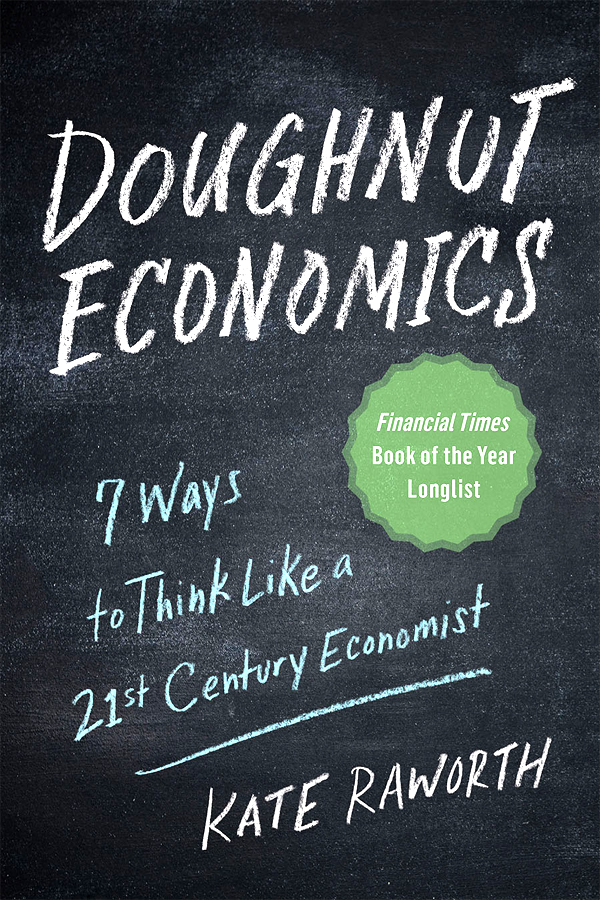
or do we see it within the context of ‘Doughnut Economics’ (see blog post “Community Interests“)?

My perspective is Geography: the physical landscape as well as the socio-economic landscape — and the recognition that we possess a strong sense of place.

Postscript

On the weekend, in New Glasgow, Heather and I enjoyed watching ‘As Time Goes By’ on Maine PBS. It is a BBC comedy series, starring Judy Dench, set in London, in the 1970s. An opportunity to reflect on ‘simpler’ times.

Acknowledgments.

I am looking forward to hearing about Edward and Anne’s trip, in the footsteps of the Group of Seven. It should provide an interesting counterpoint to Ted Lind’s talk, based on their Plein Air experience.

References

Ted Lind, Kindred Spirits: How Art Transformed Ways to Appreciate the Natural World. ARTSPACE, June 19, 2023.

Hettie O’Brien, The Power of Doughnut Economics, The Guardian Weekly, June 16, 2023, pp 34-39.

Kate Raworth, 2017, Doughnut Economics: Seven Ways to Think Like a 21st Century Economist, Penguin Random House.

Posted in Art, Event Review, New thinking

When Worlds Collide: Unicycles, Plein Air, and the Ultimate Tenting Expedition

This time of the year holds immense significance for me.

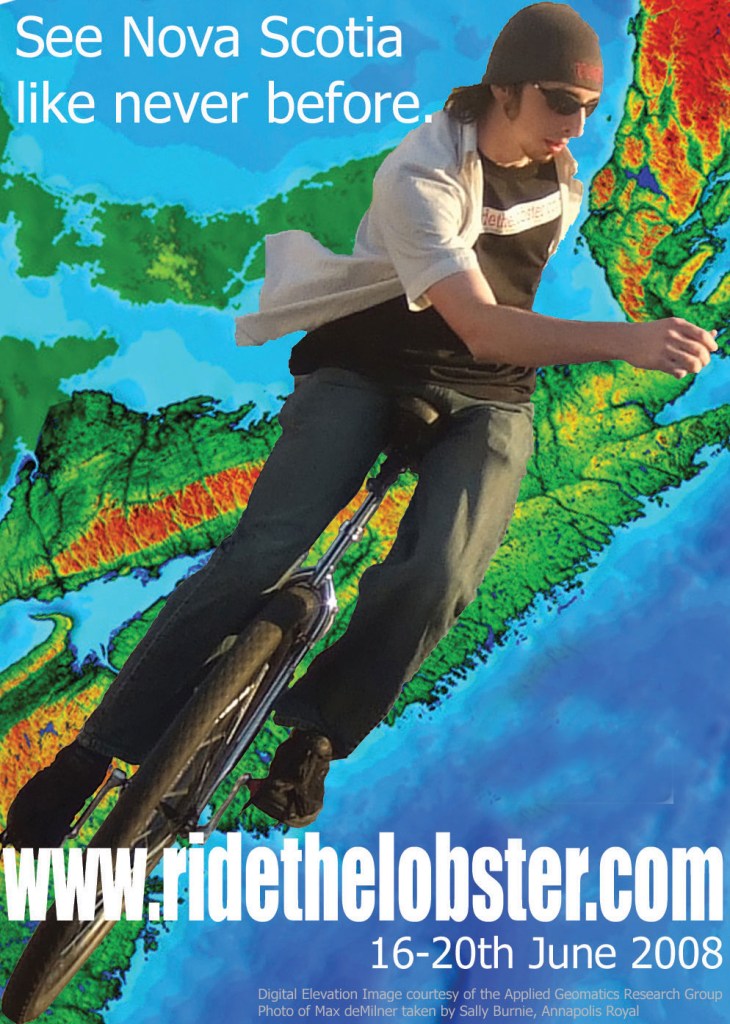
Fifteen years ago, almost to the day, we held Ride The Lobster — the world’s longest unicycle race in history, run in Nova Scotia — 500 miles and 5 days with the support of COGS, AGRG, Britec, the Government of Nova Scotia, and many, many other groups and individuals. Heather LeBlanc, Andy Cotter, Nathan Hoover, Brian Reid, and Bob Maher were instrumental in believing in this wild adventure and in convincing others to join. Max deMilner’s (Unicycle Max) New England trip triggered the idea.

Starting next week, Anne and I enter the Parrsboro International Plein Air Festival (PIPAF) alongside 28 talented artists across North America. This is our third juried entry into this prestigious event. Our painting colleagues are world-class. Not only are we in awe of them but are honoured to be participating with them.

Immediately following PIPAF, we embark on FootstepsEast (FSE), our 5,000 km tenting and painting trip through Nova Scotia, New Brunswick, Quebec, and Ontario to Lake Superior, and back. For two months, we log our journey that culminates in an exhibition of 40+ original works from our trip at the Teichert Gallery in Halifax through September.

The next few months will be hectic but exciting. Yes, this time of the year holds immense significance for me.

Acknowledgments

To Bob Maher for his continued moral support and geographic advice. To Anne for both tagging along and leading the way. To the many artists who send their best wishes and who will follow us on our journey. To those at the Teichert Gallery who believe in us. To all those who helped make Ride the Lobster work many years ago.

Posted in Event Review

SOOF presentation and more

Nina Newington made a presentation to Middleton Town Council on Monday evening; asking council to send a letter to Premier Houston, asking him to pause all harvesting and road-building activities in forests over 80 years old on Crown Land in Annapolis County until such time as 20% of Nova Scotia’s lands have been permanently protected.

Besides Nina, there were fourteen members of SOOF (Save Our Old Forests) in support of the motion. It was interesting to see the reaction of Council to the amount of clearcutting in the county over the last twenty years.

This prompted the following thought. At COGS in Lawrencetown, we have been providing training in both GIS and Remote Sensing since the early ‘80’s. It should be possible, in collaboration with the Provincial Government’s Department of Natural Resources, to provide detailed maps of changes in the forest cover and type, over the last forty years. This information could be correlated with changes in wildlife populations, forest fires, and other human impacts on the landscape ecology. Another contribution would come from citizen science.

Tuesday, we dropped into Lawrencetown Library for one-on-one technical support. My issue was to fully understand the difference between password and passcode.

To allow me to transition smoothly between my iPad and my iPhone. Greg was able to talk me through the subtleties of the technology. Heather’s issue was running out of space between her mobile phone and the cloud.

This intergenerational support is even more critical with age. The world of Google continues to intrude into our daily routine.

Acknowledgements

Thanks to Nina for a succinct and clear message on the state of our Old Forests. Thanks to Greg for his technical advice. Thanks to the Middleton Council for reminding me of the technology tools available at COGS. We will not manage our landscape effectively, without this detailed geographic knowledge and technology.

References

Save Our Old Forests (SOOF) newsletter, June 4, 2023.

Dr Frank W. Morse Memorial Library, Lawrencetown, One on One Tech Help, Annapolis Valley Regional Library.

Postscript

Edward sent me a link to the Canadian Interactive Wildland Fire Information Interactive map, via his wife, Anne.

https://cwfis.cfs.nrcan.gc.ca/interactive-map

and in Quebec. where they are about to enter their 5,000 km plein air painting journey “FootstepsEast” (read upcoming blog post).
https://sopfeu.qc.ca/en/maps/

Posted in Event Review

Reading where we live

In preparation for the EBLES event in July, I checked my personal library of local authors.

I would be happy to share these titles, listed below, with any interested reader. The only ones missing are by David Manners and they should be available from the local Library. Gaspereau Press in Kentville has a wide selection of these attractively bound books.

Harold Horwood, 1987, Dancing on the Shore: a celebration of life at Annapolis Basin, McClelland and Stewart.

Harold Horwood, 2003, Cycle of the Sun: a five part-poem, Gaspereau Press.

Geoff Butler, 2020, Lullabies for Seniors, Granville Ferry.

Ray Cronin, 2022, Alan Syliboy, Culture is our Medicine, Gaspereau Press.

David Manners, 1941, Convenient Season, Dutton.

David Manners, 1943, Under Running Laughter.

Gary Saunders, 2015, My Life with Trees: a Sylvan journey, Gaspereau Press.

Gary Saunders, 2022, Earthkeeping, Love notes for tough times, Goose Lane.

Soren Bondrup-Nielsen, 2014, Merging, Gaspereau Press

Donna E. Smyth, 1999, Running to Paradise: a play about Elizabeth Bishop, Gaspereau Press.

Donna E. Smyth, 2003, Among the Saints, Roseway Press.

Dick Groot, 2012, Come from Away: Artists of Minas Basin, Light Through Studio

Dick Groot, 2018, Closure: A Photographic Eye on an Old Economy.

Dick Groot, 2021, From Kodak Brownie to Smart phone: my journey in photography, ArtCan Gallery, Canning.

Sandra Barry, 2011, Elizabeth Bishop: Nova Scotia’s ‘Home made’ poet, Nimbus

Sandra Barry and Laurie Gunn(Eds), 2013, Echoes of Elizabeth Bishop, Gaspereau Press.

Harry Thurston, 2004, A Place between the Tides, Greystone.

.Harry Thurston, 2005, The Sea’s Voice: An anthology of Atlantic Canada Nature Writing, Nimbus

Harry Thurston, 2009, Animals of my own kind, Signal.

Harry Thurston, 2015, Keeping Watch at the end of the World, Gaspereau.

Ernest Buckler, 1952, The Mountain and the Valley, McClelland and Stewart.

Ernest Buckler, 1963, The Cruelest Month, McClelland and Stewart.

Ernest Buckler, 1968, Ox Bells and Fireflies, McClelland and Stewart.

Ernest Buckler, 1977, Whirligig, McClelland and Stewart.

Claude Bissell, 1989, Ernest Buckler Remembered, U of T Press.

Peter B. Wyman, 2021, Six Friends

Peter B. Wyman, 2022, Iceland: a simple saga.

Peter B. Wyman, 2022, Nymphalis Antiopa

Peter B. wyman, 2022, Crossing Thames

All publications by Cardigan, Little and Crow Publishing, Annapolis Royal.

Available as a set from local bookstores.

Rachel Brighton, Bridgetown.
The Nova Scotia Policy Review
December 2007 Vol1:3
September 2008 Vol 2:2 Politics, Culture and Justice
December 2008 Vol 2:3
March 2009 Vol 2:4
October 2009 Coastlands, The Maritime Policy Review: an ethical look at agriculture. Vol 3:1
Spring 2011 The Maritime Policy Review, Feast to Famine, Vol 4:1

Posted in Event Review

COGS Student Presentations: Part 2

After spending two days at COGS, I was very conscious that I had not provided readers with the details on the presentations e.g. student name, sponsor, program, topic and the online presentation. Fortunately, Dave MacLean was able to give me the necessary link (bit.ly/COGSPrjs2023 or student-presentations-2023-cogsnscc.hub.arcgis.com/). He has contributed information included in this blog post.

LIST OF AWARDS

Esri Canada award: Gabriel Herrera
– to a student making innovative uses of the remote-sensing side of ArcGIS Pro’s capabilities

Esri Canada award: Cindy Lu
– to a Geospatial Data Analytics student engaged in the application of the data analysis capabilities of Esri’s technology

Esri Canada award: Emma Hawley-Yan
– to a GIS student making innovative use of Esri technologies

GeoNova Summer position at AGRG: Alex Moore
The inaugural GeoNOVA Student Summer Position at AGRG

Esri Canada Centre of Excellence award: Francois d’Entremont
— Part of the Esri Canada Centres of Excellence program’s Student Associate Award

James Doig Award: Alex Moore
— sponsored by GeoNOVA and the Doig family, to a graduate entering the Acadia Joint Masters of Science in Applied Geomatics

Esri Canada GIS scholarship: Rachel Godinho
— software (ArcGIS Pro, ArcGIS Online, StoryMaps…), training material (including instructor-led), eBooks, & networking opportunities

Some “Thank yous” from Dave MacLean

  • Patti&Monica for coffee
  • Recreational attendees – for listening; for your input & for your questions [yes, you two are two of these!]
  • Sponsors – for ideas around relevant & interesting projects; thank you for engaging our students
  • Soon to be grads – for your innovative and insightful investigations into project ideas and your support of others. Stay in touch. All the best in your careers!!

Thank you both, Bob Maher and Edward Wedler, for your history and all that you continue to do “with our students in mind”. A tenet I’ve pressed for my 20+ years is “flexibility (of learning styles, of backgrounds, of program content) for students”.

Thanks, Dave MacLean, for the additional information. Thanks too, to the award sponsors.

Posted in Event Review

COGS student presentations

David MacLean invited both Edward and myself to attend two days of final project presentations from students in the various programs at COGS. I attended in person. Edward attended online from Eastern Passage. There were concurrent sessions in the AV room and the Board room at COGS, facilitated online by Dave and Darren MacKinnon.

(Left) In-person attendance in Lawrencetown: Bob Maher, Monica Lloyd, Dave MacLean
(Right) Remote attendance in Eastern Passage: Edward Wedler

This post-COVID experience was very different from my recollection of final projects at COGS. The focus was on the technology. It was difficult to discern which students were graduating from the different programs, which students were resident at COGS, and which students were online to COGS.

Regardless, the technical standards remain high. It was a pleasure to be in the company of the next generation. It was good to see the continued sponsorship by local organizations, e.g. MapAnnapolis, Southwest Nova Biosphere Reserve and AGRG; likewise to see old friends: Ed Symonds, Monica Lloyd, Darren MacKinnon, and Tim Webster.

From a program perspective, I noted that COGS intends to offer Forest Geomatics and Biometrics Technology in September 2023.

As a Geographer, with a life-long interest in the Geographic Sciences and GIS technology, I had a long list of questions for the NSCC.

  1. Does COGS still have three departments: Surveying, Cartography/ Planning, Computer Programming?
  2. Does COGS offer post-graduate certification as well as post-high school certification?
  3. Given access to the technology, it appears that students can be located on any NSCC campus in Nova Scotia? Anywhere in Canada, and beyond? Is there a residency requirement?
  4. Given the online access to technology, all the presentations from the two days can be shared with the world and with stakeholders. That would be excellent.
  5. Clearly, we are moving from a program model to a universal online individual model. Does that impact our ‘sense of place’? Does that impact our sense of community mapping? What challenges and opportunities arise?
  6. What happens to the geographic science behind the technology?
  7. Are we still connected with the technology providers, e.g. Esri, Esri Canada, PCI etc.

I would welcome conversations on all the above questions, perhaps in a format taking advantage of the communication technologies used here.

Edward experienced the two days online. He likely will have his own perspective on the presentations, and the ensuing questions (see below).

Final observation.

There are elders in the community. They represent a valuable and potentially valued resource. Let’s not forget our history, or sense of place.

References

I have requested that Dave MacLean share the links to the student presentations.

Acknowledgements

Thanks to Dave for the invitation to both Edward and myself. Heather attended the second day. I appreciate her input too.

Postscript: Edward

Attending COGS presentations online via Microsoft Meet was a great way to enjoy these technical projects. I viewed these on my modest Lenovo T8 tablet. The user interface was intuitive. I could zoom in/out on maps or charts as needed. The chat feature was handy in order to ask questions, get involved and share links. I was excited when external participants joined in such as with the Heritage study. I would have valued a one-minute introduction for each student presenter to have me appreciate their background and interests. Students could provide the host this introductory material. Maybe next time.

 My online vexperience shows that this type of COGS event can easily be scalable and is a great way to have COGS interface with industry, government, and academic partners no matter where they are. I have attended COGS year-end presentations on campus in the past and found today’s presentations equally engaging and professional. Now, if only we can share the coffee and cookies online.

Thank you Dave MacLean for setting this up and inviting former colleagues. You continue to tirelessly explore the boundaries between COGS and community. Bob has some valid points, questions and opportunities for NSCC to open up dialogue and reflect on its programs.

Posted in Event Review

EBLES Meeting

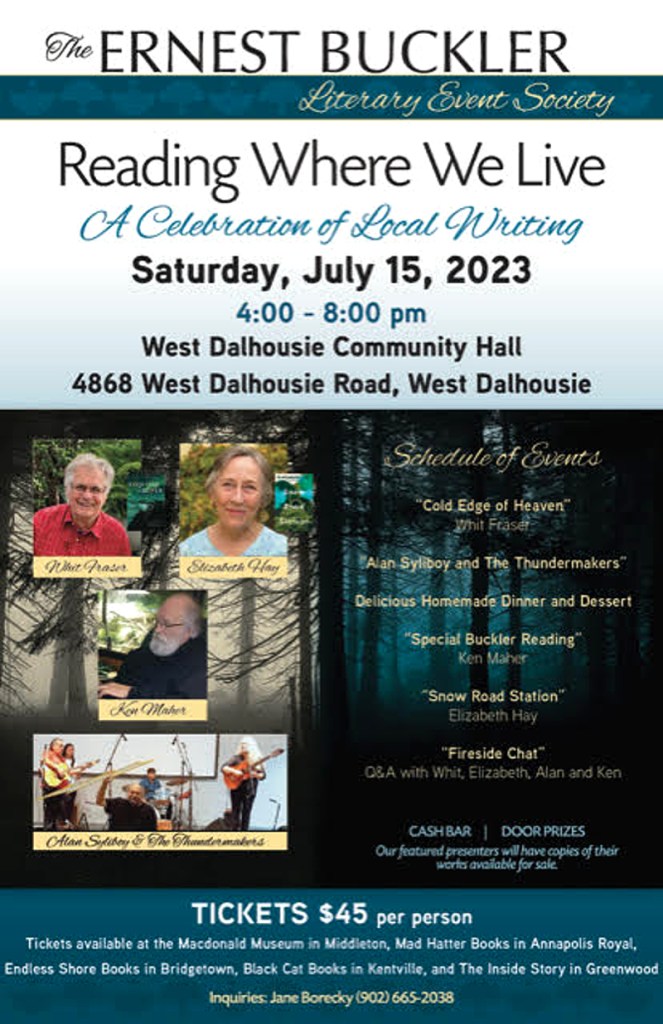
Saturday, May 19, 2023, Anne Crossman called a meeting of the Ernest Buckler Literary Event Society (EBLES) committee for 10 am at the West Dalhousie Community Hall. In attendance, besides Anne and myself, were Jane Borecky, John Montgomerie, and Heather Stewart (see also previous post “In Praise of Libraries“)

The purpose of the meeting was to discuss the budget, program, and hall facilities/ catering with Julie Hannam, for the event scheduled for Saturday, July 15, 2023, 4- 8 pm at the Community Hall.

For Heather and me, it was an opportunity to travel down memory lane. In 1980, I accepted a teaching position at the Nova Scotia Land Survey Institute in Lawrencetown (now COGS). Heather was a stay-at-home Mum with two young boys. We rented a house from Bill O’Neill (#4557), known as the Buckler house in West Dalhousie. I commuted to Lawrencetown.

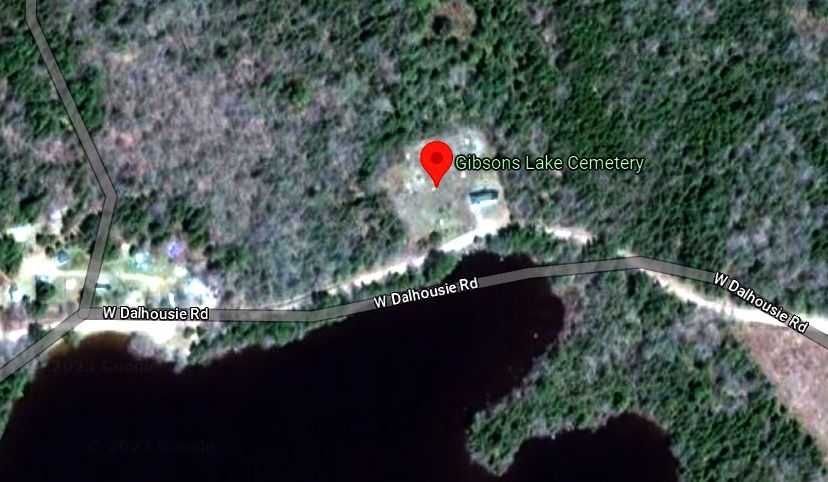
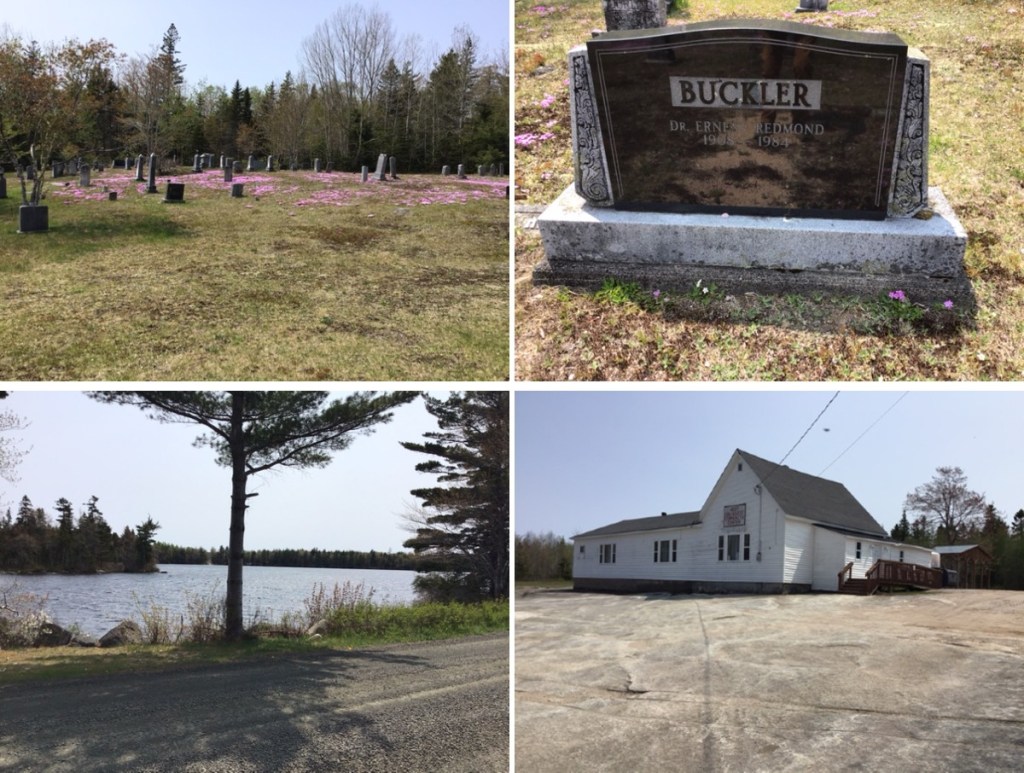
Before the EBLES meeting Heather and I went for a drive to Gibsons Lake Cemetery. In the graveyard, we found Buckler’s grave.


For those not familiar with the geography, West Dalhousie T-junction is 15.5 km up Morse Road on South Mountain, from the turn-off on Hwy #201, just east of Bridgetown. At the T-junction, turn right (towards Annapolis Royal) on the old military road; a distance of 6.6 km. Heading East, the graveyard is on the right, Gibsons Lake on the left.

If you turn left at the T, the community hall is 1.5 km on the right-hand side. If you continue on this road, eventually you will hit Highway #10, south of Middleton.

On July 15, we will be celebrating the relationship between place (or geography) and writing. The objective of EBLES is to encourage ‘reading where we live’ and celebrate local writing.

1) general view of the graveyard. Pink flowers are phlox. 2) headstone
3)Gibsons Lake 4) West Dalhousie Community Hall

We look forward to seeing you in West Dalhousie this July. The event will feature the writing of Whit Fraser, Elizabeth Hay, Alan Syliboy, and Ken Maher reading from Ernest Buckler.

Tickets will be on sale at local bookstores, or by contacting a member of the EBLES committee in June.

Acknowledgments

Thanks to John, and Jane for hosting the lunch. Anne and Jane for bringing this event together. Heather shared the memories. Edward added the graphics. Bob took the photographs.

Posted in Event Review

Saving our Estuary

On Wednesday evening at St Luke’s church in Annapolis Royal, the Clean Annapolis River Project(CARP) hosted a public presentation on two years of estuary monitoring.

The event included four presentations:

Kyle vandertoorn. Overview of CARP
Tim Webster (AGRG). Hydrodynamic modeling
Leah Creaser. Beach Seining
Keeler Colter. Fish Tagging (Striped bass, Atlantic sturgeon)

The audience numbered around thirty. The backstory was the history, from a proposal for Heritage River status to the causeway and the demise of the tidal generating station.

To move forward, it is critical that the watershed is considered in relation to existing land use, water quality and its impact on fish species that use the Annapolis River. This event complemented the Saving our Forests event from the previous Saturday (see Saving Forests). The difference was the size of the audience and that it was less political in nature.


Tuesday, Heather and I decided to walk the Peter Point trail in Kejimkujik National Park. The trail was dry (free of snow). We did not see a soul. The Visitor Centre was closed at this time of year. It did encourage me pull off the shelf, Dan Rubinstein’s Born to Walk.


Sandra Barry sent me an email. Geography as Generosity : Robert MacFarlane on Barry Lopez. In Orion Magazine, March 30, 2023.

Robert MacFarlane attunes us to a guiding principle in Barry Lopez’s work ‘how the rendering of landscape with particular nuance and specificity strengthens connection to each place and counteracts the indifference that can emerge from nameless abstraction.

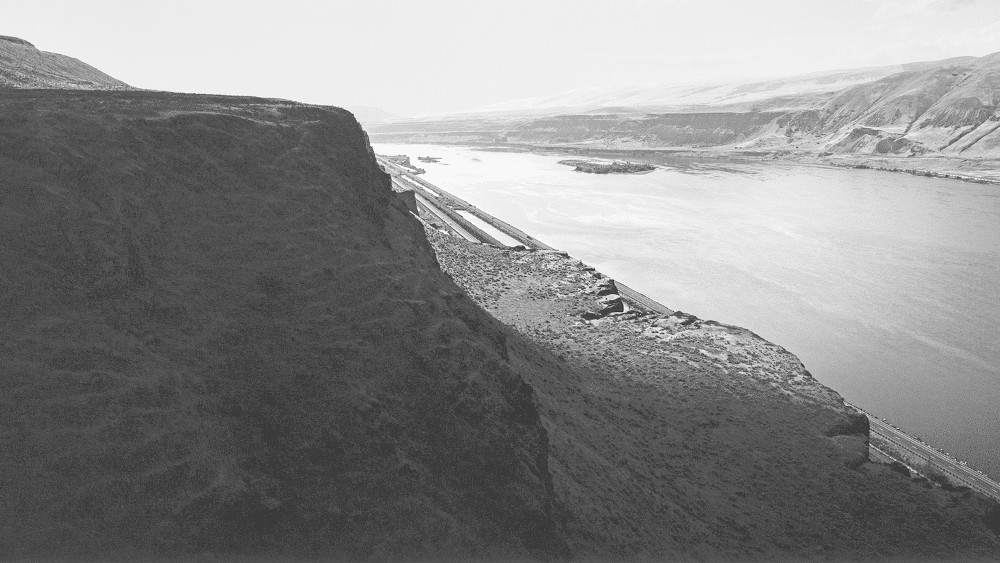
[from Orion Magazine] Terry Toedtemeier Born Portland, OR, 1947 – died Hood River, OR, 2008 // View from the Rimrock below Fairbanks Gap, One Mile West of Celilo Drawbridge, Columbia River Gorge, Oregon, 1987

Acknowledgements

Heather listened to the presentations, and shared the walk. Sandra shared the Orion link. Edward put it together with the graphics.

References

Dan Rubinstein, 2015, Born to Walk: the transformative power of a pedestrian act, ECW Press.

Robert MacFarlane, 2023, Geography as Generosity, Orion Magazine, March 30, 2023.

POSTSCRIPT

Small tidal estaury emptying into the Annapolis Basin near The Old Post Road, with Digby on the distant shore. Watercolour by Edward.

Posted in Event Review

Saving Forests

On Saturday, Heather and I attended the Save Our Old Forests (SOOF) meeting at the Bridgetown legion, organized by the Arlington Forest Protection Society.

Speakers included a moving welcome from the Mi’kmaq First Nations and by biologists, Donna Crossland, Bob Bancroft, and Rob Bright. It included a free lunch and a silent auction. The estimated turnout was around one hundred and eighty. It included members of municipal council and Carman Kerr, our local MLA. The Master of Ceremonies was Larry Powell, local reporter and writer.

The fundamental concern was old forests and the cutting on crown land. To address these issues in Annapolis County, to my mind, we need two large wall maps in the Municipal Board room at Annapolis Royal.

  1. Land ownership in Annapolis County
  2. Forest Ecosystems in Annapolis County

I can remember sitting in the COGS library and looking at the Church map. Well, we need current maps, at a similar scale, for the ownership and ecology for the county.

We have the Human Resources. COGS has turned out some excellent cartographers. Have you seen the maps produced by Marcel Morin, Lost Art Cartography for the Grand Pre area (see blog post “Spring Forward“)? The maps could also show the topography and the underlying geology.

All of us drive along highway #101 and notice the beech hangers along the face of North Mountain or, after a snow fall, the clearcuts along the face of South Mountain.

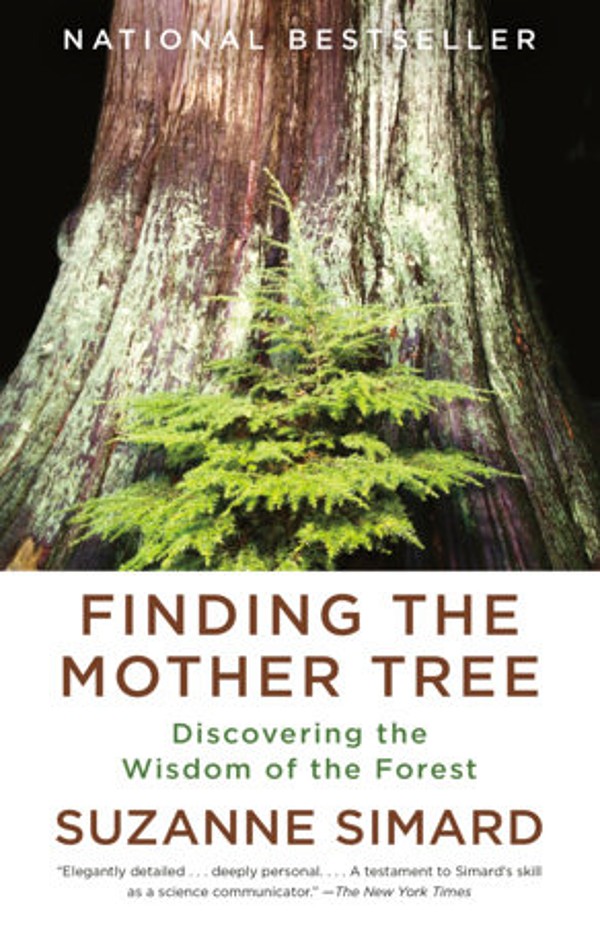
From my bookshelf, I can find seminal texts on Bioregionalism by Gary Snyder and Wendell Berry or Suzanne Simard’s, Finding the Mother Tree: Discovering the Wisdom of the Forest.

If we want ecological planning, maps of land ownership and ecosystem type are critical especially when connected to a modern GIS system. It would allow elders (from Mi’kmaw and settlers ) for example to speak on behalf of the old forests.

Acknowledgements

The Arlington Forest Protection Society for hosting the meeting. To the invited speakers.
Edward added the graphics.

References

Suzanne Simard, 2021, Finding the Mother Tree, Penguin Canada.

Gary Snyder, 2016,The Etiquette of Freedom, Penguin Random House

Gary Snyder (essays), 2020, The Practice of the Wild, Counterpoint Press