Posted in Event Review

Authors among us

Saturday morning, we headed down to the Annapolis Royal library to meet two local authors: Peter Wyman and David Wiseman.

For several weeks, I had been trying to purchase a copy of Crossing Thames by Wyman at the Endless Shores bookshop in Bridgetown (see blog post “Community Economies“).

From the book’s title, I and Sandra Barry wondered if there was any link to Helen Humphreys’ The Frozen Thames, about the river through history and all the times it froze over.

The venue was 11am – 2 pm. There was a small but well-informed audience, friends and neighbours.

It was structured into a couple of readings from Crossing Thames and Old Wrongs, plus a question and answer session on the writing process. Both authors had spent time in England and Nova Scotia. Both authors started writing for publication in their retirement years.

David Wiseman had an interest in genealogy which is reflected in his work. Peter Wyman has travelled in England, and Iceland and lived in Nova Scotia. This is reflected in the short stories.
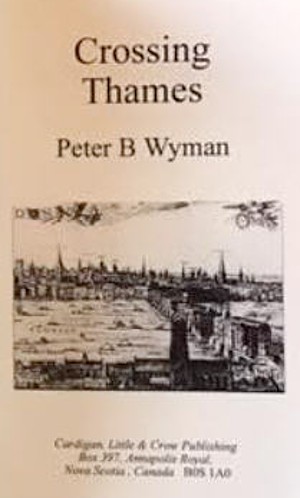
As someone who has entered the world of ‘blogging’, their comments on the writing process were both revealing and interesting. I look forward to Crossing Thames. The level of historical detail intersects well with my personal knowledge of London’s geography.

It is intriguing to appreciate the ‘authors among us‘. This connects well with our ongoing planning for the Ernest Buckler Literary Event Society (EBLES) planned for July …

… with contributions from (images left to right) Whit Fraser, Elizabeth Hay, Ken Maher and Alan Syliboy. (Whit Fraser image from Boulder Books)

One of the delights is attention to detail. Crossing Thames is published in the same small book format. The covers are colour-coded. Crossing Thames is dark blue.

In Wyman’s words:
Crossing Thames takes the reader on a jaunt over the tidal waters of this Medieval river, where one becomes unfixed, suspended on a bridge between the seductive shadows of Southwark and the Puritan lights of London.’ P.87.

David Wiseman launched Old Wrongs, the third in the Lydia Silverstream mystery series.

Acknowledgements

Heather shares my literary interests. David Wiseman and Peter Wyman proved entertaining hosts at the book launch and Question/Answer session. Edward added the graphics to the blog.

References

Peter B. Wyman, 2022, Crossing Thames, Cardigan, Little and Crow Publishing.

David J. Wiseman, 2022, Old Wrongs, Askance Publishing.
Posted in Art, Event Review

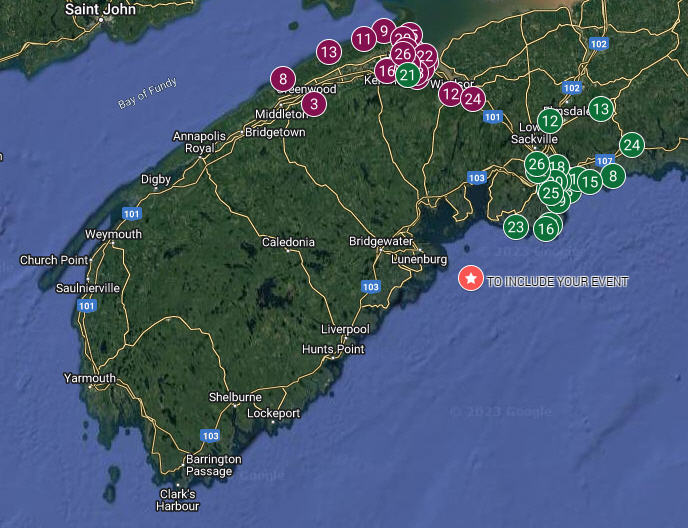
Plein Air Paint-Out Map for 2023

Our Nova Scotia plein air art map grows with community user input. It currently has 19,000+ map views.

The map shows paint-out locations for the upcoming, outdoor (en plein air) painting season.

According to Plein Air Magazine, the plein-air painting movement is the fastest-growing movement in the art world today.

Editor, Eric Rhoads, calls it “the new golf”. Many tens of thousands of artists, worldwide, are involved in this movement.

Anne and I have founded two groups in Nova Scotia (Plein Air Artists of the Annapolis Valley, PAAAV in 2016, and Plein Air Artists HRM, PAAHRM in 2019).

We participate in a third group, Halifax Urban Sketchers, HUSk, and have collaborated with the Nova Scotia Association of Architects to hold sketch-outs.

The map, and associated schedules, keep member artists, event organizers, art lovers, collectors, residents, and out-of-Province tourists aware of what, when, and where events are held. We have had visitors from Europe, across Canada and the USA join us based on this knowledge. Last year I created an icon on the map to allow others to place their event on the map. It’s crude (using Google Forms) but it works.


I use the Google Map platform because it is popular, and well-integrated with its suite of products (Google Sheets, Google Docs, Google Forms, Google Calendar, YouTube, etc.). Such a platform forms the basis of another map I am building for “Footsteps East”.

Our Footsteps East map tells the story of our 6,000+ km tenting and painting trek that Anne and I are undertaking from Nova Scotia to Lake Superior, and back. This organic, interactive map grows with text, and links to YouTube, Spotify, a Calendar, and sketches as we camp at each paint-out site. Anne looks after Instagram, Facebook, and Google Calendar.

On a final note, I’d like to say there are a number of improvements that would make such maps more valuable and scalable (and be monetized). If there is anyone out there who’d love to work with me on this let me know or refer me to some Google Map developers.

References

Link: Plein Air Map (tinyurl.com/PleinAirMap)
Link: 2023 Paint-Out Schedule PAAAV (https://bit.ly/3ZvR5Zz)
Link: 2023 Paint-Out Schedule PAAHRM (https://bit.ly/3ZvR5Zz)
Link: “Footsteps East Launch Pad(https://www.wedlerfineart.com/page/36519/footsteps-east-launch-pad)

Acknowledgments

Dr. Bob Maher as our Footsteps East Geographer Mentor and Advisor
Jesse Millican as our Footsteps East field video and audio recording Advisor
Techert Gallery as our host venue for the Footsteps East original art exhibition, September 2023
A global community of artists supporting and following us on our Footsteps East trek.

POSTSCRIPT
A recent plein air oil painting created by Anne in Florida.

Posted in Event Review, New thinking

The Hope of Geography

Yesterday, we attended the hospital information session at the Middleton Fire Hall. There had been various rumours in the media about closure of the Emergency Room (ER). This was one of three sessions. While the emphasis was on the different services available through the Middleton hospital. My concern was the lack of family doctors in the region. With a shortage of family doctors, many citizens end up at the ER.

After the information session, I met with Carman Kerr, MLA Annapolis County, at his office. I wanted to understand his perpective, representing Annapolis County.

This gave me the opportunity to question the provision of doctors in the Lawrencetown area. I was well aware of the efforts of Brian Reid, Lynne Roscoe and Kurt, the pharmacist to attempt to find a family doctor for the village. Carman confirmed my understanding,


In the afternoon, I attended a meeting at COGS on Sustainable Development goals and Nova Scotia Quality of Life.

This included a panel discussion with diverse, active members in the community. While this presented a different definition of Sustainable Development, it offered insight into community outreach.

Driving home, I listened to CBC Ideas in the Afternoon. The topic was Wallace Stegner, The Geography of Hope.

It was a documentary on his writing and life, and his role in documenting the disappearing west, especially around the Cypress Hills.

This set off the following train of thought. Less than a week ago, we returned to rural Nova Scotia. In order to understand the present initiatives in the Annapolis Valley, we attended the three meetings: hospital information session, MLA, Sustainable development goals.

My reaction. I turned the Stegner quotation upside down. Instead of ‘geography of hope,’ let’s talk about ‘Hope of Geography’.

Individuals come to live in the Annapolis Valley because of the hope of Geography. The landscape offers a microcosm of variety: fishing, forestry, agriculture plus the opportunity to interact directly with the natural environment.

In addition, we have an education institution here dedicated to the geographic sciences. It is not only possible to enjoy the landscape diversity but also to obtain an education in the relevant technologies and sciences.

If we package up this story, work together, we can attract family doctors who would want to be members of this larger community.. There is an alternative to the ‘geography of Hope’. It is the HOPE OF GEOGRAPHY.

Acknowledgements

For Heather and myself, it was a busy day. And yet we need to evaluate the sustainability of our Geography. Edward, thanks as always for your contribution.

POSTSCRIPT
Here is the Geography of “Last Hope Camp” as noted in a previous blog post.

References

CBC Ideas in the Afternoon, February 6th 2023, Wallace Stegner: The Geography of Hope.

Posted in Event Review

Musique Royale

Last night was a warm, drizzly evening. We watched CBC News. Colleen Jones interviewed Peter van der Kloet about his efforts to restore the habitat of Monarch butterflies in the Annapolis Valley.

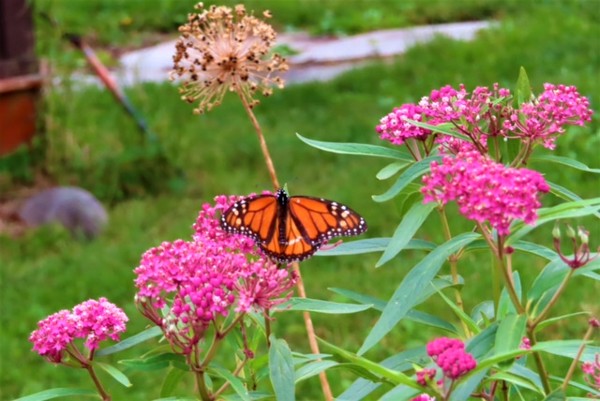
Debby Hebb saw a Monarch butterfly today beside the boardwalk in Annapolis Royal.


On Tuesday, we arrived at Dawn Oman’s Art Gallery in Bridgetown at 7 pm. It is a spectacular venue, combining the restored church with Dawn’s colourful Northern art. Last night, it was the Best of Boxwood, featuring Chris Norman, Catherine McEvoy, Sean Healy, Eamon O’Leary and Janelle Lucyk. It was an excellent, well-attended concert.

I am looking at their schedule for this week: Shelburne, Yarmouth, Bridgetown, Tatamagouche, Iona and Dundee. In my previous blog (Mourning Cloak), I mentioned ‘third place’, neither home nor work. The Oman Art Gallery is a perfect ‘third place’, providing for “the creativity of community“.

Earlier in the day, I had picked up a second Peter Wyman book, “Six Friends“. It is a short story about an attack on Port Royale, in the early eighteenth century, from a Mi’kmaq perspective.

At the concert, I swapped the Wyman’s books with Sandra Barry; for a couple of back issues of The New Yorker. I look forward to her feedback on the two books of short stories.

Meanwhile, from Debby Hebb, I received two photographs of a Monarch butterfly and a blue racer snake.

Here, I believe, is a Blue Racer Snake she saw on the trail a couple weeks ago.

It seems that these ‘third places’ are alive and well in rural Nova Scotia.

Postscript

Just imagine if we had similar venues for our writers, artists and dancers. Musique Royale has been here for thirty-seven years! Here is a sample of two of Musique Royal’s musicians performing (virtually) in Annapolis Royal.

Acknowledgements

Heather joined me at the concert. Sandra Barry shared her literary interests. Debby Hebb forwarded the photographs. Edward added his magic.

References

Musique Royale, A Festival of Music in Historic Nova Scotia, Thirty-Seven Years, Best of Boxwood, 2022, August 2, Bridgetown. Dawn Oman Art Gallery.

Peter B. Wyman, 2021, Six Friends, Cardigan, Little and Crow Publishing, Annapolis Royal

Posted in Creative writing, Event Review

Road Trip/ Landscape Painting

Last week, we held a meeting of the Ernest Buckler Literary Event Society (EBLES) committee at Anne Crossman’s, under the linden tree. We discussed plans for the next event, likely in West Dalhousie, 2023.

Jane Borecky returned Roger Deakin’s Waterlog: A Swimmers journey through Britain. Later at home, I checked through the index, and found and re-read #23 Orwell’s Whirlpool. Deakin describes his visit to Jura.

Whirlpools and wild places are inextricably linked with our capacity for creativity“, as Orwell demonstrated when he chose to come to Jura to write his last novel.

Meanwhile, I had finished reading George Orwell’s Selected Writings. Besides excerpts from his life in Burma, Spain and Marakesh, it includes essays on the English class system, Boys’ Weeklies and Charles Dickens.

We headed up to New Glasgow on Friday. I was happy to find the latest issues of Canadian Geographic and Saltscapes. Under Canadian Geographic, People and Culture, five Canadian artists address increasingly threatened landscapes.

A century after the Group of Seven became famous for an idealized vision of Canadian Nature, contemporary artists are incorporating environmental activism into work that highlights Canada’s disappearing landscapes.”

I forwarded the link to Edward and Anne Wedler. Meanwhile, Patrick emailed me a link to the Radical Landscapes exhibition in Liverpool, UK.


On Saturday, we took a road trip from New Glasgow to South Victoria, through Oxford, Pugwash, Tatamagouche, River John and home.

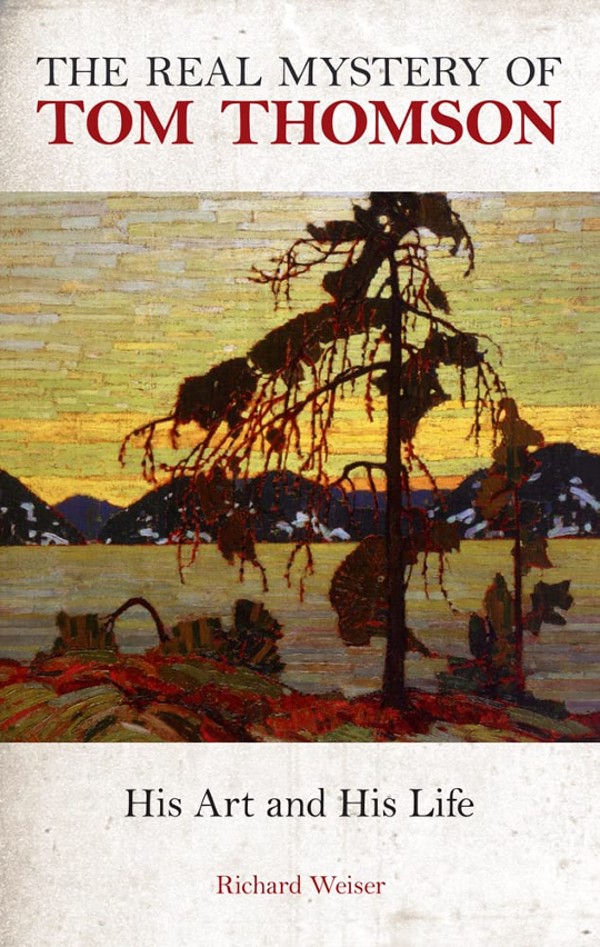
We stopped at Masstown market. Again, I found a book; The Real Mystery of Tom Tomson: His Art and His Life. Again, I forwarded the information to Edward. I thought it would be relevant to their journey, following in the footsteps of the Group of Seven.

As we drove from Oxford to South Victoria to Pugwash, we noticed significant changes in land use, both the forestry and even the roadside weeds. It would be a fascinating geographical study to map the changes in the demography and the landscape. Since we had both Heather and John Stewart in the car, we had an ongoing commentary on the changes that have taken place in the last fifty (plus) years.

Eventually, we arrived in River John for Sandy Stewart’s (Heather’s sister) birthday party. Sandy had been busy painting a new sign for the community of Melville.

Here are my questions.

If you are an artist painting landscapes, how do you separate your art from your life?

The same question applies to writers.

How do you separate your writing from your life? This certainly applies to George Orwell. I think the same applies to Roger Deakin. Hence, once back home, I pulled Roger Deakin’s book off the shelf, Notes from Walnut Tree Farm.

Acknowledgements

Heather and John Stewart accompanied me down memory lane. Sandra Stewart provided a painting of her place. Edward and Anne’s planned adventure brought the Group of Seven into focus. Plus a contribution from Patrick Maher (this week) at a conference in Ambleside, the Lake District.

References

Roger Deakin, 2000, Waterlog: a swimmer’s journey through Britain, Vintage Books.
Roger Deakin, 2008, Notes from Walnut Tree Farm, Penguin.
Richard Weiser, 2018, The Real Mystery of Tom Tomson, Dragon Hill.
George Bott (Ed), 1958, George Orwell: Selected Writings, Heinemann

Postscript

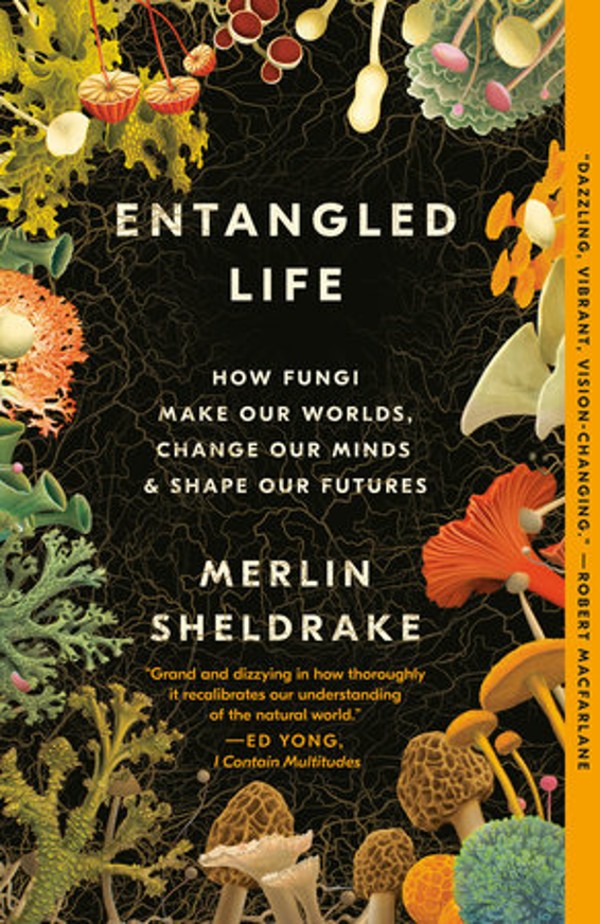
Just started Merlin Sheldrake’s book, Entangled Life: how fungi make our worlds, change our minds and shape our futures.

Merlin Sheldrake, 2021, Entangled Life, Random House.

Posted in Art, Event Review

Brush with Nature

Kings County is large — stretching from the Bay of Fundy and Minas Basin to the deep interior of Nova Scotia. That’s over 2,000 square kilometres of territory.

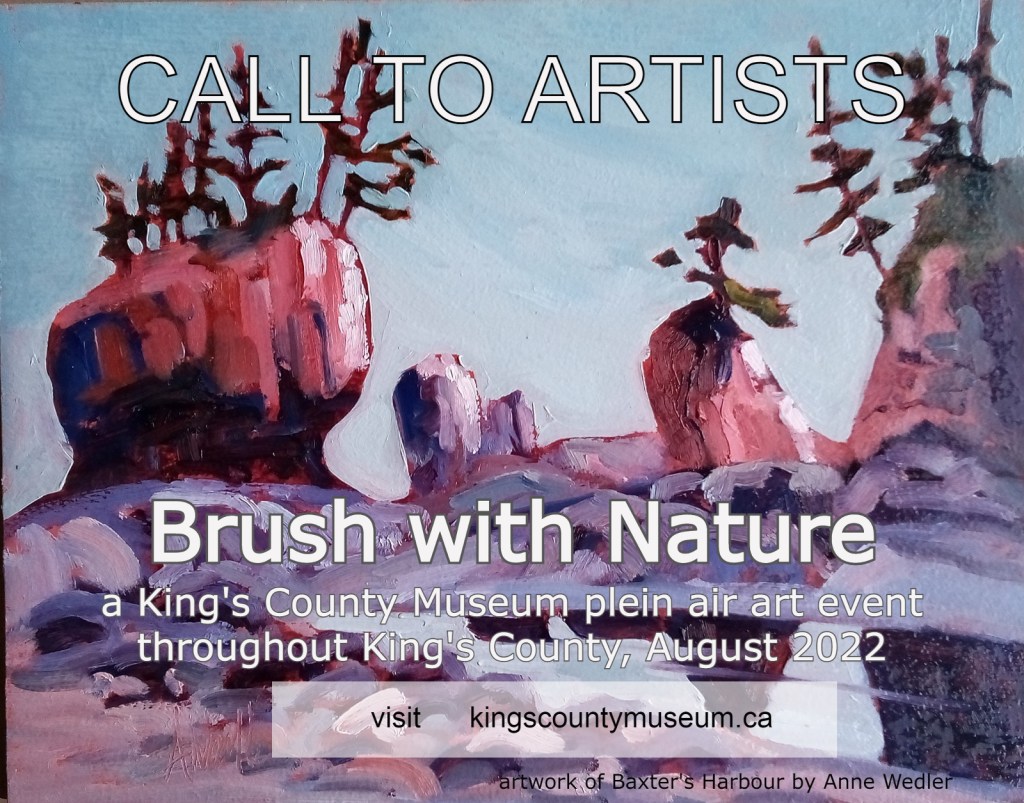
Beginning in August, artists will be spread out across the county painting landscapes as part of “Brush with Nature” — an inaugural event hosted by King’s County Museum.

Anne and I have been collaborating with the Museum in the design and operation of this three-week plein air painting event.

The goal is to support both the museum and regional artists while celebrating the natural and historic features of the County. Artwork will be available for sale, auction and draw.

Any time between the 1-18th of August, artists can paint outdoors, anywhere within the County. We call this the “LONG BRUSH”. On Saturday the 20th of August the Museum hosts the “SHORT BRUSH” at Miner’s Marsh in Kentville. This is where artists will congregate to paint in and around the picturesque marshlands within a 2-3 hour window.

An early “Call to Artists” has already attracted some serious local talent.

Anne and I belong to six plein air art groups, three in Nova Scotia (founding two) and three in the USA (co-founding one), and have participated in many plein air events. We believe Kings County Museum and artists in “Brush with Nature” will have a successful and enjoyable event.


The size of Canada’s Northwest Territories dwarfs Kings County. This, I learned, is the location of Canada’s 44th Remote Sensing Symposium, 19-22nd June, 2023.

LINK to Yellowknife promotion.

How time flies. I recall the early days of these RS conferences when conference images were printed out via typewriter overwriting symbols. Now we have hyperspectral imaging from drones (UAVs) and satellites delivered to mobile devices that complement GIS and AI systems (I could deliver a stand-up comedy routine on these changes).

The more I learn about co-chair Chris Hopkinson, professor at the University of Lethbridge and Google Scholar, the more I fathom his teaching and communication skills (he does reveal a sometimes awkward and dry sense of humour). He has built a potent remote sensing program. I could spend (and have spent) hours watching his YouTube Playlists.

Such as his “Airborne Lidar Field Operations Lecture“. Lucky students!

I wish Chris Hopkinson, his colleagues and students, along with attendees from across the country, all the best and much success at Canada’s 44th Remote Sensing Symposium.

While this symposium is taking place I will be preparing for my art trek with Anne, Footsteps East, through New Brunswick, Quebec and Ontario.


Bob kindly sent me a reference to nature writer, Richard Mabey’s audiobook, “A Brush with Nature“. This represents 25 years of personal reflections on nature —  from observational reflections on nature to questions about its relationship with language, art and life.

Acknowledgements
To Bob Maher for his continued encouragement to write about my art experiences and reflections on RS. To Chris Hopkinson for his engaging online videos and promotion of ULethbridge and Canada’s 44th RS Symposium.

Posted in Event Review

Beyond van Gogh

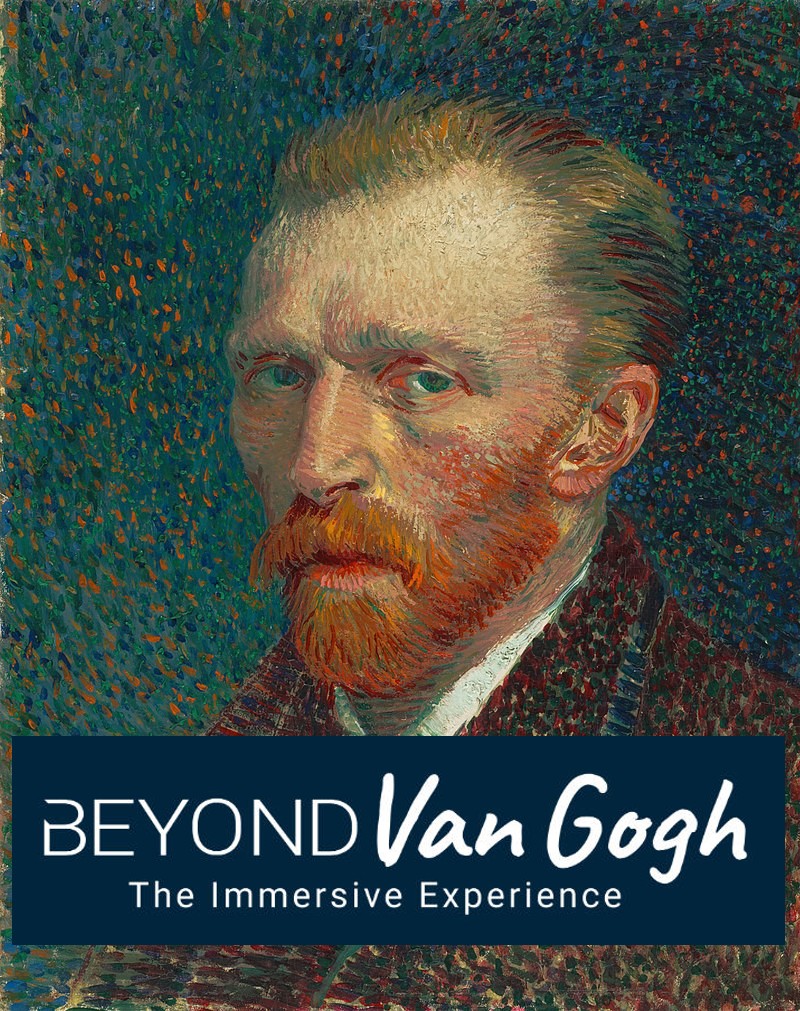
Thursday, Heather and I joined Sandy, Heather’s sister, at the Halifax Exhibition Centre for “Beyond van Gogh.

Sandy had been previously with her students from Kings Edgehill School. My first impression of the building, in an industrial park, was not great.

However, once inside, we experienced three levels of immersion. The first was a focus on Vincent van Gogh, his life and exchanges with his brother, Theo. Various quotations could be viewed through empty picture frames. The second level was a small room depicting a waterfall. The final main hall was a full three-dimensional immersion experience of the themes which were vital to van Gogh’s art. This included scenes from rural life, characters, landscapes, flowers and the starry night. Seamlessly, projected on the walls, floor and ceiling, with accompanying music.

The message seemed clear. Beauty is all around us, especially in the natural environment. A painting is a “still life” within a picture frame.

Waking up the next morning, it was hard to ignore the dawn light, shining on the oak leaves, moving in the wind. or to look up through the skylight to again see the trees, with a backdrop of clouds, moving across the blue sky.

I noticed two other aspects of the exhibition. There was very little intellectualisation of the art. To place it within its historical or geographical context. The emphasis was on colour and movement. There was also little explanation of the underlying projection technology.

At the exit, the gift shop contained many common items, e.g. puzzles, key chains, prints, T-shirts adorned with familiar van Gogh images of sunflowers, corn fields, self-portraits and starry nights.

Afterwards, it was hard to drive back out through the grey, suburban concrete of Halifax — very different geography than the countryside we find in rural Nova Scotia.

Postscript

Saturday, we went to Alan Syliboy and the Thundermakers concert at the Macdonald Museum in Middleton.

It was great to go and listen to live music. We saw friends for the first time in several years. Syliboy’s art and music proved an excellent complement to the van Gogh exhibition.

Acknowledgements

Sandy Stewart for making the trip to Halifax. Heather shared the experience. Edward added the graphics. Congratulations to Jane Nicholson on receiving the Queens Platinum Jubilee Medal for her contribution to the Community.

Posted in Event Review

Lawrencetown Event

Last night, I attended the Plannapolis meeting at the Lawrencetown Fire Hall, hosted by Annapolis County and by Stantec.

Attendance was excellent, with over seventy community members. This was my second meeting, as I also attended the one in Centrelea.

What did I learn?
What questions remain?

The format was similar between Centrelea and Lawrencetown. The only difference was the attendance of Stantec Senior Planner, John Heseltine.

My impression was that the municipal planners would be responsible for the six coloured areas on the map and Stantec would look after the rest of the county. Coloured areas include Cornwallis, Habitation, Upper Clements Park, East End, Bridgetown and Water Supply areas. Also on the map was a large area of South Mountain designated as a ’wind resource’.

Future Use Land Use Map (web LINK)

It was a lively session, with many perspectives from the agricultural community. At one level, it is positive that the province has determined there is a need for a review of municipal planning. On another level, it does beg the question, what has happened over the last twenty-plus years.

A long time ago, there were identifiable planning staff. There was a vibrant planning program at COGS. Certainly, I can recall Nick Lasch, Phil Hore, Mike Donnelly and, more recently, Ed Symons.

Fundamental to the planning process is understanding and mapping the land use. This includes agriculture, forestry and other resources. There was a time when GIS technology was used to provide this baseline information. Is that still the case today?

In Annapolis County, what is the separation between lands managed by the province, (e.g. crown lands) and those managed by the county? Within the county, why is Bridgetown a separate entity, but not Middleton, Annapolis Royal etc? I think the answer, was that Bridgetown found itself in financial difficulty. Should that impact the planning process?

Is the situation in Annapolis County similar or different from Kings County or Queens County? Are there province-wide standards for planning? If you do not know the resource, where and how much, how can you plan?

There should be sufficient residual resources at COGS/AGRG to develop a current county-wide map of land uses. Or does that infringe on the rights of citizens and communities? or COGS?

The citizens have shown initiative and direction with MapAnnapolis, perhaps a somewhat similar approach could be applied to Plannapolis.

Acknowledgements

These are the personal view of a long time, Annapolis County resident, on and off, since 1980. They have been influenced by students and colleagues at both COGS and AGRG. Edward added the graphics. For more details on the current process, check the Plannapolis website.

Postscript

I wonder whether the reaction to ’resource planning’ is a characteristic of rural Nova Scotia. Edward tells me that Beavercreek Winery has been sold, presumably, with the Tavern too. Hope new owners will maintain their investment.

I share with you the large Horse Chestnut tree across the road.

Posted in Event Review

Guided Walk

Yesterday (Wednesday) Heather and I conducted a guided walk through Andrew’s old property from the Hunter organic orchard on Highway #201, to the Annapolis River (see “Times Have Changed” blog post).

The last time we conducted a similar hike was in 1975 in Gros Morne National Park for Black Feather outfitters in Ottawa. On that occasion, it was a ten-day event, including hiking along the Long Range Mountain trail.

This time, it was a three-hour hike for two couples from Ottawa, and a father from Mount Rose (North Mountain). Our objective was to demonstrate the changing ecology from South Mountain to the Annapolis River, as well as the changes in land use over the last twenty years. The land has been used by the Mi’kmaki for a much longer period.

The experience allowed small group interaction. The couples had spent time overseas enjoying other landscapes and cultures.

Heather and I recognized that under COVID conditions we had missed the stimulation of interacting with other age groups and interests. We thank Celes for the initiative, and Abby and her group for their insights and interests.


Today, I attended the Plannapolis consultation at Centrelea. What I found most striking, was the lack of any appreciation of the unique economic opportunity presented by the technology and education at COGS (NSCC’s Centre for Geographic Sciences). I fail to understand why today, GIS technology is not a standard for community meetings. This allows a common understanding of our geography, land use, people and culture.

Second, Abby and her partner met at COGS. Imagine how many young professionals we have graduated from Lawrencetown since 1980 (The year when I started teaching there). It seems obvious to me that this represents both an educational and an economic opportunity — and opportunities lost if not exploited.

Acknowledgements

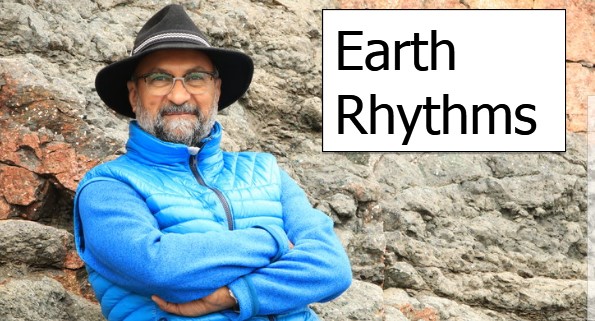
Heather shared her knowledge and ‘sense of place’ on the guided walk. Rob and Sinead gave us permission to conduct the walk on their property. Pierre at Ironworks for the excellent Hunter Brandy. Edward added the graphics. Celes Davar at Earth Rhythms has brought Experiential Tourism to the Annapolis Valley.

Reference

Annapolis County-wide Plan Review, prepared by Stantec Consulting Ltd., May 9, 2022.

Posted in Event Review

Nisoge’katik

This morning, Heather and I shared a zoom call with Celes Davar, Earth Rhythms.

He operates an experiential tourism business in the Gaspereau Valley of Nova Scotia. Our paths have crossed several times over the last forty years.

In an earlier email, he had forwarded information on the STAR (Strategic Tourism for Areas and Regions) visioning session for a new tourism strategy for the Annapolis valley. This week, there were sessions from Windsor to Annapolis Royal. I chose to attend the event at the Bridgetown Motor Inn. It was hosted by ACOA and the Valley REN.

As you might imagine, the small group of attendees was Bridgetown-centric in their interests. Thus, one of my concerns was a collaboration between the different communities throughout the Annapolis Valley region. As a previous board member of the Valley REN, I had noticed the lack of inclusiveness across the region.

To counter this reality, it is my belief that the overall focus should be on understanding our ecological landscape and the relationship of the different communities to these regional assets.

My second observation is that there is a shortage of staff in the hospitality industry, especially in rural Nova Scotia. To offset this, there should be a concerted effort to engage students and faculty within post-secondary educational institutions. With individuals, like Celes, moving into the region, there is the opportunity to become world leaders in the ’ creative rural economy. There exists an amazing resource of artists, musicians, and storytellers in the region. This links back to opportunities for experiential tourism.

Finally, from Celes, Nisoge’katik is the name for the village of Paradise in Mi’kmaq (check placenames.mapdev.ca). It means ’the lower ground

Postscript

From Wade Davis,

The world in which you were born is just one model of reality. Other cultures are not failed attempts of being you; they are unique manifestations of the human spirit.”

Tonight, we went down to Lunn’s Mill to purchase beer in support of Ukraine.

Acknowledgements

Participants at the STAR session in Bridgetown at the Motor Inn. Celes for a stimulating Zoom call. Heather shared the background research. Edward added the graphics, David and Paulette Whitman for their extensive knowledge of the Lawrencetown history and stories.

Reference

David and Paulette Whitman, 2009, Lawrencetown and the Annapolis Valley: An Old Fashioned, But New Scrapbook, Bailey Chase Books.