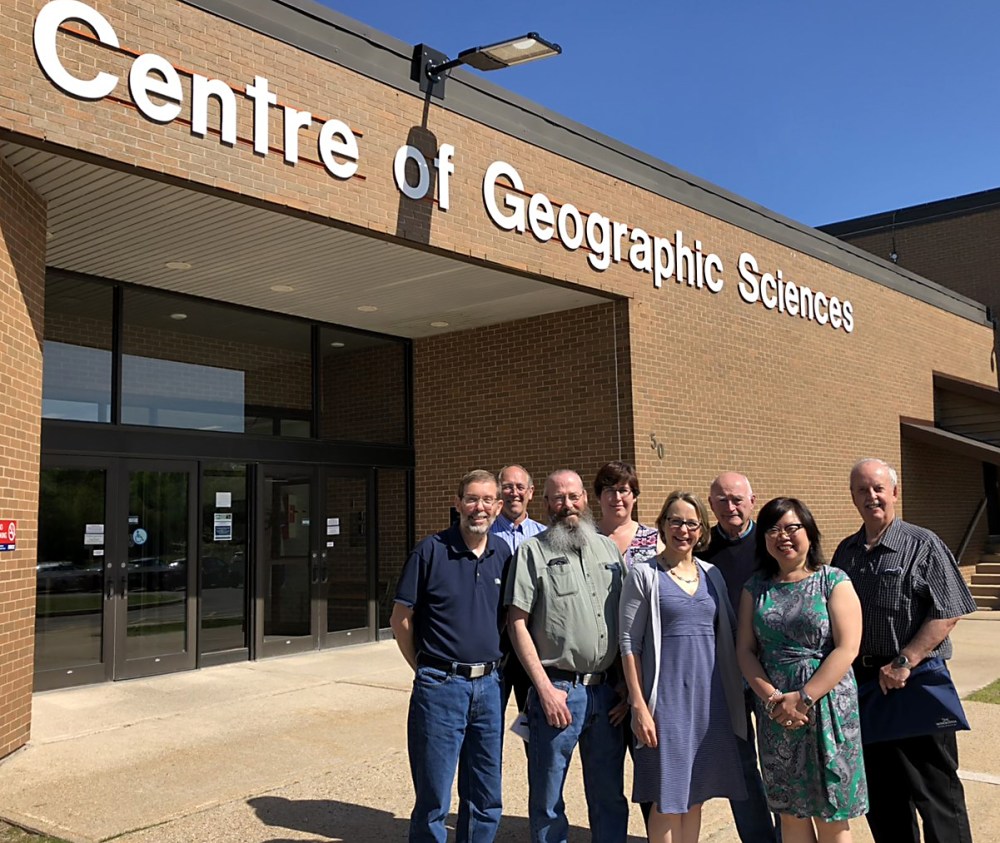
This was a tumultuous week. First, I persuaded COGS to allow me to attend their two-day conference on Sensors in return for writing a review on the GoGeomatics web site (see link under GoGeomatics). My thoughts on the COGS conference are available on the online GoGeomatics blog. Second, I attended a one-day MashUp in Annapolis Royal looking at the potential for new businesses in the region. Between these two events, I received the photograph below from David Hildebrand of the first GIS class at NSLSI (now COGS) (1985-86).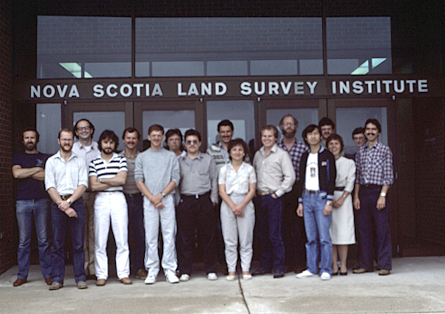
As a backdrop, I finished reading George Orwell Illustrated, before moving on to David Manners Convenient Season and Kate Raworth Doughnut Economics. At the end of the week, I picked up David Adams Richards novel Principles to Live By at the new Annapolis Royal library.
Here, I will focus on the MashUp event and its relationship to reading. In 2014, Heather, Edward and I walked the Road to Georgetown. At that conference on rural economic development in Atlantic Canada, we met Andrew Button, who lives on the South Shore. Today Andrew organizes and hosts MashUp events. The one, yesterday, in Annapolis Royal was his fourteenth. The concept is to bring together members of the community with ideas for new businesses in the region and to help them articulate their business plan, through coaching, criticism and feedback. At 8 am there were twenty-five citizens at the Annapolis Royal library.
My interest was not necessarily to create a business, but rather to understand how to create a climate where businesses can thrive. Here, I am not going to delve into the details or describe the results. Indeed, once we get into the business economics, my eyes glaze over, and I have little to offer.
This was the process. Everyone selects two words that resonate with their interests. From each table, one person takes three words from the word pool that will be used to drive their thinking. This translates into a collection of potential business ideas. We then go through the usual dot voting process that leads to one business idea per table (seven tables).
Here was my path. My two words were ‘gardening’ and ‘place’. Gardening because I believe that our relationship towards the landscape should be more akin to gardening. Place because, as a Geographer, I think that ‘place’ drives many decisions and ideas.
My issue (or concern) was ‘how can we better connect the creativity which exists in the community with our post-secondary education environment ?’ Not exactly a revenue-generating idea in the short term.
Subsequently, I joined a group of individuals who were interested in the role of writers in rural Nova Scotia (no surprise there). It included Brenda Thompson who had recently published ‘Wholesome Horror: Poor Houses of Nova Scotia’ (see her web site poorhousesofnovascotia.com)
By 2 pm, I was drained. It was hard for me to focus on the economics of a regional publishing house for rural stories. I will have to check with Andrew to find out the result of the different business plans.
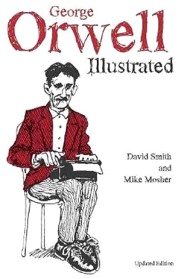 Back home, in my own comfort zone, I can heartily recommend George Orwell Illustrated. It is very accessible, with cartoons by Mike Mosher. It has two parts: Orwell for Beginners and Planet Orwell. In the second part, there is a human rights manifesto, co-authored by Orwell, with Bertrand Russell and Arthur Koestler. This returned me to my sixties reading on ‘Beyond Reductionism’, including contributions from Koestler, van Bertalanffy and CH Waddington. Other familiar Koestler titles were The Act of Creation and The Ghost in the Machine.
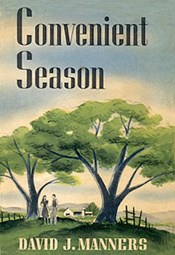 David Manners book:
He writes about Centrelea and Bridgetown. Published in 1941. Manners was a Hollywood actor who had an Aunt living in the Annapolis Valley. This was his first novel. (BTW, I am only on page 68).
Kate Raworth book
Celes Davar sent me a link to her YouTube video. I subsequently received the book through interlibrary loan. I found the video much more accessible than the book.
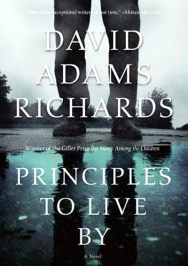 David Adams Richards book
Through Sandra Barry, I heard that DAR thought highly of the writing of Ernest Buckler. Since I was at the Annapolis Royal library for the MashUp event, perhaps I could find one of his novels.
Summary
Manners describes life in the Annapolis Valley, before the Second World War. Hildebrand is illustrating life at NSLSI in the 1980s. Today, we are holding MashUps which may impact life in the 2020s. Three very different snapshots of rural life. And yet, they could be covered in a single lifetime today (80-100 years).
We can envisage the economics of Kate Raworth and we can reflect on the economics underpinning Brenda Thompson’s book (and the poor houses). This can be placed in the context of the newly discovered human rights manifesto co-authored by Orwell.
Footnote
Anne Crossman tells me that the movie, Dracula 1931, starring Bela Lugosi and David Manners, is showing at the Centrelea Community Centre on February 23rd at 7 pm.
Acknowledgements
Thanks to David Hildebrand for the photograph. To Tim Webster and Michael Purcell for the conference opportunity. To Andrew Button for the MashUp event. Technical help from Edward Wedler, Ted McKinnon and Jon Murphy. Anne Crossman, Sandra Barry and Celes Davar for local intelligence.
References
David Smith. 2018. George Orwell Illustrated. Haymarket Books.
David J. Manners. 1941. Convenient Season. EP Dutton.
Kate Raworth. 2017. Doughnut Economics. Chelsea Green Publishing.
David Adams Richards. 2016. Principles to Live By. Doubleday Canada.
Brenda Thompson. 2018. A Wholesome Horror: Poor Houses of Nova Scotia. SSP Publications.
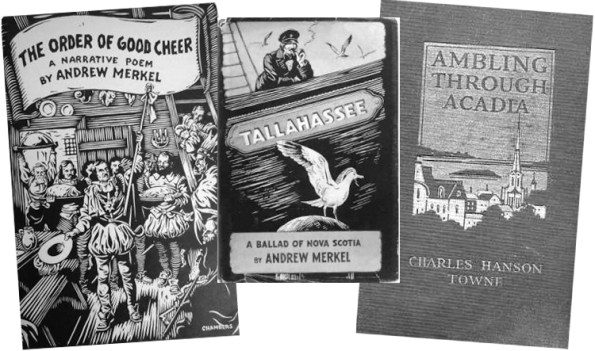 Evidence suggests that there has been a long tradition of self-publication in the Annapolis Valley. Anne Crossman arrived with a canvas bag full of books by local authors. Two notable historic treasures were Andrew Merkel’s narrative poems, The Order of Good Cheer and Tallahassee. Both published by Abanaki Press, Lower Granville, Annapolis County 1946. Second, Charles Hanson Towne’s Ambling through Acadia, 1923. It describes a trip from Yarmouth along the Annapolis Valley – Digby, Bear River, Annapolis Royal, Bridgetown, Wolfville to Halifax, with a side trip to Parrsboro.
 As we were discussing the relationship between ‘place’ and ‘writing’, I remember an earlier blog by Dick Groot on Highway #201 and the BRITEX plant in Centrelea. Centrelea was the home base for Ernest Buckler.
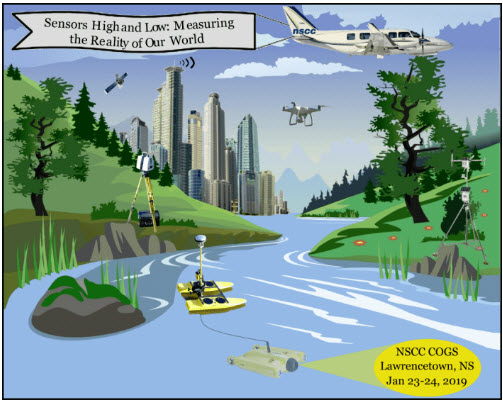 On Wednesday and Thursday (January 23 and 24th), COGS in Lawrencetown is hosting a two-day conference, entitled: Sensors High and Low: Measuring the reality of our world. A draft copy of the
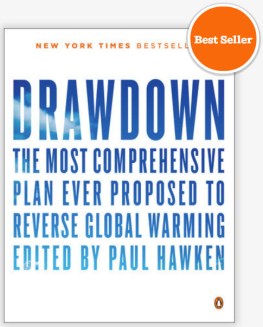
 In the documentary, there was a focus on Energize Bridgewater, perhaps Annapolis Royal could play a similar focal role with Land Use. If so, they may seek to collaborate with the Centre of Geographic Sciences, Lawrencetown and develop current maps and statistics on the status of the forest, agriculture and other land use types in the County.
 From the audience, the comment was made that ‘we only have twelve years’. How can we organize resources that go beyond the Centre for Local Prosperity and the Municipality of Annapolis County? What can we do to change our institutions: provincial and municipal government, as well as schools and post-secondary education institutions? How do we fully utilize the creative human resources in the region? Are we taking full advantage of town hall-style meetings? We need to continue to keep looking everywhere for good ideas, innovation, and where appropriate new technology. Conversely, we need to share the special resources that we have locally with other communities. The impossible becomes an opportunity.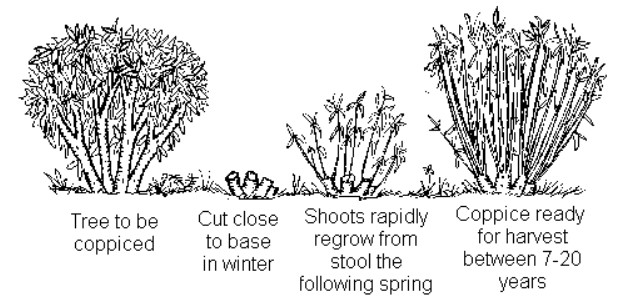


 What did I hear? A number of stories, about pilot projects in Atlantic Canada. Specific Nova Scotia examples included the Cape Breton Food Hub, Energize Bridgewater. For import replacement, there were successful models in the UK (Preston, Lancashire) and in the USA (Cleveland). The concept is to replace the demand for goods and services by 10% (or more) by local procurement.
 Examples of local need and local producers included:
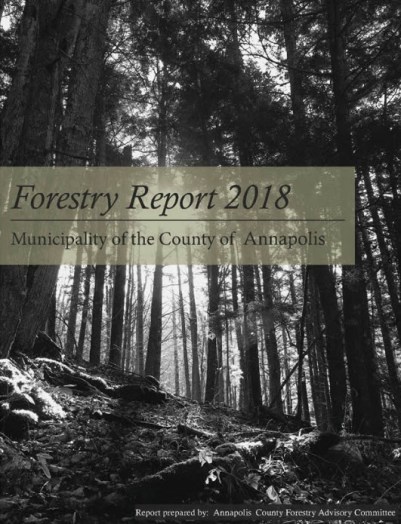 It was forwarded to me by Gregory Heming, Chair, Forestry Advisory Committee. It is a summary of their initial research and makes a set of recommendations to council. The primary recommendation is to adopt the ‘Climate Forest’ paradigm.

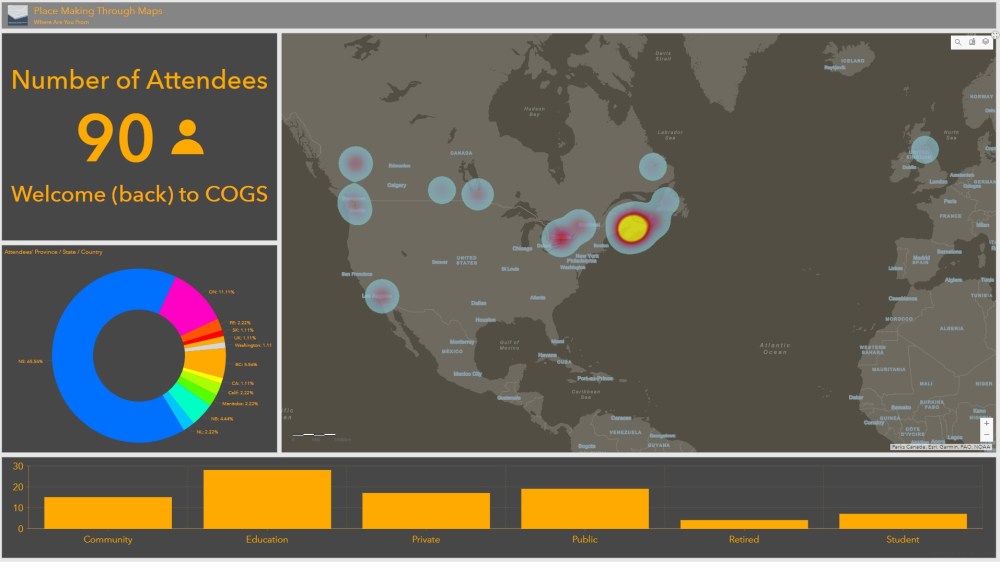
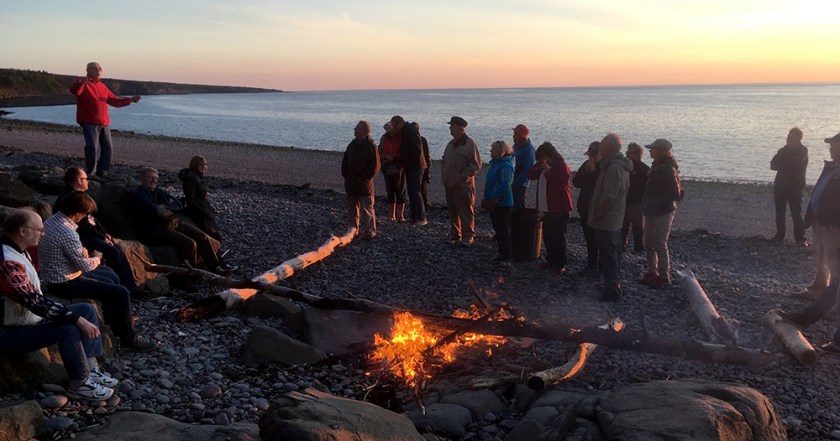
 Ernest Blair Experiment