Posted in New thinking, Opinion

Terego

Earlier in the Summer, I noticed that recreational vehicles (RVs) were stopping overnight at Lunn’s Mill on Carleton Road, outside of Lawrencetown (Hwy #201).

This week, I made my regular beer run to pick up growlers of Brickyard Red.

On the counter, they had a flier for “Terego: a tasty alternative to camping“. Going online, I discovered that Lunn’s Mill was one of their stops.

Producers throughout Canada welcome and share their passion with member travellers.”

This information meshed with an email from Edward Wedler. Edward had been approached by the Valley REN to share his passion for Plein Air Art. Combine these with the work of Celes Davar at Earth Rhythms and I can see an alternative model for the Creative Rural Economy in Nova Scotia.

Yet, contrast these ideas with the current destructive economy of Nova Scotia, whether mining (Goldboro), fisheries, or forestry ( just look at this Weekend Chronicle Herald).

What are some of the differences?

  1. Ecologically sustainable relationship between the people and the land/sea/air.
  2. Valuing the creativity of the people whether artists, writers, musicians, farmers, chefs, wine-makers etc.
  3. A different set of values between community members and the landscape. This is long overdue.

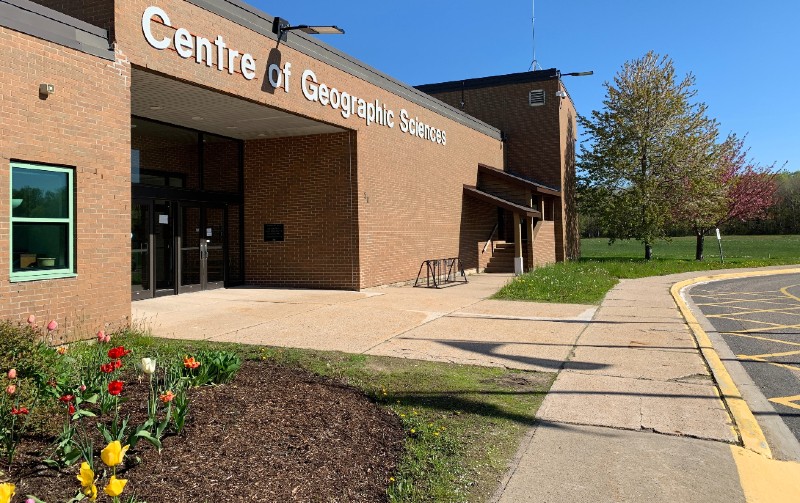
In my estimation, exactly the values that should be an integral component of the curriculum at the Centre of Geographic Sciences (COGS), NSCC in Lawrencetown.

Postscript

My son, Andrew, borrowed my Honda CRV to take some family possessions down to Maine. He left us with the RV. We could Terego at Lunn’s Mill.

Acknowledgements

Kudos to Chantelle and the team at Lunn’s Mill and The Station. Edward and Celes for espousing these values.

References

Terego, a Tasty alternative to camping. terego.ca

Celes Davar, Earth Rhythms
(see posts Rethinking Tourism, Preparing for Experiential Tourism, and Nisoge’katik)

Edward Wedler Plein Air Art.
(see posts Mapping Art, Footsteps East, and Brush with Nature)

Posted in New thinking

A Third Place

Edward commented on the latest blog that today’s ‘third place’ includes online social media. An astute observation.

For myself, this includes the Knowledge Network from BC. This week’s contribution was the Czech Philarmonic: Jakub Hrusa and Lisa Batiashvili.

There is something deeply satisfying in watching an orchestra play in concert; even, if only online. Why did I not learn to play an instrument when I was in high school?

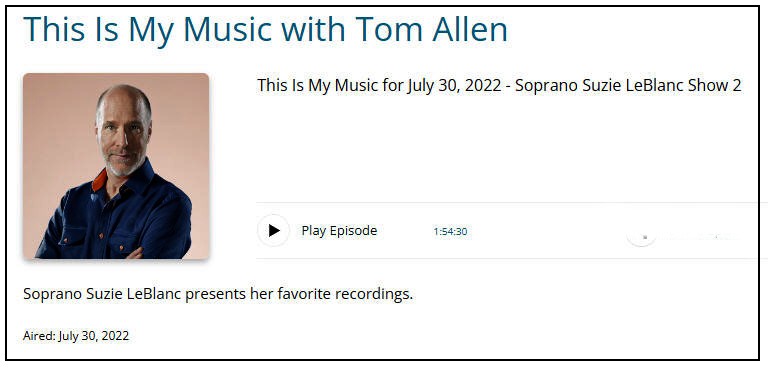
From Sandra Barry, I received the link to This is My Music for July 30, 2022 — soprano Susie LeBlanc, with a tip of the cap to Elizabeth Bishop.

Through the mail, I received a copy of the Guardian Weekly, July 29 that included a long opinion piece by Hugh Brody, The Deepest Silence; an adaptation from his recent book Landscapes of Silence, from Childhood to the Arctic. The subject is abuse and suicide in Canada’s North.

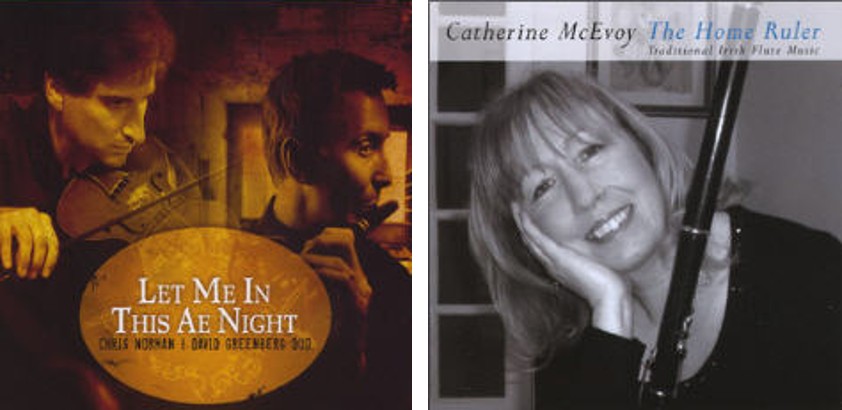
From the Best of Boxwood concert (see Musique Royale), Heather returned with a couple of CDs.

Chris Norman and David Greenberg Duo, 2010, Let me in this Ae Night.
Catherine McEvoy, 2008, The Home Ruler.

Postscript

With retirement from work, online social media likely moves to ‘second place’.

Acknowledgements

Edward Wedler and Sandra Barry occupy my third place in Nova Scotia. Heather adds her music taste. The Guardian Weekly, North American edition brings home the UK.

References

The Guardian Weekly, 29 July 2022, Hugh Brody, The Deepest Silences: What Lies Behind the Arctic’s Indigenous Suicide Crisis. p.34-39.

Hugh Brody, 2022, Landscapes of Silence from Childhood to the Arctic, Faber and Faber.

Posted in New thinking

Biogeography

Heather was reading Sonia Shah’s book, The Next Great Migration. She thought that I would be interested in two quotations on Biogeography.

Today such questions about the origin and distribution of species and people would be sequestered into a field known as ’biogeography’, a fascinating but mostly obscure branch of science generally considered of marginal public interest,” p.64.

Back then, biogeographical theory carried far-reaching consequences. The authority of the church, its hold on science, newly emerging from its shadows; the legitimacy of the colonial enterprise – and how generations of descendants would view and police migrants – all hung in the balance.

This resonated with me. My PhD thesis at the University of Western Ontario was entitled ’An Inquiry into the Nature of Biogeography’ 1976. I pulled it down from the bookshelf. Almost fifty years ago, What did I say at that time?

Biogeography is concerned with the nature of living matter and the nature of space. The discipline has a significant role in the future of Geography; it must reconcile and integrate contemporary issues of the biological sciences and the paradox of Geography.” p. v.

Before the PhD thesis, there was an M.Sc. thesis completed in 1971. Complexity Analysis of Vegetation Patterns in an Alpine Meadow. In this case, it is over fifty years ago. The location is Castleguard Meadows in the Canadian Rockies, adjacent to the Saskatchewan Glacier and Columbia Icefield.

My interest in Biogeography continued at Memorial University in St. John’s, Newfoundland and subsequently with the Rare Plants of Canada project at the National Museum under George Argus. This was all prior to working at NSLSI (COGS) in Lawrencetown, starting in 1980.

On the same bookshelf, I found Heather’s M.Sc. thesis from the University of Guelph, dated 1993, Reproductive Biology and Developmental Morphology of Agalinis Neoscotica (Scrophulariaceae ); supervisor, Judy Canne-Hilliker. This is another ’biogeography story’ about a uniquely Nova Scotian species, and its distribution; for another day — it’s really Heather’s story to tell.

Dogwood in our yard

Acknowledgements

Bill Crossman passed on his copy of Sonia Shah’s book. Heather discovered the quotations. Edward added the graphics.

References

Sonia Shah, 2020, The Next Great Migration, Bloomsbury

Robert Maher, 1971, Complexity Analysis of Vegetation Patterns in an Alpine Meadow, M.Sc. thesis Department of Geography, UWO.

Robert Maher, 1976, An Inquiry into the Nature of Biogeography, PhD thesis. Department of Geography, UWO.

Heather Stewart, 1993, Reproductive Biology and Developmental Morphology of Agalinis Neoscotica (Scrophulariaceae)

Posted in New thinking

The Mountain and the Valley

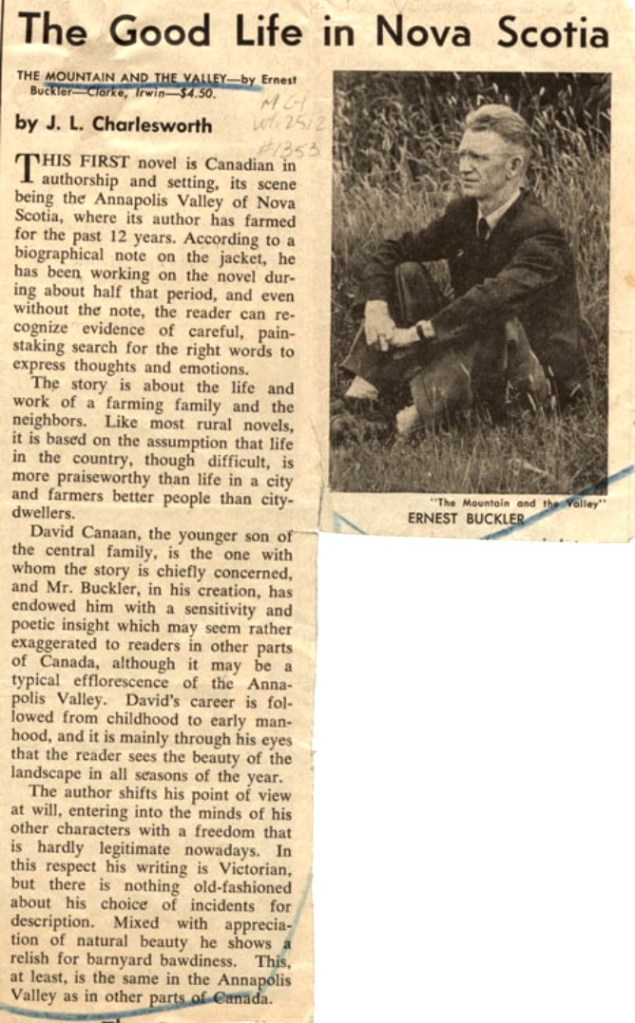
Ernest Buckler died in Bridgetown, in 1984. (He was born in West Dalhousie, 1908).

from the Nova Scotia archives.

From the back cover of “The Mountain and the Valley“,
set against the backdrop of the Annapolis Valley’s natural beauty, The Mountain and the Valley captures a young man’s spiritual awakening and the growth of artistic vision.” Published in 1952.

Today, in 2022, Annapolis County is attempting to develop a municipal plan. Indeed, the County includes four distinct regions: South Mountain, the Valley, North Mountain and the Bay of Fundy shore. Each region depends on a different mix of resources: forestry, agriculture, fishing and mining.

Within the County, we have separate municipal units: Annapolis Royal and Middleton as well as a number of smaller villages. To plan the future of the County, requires representation from the four landscape units, the different resource sectors, the various municipal units, and the business community, as a whole.

We need a consortium of citizens who can agree on a planning methodology, the mechanism for understanding our geography, e.g. land use, population distribution, river networks, road networks, climate conditions, housing stock, etc.

Without an agreed methodology, plus access to common geographic information, it will be impossible to reach a consensus on a common future.

These discussions cannot be left to County employees or an external consulting company. Instead, we need a citizen consortium, with representative voices from the different geographies, sectors, and communities.

With a common geographic database, we can at least share our understanding of the County, its resources and hence possible future.

Let us follow in Ernest Buckler’s footsteps and in his artistic vision.

Acknowledgements

I have benefited from conversations with my new neighbour, Rob Jarvis, with Jane Nicholson, with John Wightman, with Brian Reid. Edward added the graphics. Heather shared the gardening.

Reference

Ernest Buckler, 1952, The Mountain and the Valley, McClelland and Stewart Inc.
(link to 2010 edition HERE)

Posted in New thinking

Naming Conventions

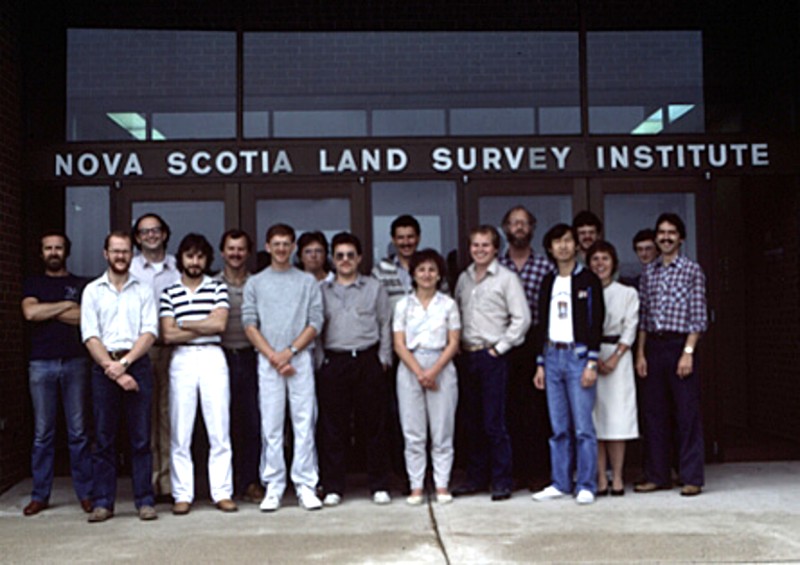
When we (Heather and I) arrived in Lawrencetown, the post-secondary institution was called the Nova Scotia Land Survey Institute (NJSLSI). Its primary purpose was to train land surveyors in Nova Scotia.

By 1986, with the introduction of new programs, it had expanded into a College of Geographic Sciences. This included Planning, Cartography, Remote Sensing, Computer Programming, and Marine Geomatics.

With the establishment of the Nova Scotia Community College (NSCC), and with multiple campuses, the administration could not stomach, or comprehend, the concept of a college within a college. COGS became the Centre of Geographic Sciences.

What was gained? What was lost?

Simply put, the NSCC became a network of locations administered from Halifax. What was lost? As a College of Geographic Sciences, the emphasis was on a holistic definition of the science of Geography. In Nova Scotia, this college had filled a vacuum. Geography did not exist as a discipline in most of the educational institutions, except belatedly at St Mary’s University. No Geography at Dalhousie, Acadia, St Francis Xavier, or Cape Breton University.

What is in a name?

Take for example the Centre for Rural Aging and Health (CORAH). Again, a node in a network. It appears to emphasize our rural location and the health of the population. How does this fit with a critical examination of the quality of health services in the Middleton area? Is the Centre designed to celebrate the positive contribution of an aging demographic in rural Nova Scotia? Does ’aging’ focus attention on ’ageism’?

What is the contribution of an eighty year old geologist, or a fifteen year old bird watcher, or a seventy year old geographer? Does ’age’ matter?

The way we use language is extremely important. For example, the Applied Geomatics Research Group. Applied refers to the ’application’ of science and technology. Geomatics is a field of science and technology — previously described as Survey Engineering. Research implies an investigation, that is an innovative exploration, into the issues of the day; for example, climate change, sustainable agriculture, relationships between rural and urban demography. The term ’group’ implies loose teams who collaborate, bringing their knowledge and skills to address these issues. It is not a Centre within a network. The type of research is influenced by the location of the group — the Bay of Fundy, Annapolis Valley, Southwest Nova Scotia — and the particular skillset of the group membership.

We need a better understanding of Geography; the term, and its importance to the relationship between the landscape and its inhabitants, both human and other species.

Posted in New thinking, Opinion

Summer Institute

Saturday evening, I shared a beer with John Wightman. Brickyard Red, of course.

We talked about our time at COGS. This brought up the topic of the Summer Institute, an event sponsored by CANMAP (see “Shifting Gears“. It set me thinking.

COGS, along with other educational institutions, has had to adjust to a different teaching model as the result of COVID. Rather than sit around waiting for change. Let’s revisit the Summer Institute. Show leadership.

From my conversation with David Colville, it seems that faculty are managing a combination of on-line students, on-site students, as well; in his case, graduate students at Acadia. What would the new model look like? Could this be a theme of a Summer Institute in 2022 and beyond?

We could include participation from

  • Canadian Cartographic Association
  • The Applied Geomatics Research Group
  • Esri and Esri Canada
  • Novita Interpares
  • Shorefast Foundation
  • Chris Hopkinson and Laura Chasmer, University of Lethbridge.

Besides new approaches to teaching, we could look at new approaches to resource management: agriculture, forestry, fisheries, mining.

We could look at new approaches to community-centric engagement with: Bridgetown, Lawrencetown, Middleton, Annapolis Royal, Annapolis County — such as different age cohorts in the community: school age, workforce, retirement age. Perhaps there is room to explore technical tourism and creative, technical workshops.

We have a choice. We can wait until politicians determine COVID is over. Or we can design a Summer Institute, with a particular format and content. Place a stake in the ground, mark a date on the calendar, and plan for post-COVID living.

We should look at previous Summer Institute events. Decide on the audience, the presenters, location and timing. I am confident that CANMAP would be supportive.

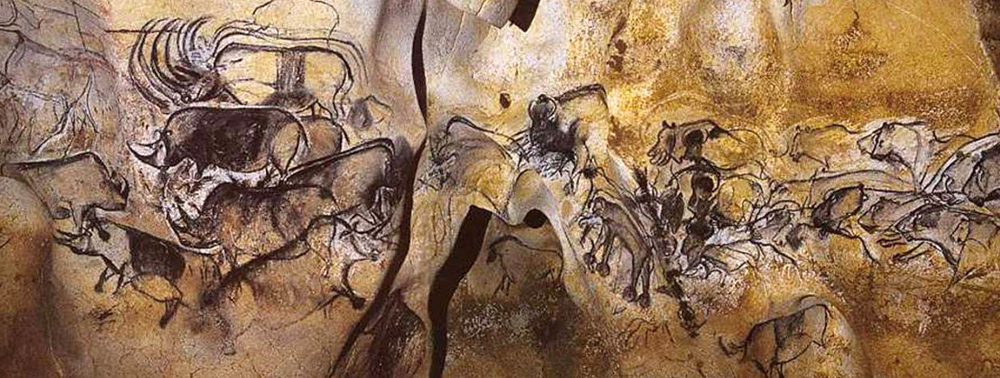
Image Source: https://www.flickr.com/photos/wessexarchaeology/49141082227https://www.flickr.com/photos/wessexarchaeology/49141082227

Anyone interested, besides John and myself?

We could look at and attract new technologies and their leaders; for example, working with GoGeomatics on new directions/new relationships.

Acknowledgements

Enjoyed an excellent conversation with John Wightman at his home in Bridgetown. Edward, another COGS faculty alumni, added the graphics. Heather continues her vigilance to help birds survive in this unusual Winter.

Posted in New thinking, Opinion

Shorefast

From the Shorefast Foundation web site:

A shorefast is the line and mooring used to attach a traditional cod trap to the shore. It is a strong symbol of Fogo Island’s cod fishing heritage, and we chose this name because it symbolizes a belief in the importance of holding on to community and culture and in the power of authentic connections between individuals, their community, culture and place.

What can you do?

Our mission is to build cultural and economic resilience on Fogo Island and to serve community well-being by sharing place-based models of economic development.”

I would like to see the Annapolis Valley join the list of communities sharing place-based models of economic development. We are well-positioned. We have a strong history of place.

The work of AIRO has demonstrated this type of initiative.

In addition, the Centre of Geographic Sciences (COGS) gives us access to skilled practitioners in geographic information technology.

On Fogo Island, the heritage has been on the fishery. In the Annapolis Valley, the heritage has been more on agriculture.

Just looking at the Reading List, non-fiction illustrates compatibility:
EF Schumacher Small is Beautiful;
Peter Senge The Necessary Revolution;
Barry Lopez Arctic Dreams;
Mark Roseland Towards Sustainable Communities.

I first met Zita Cobb at the Georgetown conference in PEI, Rural Redefined (2013). Our paths crossed again at the Esri Canada virtual conference in November 2021.

If we were to establish a foundation in the spirit of Shorefast, what would it look like?

Given the importance of apple orchards, perhaps it should be called the Honeycrisp Foundation.

Finally, from Zita Cobb again:

We exist in relationship to the whole planet, the whole of humanity, the whole of existence. It is our job to find ways to belong to the whole while upholding the specificity of people and place.

Check out “cauliflower thinking” and the “floret videos” on the website.

Acknowledgements

Thanks to Zita Cobb for the inspiration. Edward joined Heather and me on the Road to Georgetown in 2013.

Reference

The Shorefast Foundation at shorefast.org

Posted in New thinking, Opinion

Reaching Out

Christmas is the time when you hear from friends and relatives across the globe. In my case, this includes colleagues from both the academic and business community. At the local level, besides COVID, we were able to get through a multi-day power outage, caused by the latest snowstorm.

With the New Year, there is time to recall graduate studies at the University of Western Ontario, teaching Geography at Memorial University, and then teaching GIS technology at the Nova Scotia Land Survey Institute (1980). It is over forty years since we graduated our first GIS graduates. Many of these individuals are likely retired.

I contacted Jack Dangermond, President, Esri about the ongoing need for a Geographic approach. He responded with advice on ’StoryMaps tech and ArcGis hub for community engagement. That is my challenge for 2022.

Is there a mechanism to link my blog (map stories) to story maps or is that simply my play on words?

After talking to David Colville at COGS, I also tend to agree with Alex Miller, President, Esri Canada (shown here) that I cannot ignore the three pillars of our world – Society, Economy, Environment.

Edward suggested that if I wanted to start a ’geographic-mindset movement’ check out this short Youtube video.

There’s a lesson to be learned, here, as to who is most important for a leader to realize their ambition’, Wedler January 2022. He found that important person, for example, when he initiated “Ride the Lobster” back in 2008.

Listen to ESRI Podcasts on “Geographical Thinking”for inspiring stories from thought leaders and GIS users across business, government and education in Canada.

Acknowledgements

Sincere thanks to Jack Dangermond, Alex Miller, David Colville, and Edward Wedler for their comments and feedback.

Reference

Derek Sivers, “How to Start a Movement“, April 2010, YouTube Video.

Posted in New thinking

Online Learning

In the Canadian Spatial Times (October 5,2021) there is notice for a Statistics Canada workshop onMeasuring Access to Services: International and Canadian Experiences in Rural Analysis’ to be held on October 13th.

This reminded me that several years ago, there was a provincial agency called ’Community Counts’ which provided detailed access to census data.

In the same newsletter, GoGeomatics announced the return of the popular Geospatial Career seminar.

In these COVID times, there is a demand for educational institutions to offer a mix of online and in-person courses. This spurred me to ask the faculty at COGS how they have changed their curriculum to meet these new demands. Hopefully, in a few weeks, I will be able to report on the changes in curriculum and courses, as educational institutions address the changing demands. There would seem to be new opportunities for collaboration, and thus, to resurrect the role of ’community counts’ in the overall equation.


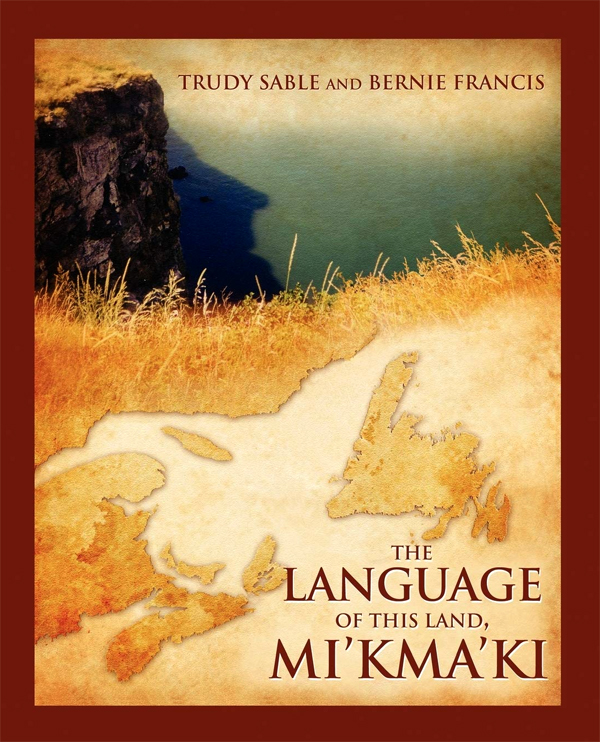
With regards, our collective understanding of landscape, I have rediscovered Trudy Sable and Bernie Francis, The Language of this Land, Mi’kma’ki.

From Chapter 1, Bernie Francis:
“Our language is verb oriented. We naturally see, and act, with the world differently than the speakers of English and French, both groups speaking language from the Indo-European stock.”

From Chapter 2, The Sentient Landscape and the Language of the Land:
”The Land is always stalking people. The land makes people live right.The land looks after us.The land looks after people.”

From a Cibecue Apache quote collected by Keith Basso.

This contrasts strongly with the Indo-European view of Herman Hesse in his ’Description of a landscape’ (see previous blog).

Acknowledgements

Jon Murphy for his good work at GoGeomatics. Dave MacLean at COGS for his encouragement. Edward Wedler supplied the graphics and links. Heather Stewart shares the journey.

References

Canadian Spatial Times. October5, 2021.

Trudy Sable and Bernie Francis, 2012, The Language of this Land, Mi’kma’ki, Cape Breton University Press, (Bill Jones contributed the maps of land use and occupancy).

Posted in New thinking

Historical GIS

Wednesday morning I walked along Highway #201 (Carleton Road) from our house to Lawrencetown Lane. I noticed the change in civic addresses at the Paradise/Lawrencetown boundary. In Paradise, they are four digits e.g. our house is #6326; in Lawrencetown they are three digits e.g. Lunn’s Mill Beer Company is #515.

On my growler of Brickyard Red, I find the following history of Lunn’s Mill.

”In 1760, this beautiful part of the Annapolis valley was known as Lunn’s Mill, named after the major industry in the area, a bustling saw mill owned by John Lunn. Around this time the Charming Molly (another beer) set sail from New England carrying the first New England Planters. These intrepid people helped expand the community with farms and shops and in 1822 it was renamed Lawrencetown.”

Within this context, I received an email from David Raymond, retired Cartography instructor at COGS. He now operates MapAtlantic from his home in Smith’s Cove.

”I have been working on a project for Dr. Paul Armstrong (Maritime Institute for Civil Society) since early 2020 that involves bringing the nineteenth century AF Church maps into a GIS database. The next phase involves matching the 1871 census records to those in the database.”

David put me in touch with Paul Armstrong. They want me to speak at a small gathering in Truro later in August. This will lead to my undertaking some background research on Historical GIS in the next couple of months.

Meanwhile, this week, in the Chronicle Herald, there was a further update on the MapAnnapolis project.

These connections serve to illustrate the relationship between COGS, Cartography and our appreciation of the the geography of the Annapolis Valley. It is a tribute to the work of Walter Morrison, John Wightman and John Belbin and their successors. It also illustrates the value of the map collection at the college.

Can you imagine a historical GIS system where you could operate a slider through time, and see the changes in the land use and land ownership?

Postscript

Last night, Heather and I watched the TVO documentary ‘From Earth to Sky’ produced by Ron Chapman. Watch it, and imagine thé Mi’kmaq perspective on this changing landscape.

Acknowledgements

David Raymond and Paul Armstrong for reaching out to me. I look forward to the research. David Colville for forwarding the end of year address by Don Bureaux, President at NSCC. Edward and Heather for their ongoing support.

References

Lunn’s Mill Beer. Check the label for a short history lesson.

Chronicle Herald. June 23,2021. C6. Digital Mapping chronicles Annapolis Co’s history.
Paul Pickrem.

David Raymond, MapAtlantic, Smith’s Cove.

Paul Armstrong Ph.D Historical Sociology, President, Maritime Institute for Civil Society, Chair, KITH Observatory Inc., Treasurer, Genealogical Association of Nova Scotia.

Don Bureaux, June 23, 2021, President’s Update. Year End Message.