Posted in New thinking, Opinion

The Art of Memory and Place

This week, we returned to Pictou Lodge.
pic_drafts
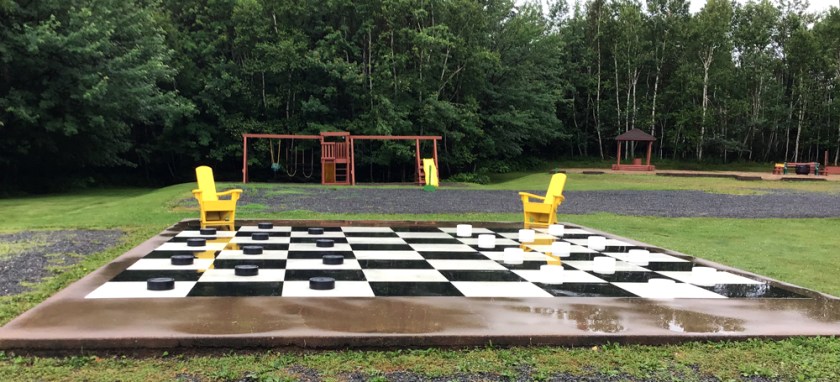
Checkers anyone? (Pictou Lodge)

It has been the location for our family reunions since 2014. The lodge was built in 1926. Well-known visitors have included King George V and Princess Juliana of Holland during the Second World War. More recently, Brian Mulroney (1983), Condoleezza Rice(2006) and Jamie Oliver (2015). No reunion this year, cancelled by COVID-19.

divisionsOfTheHeart_CoverFor light reading, I brought along Divisions of the Heart, and Elizabeth Bishop: Nova Scotia’s ‘home-made’ poet. I thought that we might stop at the Balmoral Grist Mill. The cover of Sandra Barry’s book shows Bishop at this location in 1976.Elizabeth Bishop

At the lodge, I discovered a copy of At Home on the North Shore: The Summer 2020 special edition is sponsored by Healthy Pictou County. It contains an article Best Practices, by Crystal Murray, that describes the formation of a Citizens for Healthy Pictou County who agreed ‘that a collaborative effort was needed to institute transformational change to the local health care system’. Given the state of health care in Annapolis County, it begs the question: how can this model be deployed elsewhere?

‘A grassroots movement is part of the ethos of Pictou County and has been the key to the success of many community assets in the region’ p.12.

I noted too (p.44) the new challenge: Pictou County badge.banner_pictouCountyBadge

‘Hike in beautiful Pictou County known for its sandy beaches, warm community spirit and a fascinating industrial history. To qualify you must hike just over 30 km. along the trails and old rails in the region’

How about an Annapolis County badge?

The Divisions of the Heart, Elizabeth Bishop and the Art of Memory and Place includes a keynote address by Anne Stevenson. Her essay is entitled ‘The Geographical Mirror’.

‘Bishop has always been a difficult writer to ‘place’. She found self-placement, both geographical and psychological, so difficult that it is tempting to read the entire body of her work as an extended ‘Questions of Travel‘.

‘Who am I ?‘ and ‘Where do I belong? ‘ p.21.

For myself, through Heather who is from Pictou County, returning to Pictou Lodge raises similar questions. Or in Sandra Barry’s words.

“The book-end essays comprising ‘Her own Prodigal’ and ‘Borderlands’ speak to elements of self – the poetic and the political – which held Bishop’s attention her entire life. They situate Bishop in two fundamental dimensions of place: the imagination and the nation”. p.14.

Postscript.

Michael Goodchild recommended Sue Stuart-Smith‘s book ‘The Well-Gardened Mind’ in response to an earlier blog. Looks very promising.

Acknowledgements

Heather Stewart with her roots and understanding of Pictou County. Sandra Barry for her knowledge of Elizabeth Bishop, her life and poetry. Edward Wedler for his online graphics skills.

References
From Pictou Lodge, in-room directory. A Step Back in Time.
Sandra Barry, Gwendolyn Davies, Peter Sanger (eds.) 2001, Divisions of the Heart. Elizabeth Bishop and the Art of Memory and Place. Gaspereau Press.
Sandra Barry, 2011, Elizabeth Bishop: Nova Scotia’s ‘Home-made’ Poet. Nimbus Publishing.
At Home on the North Shore, Summer 2020. A Place in the Sun. Vol 5 Edition 3.
Anne Stevenson.The Geographical Mirror, p.21-33, in Divisions of the Heart (2001).

Posted in New thinking

The Art of Nova Scotian Life

From BC’s Knowledge Network, I watched the first episode of the Art of Japanese Life (Nature).banner_artOfJapaneseLife Dr James Fox looks at the Art and history of Japan and learns about brush-painting, block-printing, bonsai-trimming and the Way of Tea. Episode 2 will be available on July 22.

Within the context of Rethinking Tourism, I wondered how we might define ‘the Art of Nova Scotian life’. My starting point was to think in terms of unique voices which describe our landscape, in particular the Annapolis Valley.

bookCover_MountainValleyFor several years, I have been supportive of literary events related to the work of Ernest Buckler. Could we envisage a modern (2020) version of the Mountain and the Valley?

Can we imagine a focus on the Bay of Fundy? Perhaps based on Harry Thurston’s Tidal Life: a Natural history of the Bay of Fundy.

Through my conversations with Sandra Barry, she recommended Elizabeth Bishop’s poem Questions of Travel. This raised the question of a literary focus on the coast around Great Village.

An alternative approach is to consider movement through the landscape. Two books come to mind, both published by Gaspereau Press.

Cover_gettingOutOfTownSoren Bondrup-Nielsen writes Merging: Contemplations on Farming and Ecology from Horseback. Kent Thompson writes Getting out of Town by Book and Bike.

’Thompson investigates the role of the bicycle in books ranging from DH Lawrence and HG Wells to Elizabeth Bishop and Ernest Buckler.’

‘Soren Bondrup-Nielsen catalogues the rich biodiversity of his own backyard, exploring the fields, dyke roads and woodland trails that surround his home in the agricultural heartland of Nova Scotia’s Annapolis Valley’.

Later this month, there will be the opportunity to watch Episode 2 (Cities) and Episode 3 (Home) from the Knowledge Network.

Can we imagine a similar series for Nova Scotia or part of Nova Scotia (the Annapolis Valley)?

My interests tend toward books (and literature). What about a broader definition of art — music, painting, crafts? Or ecosystem science, agriculture?

Acknowledgements.

Celes for starting the conversation. Sandra for her comments. Edward for his artistic talent. Heather for encouraging bicycle rides to Middleton and back.

References.

British Columbia’s Knowledge Network.
Elizabeth Bishop poem. Questions of Travel.
Kent Thompson, 2001. Getting out of Town by Book and Bike, Gaspereau Press.
Soren Bondrup-Nielsen, 2014. Merging: Contemplations on Farming and Ecology from Horseback. Gaspereau Press.
Harry Thurston, 1990. Tidal Life: a natural history Of the Bay of Fundy.

Posted in New thinking

Rethinking Tourism

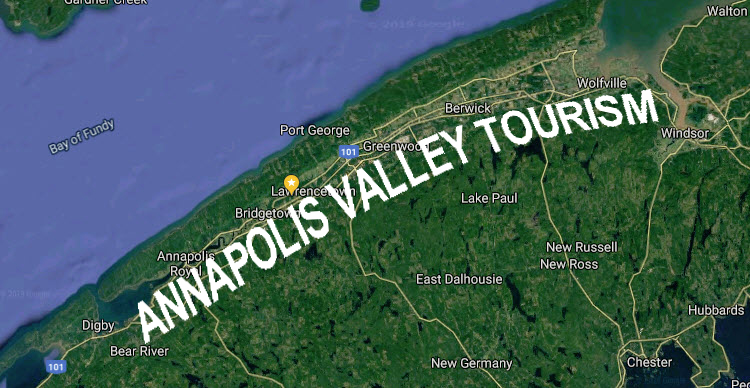
This week, I received two emails on the subject of rethinking tourism.map_annapolisValley_satelliteView_2

 from Danielle Robinson.
Culturally sustainable wine and food tourism. Key findings from a comparative case study of BC’s South Okanagan Valley and NS’s Annapolis Valley.

from Celes Davar.
Rethinking tourism for the Valley area – a larger more collaborative approach. It’s not about marketing.

Danielle’s key findings offer a summary of her Ph.D thesis research. “The central finding is that food culture as expressed through wine and food tourism is inherent to regional identity and contributes to cultural sustainability in three key ways.

Food- and wine-tourism sustains local food culture.
Food- and wine-tourism sustains local communities.
Transformative food- and wine-tourism supports the development of a more sustainable culture.”

This feeds into the email from Celes, where he asks the question.

“How can we collectively, shape a new direction that is about this region working together, and develop a community economic development strategy that features stories and experiences of agriculture, food and cuisine, the arts and music, different cultures and traditions in relation to the Acadian forest, Annapolis Valley and Bay of Fundy Bioregion? “

Great question. Here are a few preliminary thoughts.

1
we have to tell the story of this Geography.
2
we are inclusive in our definition of the Bioregion. It is not about municipalities. It is not about different cultural groups. There is a long history of use and abuse of this landscape. Where are we today? What is the path forward in the unfolding global context?
3
Celes asks us ‘to conceive of a different direction’. What might this kind of
alternative direction be?
4
Perhaps, we should move away from the term ‘tourist’ and rather think in terms of residents, part-time residents, and guests. We are indeed all residents at a number of different scales.
5
As far as possible, emphasize direct experience with the ecological environment – whether walking, cycling, canoeing, kayaking.
6
Learn as much as possible about the lessons of this landscape. What has been done right? What has proven to be an absolute disaster? What is being done to mitigate previous mistakes?
7
Understand the connectivity between this bioregion and the larger region i.e. the Eastern Seaboard/ Maritimes.
8
Engage multiple generations in the process: elders, parents, children, grandchildren.
9
Be inclusive of all diversity.

My goal is to live as close to the land, and its natural rhythms, as possible in the hope that I can learn to fully appreciate the role of other cultures and other species in this bioregion. I look forward to the ongoing conversation.

Acknowledgements

Thanks to both Danielle and Celes for striking up the conversation. Heather for her concern for other species in the region. Edward added the graphics.

References

Danielle Robinson, Culturally sustainable wine and food tourism
Celes Davar, Rethinking tourism for the Valley area – a larger more collaborative approach.

Posted in New thinking

Beginning Again

I had intended to review, “A Sense of Humus” but Heather was looking for some light reading this week. Her review suggests that it will be a worthwhile read.

bookCover_beginningAgainMeanwhile, I went to the bookcase and found “Beginning Again: People and Nature in the New  Millennium” by David Ehrenfeld. While written in 1993, looking towards 2000, it holds true in 2020, looking towards a post-COVID world.

I think it was Tuesday. I was preparing the bed to transplant some tomato plants from the greenhouse and discovered a common toad.

Ehrenfeld’s second essay is titled ‘The Roots of Prophecy: Orwell and Nature”.

What was Nature to George Orwell?

Ehrenfeld lists three qualities:

  • honesty
  • reliability/continuity/durability/resilience
  • beauty and serenity

bookCover_commonToadHe also makes reference to Orwell’s thoughts on the common toad’. For example,
“At any rate, Spring is here, even in London N1 and they can’t stop you enjoying it. This is a satisfying reflection. How many a time have I stood watching the toads mating, or a pair of hares having a boxing match in the young corn, and thought of all the important persons who would stop me enjoying this if they could. But luckily they can’t. So long as you are not actually ill, hungry, frightened or immured in a prison or a holiday camp, spring is still spring. The atom bombs are piling up at the factories, the police are prowling through the cities, the lies are streaming from the loudspeakers, but the earth is still going round the sun, and neither dictators nor bureaucrats, deeply as they disapprove of the process, are able to prevent it”. p.6

Here is my second observation. Heather feeds the kitchen vegetable waste to her worms in the basement. We use the worm castings to add to our soil in the greenhouse. One of the by-products from the worm humus is that it is full of tomato seeds. The seeds and skins are separated in the making of tomato sauce. Those are the tomato plants which I transplanted into the garden, under the watchful eye of the common toad.

This raises a larger question. What are the memories of earlier lives and events that build up the human humus? Time to read Bertha Damon.

(It is interesting to note that George Orwell was born in 1903 and died in 1950, aged 47 years. He saw the end of the Second World War).

Returning to Ehrenfeld:

“If this alternative way of living grows and prospers, I doubt that it will do so by some master plan or protocol…..

“Nature will have entered their lives at an early age and will remain as a source of joy and as a measure of their best and worst efforts. They will welcome the challenge that Orwell hoped for, a simpler, harder world in which machines, like their inventors, are understood to be limited. They will devote their first energies to the places where they live. They will come to authority not by violence but by their evident ability to replace a crumbling system with something better’.” p.193

Acknowledgements

Heather for her commitment to life and Nature. Edward for his collaboration and creativity. Jane for starting this conversation.

References

David Ehrenfeld, 1993. Beginning Again: People and Nature in the New Millennium. Oxford University Press.
George Orwell, 2010. Some Thoughts on the Common Toad. PenguinRandomHouse Books. Great Ideas #99.
Bertha Damon, 1943. A Sense of Humus. Simon & Schuster.

Posted in New thinking, Opinion

Tracking Deplaned Passengers

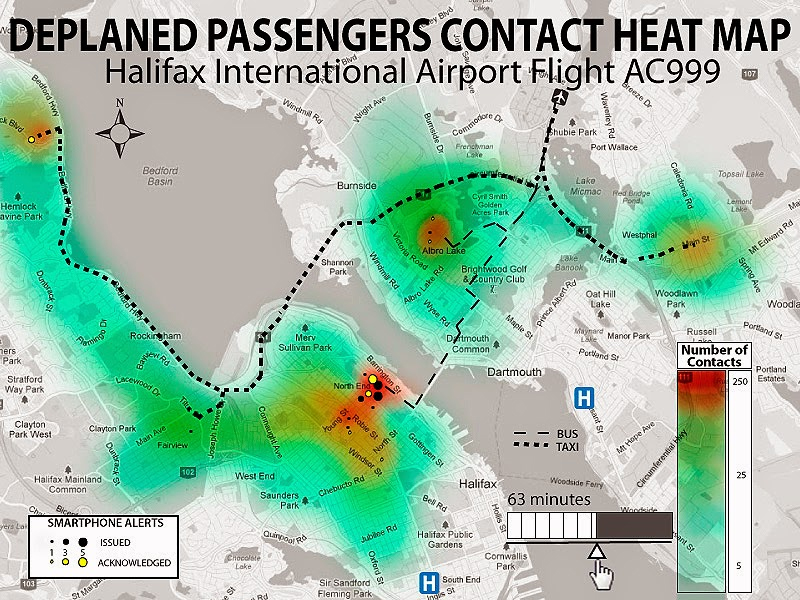
Six years ago I proposed a real-time, interactive, contact heat map to track deplaned passengers from flights arriving into Nova Scotia (contact tracing). The idea, in fact, could have been applied anywhere to track the movement of (potentially) virus-infected people.map_virusContact
By October 2014, 4,500 people had died from a recent Ebola global outbreak. We had, in Canada, experienced H1N1 (Asian Bird Flu) and SARS.  The SARS outbreak of 2002-2003 killed 800+ people worldwide and killed 44 Canadians. In our current CoVid-19 outbreak, Canada has suffered 300+ deaths to date. More Canadians have now died from COVID-19 than SARS. Viruses know few boundaries. Deadly viruses such as Ebola, MERS, SARS, Asian Bird Flu (H1N1) and COVID-19 can easily spread with today’s travel. Forensic Studies have shown that viral outbreaks mirror air travel.

“The role of mass air travel in the recent worldwide spread of a number of diseases … has been documented, analysed and discussed by transnational and governmental agencies … clinical practitioners … and academic researchers.” (ScienceDirect)

My proposed interactive map rests on the emergence of the Internet of Things (IoT), G5 cellular technology and Artificial Intelligence, where we can respond to contact and movement and predict a possible outbreak brought in by deplaned passengers from an airline flight; possibly offering a public alerts/warning system. This complements the arduous task of forensic tracking of people’s whereabouts.

Could future technology seek, track and map, in real-time, when and where infected people might come into contact with others and with sensor-embedded objects (taxis, other cell phones, public venues, stores, farm animals, etc.)? Can we react faster and more judiciously to these outbreaks and forecast/model viral outbreaks due to deplaned passengers and crew and their contacts? How can we balance privacy rights with public health needs?

A recent article notes that a team led by MIT researchers are working to do contact tracing using Bluetooth technology while retaining privacy.

References

Science Direct, Airports, Localities and Disease. July 2010.
TechXplore. Kelly Foy (MIT). Bluetooth Signals from Your Smartphone, 09 April 2020.

Postscript

Apple and Google just announced a joint effort to fight COVID-19 via Bluetooth contact-tracing technology.

Posted in New thinking, Opinion

New Localism

bookCover_livingMountainShepherd was a localist of the best kind: she came to know her chosen place closely, but that closeness served to intensify rather than limit her vision

Robert MacFarlane p.x. The Living Mountain.

Yesterday (Sunday) we joined a Zoom conference with Nina Newington and a small group from the Extinction Rebellion. The topic was Forestry and the position of the Provincial government. Today, there are additional topics of local concern, particularly access to Health Services and the Internet.

Thinking about the relationship of citizens and community groups to these global concerns it struck me that you have to start at the local level. If we are going to develop a new ‘land ethic’ then perhaps we should be expressing these concepts to the municipal government. If we want to change the political process, more openness, decisions based on best practices and science, let us work at the local level.

banner_annapolisCountyIf we want to understand our Geography, let’s start with Annapolis County. Let us map the changes in our land use, whether Forestry, Agriculture, Fisheries, Mining. If we are concerned about the health of our citizens, let us map our demography; let us know the location, number and size of long-term care facilities in the County. Let us know and understand the population at risk.
Nan Shepherd described her relationship to the Cairngorms. Ernest Buckler described his relationship to the Mountain and the Valley. Can we not start with the Geography of Annapolis County? Can we not develop a different relationship between the Municipality, the landscape and its citizens. If we conducted that experiment in this county, we could share the lessons, positive and negative, with other counties. Make comparisons, and hence improve the overall provincial picture.

In Annapolis county, we have the added advantage of access to the Centre of Geographic Sciences (COGS).

Although today, Lawrencetown is a ‘ghost town’. Nothing is open. NO post office. NO XTR gas station. NO Shakes on Main, NO In Your Back Pocket Thrift store. NO Winemakers Tavern. NO COGS. And yet, we anticipate a new Health Centre later in the year. That is a fine example of citizen engagement.

Acknowledgements

Nina Newington for hosting the Zoom meeting. Municipality of Annapolis for their comments on previous blogs. Edward Wedler for his graphics touch.

References
Nan Shepherd. 2011. The Living Mountain. Canongate Books
Ernest Buckler.1952. The Mountain and the Valley. Henry Holt. NY.

Posted in Art, New thinking, Opinion

Robert Waddell Art Awards

I propose creating an annual Robert Waddell Art Awards Event for excellence in art — something that can be launched jointly by the Municipality of Annapolis County and the Town of Annapolis Royal.

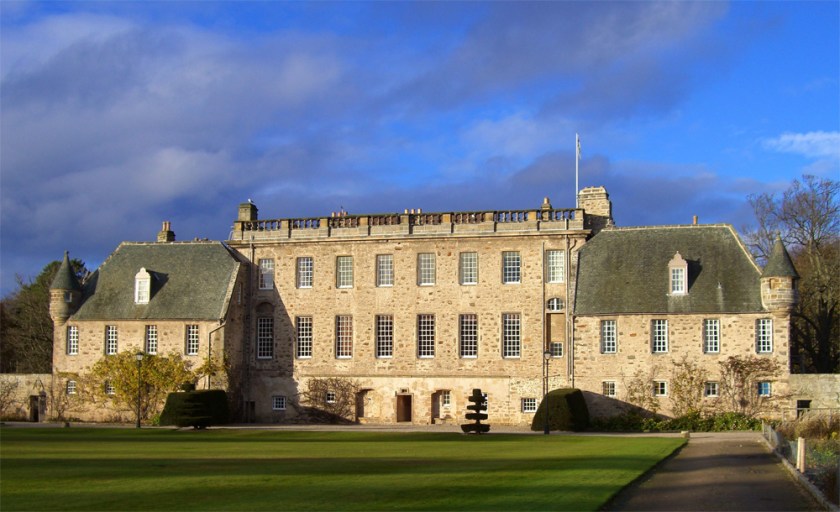
Robert Waddell was an art master at the Gordonstoun School in Scotland.gordonstounSchoolScotland Waddell inspired Prince Charles, then a student at Gordonstoun School, to paint in the 1970s. As a result of that inspiration, Prince Charles has become one of the UK’s most successful living artists, where he paints en plein air (outdoors) and exclusively in watercolours, according to Insider.
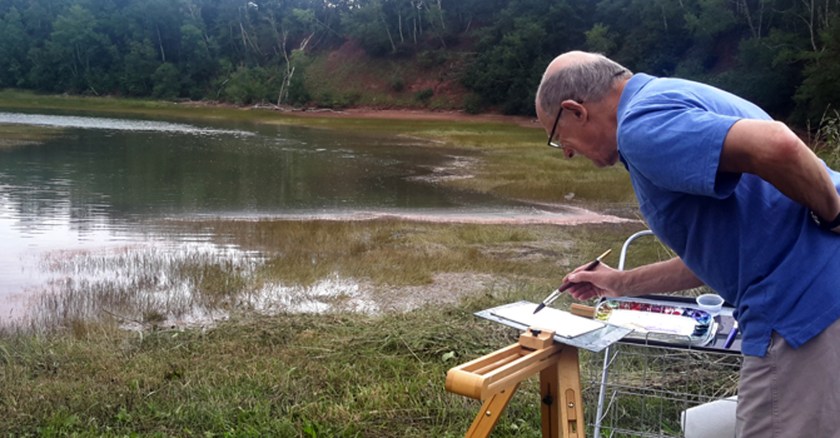
With the announced expansion of the Gordonstoun School into North America, and into Nova Scotia, in particular, a fitting tribute to Robert Waddell could excite our Maritime visual art movement. Could Annapolis County and the Town of Annapolis Royal help host/showcase such an event in collaboration with the Gordonstoun School, to celebrate the school’s Nova Scotia roots?

banner_2019_paint-outSEASON The Plein Air Artists Annapolis Valley group, now in its fifth year painting at outdoor locations throughout the Valley, could help organize the launch of such an event alongside ARTsPLACE, Paint The Town, and NSCAD.

Thinking even more inclusively,banner_KingsTheatre  connections could be made with performing arts, considering … the rich arts culture in the region, Annapolis Royal’s historical link to “L’Ordre de Bon Temps“, storytelling/plays/music at King’s Theatre, talk of a Liberal Arts University, and workshop/conference facilities such as those at Cornwallis Park. You see, “English master, Eric Anderson—like the art teacher Waddell, also in his 20s … encouraged Charles to act in several of Shakespeare’s dramas” (Vanity Fair).

Maybe this is where our Valley’s cultural history and environment can fuse with the traditions of the Gordonstoun School to make for exciting times.

References

Zoë Ettinger, Insider. Prince Charles is one of the UK’s most successful living artists. Here are 15 of his works, 30 March 2020.
Lawrence Powell, Spectator/Chronicle Herald, Gordonstoun a Go, 17 March 2020.
Plein Air Artists Annapolis Valley. 2020 Paint-out schedule.
Sally Bedell Smith in Vanity Fair. The Lonely Heir. April 2017.

Postscript

It would be excellent if Prince Charles joined Tom Forrestall and Geoff Butler on the inaugural judging panel. (Bob Maher)

Posted in New thinking

School of Life

Peter, my brother, sent me the link ‘On Confinement’ from the Book of Life. There is also a reference to Xavier de Maistre ‘A Journey Round my Room‘, written in 1790. At this time, we are all learning from the School of Life.banner_schoolOfLife

In response to the conversation between Janice Stein and Jane Jacobs, I received the following astute observations from Willy Hunter.

“Citizenship is a part-time job for us all. Some people express it via social works, and other’s via committee work, and others by being elected. Some people get to do it more or less in their jobs. Like teachers and nurses etc..

Forgiveness is actually for the forgiver and service is for the server “

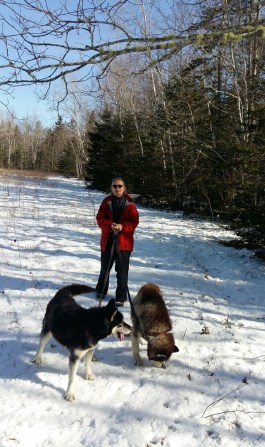
bobsDogs_2This week, we have tried to maintain our fitness regime through snowshoeing and walking. Unfortunately, the private gym at FE (Fitness Experience) in Middleton has been closed down. Similarly, the province has closed parks and trails. From Cathy, my personal trainer, I am beginning to understand my body. Now, I need to understand my mind. That seems to be one of the premises of The School of Life. Interestingly, there are several School of Life sites in Europe, but none in North America.

bookOfLifeActivitiesEmergence Magazine is offering a set of activities for the online community: a monthly book club, contributor conversations, biweekly Nature Writing course, and a facilitated workshop on the theme of vulnerability.

Before today’s snowfall (Tuesday) I was able to spend time clearing multiflora rose from the hedgerows. It was remarkable to see how different species grow together. Their form dictated by their interaction e.g. deadly nightshade, high bush cranberry. We continue to prune in the orchard, as well as topping the conifers which reach towards the overhead power lines. Today, for the first time, we were able to snowshoe down through the property.

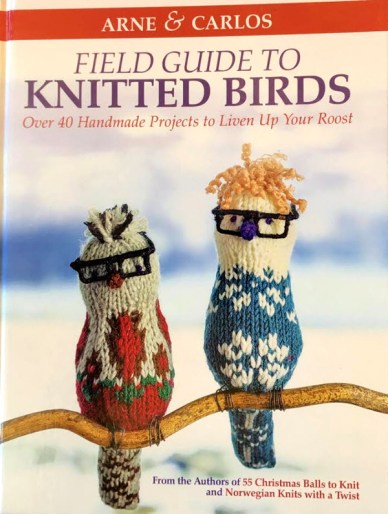
bookCover_knittedBirdsPostscript

My favourite book on the coffee table is Arne and Carlos. 2017. Field Guide to Knitted Birds. Trafalgar Square Books.

Acknowledgements

Willy Hunter for the OK to quote from his email. Cathy Bruce West for her Healthy Bodies advice. Peter Maher for the link to The Book of Life. Heather for her companionship and custodian of the pruning instruments. Edward Wedler for his graphics contributions

References

On Confinement from The Book of Life.
Xavier de Maistre. A Journey Round my Room.
The School of Life. theschooloflife.com
Emergence Magazine. March 24,2020. Contributor Conversations, Book Club, Nature Writing Course, Embracing Vulnerability and Connection. New podcast released every Tuesday.

Posted in New thinking

Mapping Art

Edward Wedler and I were both instructors at COGS in the 1980s. Edward was teaching Remote Sensing. I was teaching GIS. Eventually, the uncertainty of contract employment forced us to move on. Edward and his wife, Anne, purchased The Inside Story in Greenwood. Heather and I disappeared, with family, to Indonesia, California and beyond. And yet, we still managed to keep in touch.

20191014_132759Edward and Anne both have a passion for Plein Air Art. This takes place in Nova Scotia from Spring to Fall and Florida in the Winter.

With the changing technologies, Edward has kept on top of the new online mapping tools. This allows him to map the location of Plein Air sites. Currently, he is trying to engage COGS in the links between Google and his online Plein Air maps. Again, opening up the possibility of collaboration between the college and the community.

Edward and Anne belong to six plein air art groups; three in Nova Scotia. Each year Edward publishes “paint-out” locations (50+ sites) for the season (PAAAV and PAAHRM).PAAAV_2020schedule copy

He has also created a map at tinyurl.com/PleinAirMap to keep artists, art-lovers and tourists connected — locally, nationally and internationally. map_PAAAVHe uses Google products as these are more readily accessible to him and to the art community. The map currently has 5,000+ map views. Google also has loose connections between its many Google Drive products (eg Sheets, Forms, Calendars, Maps) that lend themselves to exciting R&D opportunities for an Innovation Hub. He feels that, with greater community college collaboration, students would gain by technical exposure to and training with Google Maps and related tools. The community would gain through local, shared incubator-projects in an Innovation Hub.  The Hub would gain by scaling locally-developed solutions and building intellectual property.
banner_lostArtCartographyMapping Art can also be seen as the Art of Cartography. There is an excellent local example in the Valley. Marcel Morin, COGS graduate, has established the business, Lost Art Cartography.
For myself, mapping the landscape is fundamental to any decisions related to land use. It continues to astound me that the Municipality of Annapolis County does not avail itself of the resources at COGS to make ‘evidence-based’ decisions on land use planning in the county, on behalf of its citizens. This is relevant to Forestry, Agriculture and any climate change strategy.

Yet another reason for the ‘community’ to be actively involved in the research and development agenda at the Innovation Hub in Lawrencetown (I noticed today that we are seeing the framework for the new multi-storey structure). The clock is ticking……..

Footnote

In retirement, many elders find their passion in the arts, science or a combination of the two. Edward and I appear to be examples of this growing trend.

Acknowledgements

Edward for his passion for both art and technology.

References

Plein Air painting sites.
Marcel Morin. Lost Art Cartography.

Posted in New thinking

The Bus Experiment: Day 2

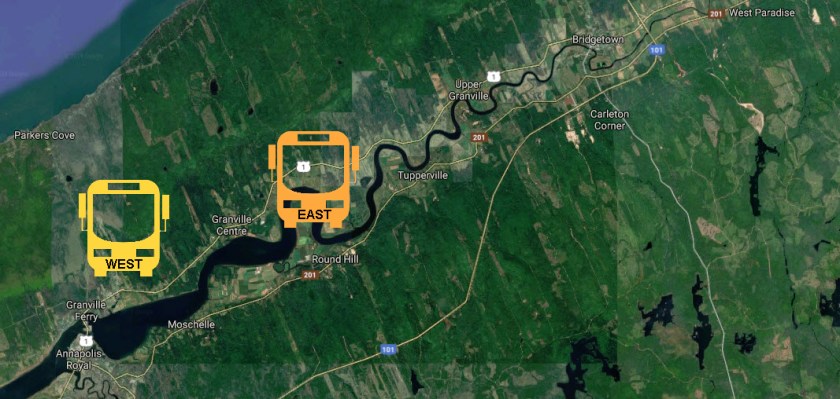
My previous blog described Heather Stewart’s experience of the Kings Transit system. It generated significant interest. Heather had more comments after Friday. I will try to summarize them below.map_eastWestBuses
1) if you decide to come home early from your meeting in Annapolis Royal, you are restricted to a two hour time window because the buses run every two hours.

2) the bus schedule in Annapolis Royal is different if you are heading east or west.
For example:
4E Champlain Seniors, Guardian Drugs, Wharf and Farmers Market, Annapolis Royal Fire Department, Granville Family Services.

4W Granville Family Services, Foodland/SaveEasy, St. George St, Historic Gardens, Annapolis  Community Health Centre, Champlain Seniors.

How do you know where the bus stops are located ? Do residents know where the bus stops are ? Are they marked? Are there any bus shelters?

3) on the bus, you are subject to the behaviour of the other passengers, who may be experiencing personal issues. If you drive your own car, then you are in your own bubble.

Another observation is that the bus travels on Hwy #1.  If you live on Hwy #201, there are limited number of bridges over the Annapolis River. e.g. Lawrencetown, Paradise, Bridgetown, Annapolis Royal. Also, what service is available if you live on the Bay of Fundy Shore?

In response to my earlier blog, I received the following  Guardian link to the situation in England. There, too, there are limited bus routes in rural areas.logo_arrivaClick

Could we not adapt the ArrivaClick application to suit the geography of  Annapolis County? Sounds like an excellent project for the COGS Innovation Hub.

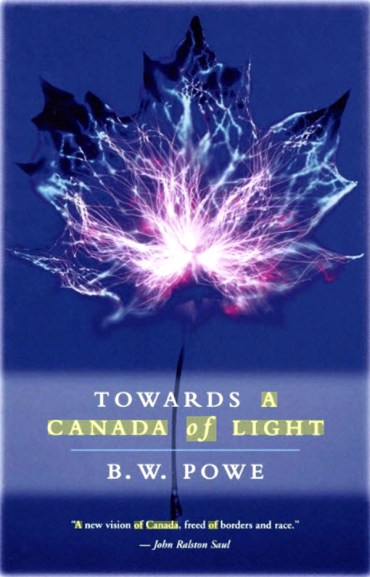
bookCover_towardsACanadaOfLightThis weekend, we stopped in Truro on our way to New Glasgow. At the NovelTea Bookstore Cafe, I picked up, for $5.00, B.W.Powe’s book Towards a Canada of Light. At the end he offers seven Coda. Here are three:

May the ability to see a future keep us bold.

May the ability to perceive patterns that are yet to be fully realized keep us directed in our hearts and minds.

May the ability to communicate and face facts, and yet to dream new dreams and to imagine fuller lives, give us the sweet strength we need.

Acknowledgements

Heather for braving the unknowns of rural  bus travel in Annapolis County. To Peter Maher for the Guardian link. Edward for finding the time to add graphics.

Reference

L Hanley, “When the Bus Ride to Your Destination is Just a Click Away” TheGuardian.com, 19 Feb 2020.
B.W.Powe. 2006. Towards a Canada of Light. Thomas Allen Publishers.