Posted in Uncategorized

Walk the Talk ( Part 2)

One of the interested buyers of our Paradise property wanted to take the trail up to the Inglisville Road. Today, we checked out the trail condition and markers.

We made it easily to the powerline. Afterwards, we spent time finding the linkage to the property boundary. Fortunately, we had hired Grant McBurney, surveyor at COGS, to mark the eastern boundary with a series of red posts and monuments. At the top of the mountain, we followed the stone wall field boundary to the Inglisville Road.

The return to our house was simple. Follow the road until you reach the junction with Highway #201. Head east to home.

In the future interested parties can follow our flagging tape or request an escort service. The total trip lasted over two hours. Heather and I benefitted from the exercise, as well as memories of earlier walks. Highlights would be the stands of mature hemlocks, and the rich flora of lichens and fungi.

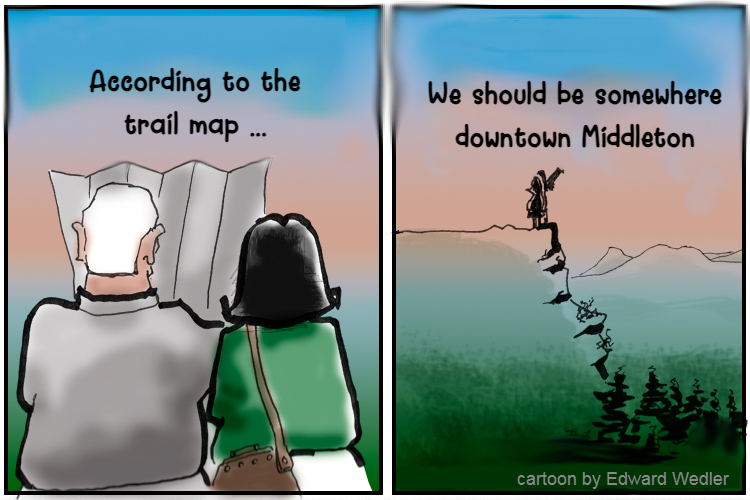
When the property sells we shall miss the walks. Instead, we shall have to find the equivalent closer to Middleton.
Posted in Uncategorized

Walk the Talk (Part 1)

Heather and I have been reading books on the importance of walking on the aging process, especially memory loss.

Today’s challenge was to return to Paradise and walk through Andrew’s property (#6325) down to the Annapolis River and across to the old Lawrencetown tree nursery. We wanted to check on the condition of the trail, as well as any cutting by Nova Scotia Lands and Forest.

After checking the trail through Andrew’s property (now owned by Rob and Sinead) I returned to #6326 and took the Z-track for a drive down to the Triangle field. This will keep the route open for the current owners.

Heather and I used this trail to conduct guided walks through the property (See post Preparing for Experiential Tourism). This was organized in conjunction with Celes Davar, Earth Rhythms. There is a short piece in the September issue of the Grapevine on his work on Regenerative Tourism in the Annapolis Valley.

Given the logistics of the house move, I have had little time for reading. This week, I did manage to finish Paul Colville’s Return to Belleisle. Paul had given me a copy a few weeks ago. In particular, I was intrigued by the historical fiction, where he had added a cast of characters to historical events in the Belleisle region. It made me want to understand in more detail the changes in the population and the landscape and to see a map of those changes over the last 250 years. Today, I see evidence of the earlier Acadian presence, but also the livelihood of Rob Warren and his maple syrup business.

I think our next walk will be from our property on Highway #201 up the mountain to the Inglisville Road. That is for another day. And keep ‘walking the talk’.

References

Paul Colville, 2024, Return to Belleisle, Printwright Printing Services, Bridgetown.

Awakening Regenerative Tourism in the Valley, September 2024, The GrapeVine.

Acknowledgements

Edward added the links and graphics. Paul Colville provided a copy of his new book. Celes Davar commented on Regenerative Tourism in the Valley.

Posted in Common Place

Window on the World

On the weekend, Heather and I walked down through the marsh below our new house to the Annapolis River. We were interested to check out the riverine vegetation species.

Yesterday we were surprised to hear the sound of a tractor. They were cutting the marsh grasses for the hay. This reminded us that it is that time of year for the farming community.


With good intentions, we are increasing our daily walks. Today, it was back to Valley View Park. At our regular parking spot on the Hampton Mountain road, we found the entrance to the Chalet Road trail. Previously, we had hiked this trail to the communication tower.

The trail had not been maintained, however we did locate new chalets, as part of the Hampton Mountain Chalets. We came back to Hampton Mountain Road via Dragonfly Lane. This proved to be about an hour-long walk.

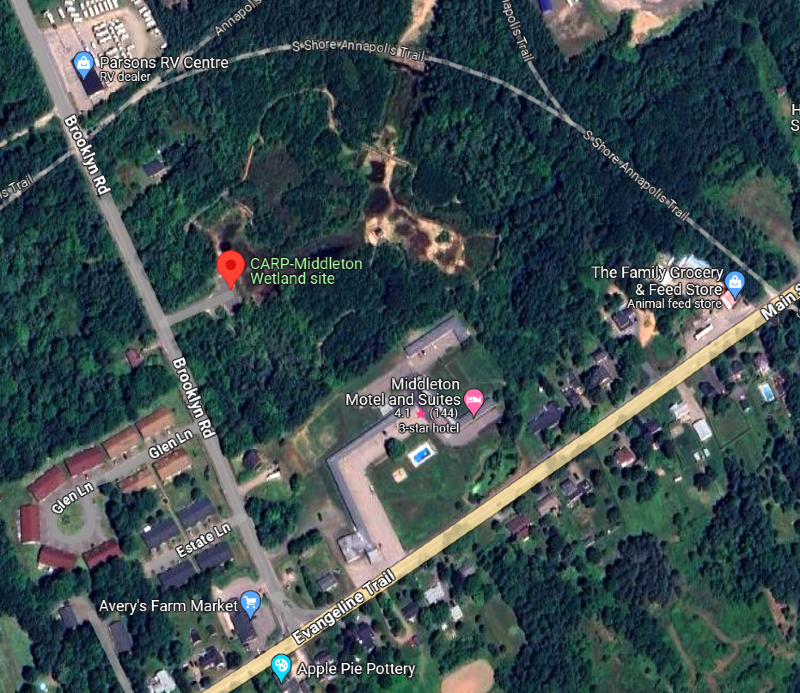
Invigorated, later in the evening, we loosened up the legs with a short fifteen-minute stroll around the CARP Marsh Trail.


Edward sent me a link he judged to be a challenger to Esri’s StoryMaps in Newfoundland and Labrador.

Create a digital book and share your story with the world.
These are the words of Newfoundland’s storyexchange.com

This platform may be an effective way of sharing place-based perspectives that are not “map-centric”.

Posted in Travel

The Talking Car

Today, we went to Kings County Honda in Kentville. On the information panel for our 2021 HR-V we previously received a notice that we needed a B1 service. We made an appointment. It was three weeks away. Meanwhile the notice changed to a B13 service.

After arriving at 8 am, we were offered a shuttle ride to downtown Kentville. We declined hoping the service would only take 1-2 hours. In fact, it took three hours.

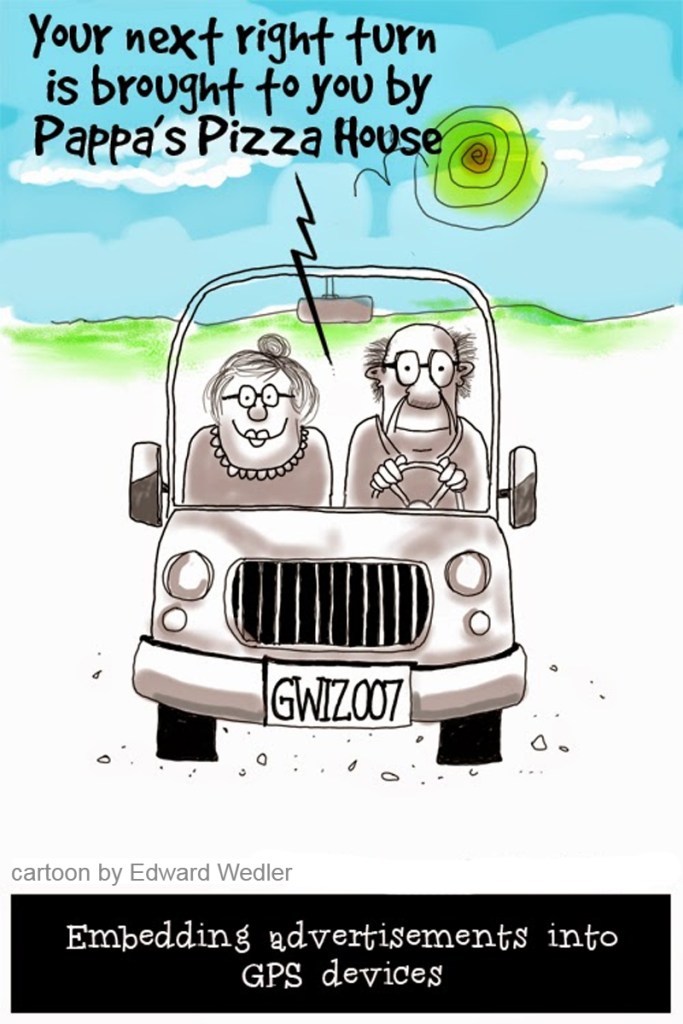
After we left Kentville, we noted the following message. Turn by Turn. Waiting for Smartphone Guidance.

By the time we arrived home for lunch , we were exhausted. What had started as a routine service at the Honda dealer, had turned into a confusing conversation with automobile technology.

Who had turned on the requirement for Smartphone Guidance ? Do we need to return to the dealer to answer the question? What happens, if you are not ‘smartphone savvy?’

Even though, we have owned the HR-V for almost a year, we still have problems with the START/STOP button. It can be far too easy to leave the car running. What used to be a satisfying/ personal visit to your friendly car dealer has turned into a marathon exposure to ‘controlling technology’.


On a very different note, yesterday, we walked the road to the communication tower above Valley View Park. En route, along the roadside, we noted a couple of patches of Agalinis neoscotica (see previous blog on this species).

Postscript

It really is time to thoroughly read the Owner’s Guide for Quick Reference 2021 HR-V.

Posted in Uncategorized

West Dalhousie visit

Driving the Morse Road from Bridgetown to West Dalhousie is always a pleasure. It makes me aware of Ernest Buckler’s geography from an earlier time.

Our objective was to attend SOOF—STOCK.

We arrived mid-morning, missing the Old Growth forest walk with Donna Crossland (see also previous posts Saving Forests and Burned: are trees the new coal).

In the hall, I noted the Ernest Buckler Memorial Library and photographed several posters on the history of West Dalhousie: churches, schools and community.

On Sunday, I stopped at the Forest market in Annapolis Royal. Nina Newington provided an update on SOOF-STOCK; Danny Bruce gave an update on the status of agriculture in Annapolis County.

Afterwards, we decided to drive down to the South shore on Hwy#8 to Liverpool, Bridgewater and Mahone Bay. Kejimkujik National Park and Mahone Bay were crowded with tourist visitors. However, Hwy#8 was eerily quiet.

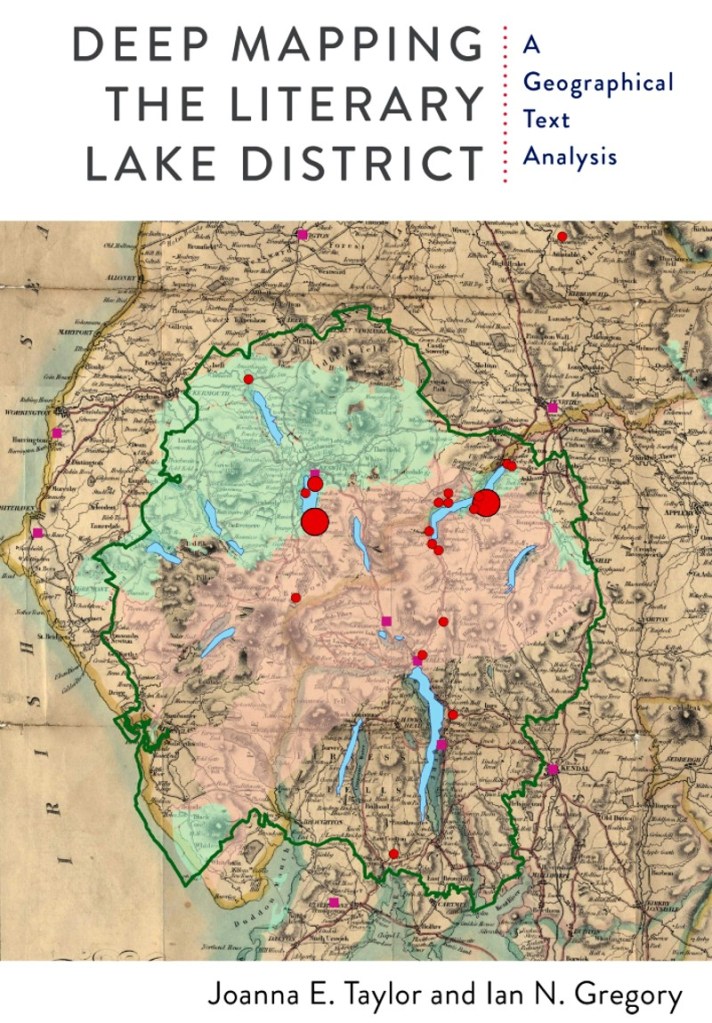
Today stopped at the COGS library and signed out Joanna Taylor’s and Ian Gregory’s Deep Mapping of the Literary Lake District, A Geographical Text Analysis.

Can we imagine Deep Mapping of the Literary Annapolis Valley ?


From Jack Dangermond, by email, a reference to James Follows and Deborah Follows 2018. Our Towns: a 100,000 mile journey into the Heart of America. Off to inter-library loan.

(See also a longer, detailed presentation of Our Towns, HERE)

Acknowledgements

Chelsea and Andrew at COGS Library for the Deep Mapping text. Jack for the reference to the Follows’ book. Edward has added the graphics and links.

Posted in Uncategorized

Agalinis neoscotica

Today (Friday) we returned to the house in Paradise. We wanted to weed the front vegetable garden. This allowed us to find potatoes, tomatoes and onions. Later in the day, Lorie, our real estate agent was showing the house. Perhaps the visitors will realize the care and affection we have for #6326.

No. 6326 Hwy 201 (click the image for a map)

We decided to walk the Marsh/CARP trail in Middleton to loosen up limbs

Just as we were returning to the parking lot, Heather noticed a small purple flower.

It was Agalinis neoscotica. She had spent her graduate research at the University of Guelph on the genetics of this species.

Energized by our discovery, we went back to the Centennial Park by the elementary school. Again we found Agalinis neoscotica, along the abandoned rail line. This is the type location for this elusive species. It is the only plant with neoscotica as its species epithet (see previous posts, Brier Island , Biogeography, and Middleton False Foxglove)

These discoveries make us feel that Middleton is ‘our home’ too.


I am still thinking about economic development in rural Nova Scotia : the relationship between geography and economy. The most obvious context is the history of geographic information systems and the role of COGS.

For example, in Great Village, Nova Scotia there is the EB House; a writer’s retreat dedicated to Elizabeth Bishop (see post Geography III). Can we imagine a “Geographers Retreat” dedicated to the legacy of Roger Tomlinson? It could be in Lawrencetown or Paradise, supported by the Geographic Information System industry e.g. Esri and Esri Canada.

“The Power of Place” or in Greg Baeker’s terminology ‘the creative rural economy’.

Acknowledgements

Thank you Edward Wedler. His contribution : links, images and research demonstrates the value of collaborative research. Much appreciated.

Posted in Uncategorized

The Power of Where

Tuesday morning, the courier delivered ‘The Power of Where’ by Jack Dangermond, published by Esri Press. This was a complete surprise, out of the blue. Subsequently, through an email from Clint Brown, I learned the amazing statistic that approximately 160 COGS graduates had joined the company over the years. Not sure if that includes Esri Canada. Certainly, I do recall the day that Alex Miller came to Lawrencetown and hired Eric Melanson, David Roscoe and John Houweling.

Thinking about the Power of Where raised up the Power of Place. What was special about Lawrencetown in rural Nova Scotia ? Certainly the history of COGS (NSLSI) after the Second World War. Also the combination of a rural setting (agriculture, forestry, fisheries) and access to the latest geographic information technology.

Other factors include the people relationships: Roger Tomlinson and John Wightman; Michael Goodchild and Bob Maher; Jack Dangermond and Alex Miller.

In some small way, I hope that these blogs over the years, have led to an understanding of COGS, Lawrencetown and the Annapolis Valley. Perhaps the seed concept (ACORN): Annapolis County Opportunities Rural Network can provide sustenance for the next generation.

Monday, Heather and I were in Canning at the Merritt Gibson Memorial Library. In the sale bin, I found the book by Bill McKibbon ‘The Age of Missing Information’, the follow up to his earlier work ‘The End of Nature’.

Clearly, time to start reading again !

Posted in Uncategorized

The Lawrencetown Exhibition

Every August, the village of Lawrencetown hosts the Annapolis County exhibition.

Heather and I attended on Saturday, the last day. We wanted to see whether there had been any changes. In particular, I was interested in the relationship between agricultural research and the Geographic Sciences ( COGS sits just across the road from the exhibition grounds).

From my relatively short visit, the content of the Ex. seemed to follow past tradition : focus on 4H, main events in the show rings, the fairgrounds and many booths for food and drinks. Certainly at $20 per adult it should generate some local revenue. Plus parking.

The presence of the exhibition did prompt me to consider the role of agriculture in the local economy, whether it still offers a tourism attraction ? Could it become a cornerstone in the ‘ creative rural economy’ ?

I left the Lawrencetown site, thinking more about the history and future of COGS. We first arrived in 1980, bringing new technology (Computers, GIS) to this rural landscape. In recent years, the NSCC has added a new wing to the building, ostensibly to bring further industry/technology to the Valley.

Is that happening ? If not, why not ? For almost fifty years, COGS has proven that the combination of new technology in a rural setting can provide an excellent environment for intensive learning and research.

Time to revisit the model !!

I sent an email, proposing ACORN, the seed of an idea.

Annapolis County Opportunities and Research Network.

Thank you, Edward, for refining the acronym. I enjoy your full support.

Posted in Uncategorized

Mapping House Space

After twenty four years there is a period of adaptation when you move house. Furniture has to find a new location. Dishes need new cupboard space; photographs and art placed on the wall. For now, books remain tucked away in boxes.

At a time, when most people are downsizing, we seem to have more rooms.

The biggest challenge is the transition. Two spaces need to be managed, and serviced. Electricity, heating, water. Likewise the rationalization of two banking services and the various payments.

Along with two banking systems comes the increased use of the cell phone for personal verification.

To compensate for the challenging complexity, we can realize that we have run out of milk or other essentials. It is a five minute walk to the grocery store, the mail box, the bank or the drug store. That will require getting ‘used to the convenience’.

Even to meet old friends for a beer at the pub. The same answer – a five minute walk.

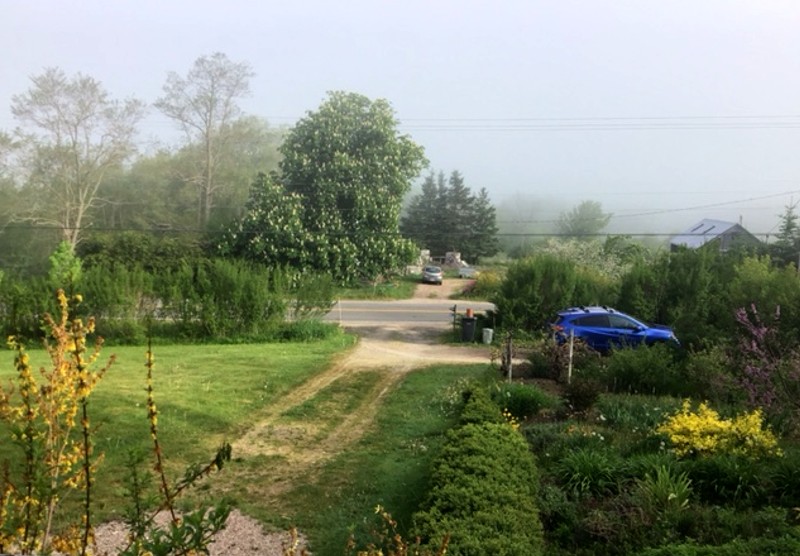
Looking out at the deck, the early morning mist is rising up from the Annapolis River. The cardinals are chirping; the squirrels are chasing after dropped acorns, from the majestic oak trees.

We are starting to feel comfortable, with friends dropping in, and witnessing our transition from chaos, back to order. It’s a rigorous test of the memory bank.

And the toaster is on top of the cupboard…..! This morning, I forgot to ‘plug in’ my hearing aids……

Posted in Uncategorized

A Jewel: McCulloch House Museum

Dr Thomas McCulloch was born in Scotland in 1776. He arrived at Pictou in 1803. In 1816 he founded the Pictou Academy and later became first President of Dalhousie University in 1838.

Before leaving Pictou to return to Middleton, we stopped by the McCulloch House Museum. We went into the the Centre, the staff opened up the house. This allowed us to enjoy a self-guided tour. We noted the paintings gifted to McCulloch by Audubon. We also found the second hand book store. I could not resist two books from the Penguin Modern Classics collection.

Albert Camus. The Outsider. 1942 ( one dollar!)

William Golding. Lord of the Flies. 1954. (two dollars!)

McCulloch believed in the right of everyone to have an education. He also believed it was the key to happiness. This led McCulloch to become a political reformer as he fought for change in university education and the government,

We returned home on Friday afternoon. Jeannie Barteaux offered to drive us to Tom Allen and friends at Kings Theatre in Annapolis Royal. The presentation combined story telling and music under the title J. S. Bach’s Long Walk in the Snow.

Having enjoyed reflecting on the life of McCulloch in the 1800’s. I had the same pleasure reflecting on the life of J.S.Bach in the 1700’s.

For more information on McCulloch check out the New Canadian Library edition of The Stepsure Letters.

Acknowledgements

Thanks to Jeannie and Heather for the excellent company.