Posted in Uncategorized

The Fundy shore

Ernest Buckler focussed on the Mountain and the Valley, yet there exists another world — along the Fundy shore. In Annapolis County, this includes the beach at Hampton, as well as the trails around Delaps Cove.

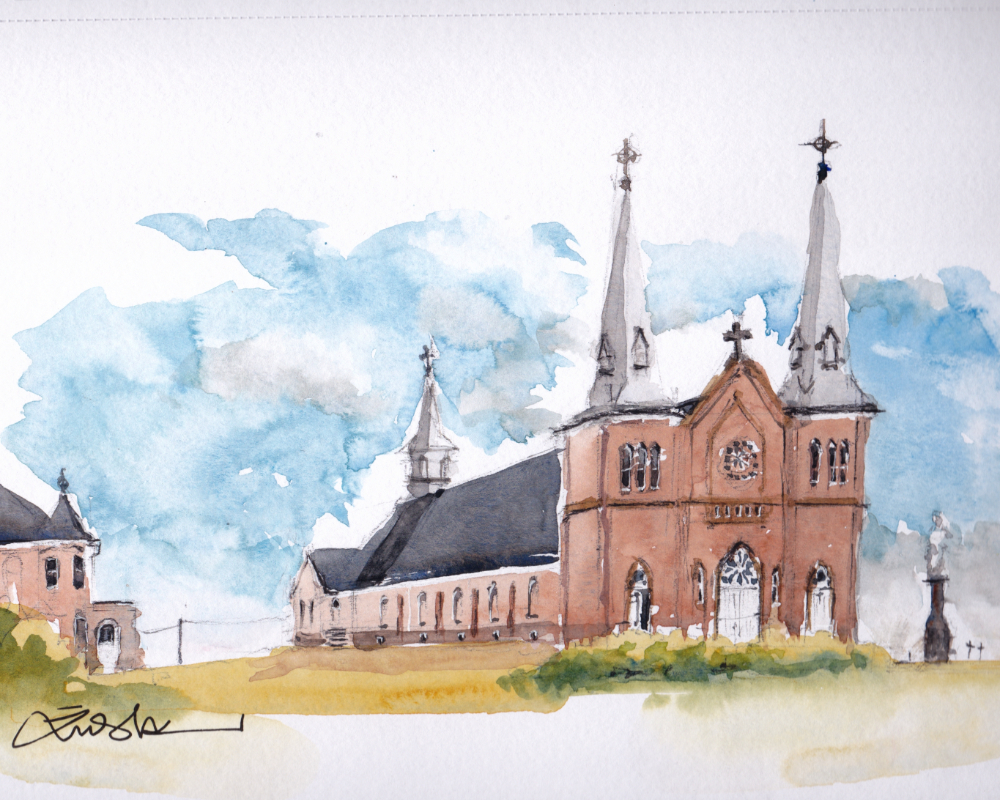
Cottage Cove on the Bay of Fundy (sketched by Edward)

Jane Borecky was a member of the EBLES (Ernest Buckler Literary Event Society ) organizing committee, along with Anne Crossman, John Montgomerie and myself (see posts Reading Where We Live, Down Memory Lane, and Writing v Reporting). Last Thursday (August 7), Jane hosted an event at her house in Young’s Cove.

Catherine will be talking about writing the play for The Mountain and the Valley, and Terry will be singing and speaking.’

Besides the combination of insight from Catherine Banks and Terry Kelly, we were treated to a backdrop of the setting Sun over the Bay of Fundy, towards New Brunswick, and a cooling breeze that caused us to dress up.

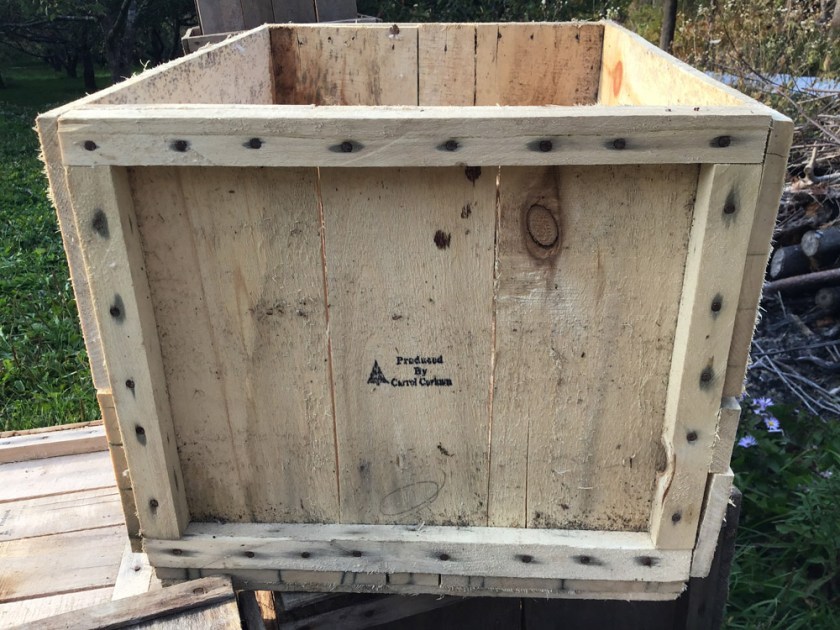
“Hampton Blue Barrels”, plein air watercolour by Edward Wedler

There were likely over thirty persons at the event. It ended with sufficient time to safely drive back to the Valley ( Middleton)

Acknowledgements.

Thank you Jane, for sharing the speakers, the music and the awesome location. Perhaps this will be the start of a new tradition.

Postscript

This week, another voice from the past, Greg Baeker. We have been out of touch; seven or eight years ago, he left for Abu Dhabi. He is a founder of AuthentiCity, with a PhD in Urban Cultural Planning (see post Doc Martin and Agalinis NeoScotica).

Posted in Uncategorized

Yarmouth County visit

Thursday, we picked up the grandchildren from Big Cove Camp (see post Pictou County Visit). Quinn had to get to the airport. He flew with his mountain bike to British Columbia. He will be hitting the trails around Rossland. Isla had to get to the Yarmouth ferry to meet Granny Janis. They will go back to Maine today

It was a full day.

First, we checked out our previous residences in the Valley.

followed by a treasure hunt for gnomes at the Historical Gardens.

We had a bit of time to kill, so we took a short drive along the coast to enjoy the landscape around Mavillette Beach on the Acadian shore.

Yarmouth was full of motorbikes hosting ‘Thunder on the Coast’, the equivalent of Digby’s ‘Wharf Rat Rally’.

Since the CAT did not dock until 7:30 pm, it made for a long sunset drive back to Middleton. With the recent price cut, we can expect to see more travel between the Acadian Shore and Maine.


It is hard to reconcile the voice of the Tim Houston government for both onshore and offshore resource development. Instead, I would champion Zita Cobb’s ‘Shorefast’ model from Fogo Island.

Shorefast supports a place-based creative rural economy (see posts Shorefast, World GIS Day and Community Economies). Promoting the culture, creativity and strengths of the people in the region can be tied to the aesthetics of unique landscapes, lifestyles and educational institutions (see also Zita Cobb’s speech Putting Leadership in Place).

Acknowledgements

Heather shared the memories of Southwest Nova, and the time with the grandchildren. Edward added the graphics and links.

Posted in Uncategorized

Annapolis County visit

After returning home to Annapolis County, I thought about the contrast between the two municipal units (Pictou and Annapolis) (see post Pictou County Visit). We decided to further explore this part of the Valley.

The first stop was the Edelweiss Restaurant on Mount Hanley Road to Port George. We hoped for lunch; but they are only open for Supper 4 – 8 pm. Another Day!

Afterwards, we stopped at the Clarence market, Friday 4-8 pm.

There were a few vendors. We walked away with butter tarts and a mint plant. We talked to Bob Bent about the availability of his next book.

Heather and I spent time on Brier Island in the early 1990’s. She completed her M.Sc in Biology at the University of Guelph in 1993 (see posts Biogeography, A Round Trip and Brier Island). The research topic was the Reproductive Biology and Developmental Morphology of Agalinis Neoscotica (Scrophulariaceae).

“Agalinis Neoscotica is the only plant that has the specific epithet ‘neoscotica’. Greene (1910) named the small plant he found at the Middleton railway station Gerardia neoscotica. Fernald (1921) after a field trip to Nova Scotia, made a new combination, Agalinis neoscotica, thus elevating Pennell’s variety to a species, and in 1929 Pennell adopted the name.“

Time (2025) for us to return to Brier Island (over thirty years).

We enjoyed the drive down Digby Neck, taking the two ferries. With Heather’s thesis in our backpack, we went to find the plant at Pea Jack Cove. We managed to obtain a map of the island, when we stopped at Brier Island Lodge.

Ah -ha , we found it, even though the site had been disturbed by earth works and ATV trails.

We did not have the time to check out the other location at Big Pond Cove. An excuse for a return trip. We also verified the flowering season, i.e. late July to early August. BTW Brier Island is in Digby County.

Feeling very pleased, we returned to Middleton, we will re-check the original Greene location, along the abandoned railway line ( stay tuned).

After our successful adventure, we went to hear the Best of Boxwood at the Kings Theatre in Annapolis Royal.

The music was excellent: Chris Norman, David Greenberg, Brid Harper and Colin Cotter. An excellent venue, it is certainly comparable to the de Coste Centre in Pictou County.

Postscript

Perhaps, Agalinis Neoscotica should be our Provincial flower. It would raise the profile of Middleton, where Greene discovered it, botanizing by the railway track in 1910.

Yesterday, Anne Wedler‘s plein air, “Spruce Meadowland”, was painted in oil near Lawrencetown Beach (Halifax County).

Acknowledgements

Heather provided the botanical knowledge. I added the Geography. Edward contributed the graphics and links.

References

Heather Stewart, 1993, Reproductive Biology and Developmental Morphology of Agalinis Neoscotica (Scrophulariaceae), University of Guelph, Department of Botany.

Posted in Uncategorized

Pictou County visit

This weekend we had to visit Pictou County. Two of our grandchildren, Quinn and Isla, had come down from Iqaluit to attend Big Cove YMCA Camp.

We met them in New Glasgow. This is a family tradition. All three of our children had attended this Summer camp during their teenage years. First as attendees, later as camp counselors. After the send-off on Sunday (20th), we will pick them up on the 31st. At the end of the Summer, their family will be moving to Whitehorse, Yukon.

Today (21st), we went down ‘memory lane’. In a heavy rainstorm, we visited Melmerby Beach.

Later, we had to find a laundromat. We were successful in Pictou. A remarkable facility, just off the main street. While we had to wait for the wash, we decided to check out the art gallery at the deCoste Performing Arts Centre (see post Pictou Visit and A Tale of Two Geographies).

Sandy, Heather’s sister, had submitted a painting, “Colour is Everywhere”. We found the painting. The gallery maintains an excellent selection of works by local artists. Today, there were also displays by students from NSCAD in Halifax.

We look forward to returning to the county at the end of the month. To help the grandchildren continue their transition from the Eastern Arctic to the Western Arctic. We will have an excuse to visit the Yukon in the months ahead.

Acknowledgements.

Granny, Heather, joined me, driving the backroads of Pictou County. Refreshing old memories, and making new ones. Edward made his excellent contribution

References

Big Cove YMCA Camp, “Canada’s oldest overnight camp and more than 130 years of tradition and growth.”. It is just off Exit 27 on Highway #104.

Pictou Laundry Ltd, 2 Water Street, Pictou.

deCoste Performing Arts Centre and Culture Hub, 99 Water Street, Pictou. Creative Pictou County is hosting three exhibitions: Rising Tide, Chroma and Road Taken.

Posted in Uncategorized

Local Geography

Increasingly, there are times when you have to turn off the global Geography (aka news media) and rediscover local Geography.

Today, we did exactly that.

We left the house in Middleton, wondering whether we could find straw to spread around our strawberry plants. We started at the AnnaVale Coop. Closed on Sunday. It did not look too promising. We noticed a sign on the Mount Hanley road, “hay for sale”, with a phone number. Duly noted.

We continued our drive through Clarence East; took the Leonard road down to Paradise. At Neily’s nursery, we turned for home.

It was nearly lunch time, so a stop at Bees Knees in Lawrencetown was in order (read posts Buy Local; Read Local and Wild Mind/Wild Earth).

The store was busy for a Sunday. We put our feet up, with a coffee and a sausage roll. The store has a variety of interesting souvenirs, as well as books by local authors. I checked out “People of Cove and Woodlot” by Ted Leighton and Alexander Leighton (1908-2007) — stories across 100 years of memories.

When we returned home, I went online to check out other Moose House publications. There were several books of interest, including Anne Crossman’s “CommonPlace“; just published. It includes a number of her columns from the Annapolis Valley Register.

The take home message is a simple one. Enjoy the pleasures of the local Geography. Note the small changes. Don’t fret the global Geography and the things that are outside of individual control. There is a rich literature, supported by local publishers. There are subtle changes in the rural economy which can be shared with other Geographers.

Acknowledgements

Heather shared the short drive. Edward added the links and graphics.
I shared an earlier draft with John Wightman.

References

Ted Leighton and Alexander Leighton, 2025, People of Cove and Woodlot: stories across one hundred years of memories, Moose House Publications

Anne Crossman, 2025, CommonPlace, Moose House Publications.

Postscript.

From my evening conversation with John. We identified two thoughts.

1) How do we think local, and act global ?
2) How does Geography play a prominent role in the Canadian response to the post-Trump economy?

In particular, what is the role of the Centre of Geographic Sciences and the application of the Geographic Information Systems and Technology? Management of the Canadian landscape depends on accurate, current geographic information.

I would appreciate feedback on this blog post.

PS Edward logs the Geography of Art-Lover-tourists during his shifts at the Fisherman’s Cove Gallery in Eastern Passage. He notes a surge in Western Canadian and European visitors this year.

Posted in Uncategorized

Hay Time

This week the bottomland alongside the Annapolis River, below our property, was cut, dried and baled.

From the deck on Connaught Avenue, we could share the action with visitors.


On Saturday, we had time to visit some of our local trails, including the Old Mill Trail, South Farmington; the Marsh Trail, Middleton …

… and the trail into the ‘back door’ of Valley View Park (Bridgetown).

The surprise, as we entered the gravel road to the fire tower, was a stunning display of Arethusa bulbosa (Dragon Mouth orchid) in a small wetland.

Sunday, we stepped outside of Annapolis County. We checked out previous visits to Burlington. At the end of the afternoon, we were at the Lobster Pound and restaurant at Halls Harbour.

It was a very crowded spot. No parking available on the dock.

Acknowledgements

We enjoyed visits from Sandra and Brenda Barry, and a beer on the deck with John Wightman. The latter included John’s memories of Roger Tomlinson, and their time together at Acadia University. I remember Roger needing to pick up lobster at Halls Harbour. Edward added the graphics.

Posted in Uncategorized

Canada Day plus One

Yesterday we celebrated Canada Day with a trip up the Valley to Wolfville and Canning.

We parked behind the Main Street. Heather noticed another small blue car. It was Sandy, her sister, dropping off some clothes.

In the bookstore Heather found a signed copy of Farley Mowat’s “Walking on the Land“, published by Key Porter Books.

I noticed that the cover was designed by my older brother, Peter. He had a career in the publishing industry in Toronto.

It brought back memories for Heather too. She had a career working for Parks Canada. Over the years, we spent time on Haida Gwaii, BC; Churchill, Manitoba; PEI; Sable Island, NS; and in Gros Morne, Newfoundland.

After the ‘book fix’, we drove across the Acadian dykeland to Canning. We stopped at the Art Can Cafe and Gallery for coffee and cake (see also Geographers Among Us).

Ron Hayes was putting together their July exhibition.

Sandy continued on to New Minas. We headed home via the orchards of South Berwick. It was a satisfying day, full of surprise encounters, memories and landscapes. Back home in Middleton, I was able to put my feet up, and enjoy Mowat’s storytelling.

Acknowledgements

It was fortuitous, unplanned, that we were able to meet Sandy and share the Art Can Cafe in Canning. The Farley Mowat’s book took us back to walking on the land, and the richness of landscape.

References

Farley Mowat, 2000, Walking on the Land, Key Porter Books

Posted in Uncategorized

North Star

At the Inside Story bookstore I found the Special Collector’s edition of Canadian Geographic (July/August 2025). It includes an essay by Wade Davis ‘North Star. Reflections on Canada and being Canadian’

Davis quotes Zita Cobb, from Fogo Island, Newfoundland :
Canada is a mosaic because our geography denies any other possibility. Our landscape is a map of dreams, a mystic endowment essential to our identity.” p.48

This special edition celebrates Canada, ‘True North Strong and Free’. Clearly, a response to Trump’s machinations south of the border.


Friday, Heather, myself and Frank Fox enjoyed lunch at the Indian Masala House on Queen Street in Bridgetown. A very positive addition to eating out locally.

Saturday, over a growler of Brickyard Red, John Wightman and I discussed plans for the Ring of Fire. Again, covered in Canadian Geographic under the title: ‘Yehewin Aski, the Breathing Lands’ by Susan Nerberg. From Jeronimo Kataquapit, ‘Jeronimo hopes to create a clearer image of what’s happening to the land and animals – and in turn his people – so he can guide positive change, perhaps as a GIS specialist and land guardian’. p.75.


Sunday, we were back in Bridgetown to celebrate Fielding’s graduation from BHS (Bridgetown Regional High School).

He has expressed an interest in the Railway Conductor program at SAIT in Calgary. It is a twelve week course. He may become a Geographer.


Tomorrow, the country and its people will celebrate Canada Day.

If you have the opportunity, find a copy of Canadian Geographic.

Acknowledgements

Frank Fox, John Wightman and AnJeanette LeMay (Fielding’s Mother) for expanding my horizon.

Reference

Canadian Geographic July/ August 2025, Vol 145 Number 4, This is Canada : Special Collector’s Issue, Protecting Western James and Hudson Bays, Last Fire Watcher.

Posted in Uncategorized

CARP and AI

Tuesday evening, Heather and I attended the CARP AGM at St Luke’s Hall in Annapolis Royal. We last attended their AGM in 2023.

Afterwards, I was curious about any changes in the projects undertaken by CARP staff. I asked Edward if he could search my blog for references to CARP activities.

His first search identified twenty eight posts between 2017-2023.

Subsequently, he applied Gemini AI. Below is a progress report.

“Processing Blog Post request.

I’m currently working on processing the provided URLs. My initial step iterating through each link to extract relevant content about CARP, the Clean Annapolis River Program. I’m focussing on text specifically related to the program for a concise 300 word summary.

Parsing URL’s Now.

I’m diving into the provided URL’s, using Browse to extract information. My focus remains to identify and gather relevant text. I’ll efficiently process these blog posts to compile the necessary details for a concise summary.”

I look forward to the concise summary. While I have no experience with Gemini AI. It seems to suggest an activity that may have ongoing value to CARP.

For myself, there may be a similar broad analysis of themes from my blog stream between 2017-2025.

That is likely for another day, and for a different audience.

Acknowledgements

Edward brings a number of talents to my blog process. He not only adds technical competence with online tools. He adds knowledge of remote sensing. And an artistic sensibility. I hope too his understanding of AI illustrates the role this technology may play in our educational environment.

Postscript

Gemini AI noted “something went wrong” when trying to process all links. Another attempt was made a day later and here is a 300-word-or-so summary of the Ernest Blair Experiment references to the Clean Annapolis River Project …

The following is a summary of the blog posts from “The Ernest Blair Experiment” that reference the Clean Annapolis River Project (CARP):

The Ernest Blair Experiment blog frequently highlights the activities and importance of the Clean Annapolis River Project (CARP). Several posts demonstrate CARP’s long-standing commitment to the Annapolis River watershed and its community engagement.

In a June 30, 2023 post titled “No Carping,” the authors detail attending CARP’s annual general meeting, noting its 33 years of operation, dating back to efforts for Heritage River status. The post commends CARP’s mission: “Enhancing the health of the Annapolis River watershed for current and future generations through science, leadership and community engagement.” It outlines various key projects, including Annapolis estuary monitoring, fish passage restoration, habitat enhancement, the Habitat and Biodiversity Assessment tool, Living Labs, Annapolis Valley sand barrens stewardship, wetlands restoration, recreation trail development in Middleton, natural infrastructure for stormwater management, and the Annapolis River Guardians program. The blog post also mentions CARP’s dozen staff members, volunteers, and numerous partnerships, and references “The Waterstrider Newsletter” and “The Annapolis Valley Sand Barrens: An Introductory Guide” published by CARP.

Another post, “Window on the World” (September 4, 2024), mentions a fifteen-minute stroll around the “CARP Marsh Trail,” indicating the physical presence and accessibility of CARP’s conservation efforts within the community.

Additionally, the post “Communities of Interest” (November 7, 2019) notes that CARP hosted an educational event with Solar Nova Scotia in Annapolis Royal, showcasing CARP’s role in facilitating broader environmental discussions and community education beyond its core river conservation efforts. This suggests CARP’s involvement in a wider network of environmental initiatives and its commitment to public awareness and collaboration.

The recurring mentions of CARP across various blog posts underscore its integral role in the environmental and community landscape of the Annapolis Valley, with a focus on watershed health, biodiversity, and community engagement. The posts collectively paint a picture of CARP as a vital organization, deeply involved in scientific research, practical conservation projects, and educational outreach to foster a sustainable future for the region.

References

Here is a list of blog posts where there is some reference to CARP.
https://ernestblairexperiment.com/2023/06/30/no-carping/
https://ernestblairexperiment.com/2019/05/13/carpe-diem/
https://ernestblairexperiment.com/2025/04/04/just-like-old-times/
https://ernestblairexperiment.com/2024/12/26/boxing-day/
https://ernestblairexperiment.com/2024/10/03/middleton-walks-1/
https://ernestblairexperiment.com/2024/09/04/window-on-the-world/
https://ernestblairexperiment.com/2024/08/24/agalinis-neoscotica/
https://ernestblairexperiment.com/2024/07/03/changing-demographics/
https://ernestblairexperiment.com/2023/12/05/a-sense-of-agency/
https://ernestblairexperiment.com/2023/11/24/community-health/
https://ernestblairexperiment.com/2023/03/31/saving-our-estuary/
https://ernestblairexperiment.com/2022/05/13/a-room-of-ones-own/
https://ernestblairexperiment.com/2021/07/22/two-conversations/
https://ernestblairexperiment.com/2021/02/21/whole-earth/
https://ernestblairexperiment.com/2020/10/07/a-green-future/
https://ernestblairexperiment.com/2019/11/11/the-climate-action-summit/
https://ernestblairexperiment.com/2019/11/10/tantramar-marshes/
https://ernestblairexperiment.com/2019/11/07/communities-of-interest/
https://ernestblairexperiment.com/2019/10/07/rewilding-the-annapolis-valley/
https://ernestblairexperiment.com/2019/07/01/down-memory-lane/
https://ernestblairexperiment.com/2019/06/18/the-pastoral-economy/
https://ernestblairexperiment.com/2019/06/03/swiftwatch-and-airos-birthday/
https://ernestblairexperiment.com/2019/02/21/uncommon-common-science-in-annapolis-county/
https://ernestblairexperiment.com/2018/11/10/a-heritage-river/
https://ernestblairexperiment.com/2018/04/30/merging-hopes-and-fears/
https://ernestblairexperiment.com/2018/02/02/3d-workshop-from-the-real-world-to-the-digital-world/
https://ernestblairexperiment.com/2017/07/20/story-maps-writing-art-and-the-landscape/
https://ernestblairexperiment.com/2017/03/27/a-day-in-rural-nova-scotia/

Posted in Uncategorized

Beneath the Surface of Things

Wade Davis has served as Explorer-in-Residence at the National Geographic Society from 2000-2013. He is currently Professor Emeritus of Anthropology at UBC.

I spent most of Friday reading his book of essays.

Three topics caught my attention: the history of America, the crowning of Everest, and beyond climate fear and trepidation.
(image link HERE)

Besides his ‘Anthropology’ perspective, he is also a Geographer. See for example, essay #7 ‘ the art of exploring’.

His final word:
Before Buddha or Jesus spoke”, wrote DH Lawrence “, the nightingale sang, and long after the words of Jesus or Buddha are gone into oblivion, the nightingale still will sing.

The goal of the pilgrim is to become as if a bird dissolved in the sky yet filling heaven and earth with song. Passing through the sky, leave no trace, at one with the sacred.” p.255.


Saturday evening, Heather and I shared a growler of Brickyard Red with John Wightman. It had been a wonderful summer day. As we were out on the back deck, we were joined by a Broad-winged hawk, sitting in one of our mature oak trees.

It had caught a small bird, and proceeded to dismember it, sitting on a branch in full sight. A unique, memorable end to the day.

Acknowledgements

We enjoyed visits from both Rosalind Miller and John Wightman on Saturday. Edward added the graphics and links

Reference

Wade Davis, 2024, Beneath the Surface of Things: New and Selected Essays, Greystone Books.