Posted in Uncategorized

AAGP Conference

The Atlantic Association of Geomatics and Planning (AAGP) are holding their 50th. year anniversary conference, at the NSCC Dartmouth campus on June 12th.

The title is ‘GeoAI’. They have invited me to give the keynote. While I can talk about fifty years of GIS, I have invited Edward Wedler to add his contribution on the relationship between GIS and AI.

As part of my blog series, Edward has been in conversation with Gemini and identified four topics relevant to the province.

The Nova Scotia Digital Twin

The Ocean Intelligence program

The Nova Scotia GeoInnovation Hub

The Sustainable Energy Corridor

All topics derived from Premier, Tim Houston’s agenda.

Yesterday (May 8), Edward and I had a Zoom call to discuss our presentation. My interests are twofold.

  1. I have been posting my blog since 2013. Could I use AI to identify key themes over that period? Could we link AI to GIS to map the locations?
  2. My second interest is to produce a series of ‘community maps’, based on the blog content.
  3. That will be the agenda for the next month.

Meanwhile I have scheduled a meeting with Ed Symons on community mapping at CORAH next week. David MacLean has also provided a useful link to relationship between GIS and AI at Esri.

It will be an intense few weeks, learning how to access the new technology. At the same time, gaining insight into the future of GIS and AI.

Afterwards, perhaps I can return to the role of ‘elder statesman’, with an abiding interest in the role of ‘place’ and its impact on our lifestyle in rural Nova Scotia. Now, back to reading, writing, walking and bicycling etc. And maybe canoeing.

Acknowledgements

I would not be able to entertain this presentation without the technological expertise of Edward. I would not have the mental energy without the shared living with Heather.

Postscript

After finishing, Ken McGoogan’s latest book, I passed it on to John Wightman. In New Glasgow, I discovered his earlier book ‘Celtic Lightning: How the Scots and Irish Created a Canadian Nation’.

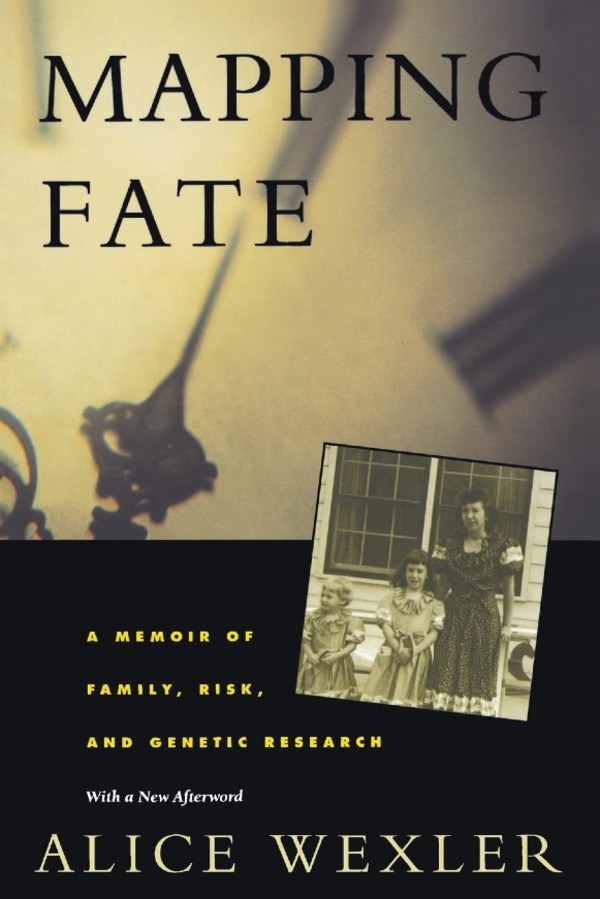
From the Middleton Library, I am also waiting through inter-library loan for Alice Wexler’s book, Mapping Fate.

Posted in Uncategorized

Red Oak Acorns

Heather has been busy collecting up the acorns from under the mature red oaks in our backyard. Today, we delivered a pail for the Seed Saving Talk by Dr. Niki Clark at the Lower Granville Hall, Saturday May 3, 1-2 pm. This activity coincided with the first lawn mowing of the season.

We stopped by Endless Shores bookstore. We wanted to obtain a copy of the place-mat illustrating the Goldsmith Lake Calicioids. This became a $20 donation to SOOF.

Further to my earlier blog ‘Local Libations Map’, John Wightman found an excellent map of the Wines of Nova Scotia. Produced in 2017 by the Winery Association of Nova Scotia.

The cartography and the graphics design illustrate the superb work of Marcel Morin at Lost Art Cartography. Quite a contrast to the Libations Map in the Grapevine.


At the Inside Bookstore in Greenwood, earlier this week, I was able to purchase Ken McGoogan’s ‘Shadows of Tyranny: Defending Democracy in an Age of Dictatorship’.

From the cover:
McGoogan’s takes a biographical approach to history, creating a montage of individual experiences. It includes George Orwell, Sinclair Lewis, Norman Bethune and Winston Churchill’.

He delves into dictatorships of the twentieth century to sound the crucial alarm about the possibility of a democratic collapse in the US – and its implications for Canada.’

At the moment, I am halfway through – including the Spanish Civil War. The second half covers Hitler and the Second World War. It is heavy reading in these difficult times.

References

Ken McGoogan, 2024, Shadows of Tyranny: Defending Democracy in an Age of Dictatorship. Douglas and McIntyre.

Wines of Nova Scotia, 2017, Explore our Nova Scotia Wineries.

Goldsmith Lake Calicioides, Stubble Lichens and Fungi surveyed in mixed forest west of Goldsmith Lake, 2022-2023.

Posted in Uncategorized

Next to Nature: Book Review

Between our trips, back and forth to New Glasgow, I found the time to read Ronald Blythe’s book, ‘Next to Nature’. Four hundred and seventy-two pages describing a lifetime in the English Countryside.

From the inside cover,
Ronald Blythe lived at the end of an overgrown farm track deep in the rolling countryside of the Stour valley, on the border between Suffolk and Essex.

His home was Bottengoms Farm, a sturdy yeoman’s house once owned by the artist John Nash. From here, Blythe spent almost half a century observing the slow turn of the agricultural year, the church calendar and village life in a series of rich, lyrical rural diaries.

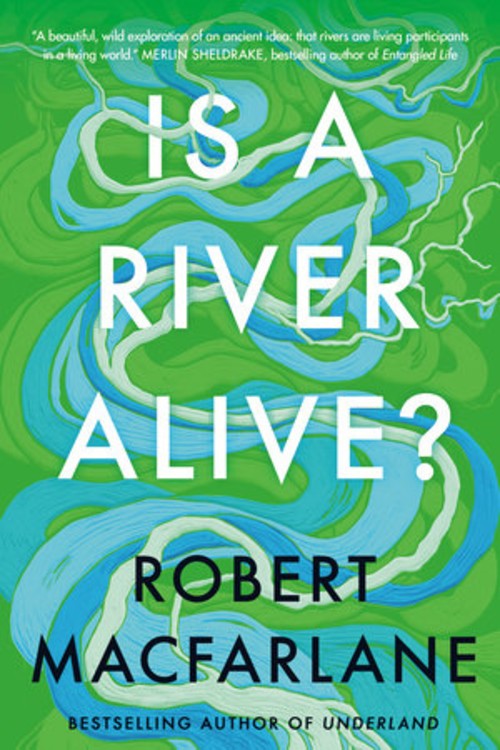
The book includes an introduction by Richard Mabey, followed by twelve chapters, one per month, January to December. Each chapter includes an introduction by an English writer. Of particular note, is the Introduction by Robert MacFarlane for the month of July.

It starts:

The idiom of modern cartography speaks of ‘ground-truthing’. To ‘ground-truth’ is to verify in person, often on foot, information gathered by remote-sensing technologies such as aerial photography or satellite imagery; to test theory against things we might say. I’ve often thought of Ronnie Blythe as a ground-truther, in many senses. For decades, he fathomed place as deep rather than wide, and did so by walking, talking, listening and watching.’ p.233.

Off we go to walk again” he wrote in one of these vividly sun-soaked, rain-soaked, thought-soaked entries from July; companionable, habitual, the phrase could be a motto for his work as a whole.

What would it be like to fathom place in the Annapolis Valley?

Perhaps Ernest Buckler understood?

And we could add maps too!

I highly recommend the book ‘Next to Nature’. Imagine an equivalent book for rural Nova Scotia.

Reference

Ronald Blythe, 2022, Next to Nature: A Lifetime in the English Countryside, John Murray, 472 pp.

Acknowledgement

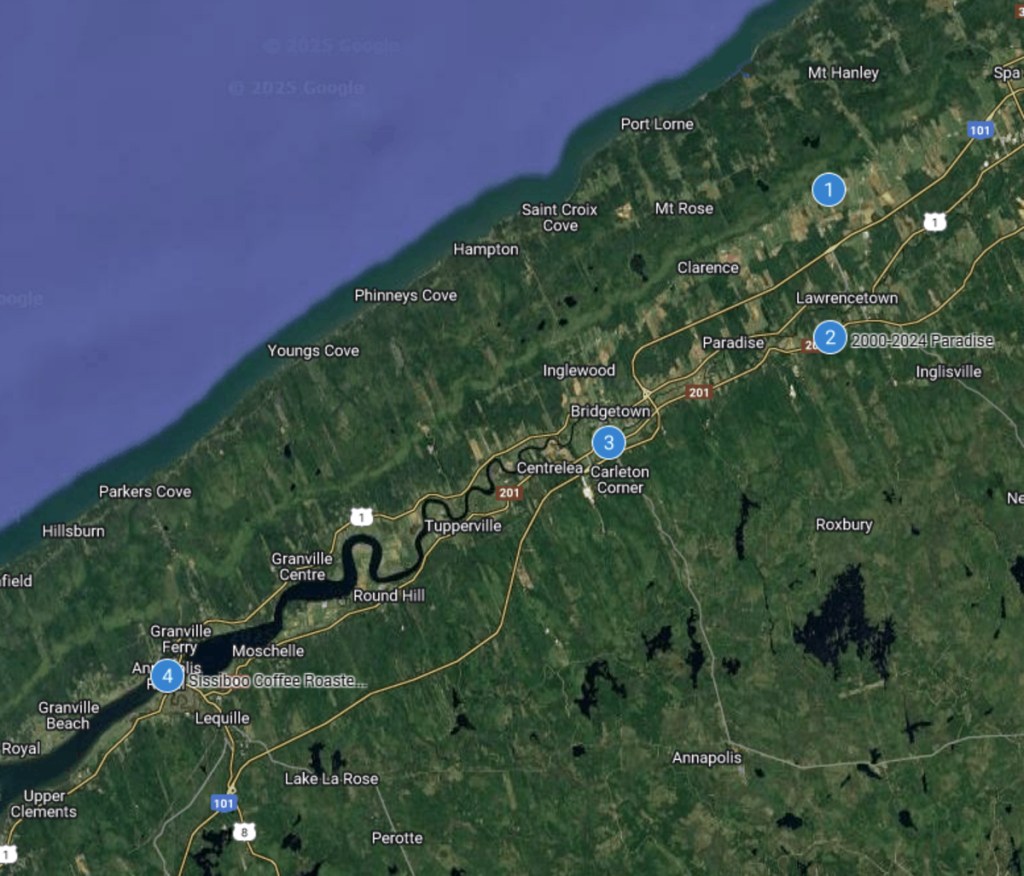
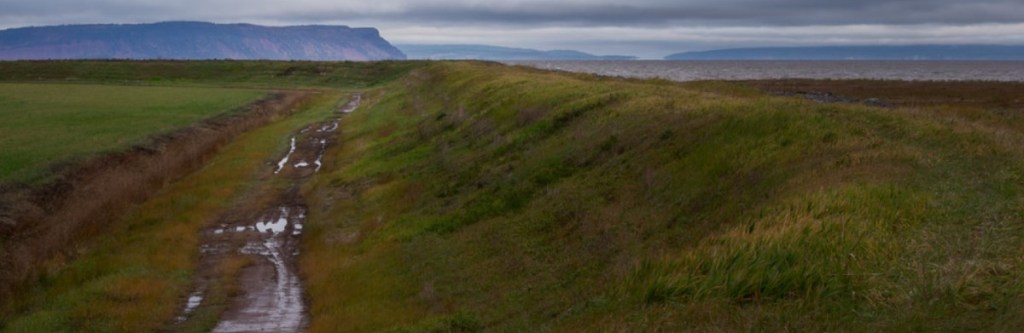
Heather continues to share our life in Middleton, rural Nova Scotia, overlooking the floodplain of the Annapolis River. In our earlier house in Paradise, we were able to enjoy the unique view of North Mountain.

Postscript

We walked the Lawrencetown nursery to Hunter Orchard loop. Just over an hour. The white May flowers were out. Spring is here.

Posted in Uncategorized

Forest Bathing

Today, Heather and I joined Donna Crossland on a hike into Corbett Lake. We met the group at the junction of the Morse and Neaves Road. The event was part of Earth Day, sponsored by Save Our Old-Growth Forest (SOOF). Near Corbett Lake we found the SOOF camp. Nina Newington was resident at the camp.

My interest, of course, was geographic. As a member of SOOF, I was aware of the unique characteristics of Goldsmith Lake and its ecology. I was also well aware of the need to ‘save our old-growth forest’.

The walk was an opportunity to enjoy time in the forest with a diverse group (17) of grand-parents, parents and children. To remind ourselves of the species, landscape elements that are at risk if the province continues to undervalue this part of rural Nova Scotia.

After the walk, we returned to Centrelea Community Hall, and enjoyed the lunch provided by SOOF. My take-home is to pick up the Nova Scotia Atlas (seventh edition) to find Goldsmith Lake on page 55, W5. This gives us another walk, ‘forest bathing’ on South Mountain, within a short drive from Bridgetown.

Acknowledgements

Thanks to Donna Crossland for leading the nature hike. Thanks to SOOF for a delicious soup lunch after two hours walking in the forest. Nina Newington for her good work, the blog ‘Nova Scotia Forest Matters’ and maintaining a presence at the camp on the Corbett Lake road.

Posted in Uncategorized

House Visit

This week, I had a meeting in Kentville. On my return, I was surprised to find Ed Symons on my doorstep. He had randomly dropped in, to discuss some of his ideas about community mapping in Annapolis County.

From my recent blogs, the reader will discern that I have made several attempts to engage both faculty and students in the application of GIS and AI in community mapping. In particular, I have believed that CORAH in Middleton could be a suitable venue for this type of collaboration.

This initiative, led by Ed, myself and others fits well with the mandate of the GIS technician program. These graduates often work within a municipal planning environment. Stay tuned !

Today, Good Friday, being a holiday, Heather and I decided to go to Kejimkujik National Park. We wanted to hike the Peter Point trail. Surprise, the park backcountry is not open until May. However, we were able to walk the Grafton Woods Trail, two 1.6 km loops.

It proved to be a nostalgic event. On the trail, we encountered a couple with three young children, two boys and a girl. They had a dog. The Dad had a children carrier for when the youngest became tired.

This freed up memories of similar family experiences, whether in Kejimkujik, Haida Gwaii, Algonquin or even, Palm Springs.

On the return trip, we detoured from Annapolis Royal to the Fundy Shore, savouring the sea breezes at Hampton Beach.

Postscript

A shout out to Kings Theatre, this week we enjoyed Beethoven’s Fidelio – Stage to Screen, and National Canadian Film Day, Margaret Atwood: A Word after a Word after a Word is Power. (Documentary).

Reference

William Moreira, Norm Green and Tom Sheppard. 2005. Keji. A Guide to Kejimkujik National Park and National Historic Site. Nimbus Press.

Acknowledgements.

Ed Symons for making the detour to Connaught Ave. On his commute between Port Williams and COGS, Lawrencetown. Heather for the family memories in Kejimkujik and other National parks. Jeannie for the drive, and company at Fidelio.

Posted in Uncategorized

People, Place and Ocean

Today, I received by email the latest issue of the Ecology Action Centre (EAC) newsletter. It was a wonderful surprise to read about the Gros Morne Community-led Marine Atlas

‘The atlas tells the story of the people of Gros Morne, their connection to the sea and highlights more than fifty years of local ocean science, offering a towards the future development of a community-led marine plan for the region’.

Heather and I first met in Gros Morne National Park over fifty years ago. Heather was a seasonal Park Naturalist. I was teaching Geography at Memorial University of Newfoundland (MUN) in St. Johns. We married in 1976.

At the time, I was running ten-day backpacking trips in Gros Morne for Wally Schaber, Black Feather Outfitters.

The marine atlas has over 180 pages. Of critical significance, it is a ‘community-led’ marine atlas.

Imagine, the production of a similar ‘community-led’ atlas for the Annapolis Valley, or the Bay of Fundy . What a marvellous model !

It would be a tremendous opportunity for faculty and students at the Centre of Geographic Sciences in Lawrencetown, Annapolis County.

I remember well, Bob Hooper ‘who dedicated his life to marine biological research at the Bonne Bay Aquarium and Research Station ( BBARS)’.

Posted in Uncategorized

Local Libations Map

A short note, today.

The Grapevine (April 2025, No. 22.4) includes a map of local libations on page 15. It is a cartographer’s nightmare. I should take it to COGS to get their opinion.

Here are a few of the errors that I have noticed. I think #38 Lunn’s Mill is in the correct location. #38 Still Fired Distilleries in Annapolis is incorrect. #39 Beaver Creek Vineyard is not correct.

Here is a possible explanation. #39 is Still Fired Distilleries. #38 is Lunn’s Mill. #37 is Beaver Creek Vineyard.

The map does not show road numbers e.g. highway#1 or highway #201. Nor does the map identify any of the communities by name.

I cannot speak for the geography (cartography) in Kings County.

My suggestion to the Grapevine Editorial. Contact the faculty at COGS and see whether they, or a student, can produce an accurate, useful map for those folks who want to enjoy a drink of local products in the Annapolis Valley

Everyone will have noticed the increase in lawn signs for candidates in our forthcoming federal election. Today (Sunday) we will stop at the Bridgetown Legion to hear from Ronnie Leblanc, the Liberal candidate. I anticipate there will be a similar event for our incumbent Conservative representative, Chris D’entremont; or perhaps, an all-candidate meeting for our riding.

PS

We attended the meeting in Bridgetown. Speakers included Stephen McNeil and Carman Kerr. McNeil emphasized that this election was about the United States threat to Canada as a Nation, and which party will stand up to the threat posed by Donald Trump’s policies south of the border. The meeting had a strong attendance, with the opportunity to catch up with old friends.

Go find your Grapevine !

Posted in Uncategorized

Just like old times

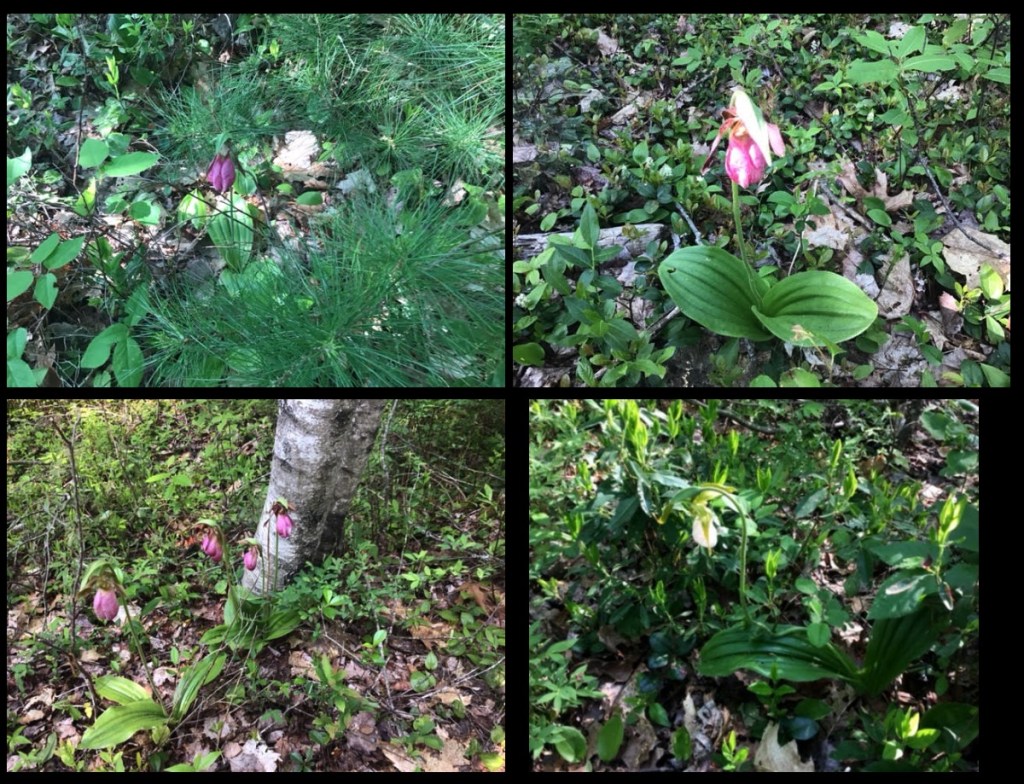
Heather and I decided to revisit a walk we have made many times, when we lived on Highway #201. We parked at the Lawrencetown tree nursery. Walked down to the Annapolis River, checked out the Spring flowers. Too early for Ladyslipper orchids.

On the river bank, there is a platform where the Fire Department dry out their hoses.

We followed the residual flagging tape markers (towards Bridgetown). this takes us to Raymond Hunter’s property. At this point, we head South. Eventually reaching the orchard and Highway #201.

Turn left on the highway, past Peter Redden’s property, to the car. Lunn’s Mill is a bit further on the left hand side. The complete circuit is one hour.

The walk reminded us of the many times we took the dogs down to the river. The proximity of the tree nursery to Lunn’s Mill always seemed like a missed opportunity. An outdoor laboratory of different tree species, within walking distance of a retail outlet. We talked about field trips for school groups, snow-shoeing in winter. If the province gave up the nursery, it could become an outdoor education centre.

A week or two ago, I issued a challenge to COGS faculty and students (To date no response).

If we used AI to search my previous blogs, we would find descriptions of previous walks, through the same geography, with observations about various plants in flower.

The property (#6325) was owned by Raymond Hunter. He planted the orchard. Andrew, my son, purchased the property between 2005 -2019. We enjoyed harvesting the apples, turning them into apple juice and then later, with help from Brian Boates and Pierre at Ironworks Distillery in Lunenburg, into Hunter Brandy.

Ps we did find a couple of ticks. On the Inglisville Road we noticed carpets of the yellow flowers of Coltsfoot ( Tussilago farfara). A true sign of Spring.

Posted in Uncategorized

Community Mapping

Yesterday (Sunday) we made a second visit to the Lower Granville Hall at Port Royal. We enjoyed an excellent lunch prepared by the community. The guest speaker was Heather Leblanc. It was good to catch up. I recall the days when Planning students at COGS would work with the citizen group to use GIS technology to produce online maps of heritage buildings in the County. Map Annapolis also worked with Parks Canada and ground penetrating radar of the graveyards.

The current web site includes a number of excellent videos, produced by Andrew Tolson.

On Saturday night we visited the Evergreen Theatre in East Margaretsville. We enjoyed the music of Rachel and Darren. They were part of the award-winning group, Coig.

The venue was a chance to catch up with old friends at the Eastern end of the County. On a sad note, we learned from David O’Leary that Karen Reinhardt and her husband had passed away. Karen was at student at COGS in the early eighties.

My homework (reading) this week is Matt Rouse ‘Will AI take my job ? And Ronald Blythe Next to Nature. A Lifetime in the English Country side. The first is an introduction to current technology and the second prepares me for our life in the Nova Scotia countryside.

References

Matthew Rouse. 2023. Will AI take my job. ? Predictions about AI in Corporations, small business and the workplace.

Ronald Blythe. 2023. Next to Nature. A Lifetime in the English Countryside. John Murray.

Posted in Uncategorized

A Challenge to Students and Faculty at COGS

This week, I stopped at the COGS library. I found ‘Canadians who Innovate’. The last entry, #60 was Fraser Taylor, Ottawa, Ontario. Fraser Taylor’s contribution includes the Cyber-cartography Atlas of Arctic Bay.

This led me to ‘AI and the Geography of Annapolis County: a proposal for students and faculty at the Centre of Geographic Sciences.

I have been writing a blog ‘Ernest Blair Experiment’ since 2013. Some times, it was posted to GoGeomatics. Since 2017, it was posted under Ernest Blair Experiment. The title comes from Ernest Buckler, author of ‘The Mountain and the Valley’. Eric Blair aka George Orwell. Experiment because using changing technology is always an experiment. Volume 9 includes all the blogs for 2024.

After attending Wayne Rouse’s talk on AI. I had this idea.

Could we use AI to link GIS to local Geography ?

Is this a project that might appeal to current GIS/AI students at COGS ?

Could this provide a model for other groups in other parts of the country to link local geographic knowledge and share it with the world ?

Here is my thinking. Each blog has date and contains reference to the local geography. In my case, Annapolis County or the Annapolis Valley.

Using AI could we take the total collection of blogs, identify themes and topics and produce a series of online maps ? We could use AI to identify the locations. We could use ArcGIS to map these locations.

Topics could include walking trails, canoe routes, mountain bike adventures. They could include types of retail outlets – restaurants, book stores, tourist services.

From a literary perspective, it could include geographic references in the writing of Ernest Buckler, David Whitman (e.g. Roxbury).

A recent blog feedback from Celes Davar showed me the technology for mapping bird calls. I can imagine something similar for mapping plant observations e.g. Agalinis neoscotica.

The fundamental challenge is to use current technology to extract local knowledge (in an electronic database) and to ensure it is taken into account when making resource management decisions about our ‘collective geography’. The tools exist; there are individuals who possess detailed experiential knowledge of our environment.

Let’s bring them together. Create a prototype at COGS; then share world-wide.

Reference

Roseann O’Reilly Runt. 2024. Canadians who Innovate. The Trailblazers and Ideas that are changing the World. Simon and Schuster. Part 9. Social Innovation for a better world.#60 Fraser Taylor, Ottawa, Ontario. p.300.