It’s Saturday (Sept. 16) no power, no Internet in Paradise because of post-tropical storm Lee. ( Power back at 1 pm)
Yesterday, I had the opportunity to attend two GoGeomatics sponsored events.
1) Third annual GoGeomatics COGS Industry and Career panel.
2) GoGeomatics Back to School Social at Lunn’s Mill.

First, I want to acknowledge the contribution of Jonathan Murphy and Ted MacKinnon, both graduates of the Applied Geomatics Research program in the early 2000’s. Jon went to Ottawa and has established GoGeomatics Canada. Ted has been working for Natural Resources Canada, and supports GANS in Nova Scotia.
The first event was a panel in the afternoon, in the AV Room at COGS, Lawrencetown to answer student questions about career opportunities and the state of the industry.
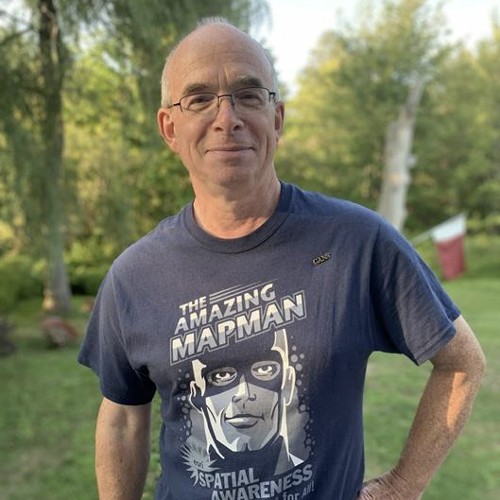
David Maclean organized and hosted the technology so that students could ask questions and participate online.
The panelists

Tim Webster, colleague at AGRG, described the types of technology and applications for their research in Middleton.
Various forms of remote sensing, LiDAR applied to modeling the impact of of sea-level rise and storm surges.
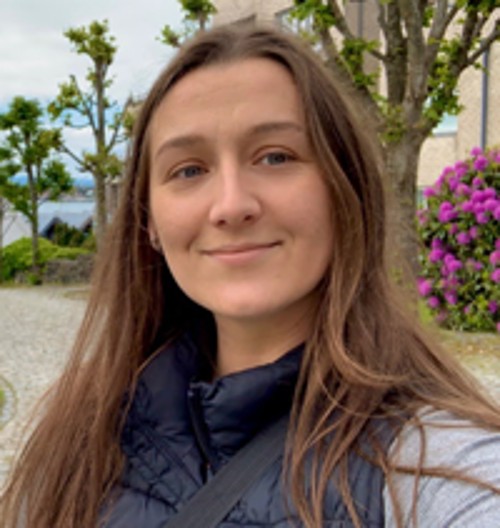
Nicole Caissie, a graduate from UNB Survey Engineering, and now with Eagle Engineering described her experiences since graduation.
Jonathan Murphy, explained the role of GoGeomatics in assisting Geomatics graduates find employment in Canada, and beyond.
Examples of his efforts include forthcoming GeoIgnite Western Canada Career Fair in Calgary, November 7-8th and their online magazine and job listings.

Ted MacKinnon gave an inside look into the application of Geomatics technology in the federal government, in the region, and specifically at Natural Resources Canada.
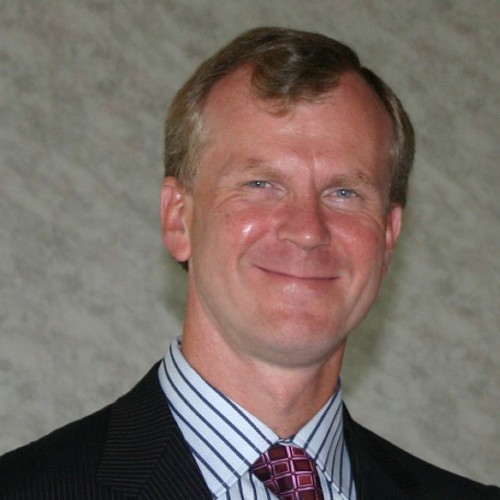
Finally, Simeon Roberts, Executive Director Association of Nova Scotia Land Surveyors, private consultant and ex-faculty at COGS explained the options for COGS graduates seeking professional surveying qualifications.
From the number of COGS students, and the types of question, I would judge it to be a useful panel. Afterwards, conversations were continued at Lunn’s Mill. This was convenient, since later, I could walk home along Highway #201 to Paradise.
David MacLean provided some current enrolment numbers on programs at COGS ( in person, and online).
Remote Sensing 9
Geospatial Data Analytics (GDA) 14
GIS 19 in person; 23 online
Marine Geomatics 6
Cartography 16+
GIS Tech High single digits
Many in Programming; lots in Surveying.
From my conversation with students, it seems that the new wing at the front of the building is being used as a residence, housing thirty plus (30+) students.
Outstanding Questions/ Observations
It would be extremely helpful to understand the exact number for each program, divided according to in-person and online. What level of interaction exists between in-person and online in each program? What level of technical support is offered to online students?
A second key question concerns projects with industry/external agencies. Traditionally (from my historic perspective) students would undertake a co-operative project with an industry, government or not-for-profit group. What infrastructure/support exists to manage these capstone projects? They are both learning opportunities, and they present challenges for the college administration. This would be particularly true, for off campus students.
An auxiliary question. What are the specific benefits of being in a particular ‘place’, namely rural Nova Scotia (Annapolis County)?
In ‘my day’ we would argue the benefits of studying in a rural part of Canada, to allow intensive learning about new technologies. Is that still true?
My Day : 1980-2011.
Acknowledgements.
I appreciate the contribution of the panelists. The coordination of David MacLean. Jonathan Murphy and the sponsorship from GoGeomatics Canada.
Postscript

Just stepped out for a coffee and a locally-made sausage roll at the Bees Knees in Lawrencetown. Another find, within walking distance of the house. Could become a new habit !
Earlier in the week, I met with Debby and Rocky Hebb for breakfast. Deb handed me, College of Geographic Sciences, Memories 1991. I will share with John Wightman over a beer.
 If we want to change our attitude towards the earth, it’s resources and our place on its surface, we must become more informed about our ‘geography’; not simply latitude and longitude, but rather ourselves and the processes that affect our behaviour. Geography, in an holistic sense, is physical, biological, economic and social. It is spatial and temporal: neighbourhoods, regions, countries and global; hours, days, years, decades, centuries, lifetimes and beyond.
 Ernest Blair Experiment