 In True North Rising, Whit Fraser describes meeting Mary Simon’s parents in the Arizona Desert (p.138). For nearly twenty years, the in-laws made winter camping trips. Bob May started work for the Hudson Bay Company at Arctic Bay, where he met his wife, Nancy. This story reminds me of the changes in technology, and its relation to elder travel.
We head North, to Iqaluit, with a cell phone and iPad. On arrival, we are reminded that this is ‘old’ technology. Here are smartphones, text messaging and no landline in the house. My iPad only gives me access to email.

In Iqaluit, at the Black Heart Cafe and at the Aquatic Centre, I notice that they have a free book exchange. This allows me to read an essay by Margaret Laurence, ‘My Final Hour’. Laurence was Chancellor at Trent University, living in Lakefield. This connects me with my son, Patrick. They have recently moved their family to Peterborough. We once lived there, when I worked for the Ontario Ministry of Natural Resources.
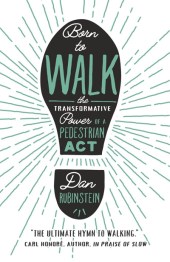 On our way North, we had a stopover in Ottawa. This was our chance to visit an urban Chapters bookstore. I picked up Dan Rubinstein’s Born to Walk: the transformative power of a pedestrian act. The book contains a reference to a wonderful Ray Bradbury short story, The Pedestrian.
“The year is 2053. Leonard Mead loves to walk. Every night, he strolls alone along the buckling concrete sidewalks of an empty silent city, peering at houses who citizens are riveted to their viewing screens. Suddenly, he is stopped by the city’s lone police car. (There is no more crime, nobody goes outside).
“Business or Profession ?” A metallic voice asks.
“I guess you’d call me a writer.”
“No profession”, says the voice.
“What are you doing out ?”
“Walking” replies Mead.
“Walking !”
“Just walking.”
“Walking, just walking, walking ?”
“Yes Sir”.
“Walking where? For what?”
“Walking for air. Walking to see.”
Mead is told to get into the car. There is no driver. He is taken to the Psychiatric Centre for Research on Regressive Tendencies.
Rubinstein, page 193. Chapter 6. Creativity.
As part of our elder travel, we need to understand the appropriate combination of technology in North America and elsewhere. We also need to make sure that we engage in walking, and have ready access to a variety of printed matter (books).
At the end of our third week up North, I am coming to the end of Sheila Watt-Cloutier’s book, The Right to be Cold. Recently, I became aware of a new blog site — northbooks
Acknowledgements
Heather Stewart, my travel companion, and Edward Wedler, my technology support person down South.
References
Whit Fraser. 2018. True North Rising. Burnstown Publishing House.
Dan Rubinstein. 2015. Born to Walk. ECW Press.
Christl Verduyn (Ed). Margaret Laurence: an appreciation.
Sheila Watt-Cloutier. 2015. The Right to be Cold. Penguin Books.

 Ernest Blair Experiment
What do they serve at the Black Heart Cafe? Margaret Laurence is my all-time favourite author.
On Mon, Apr 8, 2019 at 8:37 AM Ernest Blair Experiment wrote:
> maherrv posted: “In True North Rising, Whit Fraser describes meeting Mary > Simon’s parents in the Arizona Desert (p.138). For nearly twenty years, the > in-laws made winter camping trips. Bob May started work for the Hudson Bay > Company at Arctic Bay, where he met his wife, N” >
LikeLike
Excellent coffee. I asked about the name of the cafe.
It refers to a ‘coffee bean’. It is the new go to lunch place.
Not traditional Inuit food.
Bob
LikeLike