This week, we received an invitation to the Annapolis County Climate Action Summit, scheduled for Cornwallis Park on November 9th.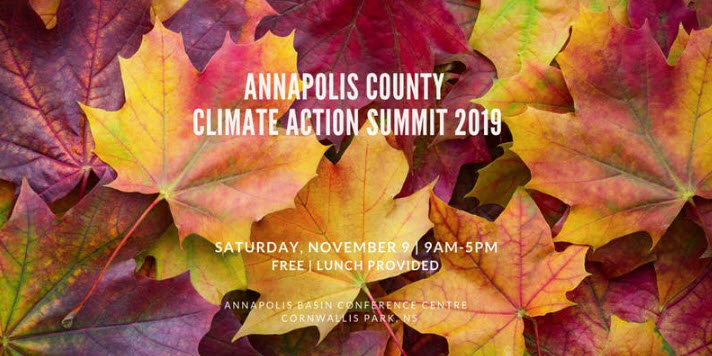 I also received email from Brian Arnott that Robert MacFarlane will be on CBC Sunday Morning with Michael Enright. (see the previous blog)
The questions from County are:
1) what climate changes are you most concerned about in Annapolis County?
2) have you identified any solutions?
3) what local action (both individual and collective) and resources are needed to achieve these solutions?
4) are you willing to be a climate action ambassador for your neighbourhood?
Last night, the Federal Riding of West Nova elected Conservative Chris d’Entremont to represent us in Ottawa.
All of these questions suggest that it is time. Time to recognize the abilities of all citizens in the region. To hear their voices. It is time for the educational and research institutions to step up and contribute to our understanding of the issues (see, for example, a AGRG-developed Emergency Coastal Flooding Decision Support System, test result below).

In the 1980’s we renamed the Land Survey Institute to the College of Geographic Sciences. We recognized that there were many new technologies available to manage our geography. If we are going to have three levels of government deciding on the future of the landscape and its use/abuse. Let us work from a common shared digital representation of that landscape and its climate.
It is time to remind the educational institutions that educators when they retire they do not stop contributing to the thinking in their chosen discipline. In other cultures, there is recognition of these educators/elders.
 It is time to realize that the movement of individuals from elsewhere in Canada, or other countries, to Annapolis County is positive. It is time to stop thinking that more citizens who have reached retirement (arbitrarily, say 65 years) is negative. It is positive.
Living in rural Nova Scotia, where it is possible to grow your own food, is positive.
So let’s answer the county’s questions.
1) What climate changes are you most concerned about in Annapolis County?
No specific change. Rather our ability to be well-informed, able to make the necessary adaptation, and have emergency preparedness action plans.
2) Have you identified any solutions?
Yes. Full engagement of educational institutions. Access to shared community information on our environment, land use, ocean use, demographics.
3) What local action and resources are needed?
Resources to maintain the existing climate network and a community information utility.
4) Are you willing to be a climate action ambassador?
Yes. If this includes education and research of our representatives, citizens and educational institutions.
It is time for citizens to demand more from our representatives, institutions and ourselves.
Acknowledgements
To many friends and colleagues in the county, Nova Scotia, Canada and elsewhere.Edward added the excellent graphics and is pleasure to collaborate on this blog.
AGRG, Emergency Coastal Flooding Decision Support System.
Climate Change in Nova Scotia.
References
Annapolis County Climate Action Summit. November 9,2019 at Cornwallis Park.

 Ernest Blair Experiment
One of the most thought provoking and inciteful posts yet. Thanks, Bob
LikeLike
Thanks for the note about the Annapolis Count Climate Action Summit.
I have registered.
Cheers Celes
>
LikeLike