Google has announced a new program Google Career Certification. These certificates are considered equivalent to a four-year degree for related roles. Given the move by universities and colleges to online education, this raises the prospect of re-thinking tertiary education (perhaps, secondary too).
Let us assume that software vendors will continue to offer a wider range of online, hands-on tutorials on their products. The role of colleges and universities will be to develop “critical thinking”.
Back in the 1980s, when I was teaching at COGS, in the third semester, each student would undertake a cooperative project with government and industry contacts. Fast forward to 2020, I can envisage projects driven by the needs of the community, that focus on the local geography.
For example, in Annapolis County, we are seeing a movement towards protecting community forests. Students from this region could focus on tools that would allow citizen groups to build ‘pods’ of like-minded citizens who wished to maintain and protect similar forest values.
If a student is attending COGS online from another part of the country, eg BC or Nunavut, then their cooperative project would engage citizens from their local geography. The topic would be defined by the community.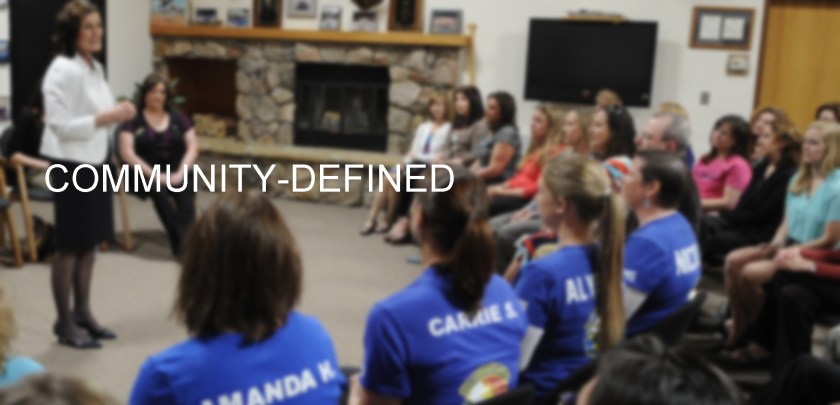
Besides technical support for the online tutorials, students would need access to a mentor for the critical thinking component of their education. In the case of the Annapolis Valley, it could be a retired academic or informed citizen.
Since the cooperative project is determined by geography, it would be important to define a set of new relationships:
a) citizens with an understanding of geographic issues;
b) vendors bring their understanding of the online learning materials;
c) critical thinking on the relationship between education/technology/community.
What is needed to make this work at COGS?
A willingness for open discussion:
a) with the primary software vendors,
b) citizen advisory groups
c) and critical thinking mentorship.
In this disruptive education scenario, there is an opportunity to redefine collaboration or ‘community’ college to be much more inclusive with a wide range of members from different geographic communities. The scenario could include multiple technologies. It offers a new vision for civilization and nature.
 Postscript
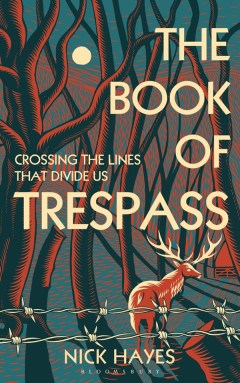
In the latest Guardian Weekly (August 21) there is a review of Nick Hayes’s book, The Book of Trespass: crossing the lines that divide us. p.60.
References
Google Link
Email from Nina Newington.
Nick Hayes, 2020. The Book of Trespass: Crossing the Lines that Divide Us. Bloomsbury Circus.
Acknowledgements
Edward for forwarding the Google link. Nina for her thoughts on citizen collaboration and forest values. Heather for seeing the individual species from the trees.

 Ernest Blair Experiment
Well don’t you get up early…….lol……Good Morning.
John A. MacDonald
Councillor District 2
Municipality of the County of Annapolis
902-804-9228 (C)
JMacDonald@annapoliscounty.ca
________________________________
LikeLike