In 2011, I proposed the concept of a Community Information Utility. The concept came originally, I think from Paul Beach in Sault Ste Marie.
Now, 2024, in my retirement, there have been many changes in the planning process in Annapolis County. Today, I am a resident of the Town of Middleton. As a retiree, I become more aware of the needs of the local population. In Middleton, there is CORAH, (Centre of Rural Aging and Health) to meet the needs of our population (read also Antiques Map Tour and Applied Geomatics/CORAH Presentation).
We should review the CIU concept.
What is needed from a CIU? Who determines the content? How is it maintained?
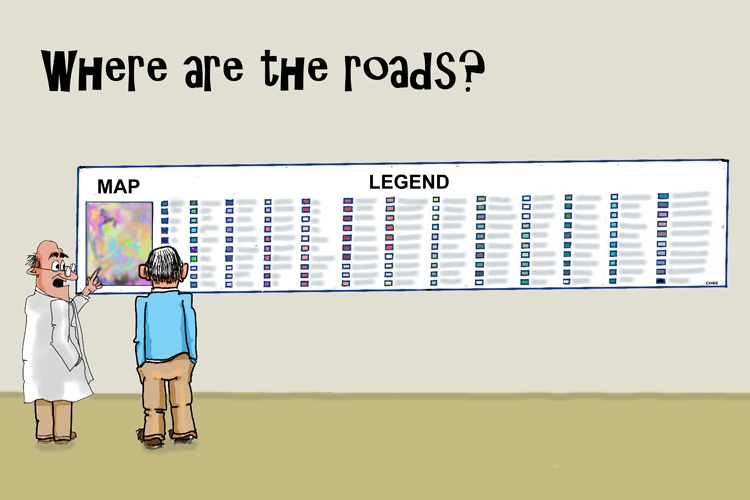
Throughout my career at COGS I have been a proponent of understanding our geography and its relationship to both physical and mental health. This means access to information, for example:
- Walking, bicycle and canoe trails. Maps and description
- Access to businesses and services in the landscape: location, hours, services
- Health services, education/library resources
- Voting, community planning services
- What is needed to make this a reality?
- Access to the resources at the NSCC, Annapolis campus:
- courses, workshops, seminars:
- Information on self-guided tours
- Material in both electronic form, and printed hard copy
The bottom line is that members of our rural society (in Canada) need access to geographic information to keep healthy.
PROPOSAL
Expand the capabilities of CORAH to include access to geographic information related to the resources that support an ageing population and their mental/physical health.
What does that mean?
Information related to our current landscape and information on how to access these resources (both electronic and hard copy).
Potential partners could include
If we implement a CIU, it must be portable, and the concept transferrable to other rural geographies.
Acknowledgements
This morning, I met with David MacLean at COGS. He helped me troubleshoot the WordPress software. He also offered helpful feedback on the CIU concept. Part of the problem is that access to geographic information does not arrive in the form of a ‘utility’ — just turn on the tap, or switch on the light.
Thanks to Brian Arnott and Edward Wedler for their encouragement in this pursuit.
EMAIL NOTES FROM EDWARD
During the writing of this CIU concept, Edward offered some observations and views. Food for thought.
ESTONIA
You have a great opportunity to advocate your “Community Information Utility”. Like having on-demand access to water when we turn on the tap or to electricity and light when we flip the switch, we should have ready access to [data] and to what is happening in our backyards.
I would argue that one of the most plugged-in countries in the world is Estonia; a potential CIU role model.
“Over the last decade, Estonia has constructed a system of digital infrastructure that made nearly all of its government services available online. 99.9% of Estonian public services are digitally accessible. This includes everything from filing taxes to viewing healthcare records to voting in federal elections.” (Wiki)
THE CIU IDEA
I do take issue with [your colleague’s] sentiment, “Part of the problem is that access to information does not arrive in the form of a ‘utility’. Just turn on the tap, or switch on the light.“
I couldn’t disagree more. The fuel for this information utility is US; as in you, me and others — in the form of social media, the internet, big data, AI, “Hey Siri …”, “Hey Google …”, etc. We “turn on the tap” daily when we go to YouTube, request auto-route directions when we travel, or click on the weather button. WE are the utility. It’s a matter of feeding the utility (like rain), storing the utility (like dams), and distributing the utility (like pipes and taps). Look at Google Maps and Street View. As I travel the Google terrain, I discover the coffee shops and restaurant locations. I click on one and find their hours of operation, their contact info and much more.
Check out the Fisherman’s Cove Gallery where I post my art, for example.
https://tinyurl.com/2yy99p3h
or the painting locations for artists in the Annapolis Valley and HRM
tinyurl.com/PleinAirMap (clicked now 30,000 times).
Isn’t that Community Information?
What we need to develop is a common way to access that information. Maybe this is where search engines and AI voice inquiries play a role. Maybe … we already HAVE a community information utility. We just need to feed the utility for it to be of value to our communities.
Maybe we are asking the wrong question about CIU.
Let’s not ask, “Do we have a CIU?” (because I think we already do) but “Do we have a CIU that best serves our [local] communities’ interests?“
My views and observations. What do you think?

 Ernest Blair Experiment
Hello Bob,I have followed the concept of CIU for many years. Mapannapolis has full filled a part of this concept with our community engagement and mapping, committees
LikeLike