Posted in Uncategorized

The Real Resource

From the Bridgetown Reader ( February 28th.) Page 9. ‘Letter to Warden and Council of the Municipality of Annapolis County’ from Nina Newington.

“Minister of Municipal Affairs, John Lohr recently sent a letter to all Wardens and Mayors ‘asking for you and your council to signal your support for greater resource development within our province by letter or press release.

This is a peculiar request.”

I agree with Nina. The real resources of Annapolis County are its citizens. We should be proud of our history, our relationship to the landscape, our educational programs.

Why do you think world class technology companies from California come to Lawrencetown to recruit new employees ?

Why do you think provinces with responsibility for the management of their landscape and natural resources come to recruit the next generation of employees ?

Why have other countries developed educational programs that follow the COGS model ?

The reason citizens move to rural Nova Scotia (including Annapolis County) is because of an appreciation of the creative opportunities for writers, thinkers, artists etc. This combined with access to the technologies of Geomatics, Remote Sensing and other landscape monitoring technologies is GOLD.

Let us not lose sight of the opportunity.

With three levels of government: federal, provincial, municipal it is far too easy to become entrapped in the bureaucratic process, at the expense of creative thinking.

Acknowledgements

Edward remains in Florida, with limited access to his home computer environment.

Posted in Uncategorized

Citizen Science

This week has been challenging, hence no blog. The challenge is all the global political posturing. To compensate, Heather and I attended the SOOF Soup Saturday meeting at the Centrelea Community Hall. First, I wanted to renew our membership. Second, I wanted to hear Lisa Proulx on Citizen Science and third, to hear Brad Redden on lithium exploration licenses on South Mountain in Annapolis County. I invited John Wightman to join us, because I know that he has good, first hand experience on lithium exploration.

Overall, it was a positive boost. It gave us a sense of community. It reminded us of the potential value of rare earth minerals in Nova Scotia,

Today (Sunday) we enjoyed the hospitality of Vicki Barteaux, Jeannie and Tim Shoveller, and their friends David and Carol, in Clarence. We shared a belated birthday cake, cooked by staff at Bees Knees.

Last Thursday, the Reader was full of notices about community activity. This included a talk by Andy Kerr on AI at the Annapolis Royal library. CORAH is presenting a transformative simulation journey, Experience Dementia Live ( Monday, March 3rd.)

On the reading front, I continue to work through Mike Parker’s ‘Map Addict’, (356 pp.)

Two pieces of information reminded me of time spent back in England.

‘The very first Director General (DG) without military training was Professor David Rhind, who took up his post only in 1992.’ p.90.

‘Today’s Ordnance Survey (OS) is a very different beast from its earlier incorporation even that of only thirty years ago. The appointment of Vanessa Lawrence as DG is the most obvious symbol of a new digitally oriented, more feminized OS’ p.92.

I recall fondly, my time in the UK, with both David and Vanessa.

In conclusion, we do need to maintain our cadre of ‘citizen scientists’.

The message to myself is how to balance the roles of ‘citizen’ and ‘scientist’ in these difficult times.

Acknowledgements

Thanks to Heather, Jeannie Shoveller and John Wightman for giving me a sense of community.

Reference

Mike Parker, 2023, Map Addict, William Collins.

Posted in Uncategorized

A Coincidence on Valentine’s Day

Friday, I received an email about an outstanding electrician bill. The contact was Heather Jackson. I decided to drop off a cheque at 3675 Clarence Road. It was my eightieth birthday and we needed to get out of the house,

Imagine my surprise, the civic address is a new house between the Elliot’s and the van Roestel’s. We owned , the Butterball (?) house, same civic address in the mid-1980’s, over forty years ago. Heather Jackson gave us a tour of the new house. Of course, it had the same view of the Valley, and the hillside up behind the Barteaux farm..

Saturday, we had scheduled brunch at the Flying Apron in Summerville to celebrate my birthday. We then stayed overnight in Suite #5. Besides the excellent food, the main floor offers a second hand bookstore. Heather found good reading by Mark Critch. I found Driving Mr. Albert. A trip across America with Einstein’s Brain.

In these comfortable surroundings, I finished Gary Leeson ‘ One Darn thing after another’. About his time as a mounted policeman in Toronto. A prequel to his book ‘ The Dome Chronicles’. I also brought along for light reading, Mike Parker ’Map Addict’. This one, I had signed out from the COGS library.

Fortunately, the roads were clear and dry. Before returning home, we took a short drive to Walton.

If you are looking for a quiet getaway, I would recommend the ambience, accommodation and excellent food at the Flying Apron.

Acknowledgements

Heather shared our Valentine’s Day tradition. Edward is away in Florida, so we will forego his graphics etc

References

Garry Leeson 2024. One Damn Thing after Another. Moose House Publications.

Mike Parker. 2023. Map Addict. Harper Collins..

Michael Paterniti. 2000. Driving Mr. Albert. A trip across America with Einstein’s brain. Delta Paperback.

Mark Critch. 2018. Son of a Critch. Viking.

Posted in Uncategorized

Memory Cafe

Yesterday, Tuesday February 11, Heather and I attended a meeting of the Memory Cafe at the Evangeline Club in Berwick. It was a one hour event at 2:30 pm. Beforehand, we went to New Minas. At the Cole’s bookstore in the mall, Heather noticed Scott Osmund’s book ‘ Hidden Nova Scotia’. We picked up a copy.

Scott is from Corner Brook, Newfoundland. He completed degrees in Civil Engineering and Geography at MUN. In 2014, he established HiddenNewfoundland.ca as a place to share the Newfoundland hidden places, lost stories and natural wonders. In hopes that it would bring awareness of its history and provide others with an opportunity for adventures. In 2021, Boulder Books published Hidden Newfoundland. Hidden Nova Scotia was published in 2023..

After New Minas we stopped at Berwick for groceries and North Mountain coffee. The Memory Cafe was recommended by N.S. Health Services, Shelley Kingston.

The format was simple. Once per month groups in different communities share time together. Yesterday the focus was on a couple of Maud Lewis prints and the songs of the Beatles. Tea, coffee and desserts were available.The music was memorable for all the couples in the room.

Afterwards, checking out Hidden Nova Scotia it includes BRITEX, Bridgetown, Upper Clements Park, Nova Scotia Textile Limited Mills, Windsor, South Maitland Railway Bridge.

This morning, John Wightman and myself had a meeting with David Bowlby, MLA Annapolis County. The conversation topic was the four Moonshots developed by Edward Wedler ( I will publish #4 this week) and the relationship between the Human Resources at COGS/AGRG and the natural resources in the region: Mining, Agriculture, Forestry and Fisheries.

Reference

Scott Osmond. 2023. Hidden Nova Scotia. Boulder Books.


Posted in Uncategorized

One Day at a Time

Yesterday, with fresh snow on the ground, Heather and I walked the road to the communications tower above Valley View Park (see also A Walk in the Park). Earlier, while in Bridgetown, we stopped at Endless Shores, where I picked up Peter Moreira’s book Backwater: Nova Scotia‘s Economic Decline, 2009.

Today, Wednesday, I checked online whether he had written any further books. Instead I found a podcast: Peter Moreira reviews the findings in the latest Atlantic Canada Start Up report, dated 2022.

At the Middleton library, I found the latest issue of the Grapevine. Inside was Wendy Elliott’s, Books by Locals reviews Nicholas Hill, Sarah Hines, Nelson O’Driscoll (eds.) Wetland Restoration for Endangered Species Recovery: a multidisciplinary case study of Big Meadow Bog, Brier Island, Nova Scotia.

Off to the Inside Story in Greenwood; they did not have a copy. Apparently, the book costs around $300. I returned to the COGS library to see if I could obtain it through inter-library loan. Chelsea Heighton proved very helpful.


This evening, we have tickets to the film, A Complete Unknown at Kings Theatre, Annapolis Royal. It is about the life of Bob Dylan.

Sunday, we have tickets for Macbeth – Stage to Screen. We will travel to both with our friend, Jeannie.


Later tonight, I may have the chance to reflect on the changes in Nova Scotia between 2009 and the podcast by Moreira in 2022. He was more optimistic in 2022. I wonder what he thinks today, in 2025, with Trump in the White House.

References

Peter Moreira, 2009, Backwater: Nova Scotia’s Economic Decline, Nimbus Publishing
Peter Moreira, 2022, Podcast interview with David Campbell and Don Mills
Nicholas Hill, Sarah Hines, Nelson O’Driscoll, 2024, Wetland Restoration for Endangered Species Recovery: A multidisciplinary case study of Big Meadow Bog, Brier Island, Nova Scotia, Springer Publishing.
Wendy Elliott, 2025, Books by Locals, The GrapeVine, February 2025, p.5.

Acknowledgements

Heather shared this busy day. Edward had time for the edits, before he headed back to Florida.

Posted in New thinking

Geospatial Moonshots: Where AI Meets Nova Scotia’s Future

What should not be a surprise, is that both of us, although officially retired, remain engaged in the questions of the day.

Today (January 28) Edward had a conversation with Gemini. This led to four ‘moon-shot-type’ projects. COGS and AGRG with their expertise in the Geographic Sciences, can play a crucial role in these sectors and drive innovation to become a global leader for Nova Scotia in Artificial Intelligence and Geomatics.

Our exploration was spurred on by Nova Scotia’s Premier’s reported comments on our traditional industries (such as Farming, Fisheries and Forestry) and our potential in “new-to-Nova-Scotia” industries (such as Hydrogen, Wind and Critical Minerals).

We will explore these four “moonshot” projects in future blog posts.

PROJECT 1: The Nova Scotia Digital Twin.

PROJECT 2: The Ocean Intelligence program.

PROJECT 3: The Nova Scotia Geo-Innovation Hub

PROJECT 4: The Sustainable Energy Corridor

Heather and I attended the second day of the COGS Industry Expo. At the ESRI Canada booth, we were fortunate to pick up a copy of the latest ESRI Map Book, Volume 39.

Acknowledgements

I appreciate Edward’s inquiring spirit, checking out the relationship between AI and GIS.

Posted in Event Review, Opinion, Uncategorized

COGS Industry Expo

Today, Heather and I went to the Industry Expo at COGS.

There were several highlights.

Kevin McGuigan provided a useful update on AGRG’s history, from its early days in 2000 through the modernization era of 2016 to the challenge era of 2020 and today.

Significant events include complete LiDAR coverage of Nova Scotia and an increased web presence.

Afterwards, we joined Andrew Hannam and Chelsea Heighton in the Board Room to tour the ‘Maps as Art’ exhibition. CORAH is organizing a series of tours this Wednesday and Thursday.

We highly recommend signing up to see the exhibition.

In the afternoon, there was the opportunity to catch up with the survey companies in New Brunswick. This culminated in Kelly Bates’ keynote presentation ‘Bridging Academia and Offshore Infrastructure Planning’. Of particular interest to myself, was the role played by the M.Sc. degree in Applied Geomatics at Acadia University.

Tomorrow, the focus will be on industry displays in the gymnasium and student interviews. Overall, this was a rewarding day, with many examples of collaboration between COGS and the private sector.


On the weekend, the Premier had a paid advertisement on the front page of the Chronicle Herald. He referenced Nova Scotia’s traditional industries – fishing, farming, forestry. Plus ‘New-to-Nova Scotia: industries like hydrogen, wind and critical minerals can operate safely and the potential positive impact on our Province is massive.’

My response to the Premier, and our local MLA’s is PLEASE begin to appreciate the significance of GIS and Geomatics in mapping these resources. To the NSCC, I would recommend a ‘COGS Government Expo focused on the importance of these technologies, and the importance of a well-trained workforce.

Acknowledgements

Thanks to Heather who joined me for a stimulating day in Lawrencetown. Edward is busy investigating the relationship between AI and GIS. Hence this post will be short on graphics and links.

But I did want to encourage the reader to sign up for the CORAH ‘Maps as Art’ tours at COGS, Wednesday and Thursday.

Posted in Uncategorized

A College Community (aka Community College)

This week, I met with Brent Kerr. He is part of the new PC team representing Annapolis County. I wanted to ensure that our political representatives had a good appreciation of the educational and technological resources in the County, at both COGS and AGRG.

Today I attended my first class of the year, Men’s’ Strength and Fitness with Sandy Murray at CORAH – Middleton. This afternoon, we will meet Paul and Ruth Colville at the Capitol Pub for lunch. If we still have the energy we will go for another snowshoe around the Annapolis River meadow, below our house (cancelled, too cold).

Next Monday and Tuesday, COGS will be hosting a two day Industry Expo. This includes tours of the Map Collection by Andrew Hannam and Chelsea Heighton.

To assist the new PC team, I provided a list of email contacts at both COGS and AGRG. There is a long history of the application of Geomatics technology in the region. This includes the maintenance of a network of climate stations, the use of LiDAR and more recently drone technology, and the application of AI.

If the province wants to develop its natural resources, especially agriculture and forestry in Southwest Nova, then it is important that our political representatives fully understand the significance of the management and access to these geographic data sets.

I would encourage the NSCC not only to support the local community through CORAH, but also through showcasing access to these Geomatics resources within the research community. This would complement the industry showcase, where the focus is more on employment opportunities for future graduating students.

Acknowledgements

Edward is away, hence no graphics or links. Heather shared the snow shoeing experience in the meadow, below our house.

Posted in Uncategorized

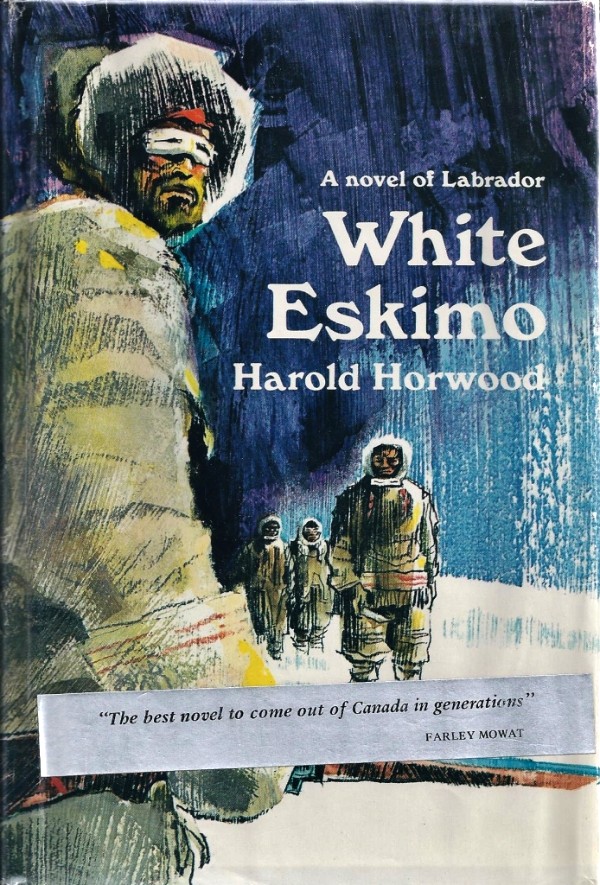
White Eskimo

Between 1963-66, I was an undergraduate at the University of Birmingham, UK.

For two Summers, I came to Canada to work at the McGill SubArctic Research Lab, in Schefferville, PQ. I was a field assistant to graduate students working on the Canadian Shield. The research involved digging soil pits and undertaking till fabric analysis.


This Monday evening, after being saturated by the CBC coverage of Donald Trump’s inauguration, we decided it was time to find out more about David Bowlby,

our new PC representative for Annapolis County (replacing Carman Kerr, Liberal).

The AGM meeting was 6:30 pm, at the NSCC Middleton campus.

On arrival, I noticed a stack of free, used books outside the Library. I found Harold Horwood’s White Eskimo. After teaching at Memorial University,

I had always enjoyed his writing. Time for a re-read.

Later this week, I shall drop by the PC office to learn more about the current government plans for Annapolis County. In particular, I am interested in the use of modern mapping technology (at COGS and AGRG) and its application to resource management in the county (agriculture, forestry, fisheries and mining).

Acknowledgements

Heather joined me at the AGM for the Annapolis County PC party.

Edward added the graphics and links.

Reference

Harold Horwood, 1972, White Eskimo: A novel of Labrador, Doubleday Canada.

Posted in Uncategorized

Explore Local

From my growler of Brickyard Red beer, purchased at Lunn’s Mill:

“In 1760, this beautiful part of the Annapolis Valley was known as Lunn’s Mill, named after the major industry in the area: a bustling sawmill owned by John Lunn. Around this time the Charming Molly set sail from New England carrying the first New England Planters. These intrepid people helped expand the community with farms and shops, and in 1822 it was renamed Lawrencetown.”

Besides stopping at Lunn’s Mill for the beer, I stopped at Bees Knees in the village to pick up a couple of slices of quiche.

The other day, I was talking with Paul Colville. We commiserated about the closure of Bistro 300, the coffee shop in Middleton, next to the Independent grocery store.

Walking home from the grocery store, we found a different route, behind St. Monica’s Catholic Church. It was marked by the sound of a pileated woodpecker in a grove of trees.

Meanwhile, at the house, we continue to be entertained by grey squirrels gathering up the acorns, and by the blue jays from the neighbouring feeder. Today, there is a male cardinal in fresh snow.

From the top of the red oaks, there is a Northern Goshawk scanning the riverside meadows..

In the next week or so, I shall be reporting on the COGS Industry Expo 2025 (January 27-28) in Lawrencetown. More on that event, once I see the detailed program.

Acknowledgements

Heather shares the exploration of the local geography.