Posted in Book Review

Reading List

One of the delights of visiting family is sharing reading lists. In Peterborough, this means Patrick’s interests in Scandinavia and Iceland from the perspective of culture and nature; from Emily, place-based and indigenous education. In Toronto, I can catch up with Peter’s reading. In this case, questions about ‘growing old gracefully’ or alternatively “a father and son discuss the meaning of life”.

In addition to the compilation of lists, Peterborough has an excellent set of second-hand bookstores, filled with contributions from the local academic community. Heather found ‘Flower Hunters’. It includes stories from Linnaeus to Marianne North and Joseph Hooker. I found a couple of David Quammen’s books: The Reluctant Mr. Darwin and The Boilerplate Rhino. Essays.

After the journey, we can relax with these new-to-us texts.

References

From Patrick Maher:

Meik Wiking, 2016, The Little Book of Hygge, Penguin Random House
Meik Wiking, 2017, The Little Book of Lykke, Penguin Random House
Meik Wiking, 2019, The Art of Making Memories, Penguin Random House

From Emily Root-Maher:

Naomi Krogman and April Bergstrom, 2022, The Future of Sustainability Education, U of Alberta Press.
Marcia McKenzie, et al. 2019, Fields of Green: Restoring Culture, Environment and Education, Hampton Press.
Karen Osmond, 2011, Iceland Imagined: Nature, Culture and Storytelling in the North Atlantic, U of Washington Press.
Eve Tuck and Marcia McKenzie, 2015, Place in Research Theory, Methodology and Methods, Routledge.

From Fraser Root-Maher:

Margaret Webb, 2008, Apples to Oysters: A Food Lover’s Tour of Canadian Farms, Viking Canada.

From Peter Maher:
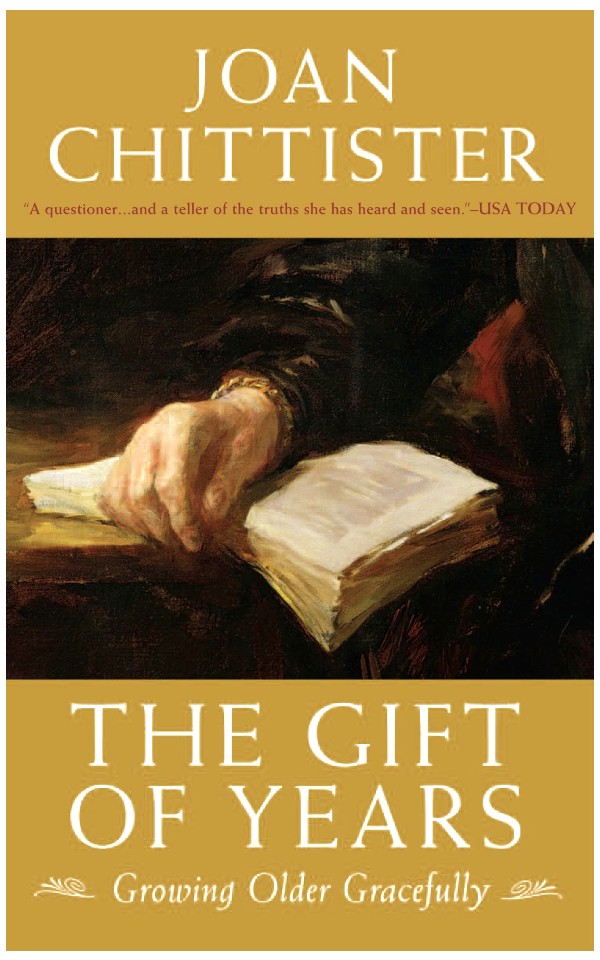
Jean Chittiste,. 2008, The Gift Years: Growing Old Gracefully, Bluebridge Publishing
Jean-François Revel and Matthieu Ricard, 1998, The Monk and the Philosopher, Schocken.

The English Landscape with introduction by Bill Bryson. 2001. Viking Studio.

From Heather Stewart:
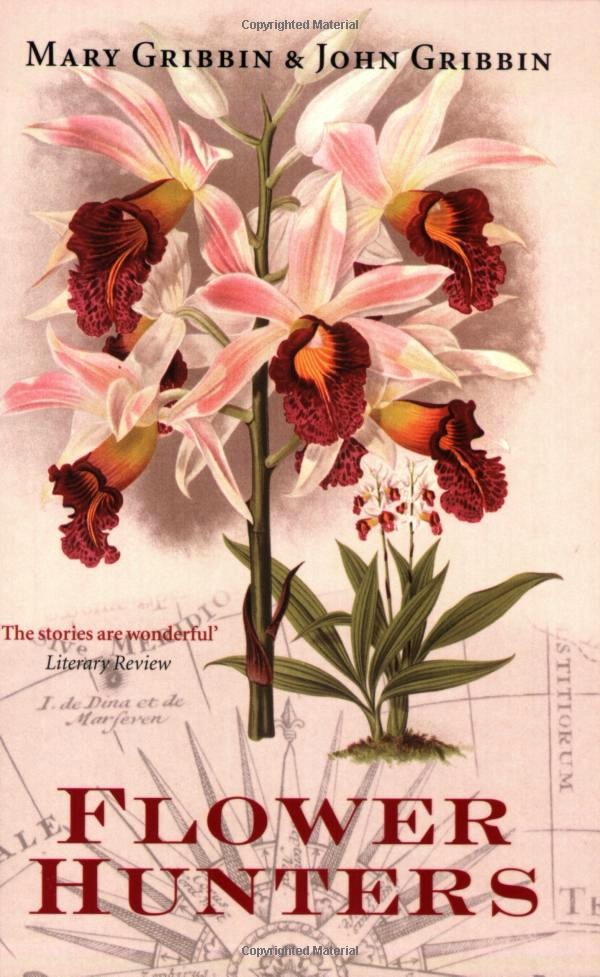
Mary Gribbin and John Gribbin, 2008, Flower Hunters, OUP.
David Stuart and George Stuart, 2008, Palenque: Eternal City of the Maya, Thames and Hudson.

From Robert Maher:

David Quammen, 2000, The Boilerplate Rhino, Touchstone.
David Quammen, 2006, The Reluctant Mr. Darwin, Atlas Books.

Acknowledgments.

Thanks to everyone for sharing their literary interest: Patrick, Emily, Fraser, Peter and Heather.

Thanks to Edward for enlivening the blog with suitable graphics and links.


POSTSCRIPT CARTOON by Edward

Posted in biographical sketch

Road Warriors

We have been travelling for a week. Hence no blog. The purpose is to pick up our canoe from Patrick’s house in Peterborough. We left Paradise on Tuesday afternoon, after our latest doctor’s appointment and car service. We drove hard to reach Woodstock, New Brunswick, by late evening.

On the second day, we survived the traffic in Montreal and managed to travel Highway #401 to Belleville. This allowed us to cut North to Madoc and then Highway #7 into Peterborough — essentially, 2000 kilometres in twenty hours of driving.

Peterborough has changed significantly since the days we lived there in the 1990s. At that time, we worked for the Ontario Ministry of Natural Resources.

In contrast to the Annapolis Valley, Peterborough seemed to have maintained a dynamic economy in the face of COVID. Besides visiting family, we were able to enjoy the MindGame cafe, various second-hand bookstores, and Wild Rock Outfitters.


Our second adventure was to visit my brother and family in Toronto. This required us to head down to Highway #401 and negotiate the suburb of Scarborough. We arrived safely after several hours in Toronto traffic.

A few salient observations …

It was a shock to drive through Montreal on the TransCanada, especially as we did not have a Quebec map. Once we reached the Ontario border (and Highway #401), the biggest surprise was the volume of truck traffic. The goods that are being moved by truck through the industrial heartland of Canada and the expenditure of gasoline to fuel these trucks must be massive.

Of course, we endured changes in the weather: cold rain, ice pellets, and snow. And yet in Toronto, we saw flowering cherry trees, forsythia. In the gardens of Peterborough, were harbingers of Spring: cardinals and robins.

Visiting Patrick, Emily, and Peter, I have accumulated a long reading list. That, I will save for another day.

We plan to return to the Valley by May 1st.

Posted in Opinion

Learning Links

Letter from America.

During the Summer of 1964, from the end of June until the end of August, I was a field assistant at the McGill Sub-Arctic Research Laboratory at Schefferville, Quebec …

In 1964, I was in my second year of my B.Sc (Hon) degree in Geography at the University of Birmingham. This letter was sent to The Lamp, the school magazine at Chiswick Grammar School for Boys. It was sent to me this week by Andrew Ronay, an old school friend, who had retained a copy.

Last Thursday, Heather and I attended the Kings Edgehill School IB Arts Show in Windsor.

Heather’s sister Sandy is the Art teacher. Afterward, we went to Bent Ridge Winery. From the patio, we could see the white, ski runs at Martock. I had not fully appreciated the local geography before.


From Sandra Barry, I received the link to an online presentation by Merilyn Simonds on her book ‘Woman, Watching’.

Of particular interest to me was her other writing: ‘A New Leaf: growing my garden’ and ‘Gutenberg’s Fingerprint’. In the video, she also referenced her latest non-fiction ‘Still Life with Beth’ (to be published).

These three experiences lead me to the following observations. I was struck by the contrast. Between my grammar school education in England, over sixty years ago, and the private school, multi-national program offered at KES in Windsor. I then contrast the lifelong learning described by Merilyn Simonds. In this case, a woman (Beth) and her life between 70-100 years.

How do we share our experiences with the next generation (or two, or three)? What do we gain from teaching the next generation, given the changes in society, and technology? Does a teacher ever retire? Or are they simply transformed into an elder? Or a watcher?

Postscript

Sandra Barry forwarded to me a blog by Sarah Emsley ‘Old Rusty Metal Things’. I thought it was relevant to this discussion.

Acknowledgements

Andrew Ronay forwarded the ‘Letter from America’ text in the Lamp. Sandy Stewart invited us to the IB Art Show. Sandra Barry shared the link to Merilyn Simonds’ presentation. Edward added the graphics and links. Heather shared both the Art Show and watching the Simonds video.

Reference

Merilyn Simonds video presentation on her book ‘ Woman, Watching’.

Sarah Emsley blog ‘Old Rusty Metal Things’.

Posted in biographical sketch

Mid-week Relaxation

Heather attended Jane White’s presentation at CORAH, NSCC Middleton campus, ‘Return of the Birds’.

This motivated us to drive down to Annapolis Royal to birdwatch along the French Basin trail. There was an amazing variety of ducks (see French Basin Trail video in my post Walking Paths).

Afterwards, we stopped at the Sissiboo coffee shop.

While there, I noticed a book on the shelf. ‘Puzzles for Spies. GCHQ’. This took me way back to my time working for IBM in Cheltenham , England.

In 1967, I was a trainee Systems Analyst. My first assignment was with the Government Communication Head Quarters (GCHQ). IBM computer technology was used to monitor foreign communication.

Our second stop in Annapolis Royal was MareGold bookstore, an excellent addition to the town. It complements the Mad Hatter Books..

I wanted to see a copy of Steve Skafte’s new book ‘The Dead die twice – abandoned cemeteries of Nova Scotia’. I decided not to purchase. Instead, I picked up Robert MacFarlane ‘The Old Ways: A Journey on Foot’.

From GoGeomatics, I received the Canadian Spatial Times for April 12, 2023.

In the magazine section,Tim Webster contributed a profile on the Applied Geomatics Research Group (AGRG). AGRG was founded in 2000 by COGS faculty members.

Earlier in the day, I stopped at COGS to catch up on the programs in Lawrencetown. I happened to meet Wayne Regier, Darren MacKinnon and Andrew Hannam. From the bookshelf, I picked up a copy of the Graduate Profiles 2021-2022. There have been many changes since I left in 2011. However, the parking lot remains full.

Acknowledgements

The CORAH talk set the tone for the day, giving us an excuse to walk the French Basin trail. It was also good to see old colleagues at COGS. Thank you Heather for the company. Edward, thanks for the graphics and links.

References

Puzzles for Spies, GCHQ, 2022, Puffin Books.

Steve Skafte, 2023, The Dead Die Twice: Abandoned Cemeteries of Nova Scotia, Nimbus Publishing.

GoGeomatics April 12, 2023, Canadian Spatial Times, AGRG profile.

Robert MacFarlane, 2012, The Old Ways: a journey on foot, Penguin Randon House.

Centre of Geographic Sciences, Graduate Profiles, 2021-2022.

Posted in Book Review

Woman, Watching

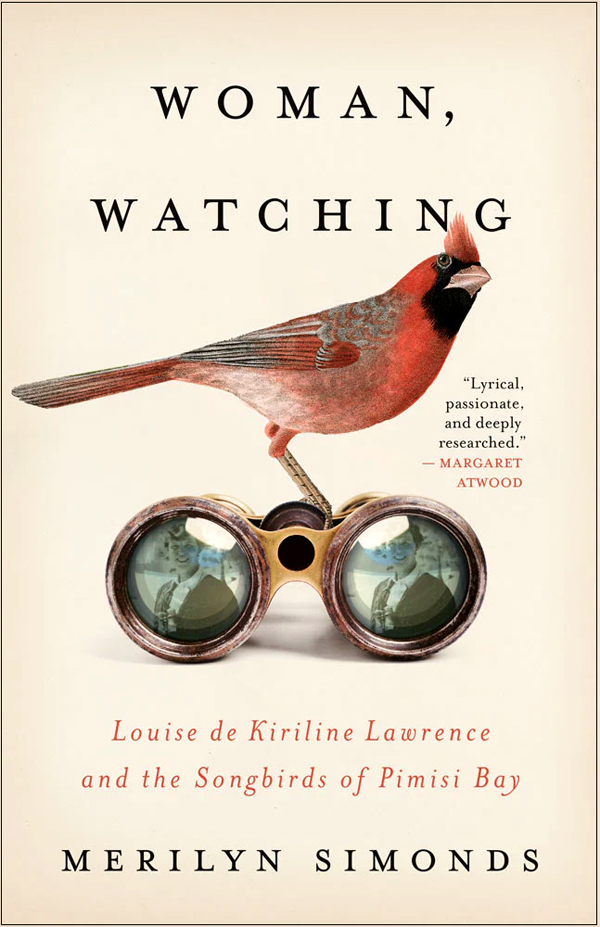
This weekend, we returned to New Glasgow for the Easter holiday. During the week, Heather had the opportunity to finish reading Merilyn Simonds ‘Woman, Watching’, a biography of Louise de Kiriline Lawrence and the Songbirds of Pimisi Bay (see post Man, Watching). I also found the book excellent. I would recommend it for a number of reasons. It emphasizes the value of citizen science, in this case in the field of ornithology.

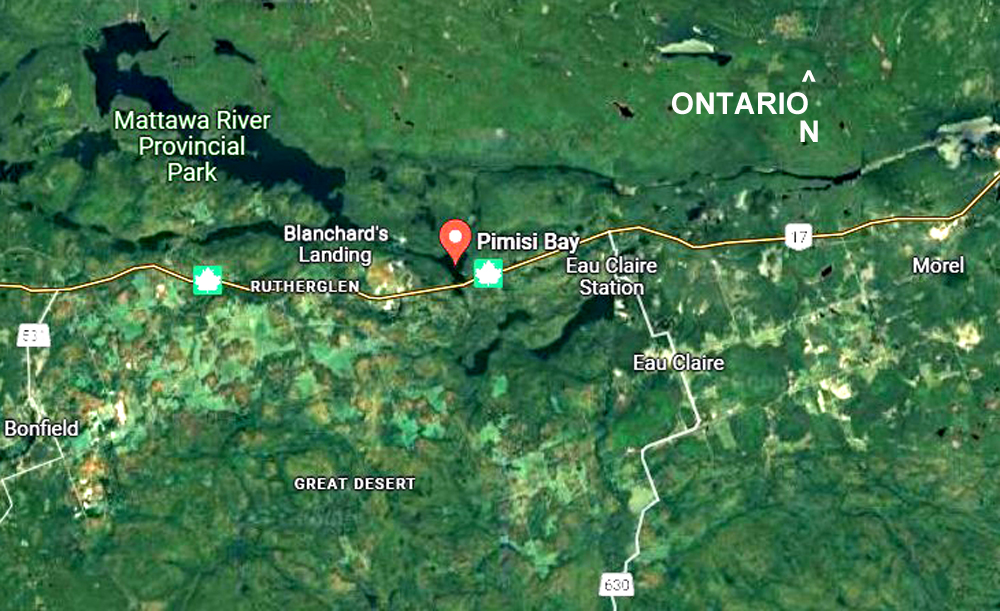
A second thread is the importance of a sense of place.Here, Louise lived at the Loghouse Nest on Pimisi Bay, outside of North Bay, Ontario for over fifty years.

Merilyn has written a well-researched biography. It includes detailed references to letters, publications and and books by Louise. Interwoven with her own biographical experience. It represents an inspirational piece of writing.


Before leaving the Valley, we checked out lunch at Junction Sixteen. With Anne and Bill Crossman, Roger Mosher, everyone enjoyed the pasta and the seafood. In New Glasgow, we went to the Blue Lobster Public House in Stellarton with John and Sandy Stewart. Another success.

To offset the excellent food, we took our first hike through our property on South Mountain, to the Inglisville Road. The snow has almost disappeared in the woods.

Along the gravel roadside, we saw the first sign of Spring, the yellow flowers of the Coltsfoot ( Tussilago farfara). In New Glasgow, the trails in Trenton Park were alive with walkers.

Acknowledgements

Heather selected the excellent read, Woman, Watching. We enjoyed the lunch company in both Bridgetown and Stellarton. Edward made his usual, valued contribution.

Reference

Merilyn Simonds, 2022, Woman, Watching, ECW Press.

Posted in biographical sketch

Man, Watching

In New Glasgow, Heather picked up the book, Woman, Watching, at Coles in the Highland Mall. I had the chance to start reading this biography of Louise de Kiriline Lawrence and the Songbirds of Pimisi Bay by Merilyn Simonds.

It starts in Scandinavia and Russia; moves to Canada. She is involved with the Dionne quintuplets in North Bay, Ontario. The next section covers her enthusiasm for ornithology — hence the book title. Heather has reclaimed her book. I will finish it later.


In an e-mail, I received the Spring 2023 Bras D’Or Lake Biosphere Reserve newsletter.

I recall time spent in Cape Breton in 2011, transferring our knowledge of SNBRA (Southwest Nova Biosphere Region) to BLBRA. Checking with David Colville, I discovered that Nick Hill has been providing a newsletter for our biosphere reserve (see SNBRA newsletter) .

Sunday was a good excuse to visit to Hampton Beach at low tide. Afterwards, we followed the coastal road to Parker’s Cove, then back over the North Mountain to Annapolis Royal and home.


From Woman, Watching, the description of rural life in Northern Ontario rings true of the rural economy in Nova Scotia; the need for multiple short-term jobs that will allow sufficient income for a living.

Listening to the Mass Casualty Commission (MCC) I realized the importance of local knowledge (geography) — the culture, the nature and the human infrastructure (road system). This cannot be acquired via an urban environment. There is also a need and value to travelling the backroads, walking, canoeing and other means of transport (bicycle, ATV, snowmobile).


Finally, a shout out to Junction Sixteen (formerly, End of the Line Pub) on our list for lunch this week. Thanks to John Montgomery for the link , and the reference to Ernest Buckler.

Acknowledgements

Heather researched the book, Woman, Watching. David Colville and John Montgomery provided email links. Edward added the graphics.

References

Merilyn Simonds, 2022, Woman, Watching: Louise de Kiriline Lawrence and the Songbirds of Pimisi Bay, ECW Press.

BLBRA newsletter.

SNBRA newsletter.

Junction Sixteen web site

Posted in Event Review

Saving our Estuary

On Wednesday evening at St Luke’s church in Annapolis Royal, the Clean Annapolis River Project(CARP) hosted a public presentation on two years of estuary monitoring.

The event included four presentations:

Kyle vandertoorn. Overview of CARP
Tim Webster (AGRG). Hydrodynamic modeling
Leah Creaser. Beach Seining
Keeler Colter. Fish Tagging (Striped bass, Atlantic sturgeon)

The audience numbered around thirty. The backstory was the history, from a proposal for Heritage River status to the causeway and the demise of the tidal generating station.

To move forward, it is critical that the watershed is considered in relation to existing land use, water quality and its impact on fish species that use the Annapolis River. This event complemented the Saving our Forests event from the previous Saturday (see Saving Forests). The difference was the size of the audience and that it was less political in nature.


Tuesday, Heather and I decided to walk the Peter Point trail in Kejimkujik National Park. The trail was dry (free of snow). We did not see a soul. The Visitor Centre was closed at this time of year. It did encourage me pull off the shelf, Dan Rubinstein’s Born to Walk.


Sandra Barry sent me an email. Geography as Generosity : Robert MacFarlane on Barry Lopez. In Orion Magazine, March 30, 2023.

Robert MacFarlane attunes us to a guiding principle in Barry Lopez’s work ‘how the rendering of landscape with particular nuance and specificity strengthens connection to each place and counteracts the indifference that can emerge from nameless abstraction.

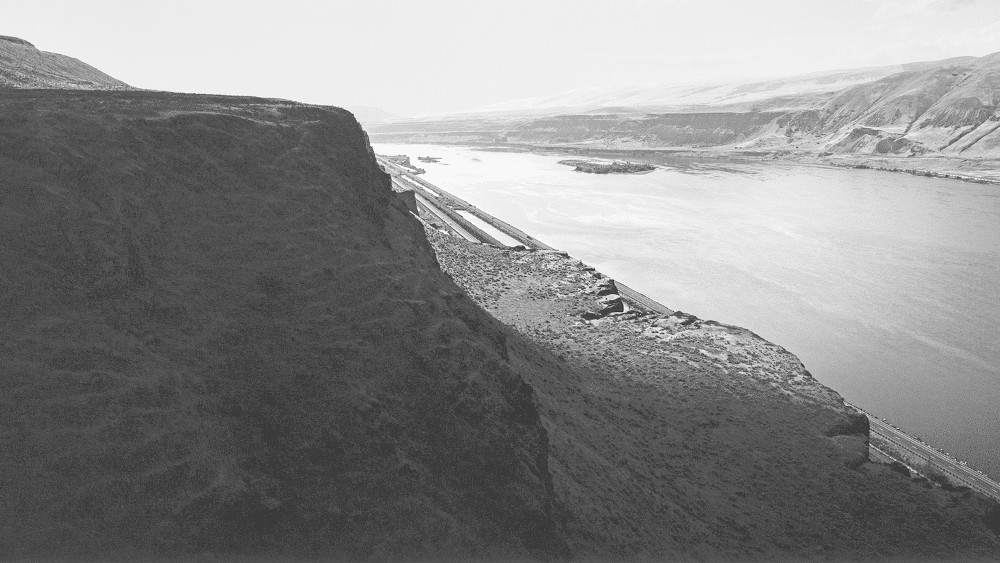
[from Orion Magazine] Terry Toedtemeier Born Portland, OR, 1947 – died Hood River, OR, 2008 // View from the Rimrock below Fairbanks Gap, One Mile West of Celilo Drawbridge, Columbia River Gorge, Oregon, 1987

Acknowledgements

Heather listened to the presentations, and shared the walk. Sandra shared the Orion link. Edward put it together with the graphics.

References

Dan Rubinstein, 2015, Born to Walk: the transformative power of a pedestrian act, ECW Press.

Robert MacFarlane, 2023, Geography as Generosity, Orion Magazine, March 30, 2023.

POSTSCRIPT

Small tidal estaury emptying into the Annapolis Basin near The Old Post Road, with Digby on the distant shore. Watercolour by Edward.

Posted in Event Review

Saving Forests

On Saturday, Heather and I attended the Save Our Old Forests (SOOF) meeting at the Bridgetown legion, organized by the Arlington Forest Protection Society.

Speakers included a moving welcome from the Mi’kmaq First Nations and by biologists, Donna Crossland, Bob Bancroft, and Rob Bright. It included a free lunch and a silent auction. The estimated turnout was around one hundred and eighty. It included members of municipal council and Carman Kerr, our local MLA. The Master of Ceremonies was Larry Powell, local reporter and writer.

The fundamental concern was old forests and the cutting on crown land. To address these issues in Annapolis County, to my mind, we need two large wall maps in the Municipal Board room at Annapolis Royal.

  1. Land ownership in Annapolis County
  2. Forest Ecosystems in Annapolis County

I can remember sitting in the COGS library and looking at the Church map. Well, we need current maps, at a similar scale, for the ownership and ecology for the county.

We have the Human Resources. COGS has turned out some excellent cartographers. Have you seen the maps produced by Marcel Morin, Lost Art Cartography for the Grand Pre area (see blog post “Spring Forward“)? The maps could also show the topography and the underlying geology.

All of us drive along highway #101 and notice the beech hangers along the face of North Mountain or, after a snow fall, the clearcuts along the face of South Mountain.

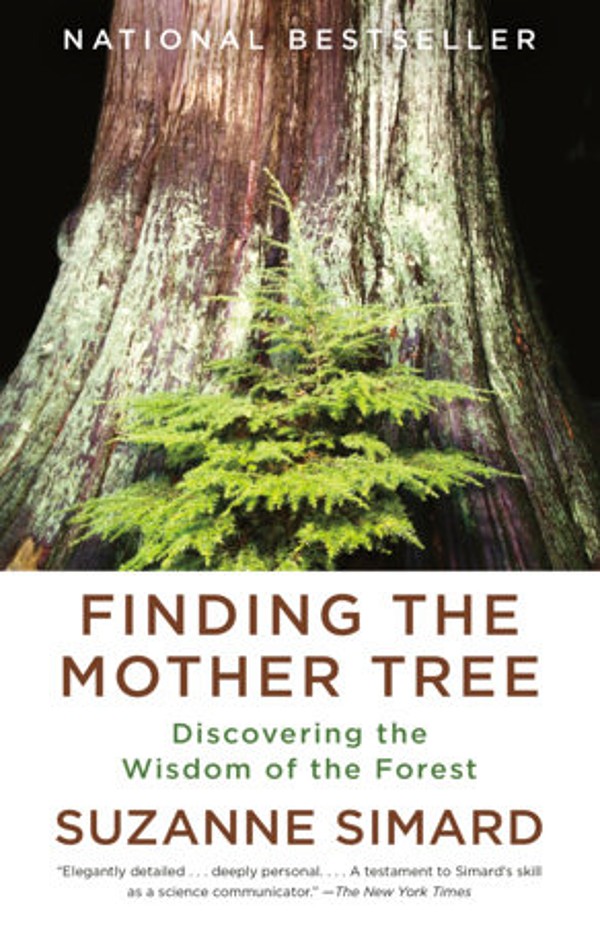
From my bookshelf, I can find seminal texts on Bioregionalism by Gary Snyder and Wendell Berry or Suzanne Simard’s, Finding the Mother Tree: Discovering the Wisdom of the Forest.

If we want ecological planning, maps of land ownership and ecosystem type are critical especially when connected to a modern GIS system. It would allow elders (from Mi’kmaw and settlers ) for example to speak on behalf of the old forests.

Acknowledgements

The Arlington Forest Protection Society for hosting the meeting. To the invited speakers.
Edward added the graphics.

References

Suzanne Simard, 2021, Finding the Mother Tree, Penguin Canada.

Gary Snyder, 2016,The Etiquette of Freedom, Penguin Random House

Gary Snyder (essays), 2020, The Practice of the Wild, Counterpoint Press

Posted in Book Review

The Bookshelf

We have been reducing our book load, with help from Endless Shores in Bridgetown. In checking the top shelf, I found a number of books that have followed me from England, including:

The Spirit and Purpose of Geography by Wooldridge and East was a school prize for Mathematics in 1962. It includes chapters on different geographies: Physical Geography, Biogeography, Historical Geography, Economic Geography, Political Geography.

On the same shelf, we have my graduate theses. M.Sc. Complexity Analysis of Vegetation Patterns in an alpine meadow, 1971 and Ph.D thesis, Inquiry into the Nature of Biogeography, 1976.

Elsewhere in the house, I found two publications from the National Museum in Ottawa.

The Rare Vascular Plants of Nova Scotia, 1977, co-authored with David White, George Argus and Paul Keddy, Syllogeus 18.

The Rare Vascular Plants of Saskatchewan, 1978, co-authored with George Argus and Vernon Harms, Syllogeus 19.

[From the Alaska Dispatch] George Argus rests in a rescue sled after being injured in a climbing accident on Denali in spring 1954. (Photo courtesy of John DeLapp)

George Argus was responsible for bringing Heather and myself back to Canada from England. With some online research, I found that George died last Fall . Irwin Brodo and Erich Haber penned a wonderful tribute in the Canadian Field Naturalist.

From Wooldridge and East, Preface p.12.

We have tried to signpost a path which can lead the student, if he is so inclined, towards the full study of his heritage, the earth’s surface which he treads. And if he persevered along this path his journey will not prove unrewarding. For his effort will subject him to a discipline and yield him a philosophy.

Finally, from the Alaska Dispatch News November 19, 2022, by Ned Rozell ‘George Argus, a man of the mountains and its willows’.

Acknowledgements

Heather helps me clear the shelves. Edward adds his creative touch. To Mary Argus, fond memories of Ottawa.

References

S.W.Wooldridge and W. Gordon East, 1951, The Spirit and Purpose of Geography, Hutchinson University Library.

Irwin Brodo and Erich Haber, 2022, A Tribute to George William Argus: 1929-2022, The Canadian Field-Naturalist. Vol 136 No 3.

N. Rozell Nov 19, 2022, George Argus: a man of the mountains and its willows, Alaska Dispatch News.

Posted in biographical sketch

Geographers among us

This is the third blog in a sequence: authors, programmers and now geographers. As Edward noted, you can divide the community into a wide range of professions or businesses. An analogous example would be the inventory of assets in creating the successful creative rural economy of Prince Edward County, Ontario (see also previous blog posts “Landscape and Food“, “Rural Curriculum“, and “Joining the Dots“.

To test out the concept, Heather and I visited Kings County. At Grand Pre, we checked out Marcel Morin at Lost Art Cartography (see blog post “Spring Forward“).

We then went across to Canning, where we stopped for lunch at ArtCan Kitchen and Studios owned by Ron Hayes.

We had previously visited to see an exhibition of photography by Dick Groot. We went for the Art, but stayed for the excellent cuisine.

It occurs to me that we are fortunate to receive the Reader each week from Bridgetown. Imagine if we had maps each week showing us the location of different events, the Geographer (an excellent co-op project for a student at COGS to address a specific community member).

Returning to the concept of the creative rural economy, we can envisage maps ranging from historical geography (see, for example, “Historical GIS“, physical geography (climate, geomorphology, biogeography), economic geography, cultural geography. It could include canoe routes, hiking trails, bicycle rides. It would show land use: agriculture, forestry, mining.

COGS could help maintain a database of changes in the geography, as a set of layers. Indeed a geographic information system. This would enhance collaboration between this educational institution and the surrounding communities.

Acknowledgements

Edward was able to join the dots. Heather shared the road trip.