Posted in Opinion

No Spraying in Paradise

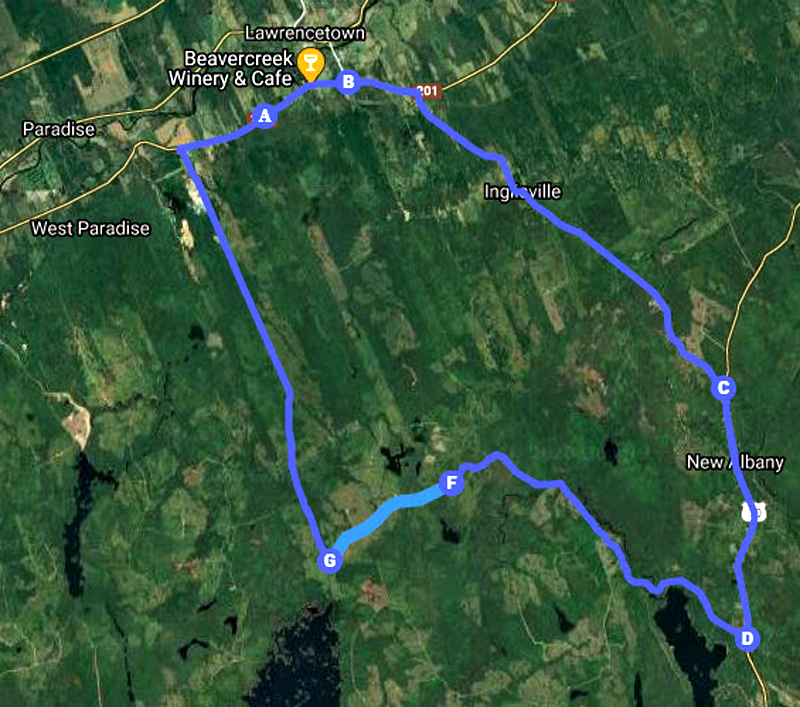
It is a busy time in Paradise. Time to pick apples, and to harvest tomatoes and vegetables from the garden. And, protest about the possibility of aerial spraying at Roxbury on Paradise Lake and at Eel Weir Lake. There are two parcels of land at Roxbury and one parcel at Eel Weir Lake (see map HERE).

“Don’t Spray Us” sign on Hwy 201

The Eel Weir Lake and Mud Lake are part of the water supply catchment for the Village of Lawrencetown.

Heather and I made a reconnaissance of the Eel Weir Lake parcel. We checked out the access roads, off the Inglisville Road. Finally, deciding that the best access to the protest camp would be from the Rifle Range Road.

On our travels, we found the remains of the tree planters bus. Hidden away in the woods, after the last cycle of harvesting and planting.
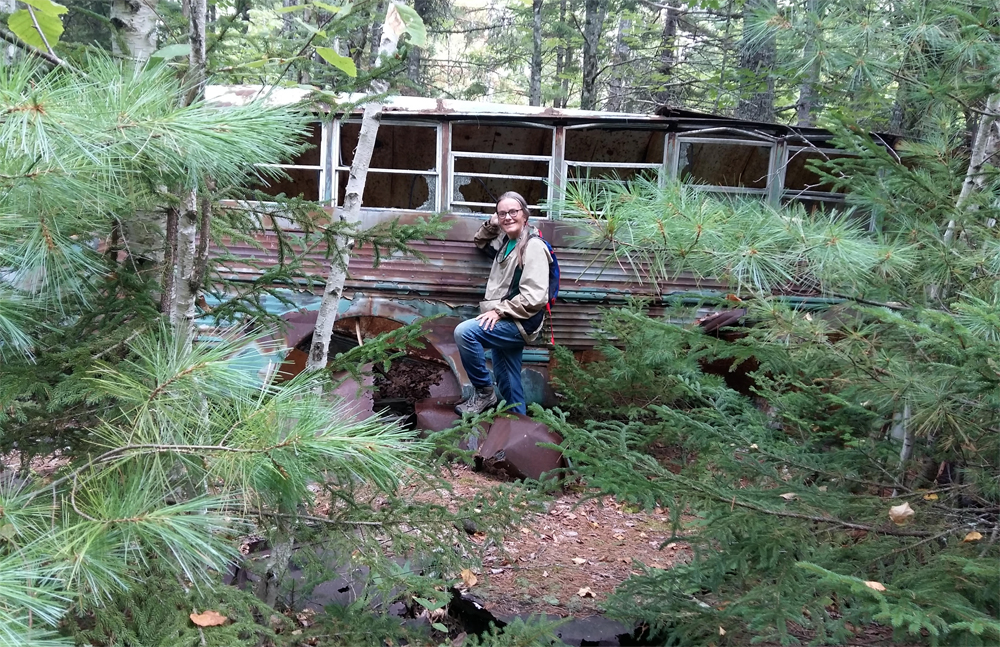
Bus buried into the South Mountain woods

If you want to obtain a good visual picture of the forest cover, and landscape, key in West Inglisville into Google Earth.


When we were at the Burlington rally, one of the team mentioned the title of a folk song, ‘No cell phones in Paradise’. I would add a sign ‘No spraying in Paradise‘. Note the frog in the above poster.

If you spend time up in the woods on South Mountain, you will notice the beautiful night sky. On the ground, you will see the amphibians (frogs, toads, salamanders), the bees on the goldenrod, the birds and other critters. Plus the rich mix of Acadian forest species.

If you live down slope, along the Inglisville Road, Highway #201 or Highway #1 it is likely that the rain falling on the forests of South Mountain is making its way down to the Annapolis River.

Please check the news release for further information , and support ‘No spraying in Paradise’.

Postscript

Want to see what happens three years after whole forest clear-cutting near Middle Musquodoboit, Nova Scotia? Click HERE.
Posted in Event Review

Out of Sight; Out of Mind ?

This Tuesday, Annapolis County municipal council voted unanimously to send a letter to the provincial Ministers of Lands and Forests, and Environment to stop aerial spraying of glyphosate in the County. In particular, three parcels owned by Freeman Lumber Ltd: two in Roxbury adjacent to Paradise Lake and one next to Eel Weir Lake.

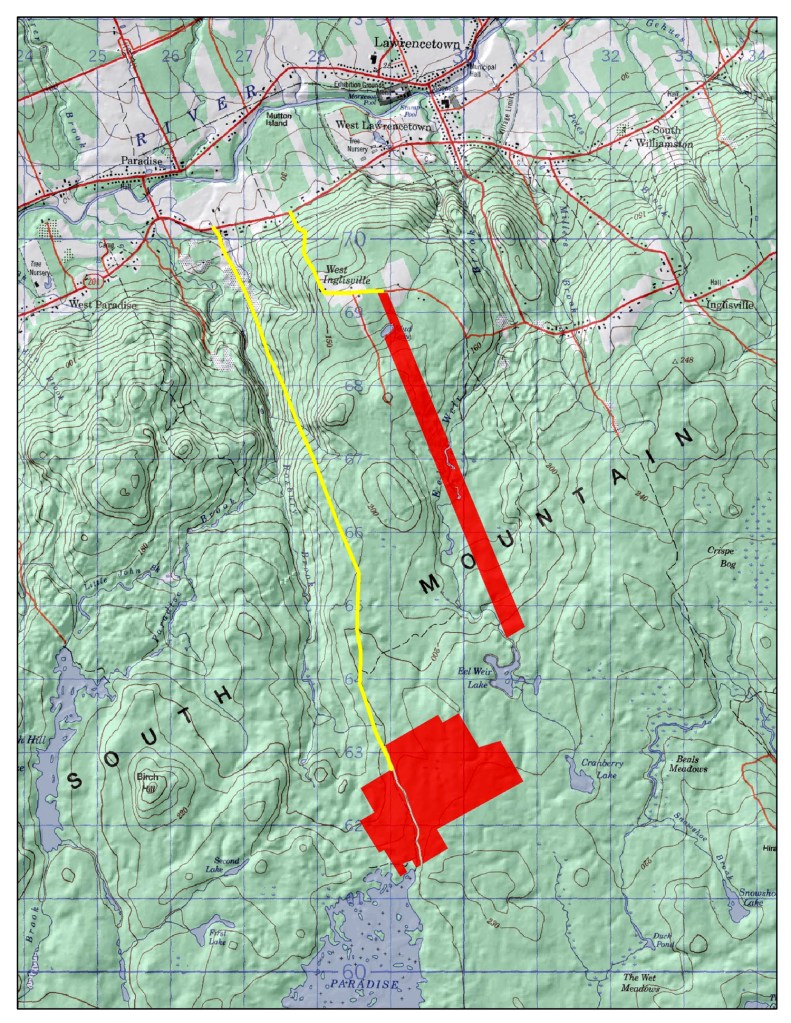
This weekend, a map was produced showing the three parcels on a topographic base.

Land set for aerial spraying shown in red.


Also, on the weekend, I finished reading Brenda Thompson’s book Tales from the End of the Old Military Road.


I found these two paragraphs relevant today.

“Most local people were disgusted and referred to the clear cuttings as ‘moonscapes’. The land looked barren, scary as if the world we knew was coming to an end And this was what the new world would look like. The new world was called Clear Cutting and everything in the path of the monsters, save one ridiculous little patch of trees was sheared, ripped and slashed down. Trees, brush, nests, dens – it did not matter to the Monsters. All of it was to be killed.” p.134.

“The local people had tried hard to convince both their government and the corporations that logging could be done in a different manner, a responsible manner which did not have land looking like a war zone with animals, birds and even mushrooms losing their habitats. The government listened but were politically beholden to the corporations.” p.135.

What can we do?

Over two years ago, I have posted a couple of blogs.

Community monitoring of the landscape, 21 January 2018 (Drone video link HERE).

The Five Little Pigs, 04 May 2018 (Drone video link HERE).

These blogs have links to drone video of the clearcuts on South Mountain taken by Neil Green.

What can we do today in 2020?

We can encourage Annapolis County Municipal council to represent the interests of its citizens. DONE.

We can obtain maps of Annapolis County which show all theparcels that have been clearcut, their ownership and spray schedule.

We should notify citizens living down stream/ down slope of the spray parcels.

We should work with forestry companies to adhere to ecological forestry practices, especially in those watersheds containing rural communities.

Acknowledgements

The support of the Annapolis County Municipal Council. The Burlington team and the Extinction Rebellion group for dogged determination. Edward supplied the blog graphics.

Postscript

Heather joined me on a road trip this evening (Wednesday). From our house on Hwy#201, we went up the Trout Lake Road to the Crisp Road and to Hwy. #10. Turn off to Trout Lake Road. Drive logging roads to Roxbury, from Roxbury to Hwy #201 and home. Total distance 39 km. Time 6 pm – 7:40 pm. We were in a Honda CRV. Only recommend for high clearance trucks.

Road Trip Wed 09 Sep 2020

Reference

Brenda Thompson, 2019. Tales from the End of the Old Military Road. Moose House Publications.


Posted in New thinking

Island of Hope: the Annapolis Valley

After the rally in Burlington, the next step was to try to persuade the Annapolis Municipal Council to ban spraying in the County. The Warden and some Councillors appear to be receptive to the motion.

The need to spray is contingent on previous forest clear-cutting. Therefore, the larger issue is to stop clear-cutting.

What can citizens do (for example)?

In the case of spraying in Annapolis County, we can lobby our Councillors. We also need to be fully informed. We need to know:

  1. Which parcels are designated for spraying?
  2. Where are they located? A map.
  3. Who owns the land?
  4. Who will conduct the spraying? When?

If necessary, Annapolis County citizens will have to stand up in the same way as the citizens of Burlington.

If we wish to stop clear-cutting, we need to know:

  1. Which parcels have been clear-cut, by whom, when?
  2. Which parcels are designated for future clear-cut by whom, when?
  3. Which parcels that have been clear-cut, and have already been sprayed?

As in all these situations, a key is the understanding the geography of our landscape. Again, we can lobby, the Centre of Geographic Sciences (COGS), to help us map the landscape, the forest cover and areas at risk.

Centre of Geographic Sciences

With the forthcoming municipal election, we should promote the concept of an Island of Hope. This could be just Annapolis County or it could extend through the physiographic region, the Annapolis Valley.

An Island of Hope is a region where life has a higher value than money. This will require a different definition of economy and well-being.

In nature’s economy the currency is not money, it is life

— Vandana Shiva


If our municipal units agree with this approach, we can all learn through citizen engagement, collaboration with our educational institutions, and sharing our findings with other regions of the province and beyond.

Our experiment is only as effective as the initial design.

Acknowledgements

First, the inspirational efforts of the citizens in the Burlington area. Those citizens of Annapolis County who have responded to the call for action. Edward for mastering the new WordPress editor. Heather for passing along her Facebook feedback and the Dave Gunning song.

References

Rick Ketcheson link, “How Economic Growth has become Anti-Life
Celes Davar link.
Circular Economy. Explainer video.

Footnote

Listen to Dave Gunning “Wish I Was Wrong

Posted in Event Review

Citizen celebration in Burlington

Heather and I, along with a number of other Annapolis County residents, went to the Burlington Community Hall in Kings County to hear about the protest against aerial spraying of glyphosate of 115 acres of land owned by Five Islands Forest Development Ltd.

Photo by Heather Stewart

At the meeting, it was confirmed that the property owners no longer intend to spray. In the words of Don Osburn:

“We are asking Nova Scotians to stand up and join us to get the province to agree to end the spraying of herbicides on the woodlands in Nova Scotia. It has to stop. It’s unsustainable. We’re in a climate emergency. That’s all there is to it.”

— Don Osburn

As residents of Annapolis County, we are asking our municipal council to pass a motion to stop clear cutting and aerial spraying in the county. We know that there are parcels scheduled for spraying in the Inglisville and Paradise section of South Mountain.

Photo by Heather Stewart

The next steps are to identify the parcels on a map, their size, ownership and the schedule for spraying. We need to know where organic farms/orchards and operations exist. The spray season has started September 1st. We need to come up with a citizen action plan.

Leo Glavine, MLA

In Burlington, Leo Glavine, MLA for Kings County spoke against the spraying of glyphosate. We need the same leadership in Annapolis County, at both the municipal and provincial table. In Burlington, Nina Newington from Extinction Rebellion, and resident of Annapolis County, spoke against clear cutting and aerial spraying in Nova Scotia.

In the words of Dave Gunning, “What shall I do with these hands of mine?

Acknowledgements

Cathy and Rick Ketcheson joined us for the drive to Burlington. Nina Newington, Jane, Olga and Stephanie were also there from Annapolis County. Edward joined us in spirit.

References

Ashley Thompson. Kings County News. September 3rd.

Dave Gunning, These Hands, 2012.

Posted in Creative writing

Some thoughts on the yellow-spotted salamander

pic_yellowSpottedSalamander
By Camazine, Wikipedia, CC BY-SA 3.0

In the Spring, Heather and I noticed a yellow-spotted salamander on the edge of our garden pond. Today, the pond is almost dry, full of weeds and bulrushes. The pond depends on the runoff from South Mountain.

The salamander is at risk, as the provincial government supports the use of sprays to manage the clear-cuts. Who will speak for the salamander?

Meanwhile, as we approach a municipal election, candidates focus on fiscal accountability. If we destroy our landscape and the species that call it home, then arguing about the costs of different projects is relatively insignificant.

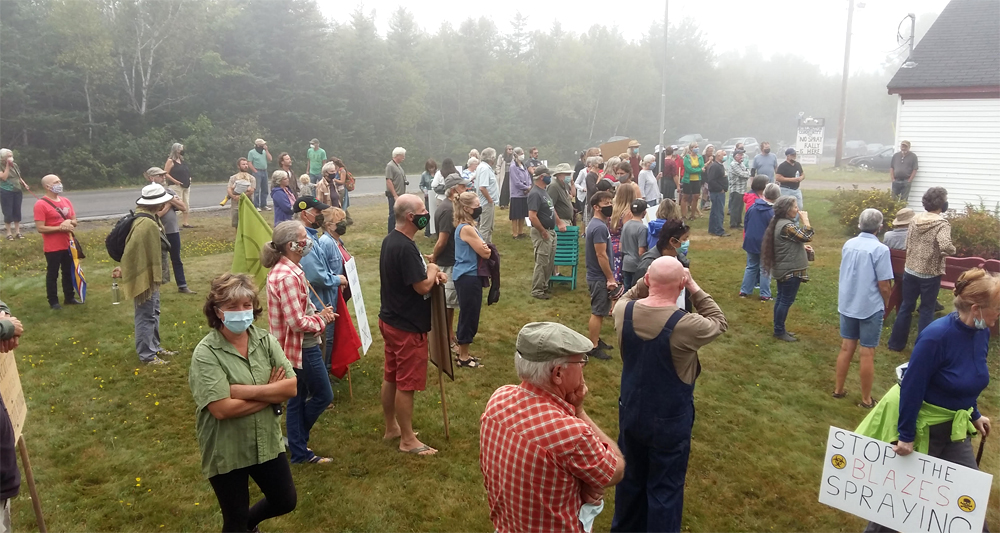
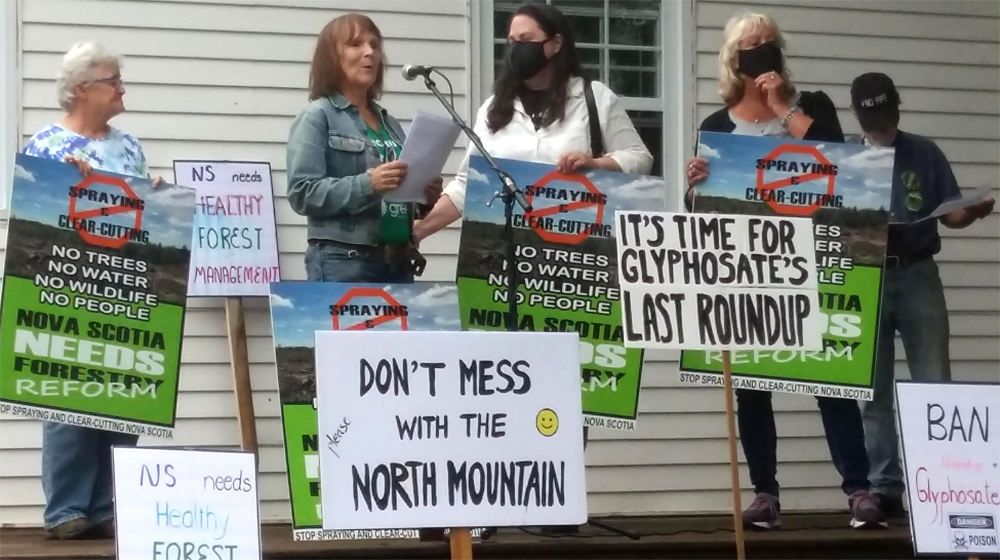
This Thursday, there is a protest against spraying on North Mountain,
https://www.facebook.com/ExtinctionRebellionNovaScotia/posts/1114729368923750 Image may contain: plant, tree, grass, outdoor and nature

My brother, Peter sent me a BBC4 interview with Robert MacFarlane. MacFarlane is well known for his books on the ‘language of place’.banner_BBC4interviewRobertMacFarlane In the podcast, he makes a couple of interesting points.
MacFarlane quotes the poet, W.H.Auden:

“Culture is no better than its woods”

He also speaks to the need to collaborate with artists and musicians, especially when campaigning to save the trees and the landscape.

Acknowledgements

Peter Maher for his support from France. Edward and Heather for their support in Nova Scotia. Nina Newington for her campaigning.

pic_3_orchard26Aug2020References

BBC4 Front Row. Interview with Robert MacFarlane by Kristy Lang.
George Orwell. Some Thoughts on the Common Toad. Penguin Great Ideas. #99.

The title of this blog is a homage to George Orwell (1903-1950). His thoughts on the Common Toad was first published in 1946. He concludes the essay.

“The atom bombs are piling up in the factories, the police are prowling through the cities, the lies are streaming from the loudspeakers, but the earth is still going round the sun, and neither dictators nor the bureaucrats, deeply as they disapprove of the process, are able to prevent it”. p.6.

Post-postscript

From one of my boxes of books, I noticed, peaking out, David Knight and Alun Joseph (Ed) 1999. Restructuring Societies: Insights from the Social Sciences. It contains an essay by Bob Rae. ‘Two men against Revolution. Edmund Burke and George Orwell’. That is now over twenty years ago!

Posted in Event Review

Meat and Greet

banner_dAubinMeats_3Living in Annapolis County, one of the many pleasures is to be able to support local businesses. It is a joy to go to the D’Aubin Family Meats market and purchase smoked bacon and fresh-made sausages.

This week, Susan Robinson-Burnie organized a ‘meet and greet’ at Paul and Fiona Hubble’s farm. There were six Annapolis County municipal election candidates from six different districts in Annapolis County. map_AnnapolisCoMunicipalityDistrictsThe venue had a number of positives:

  • the opportunity to meet neighbours on Hwy # 201.
  • to hear questions from like-minded citizens of District #7.
  • to recognize that candidate councillors from different districts represent a collective demand for change.

Of course, there were a few things missing, from my perspective.

We are hearing about the prospect of forest spraying on South Mountain. If this goes ahead, it will impact all of the watershed flowing into the Annapolis River.

If the municipal council represents the interests of the citizens of Annapolis County.

1) What is the voice to the provincial government on forestry land-use practices?
2) Does the county have a land-use plan?
3) Do we have a land-use planner?
4) How do the concerns of Annapolis County citizens get voiced at the provincial table? Through Stephen McNeil?
5) Is Annapolis County, the only municipal unit that does not have input into provincial land use plans?

It seems time for citizens to be heard at both the municipal table and the provincial table.

Indeed, do we really need two tables? One balanced on top of the other?
Does that not result in a lack of accountability to the citizens ?

How does it work in other geographies, larger in size, or with a greater population?
Are we suffering from the Nova Scotia factor? Our history, our geography?

Postscript
We recommend the forest walk around First Lake outside of Annapolis Royal.
Park at Highway #101 and enter across the road. Follow the signs.

Acknowledgements
Edward for his graphics. Heather for her concern about the spraying.

Posted in New thinking

Disrupting College Education

Google has announced a new program Google Career Certification. These certificates are considered equivalent to a four-year degree for related roles. Given the move by universities and colleges to online education, this raises the prospect of re-thinking tertiary education (perhaps, secondary too).person_graduateStudent

Let us assume that software vendors will continue to offer a wider range of online, hands-on tutorials on their products. The role of colleges and universities will be to develop “critical thinking”.

Back in the 1980s, when I was teaching at COGS, in the third semester, each student would undertake a cooperative project with government and industry contacts. Fast forward to 2020, I can envisage projects driven by the needs of the community, that focus on the local geography.

For example, in Annapolis County, we are seeing a movement towards protecting community forests. Students from this region could focus on tools that would allow citizen groups to build ‘pods’ of like-minded citizens who wished to maintain and protect similar forest values.

If a student is attending COGS online from another part of the country, eg BC or Nunavut, then their cooperative project would engage citizens from their local geography. The topic would be defined by the community.person_communityAssembly

Besides technical support for the online tutorials, students would need access to a mentor for the critical thinking component of their education. In the case of the Annapolis Valley, it could be a retired academic or informed citizen.

Since the cooperative project is determined by geography, it would be important to define a set of new relationships:

a) citizens with an understanding of geographic issues;
b) vendors bring their understanding of the online learning materials;
c) critical thinking on the relationship between education/technology/community.

What is needed to make this work at COGS?

A willingness for open discussion:

a) with the primary software vendors,
b) citizen advisory groups
c) and critical thinking mentorship.

In this disruptive education scenario, there is an opportunity to redefine collaboration or ‘community’ college to be much more inclusive with a wide range of members from different geographic communities. The scenario could include multiple technologies. It offers a new vision for civilization and nature.

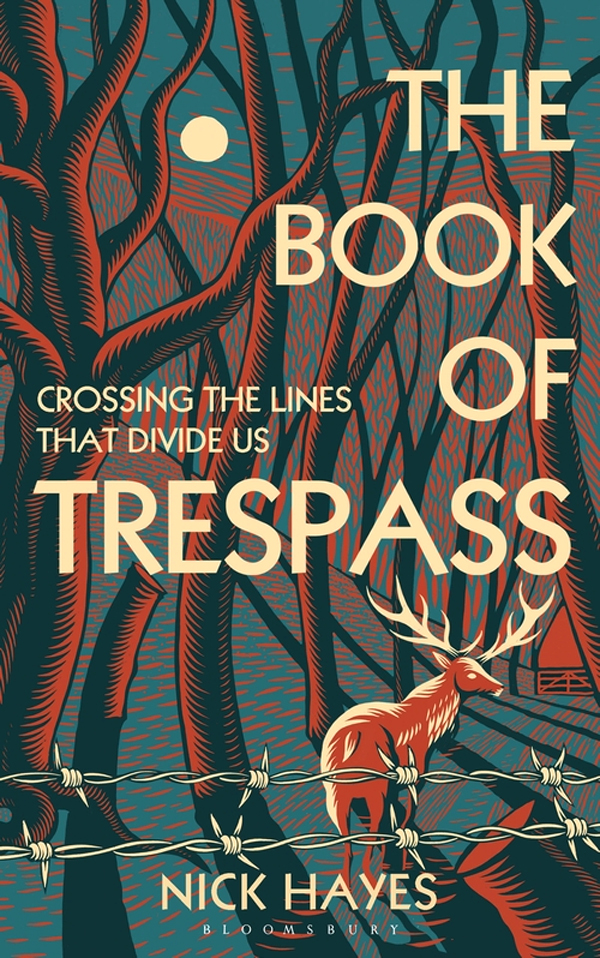
bookCover_trespassPostscript

In the latest Guardian Weekly (August 21) there is a review of Nick Hayes’s book, The Book of Trespass: crossing the lines that divide us. p.60.

References

Google Link
Email from Nina Newington.
Nick Hayes, 2020. The Book of Trespass: Crossing the Lines that Divide Us. Bloomsbury Circus.
Acknowledgements

Edward for forwarding the Google link. Nina for her thoughts on citizen collaboration and forest values. Heather for seeing the individual species from the trees.

Posted in Opinion

Decolonize the countryside

This week, I received a link to George Monbiot’s Guardian article on a new campaign ‘to decolonize the countryside’.pic_decoloniseTheCountryside Meanwhile, in Nova Scotia I read Larry Powell’s article on the Protected Community Forest initiative.

Reflecting on the differences and similarities between Europe and North America, I recall arriving in Schefferville, Quebec to work at the McGill Sub-Arctic Research Laboratory in Summer 1964. Conducting field research on the Canadian Shield, I developed a very different perspective on the relationship between man and nature.

Eventually, in 1969, I left my job with IBM in England and moved to Canada to study alpine vegetation patterns in the Rockies, just off the Columbia Icefields.

This week, I have been hearing about plans to spray the vegetation in the West Inglisville and Paradise area of South Mountain. I have obtained the Property Identifiers (PID) and with Viewpoint can accurately locate the designated areas.

Here are my questions.

1) the Municipality of Annapolis produced its Forestry report in 2018. Does the Municipality have a say in the Forestry practices impacting citizens in the county?

2) Driving to Bridgewater, I see signs ‘Nova Scotia needs Forestry’. Is that indeed the case? If so, what type of forestry? Read Bob Bancroft’s article in this weekend’s Chronicle Herald.

3) Does the Municipality have any control or input over land use planning in the county? Or are all decisions related to Forestry, Agriculture, Mining made at the provincial level?

4) Finally, with the demise of local newspapers, it is hard to imagine how we are going to understand the positions of candidates in the municipal election. Thankfully, we have The Bridgetown Reader and the link municipalelection-annapoliscounty.com for the basic facts.

bookCover_noMansGardenWhile in Lunenburg to collect a few bottles of Hunter brandy at Ironworks Distillery, we dropped into Lunenburg Bound bookstore. I found Daniel Botkin’s book, No Man’s Garden. Thoreau and a new vision for civilization and nature, written in 2001.
We are still seeking that new vision.

Acknowledgements

To my brother for the Guardian link. To Rocky Hebb for notice about the spraying. To Gregory Heming for the PIDs. Larry Powell for his report on the Protected Community Forest. As always, support from Heather and Edward.

References
Daniel Botkin, 2001. No Man’s Garden: Thoreau and a new vision for Civilization and Nature. Island Press.
Bob Bancroft, Forest plantations defy science, ignore economics. Chronicle Herald. August 22. Opinion C2.
Lawrence Powell. Annapolis County group raising funds to protect the forest.

Posted in biographical sketch

Inside the barn

pic_insideTheBarn_4
Inside the Barn

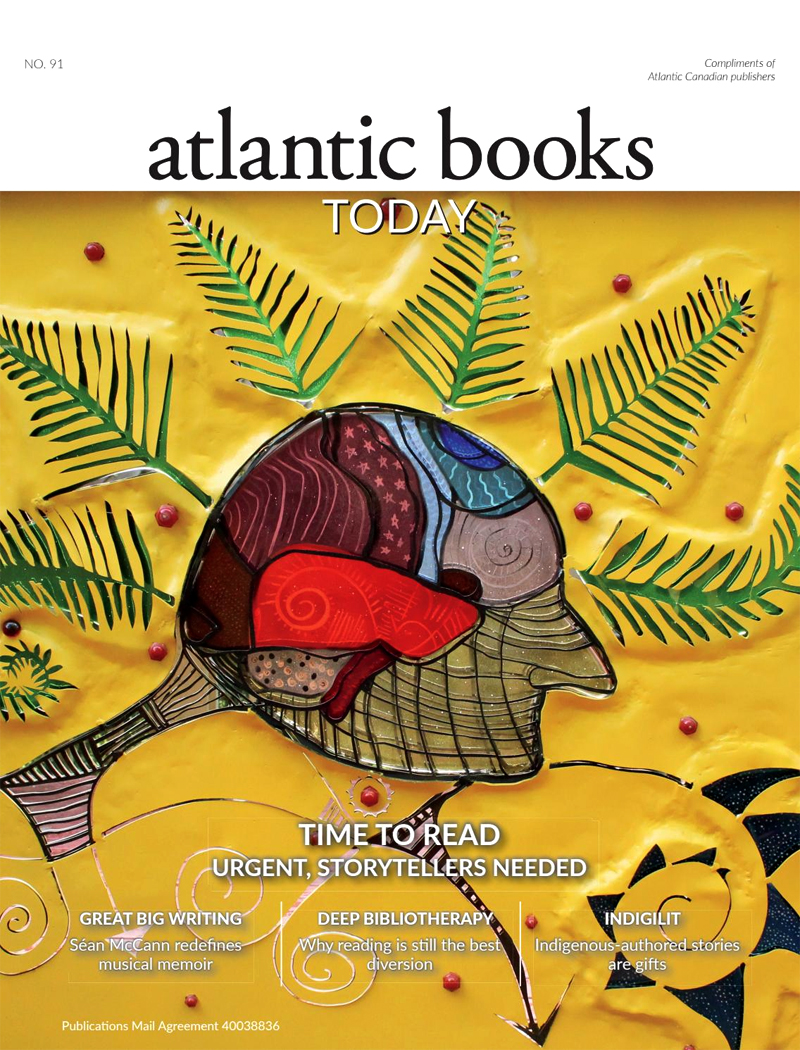
We made a quick trip to New Glasgow for a family BBQ at Sandy’s place in River John. bookCover_AtlanticBooksToday_91Before leaving town to return home, we made a quick stop at Coles bookstore in the Highland Mall. I picked up another copy of Thoreau’s Walden and Civil Disobedience. This version had a robust, attractive cover. (I had not realized that Thoreau died at age 45 years, 1817-1862).
While in Coles, I also picked up the latest issue of Atlantic Books Today (No. 91). With COVID there have been delays in book publishing. From the cover:

“Time to Read.
Urgent, storytellers needed.”

Inside, there is an interview with Lesley Choyce, author of a hundred books.
There was an advertisement for Breakwater Books. Recently, Antony Berger has compiled and edited No Place for a Woman. The Life and Newfoundland Stories of Ella Manuel’  was of personal interest since I recall visits to her house above Woody Point in the 1970s.

Leaving town, we stopped at Whistleberry Market (exit 20 on Highway #104) run by Mennonites at Green Hill. We wanted to try again the smoked Italian sausages. It was well worth the stop.

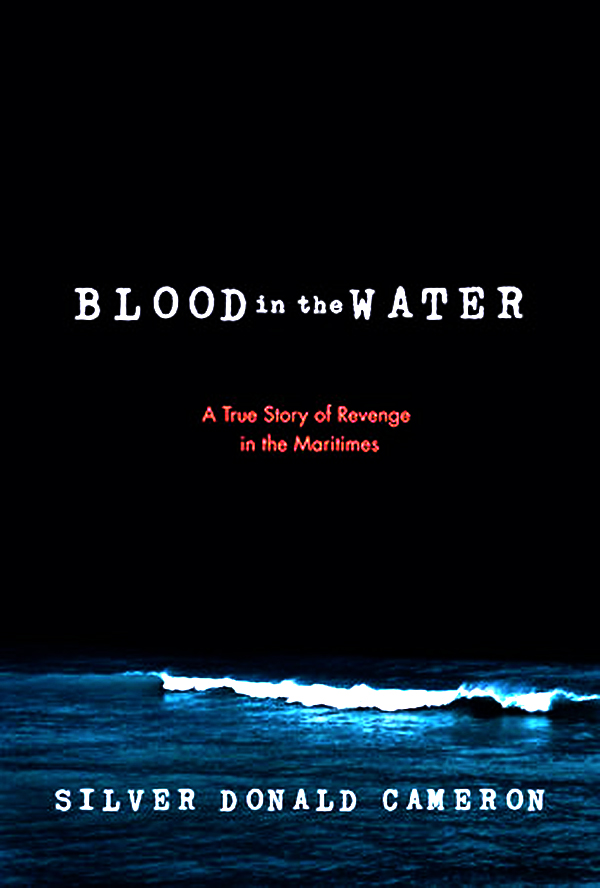
bookCover_bloodInTheWaterWhile on the road, I heard an interview about Silver Donald Cameron’s final book Blood in the Water. Checking online, I rediscovered his Green Interviews and watched the 2014 interview with George Monbiot. The Green Interviews represented a valued contribution. Silver Donald will be missed.

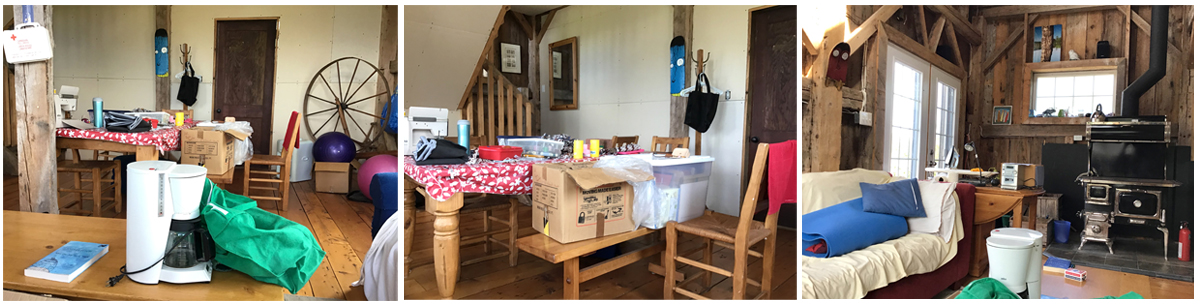
At home, there is the opportunity to get back to my fitness regime and enjoy the writing space inside Andrew’s barn. On the task list, it is time to get the tractor ready for Apple picking, and the orchard ready for its organic certification inspection.

Postscript

We are watching from the sidelines, the Nova Scotia government ‘Talk and Log’ strategy. Meanwhile, we have contributed to the local Protected Community Forests campaign in Annapolis County.

Acknowledgements

Heather has been working hard with the garden produce: garlic, tomatoes, beans and potatoes. Edward contributes his online graphics skills.

References
Atlantic Books Today. No. 91
Henry David Thoreau, 2014. Walden and Civil Disobedience. Word Cloud Classics.
Antony Berger, 2020. No Place for a Woman. Breakwater Books.
Silver Donald Cameron. 2020. Blood in the Water. Penguin Random House.

Posted in Opinion

Accountability

I want to use the word ‘accountability‘ in two very different ways.banner_theReaderBridgetownNS First, at the time of a municipal election, candidates are seeking to hold local government to account. This week’s The Reader (August 14) includes contributions from Susan Robinson-Burnie (District 7) and Alan Parish (District 3). Meanwhile, from the Municipality, we are now seeing coverage on the new waste management site in West Paradise.

If you will excuse a bit of ‘wordplay’, I would like to address ‘a County ability’.

I continue to be amazed that, at a time when so many of our issues are Geographic in nature (e.g. climate change, COVID, sustainable land management) that the county does not make better use of the resources at both COGS and AGRG. Many of these Geomatics technologies are in high demand (e.g. LiDAR, image analysis, GIS). Annapolis County could showcase a leadership role in municipal land management.

What is stopping us?
Is it the same reason we cannot collaborate with adjoining counties and towns?

banner_earthArchiveIn response to my queries, Edward sent me the link to the following TED talk …

It features Chris Fisher, archaeologist and founder of Earth Archive.

Edward’s question: “Could we develop a Nova Scotia Archive as part of the Earth Archive Mission [starting in the Valley]?

YES. And we could start by utilizing the skills, abilities and resources that reside in Annapolis County.

bookCover_bookThatChangedAmericaPostscript

Finished reading Randall Fuller’s The Book that Changed America. Fuller describes the impact of Darwin’s Origin of Species on the intellectual community in Concord in 1860. This included Emerson, Thoreau and Asa Gray (the botanist). It was the time of Abraham Lincoln as President and the anti-slavery movement.

If you are a book-lover, check out the documentary The Booksellers on GEM.

Acknowledgements

Edward for the TED talks link. Heather for the help in the garden. Anne Crossman for the updates on the municipal scene. Jon Murphy for news from GoGeomatics.

Reference
Randall Fuller, 2017. The Book that changed America. Penguin-RandomHouse.