Serendipitously, I noticed in Orion magazine, besides the article on David Quammen, that there was an article on a conversation between Tim DeChristopher and Wendell Berry, To Live and Love with a Dying World. DeChristopher is a Climate Activist, Berry is a writer and poet.
From their conversation, I took away Berry’s concern about machine civilization and the role of the state.
“Live so far as you can in opposition. You’ve got to live and love. You’ve got to find the answers in your heart”
And a couple of short poems.
“O when the world’s at peace and every man is free
Then will I go down unto my love.
O and I may go down several times before that.”
“Something better, something better!
Everybody’s talking about something better!
The important thing is to feel good
And be proud of what you got, don’t matter if it ain’t nothin’ but a log pen.”
After my last blog, I asked Andrew for a current photograph from Iqaluit. In the background, you can see the roof of the arena. You can also see that there are not many people around. Social isolation.
For several weeks, I have been burning materials from the hedgerows. Every day, I would check the burn ban website, to see whether burning was permitted between 2 pm and 8 am. Then I noticed in the SaltWire-Spectator that someone was charged for ignoring the burn restrictions in the Village of Lawrencetown. Unbeknown to me, the Minister of Lands and Forests had put out a no-burn order until May.
To free up the Fire Departments in this time of crisis. Oh well, no rush!
Earlier in the week, I contacted Brent Hall at Esri Canada. My interest was the impact of COVID-19 on teaching GIS in the universities. Brent observed that this pandemic will change the relationship between education and online learning. This caused me to reflect on Wendell Berry’s comment about ‘machine civilization’.
Postscript
Listening to The Jerry Cans CD, Nunavuttitut , to remind us of life in Iqaluit. Feels good!
And received our first email from grandson, Fraser Root-Maher, he deserves a special mention too. I hope he will become a blogger.
Acknowledgements
Andrew Maher for the new photograph. Brent Hall, Director, Education and Research at Esri Canada for his perspective on COVID-19 and Education. Edward Wedler for his graphics contribution. Heather for her long-distance walking, in the rain.
References
Orion Magazine. March 2, 2020. To Live and Love with a Dying World.Tim DeChristopher and Wendell Berry.
Nova Scotia Burn Restriction web site.
The Jerry Cans. CD Nunavuttitut.

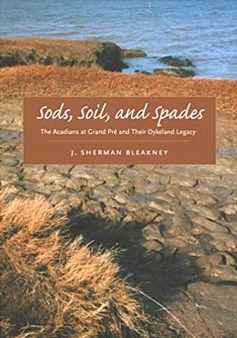 This discussion of the Language of Place took me back to my bookshelf. For Nova Scotia, I retrieved Sherman Bleakney’s book Sods, Soils and Spades: The Acadians at Grand Pre and their dykeland legacy. The word that triggered this search was aboiteau and its role in dykeland construction.
 This is his third book in the Politics of Place series. It includes chapters on walls in China, the United States, Israel and Palestine, the Middle East, the Indian subcontinent, Africa, Europe and the United Kingdom. Of particular interest was the chapter on the UK and its relationship to the Brexit vote. Looking at the map of voters who want to stay in the European Union and those who want to leave. Scotland, Northern Ireland, some of the cities in England want to stay whereas ‘rural’ England want to leave the EU.
 Marshall quotes from the book by David Goodhart,
  In the latest issue of Saltscapes, two articles caught my attention. Jodi DeLong reviewed Sandra Phinney’s book ‘Waking up in my own backyard. Explorations in Southwest Nova Scotia. Or as DeLong titled her article ‘ Celebrating our own spaces’
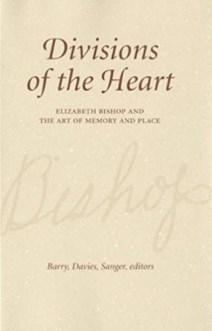 There, I discovered:
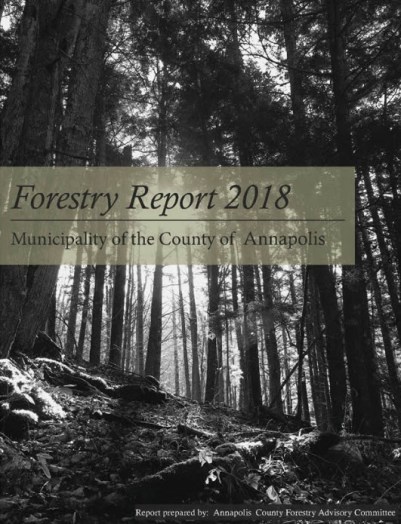 It was forwarded to me by Gregory Heming, Chair, Forestry Advisory Committee. It is a summary of their initial research and makes a set of recommendations to council. The primary recommendation is to adopt the ‘Climate Forest’ paradigm.
 Ernest Blair Experiment