Posted in biographical sketch

Two Conversations

As part of my research on Historical GIS, I have been thinking about aerial photographs and satellite imagery of Nova Scotia. On the weekend, I went to talk to John Wightman in Bridgetown.

John has had several careers in his work life. He was Vice-Principal at NSLSI when they hired me to teach Scientific Computer Programming in 1980. John has had a long standing interest in the landscape and it’s geological structure. He reminded me that the Nova Scotia Department of Lands and Forests had taken aerial photographs of the provincial forest cover, every ten years. Likely since the 1950’s. He was also familiar with the work of the Canada Centre for Remote Sensing (CCRS) and their support of the LANDSAT series of satellites.

Given this background, it seems highly likely that we could document changes in the forest and agricultural landscape over the last ninety years. This would be a significant challenge for the total province, but we could sponsor a pilot project for a sub-region (eg. the Annapolis Valley).

Researching the availability of these images would take some time. However, the availability of imagery in combination with historical maps would give us the background story on landscape change.


My second conversation was online. In response to my recent blogs on maps and mapping, Sandra Barry sent me a poem by Elizabeth Bishop, ‘The Map’.

Sandra is a remarkable resource on the life and work of Bishop. Here is the poem, published in 1946 from the book, North and South.

THE MAP
 by Elizabeth Bishop
 
Land lies in water; it is shadowed green.
Shadows, or are they shallows, at its edges
showing the line of long sea-weeded ledges
where weeds hang to the simple blue from green.
Or does the land lean down to lift the sea from under,
drawing it unperturbed around itself?
Along the fine tan sandy shelf
is the land tugging at the sea from under?
 
The shadow of Newfoundland lies flat and still.
Labrador's yellow, where the moony Eskimo
has oiled it. We can stroke these lovely bays,
under a glass as if they were expected to blossom,
or as if to provide a clean cage for invisible fish.
The names of the seashore towns run out to sea,
the names of cities cross the neighboring mountains
--the printer here experiencing the same excitement
as when emotion too far exceeds its cause.
These peninsulas take the water between thumb and finger
like women feeling for the smoothness of yard-goods.
 
Mapped waters are more quiet than the land is,
lending the land their waves' own conformation:
and Norway's hare runs south in agitation,
profiles investigate the sea, where land is.
Are they assigned, or can the countries pick their colors?
--What suits the character of the native waters best.
Topography displays no favorites; North's as near as West.
More delicate than the historians' are the map-makers' colors.
 
(from North & South, 1946)

The appeal for me is the link between place, the cartographer’s craft and the poet’s sensibilities.

Two separate conversations, taking place, between Bridgetown and Middleton.

My hope is that COGS faculty and students believe it is worthwhile to develop an Historical GIS that incorporates both the early cartography and the subsequent image analysis.

Postscript

Tuesday evening, David Colville described a current student project that looks at the sand barrens ecosystem, using historical photography, in the Annapolis Valley. It is a collaboration with CARP. This fits well with my thinking. It covers the period 1930-2020.

Postscript

This weekend, we picked red currants, gooseberries and high bush blueberries. Lots of jams, jellies and desserts.

Acknowledgements

To John Wightman and Sandra Barry, both of whom, added to my initial story. David Colville provide current information on satellite imagery, and the student project. Edward Wedler added both his knowledge of remote sensing and technical skills.

References

Elizabeth Bishop,1946, North and South, (It includes the poem ‘The Map’).

Posted in biographical sketch

Stepping Back

Thich Nhat Hanh made the following observation (see previous blog).

”You want to find something, but you don’t know what to search for. In everyone there’s a continuous desire and expectation; deep inside, you still expect something better to happen. That’s why you check your email many times a day!”

Imagine my consternation on Sunday morning, when I discovered that our phone system was not working AND my iPad was frozen (locked). Fortunately, in these times when communication is so important, I was able to purchase a new telephone set in Bridgetown. Monday morning I went to Berwick to talk to Gekko Tech Services they were able to advise me on the procedure for a forced boot of my iPad.


Sunday, later in the day, we went over to Hampton Beach to enjoy the sound of the waves on the shingle shore. We travelled along the shore road to Hillsburn, before coming over the mountain to Annapolis Royal.

An added benefit from the drive to Berwick, I was able to walk-in for a COVID test at the Fire Hall. And now I can check my iPad for the results. Negative !

It is remarkable how dependent we are on these communication systems, particularly in times of strife and uncertainty. We look forward to Wednesday. Bell Aliant should install Fibre Op to our house.

Acknowledgements

Kyle at Bridgetown Computers and the technical staff at Gekko Tech Services for keeping computer services in the Valley. Heather and Siqsiq enjoyed the Bay of Fundy cool air. Edward provided technical support.

References

Check the Looking Forward blog post for the Brain Pickings reference.

Posted in biographical sketch

Spring Wildflowers

Last Tuesday, we took the First Lake loop trail. It is a forty five minute walk with Siqsiq. And yes, we did go anticlockwise. The only other visitors, at that time in the afternoon, were two fly-fishermen.

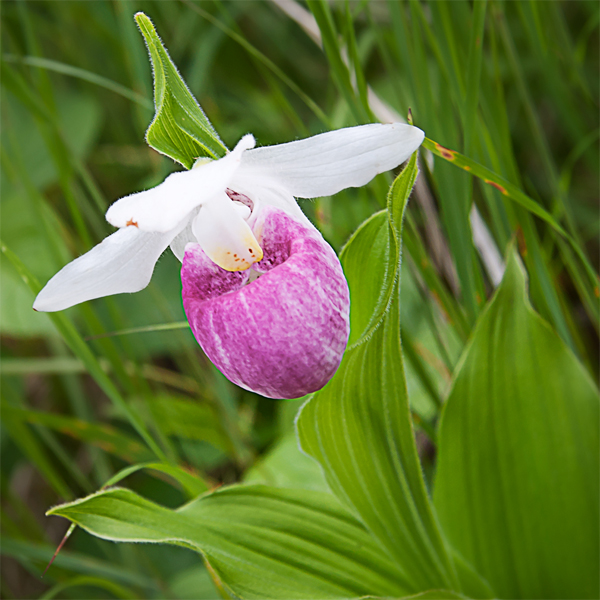
The main surprise was the number of Spring flowers in the woods : star flower, Clintonia, Ladyslipper orchids, Trillium, Mayflower.

After the walk, I pulled off the bookshelf Roland and Olson, Spring Wildflowers. Albert Roland taught Biology for many years at the Nova Scotia Agricultural College (NSAC) in Truro. After that, he was Professor Emeritus of Biology. He is best known as the author of the Flora of Nova Scotia. Randall Olson teaches Botany and is Curator of AE Roland Herbarium at the NSAC, Now Dalhousie University, Agricultural campus.

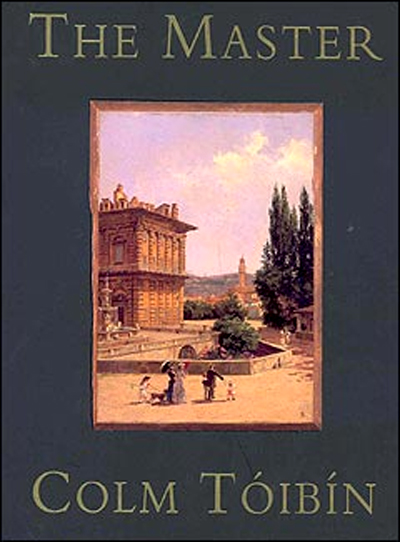
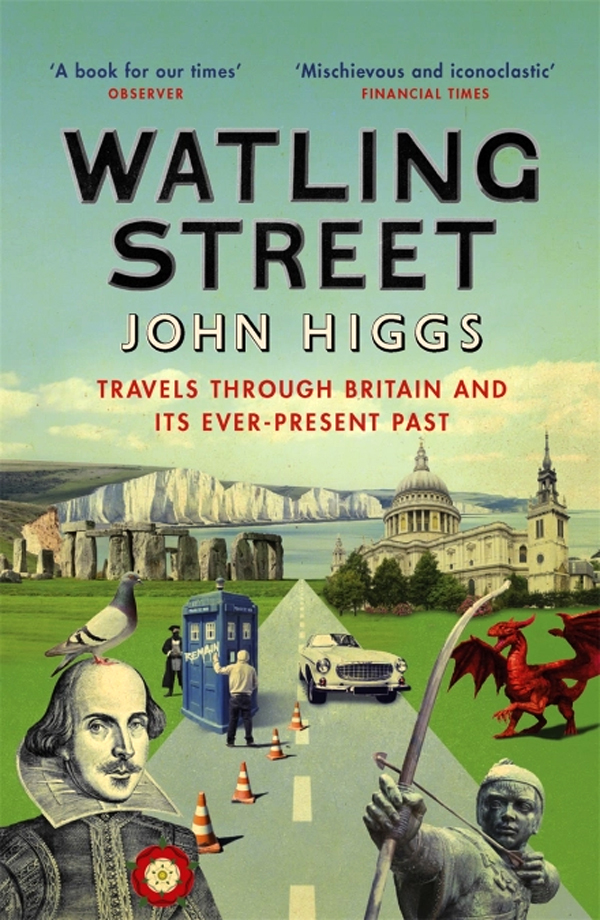
This week, I returned Blue Sky Kingdom to the library. But then added Watling Street, recommended by Peter Maher (see blog post here), and The Master recommended by Sandra Barry.

It is increasingly difficult to be a task-oriented person living in ‘task-timeless’ world. My solution is to pick a few discrete ‘low-hanging’ tasks, and then free format the rest of the day. Even reading a long book is a challenge.

Today, with restrictions lifted, the task was to drive through the Rawdon Hills to New Glasgow, for a weekend away. Last night, I cooked Rhubarb and Strawberry Cobbler from Bonnie Stern, Simply HeartSmart cookbook, p.271.

Congratulations to AIRO on its five year aniversary

Acknowledgements

Heather and Siqsiq shared the travels. Edward added the graphics and links.

References

Bonnie Stern, 1994, Simply HeartSmart, Random House.

AE Roland and AR Olson, 1993, Spring Wildflowers, The Nova Scotia Museum Field Guide Series.

AE Roland and EC Smith, 1983 (reprint), Flora of Nova Scotia, Nova Scotia Museum.

John Higgs, 2017, Watling Street, Weidenfeld and Nicholson

Colm Toibin, 2004, The Master, Picador.

Posted in biographical sketch

Walking Paths

We have two dog walks in the Annapolis Royal area. The First Lake loop trail, which you start near the parking lot on Highway #101. The signage encourages dog walkers to go anti-clockwise around the lake. To reduce encounters.

The second loop trail is around the French Basin. It has excellent signage on wildlife and bird life. No instructions for dog walkers.

Friday, we walked the French Basin loop clockwise. The consequence was that we met everyone coming the other way. The advantage of being contrary.

” Hi, Wayne, how are you keeping?”

”Good to see you, Bob.”

The experience gave us a sense of community. Hale, well met. Would be good to live in Annapolis Royal; to be able to to enjoy these walks on a regular basis? There is nothing equivalent in Middleton, or Bridgetown (perhaps Valley View Park).

The direction (followed or not) can offer a metaphor for life. If we all go in the same direction, we likely will not meet. If we go in a contrary direction, then that increases the likelihood of encounters. To my mind, perversely, that seems positive.


Sandra Barry sent me a link to a discussion between Mark Lilla and Colm Toibin on Thomas Mann’s classic book, Reflections of a Nonpolitical Man.

This one hour YouTube video reminded me of the role of writers in our society. Sandra also noted that Elisabeth Mann Borgese was the daughter of Thomas Mann and an important part of the founding of the International Ocean Institute (IOI) at Dalhousie University. A quick Google reminded me of earlier times with Mike Butler, Dirk Werle and Tony Charles (SMU).


From Peter, there is a recommendation to read Watling Street by John Higgs. Watling Street runs from Dover northwest across England to Anglesey. It follows the old Roman Road. I have requested the book through the Lawrencetown library

This morning (Sunday) started the day by walking to the top of the mountain, on the West Inglisville Road. Felt good. It has been a while. Too long.

Postscript

From Brain Pickings, May 30,2021 Thoreau quotation:

If you have built castles in the air, your work need not be lost; that is where they should be. Now put the foundations under them.

Acknowledgements

Sandra Barry for reminding me of the role of writers in our society. Also the memories of the International Oceans Institute. Peter Maher for the links to the UK landscape. Heather and Siqsiq shared the dog walks. Edward added his two cents.

References

Mark Lilla and Colm Toibin YouTube discussion of Thomas Mann’s Reflections of a Nonpolitical Man.

John Higgs, 2017, Watling Street: Travels through Britain and its ever-present past, Weidenfeld and Nicholson.

Posted in biographical sketch

Food for Thought

This weekend, I harvested a first crop of rhubarb.

This took me to the bookshelf and ‘Out of Old Nova Scotia Kitchens’ page 131, Rhubarb Cobbler and Apple Crisp or Levi’s Pie. Apple Crisp is my ‘go to’ crumble recipe. This time, I replaced Apple with Rhubarb. Two desserts.

Another harvestable crop is kale. Our six plants overwintered into perennials. This allows me to supplement my Shepherd’s Pie recipe.

If we get some rain, on a long weekend, there should be time to plant out brussel sprouts, tomatoes, peas, potatoes and a number of other seeds.


May 22nd is a significant date in our family calendar: my daughter Laurel’s birthday and now a virtual wedding shower for Daisy. These two happenings bring together some of the flower power in the extended family: Heather, Laurel, Daisy, Poppy, Isla Rose.


Besides harvesting, planting, cooking and eating on a dull long weekend, I have been thinking about the health services at this end of Annapolis County. Even accepting the limitations due to COVID, the level of health service for families without a family doctor is TOTALLY UNACCEPTABLE.

In normal circumstances, the best solution would be to move elsewhere. Heather and I have good memories of the quality of the health services in other locations: Haida Gwaii (BC), Churchill (Manitoba) and Iqaluit (Nunavut). All remote parts of Canada. What is the basis of the health service problem in Nova Scotia? Is it cultural? Is it urban vs rural?

It will be a sad day, if we have to move (yet again) because of the lack of health services in rural Nova Scotia.

Postscript

For more background statistics, see Paul Schneidereitv Family doctor shortage skyrockets over past year, Saltwire, Saturday May 22, 2021.

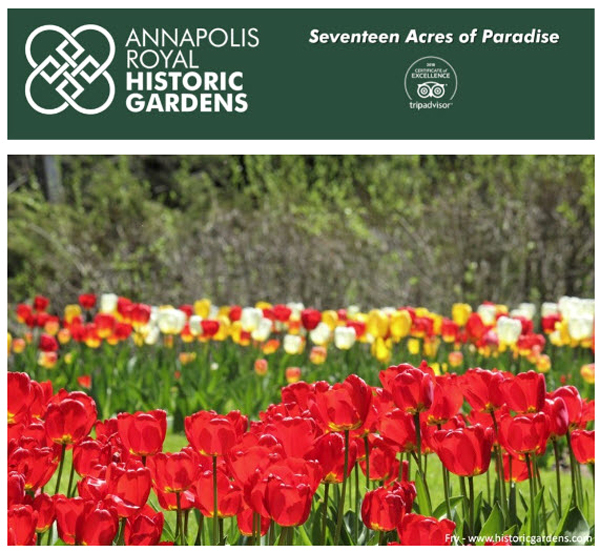
Check out Trish Fry, Bloom Report for Annapolis Royal Historic Gardens, May 22, 2021. In particular, the section on heritage apple varieties.

Acknowledgements

References

Edward: you may want to add a couple of recipe links. Heather shares the planting, harvesting, cooking and eating.

Marie Nightingale, 1972, Out of Old Nova Scotia Kitchens, Charles Scribner’s.

Jenny Osburn, 2017, The Kitchen Party Cookbook, Gaspereau Press. Also The Union Street Cafe Cookbook.

From Joel Plaskett: “Nova Scotia is a great place to live and eat. This book is the proof in the pudding !”

Posted in biographical sketch

Taxes and Ticks

‘Tis the Season.
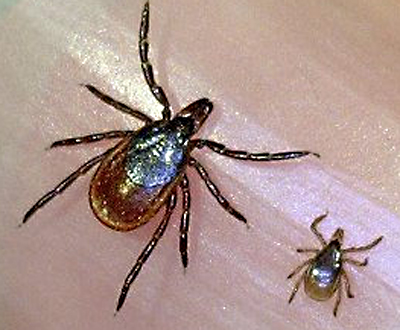
With the warm Winter, we seem to have a lot of ticks this year.

While I celebrated the first mowing of the orchard – removing the crop of dandelions and cuckoo flower. The ticks celebrated the arrival of a warm-blooded visitor.

Despite the pandemic, taxes still have to be paid to the government. They know where we live, after we completed Census 2021.


For Mother’s Day, Heather wanted to read Finding the Mother Tree by Suzanne Simard. On Friday, I had a call from the Inside Story about the procedure for pick up in these COVID times.

In response to my ruminations on ‘thinking rural’, Jane Nicholson suggested the need for leadership and a plan. I reminded myself that AIRO includes the term ‘rural opportunities’.

Revisiting their web site and watching the video, I was impressed by the leadership shown by both Jane and Adele. Not wishing to start a business, I need to think hard on the best way to make a contribution to the region. Perhaps it’s simple, just keep writing a blog in these turbulent times.


Heather has just finished, The Book that Changed America, Charles Darwin’s The Origin of Species.

We discussed the life of Emerson, Whitman and Thoreau. Going to the bookcase, I pulled out a weathered copy of Thoreau: Walden and other writings, with an Introduction by Joseph Wood Krutch. Inside the front cover, R.V.Maher Anchorage, Alaska. August 1971.

I remember after a long field season in the Canadian Rockies, studying alpine vegetation. Rather than heading home to the University of Western Ontario (London), we took a side trip up the Alaska Highway. Fifty Years ago !

LINK to The Milepost

Acknowledgements

Heather shares the battle with both the ticks and the taxes. Jane for her insightful response to my blog. Edward for the links and graphics.

References

Annapolis Investments in Rural Opportunities (AIRO). Check out the video.

Randall Fuller, 2017, The Book that Changed America: How Darwin’s Theory of Evolution Ignited a Nation, Viking Publishing.

Thoreau: Walden and Other Writings, 1963, Bantam Classic.

Suzanne Simard, 2021, Finding the Mother Tree: Discovering the Wisdom of the Forest, Penguin Random House.

Posted in biographical sketch

Winds of Change

As we started the two week COVID provincial lockdown, it coincided with the sale of Andrew’s farm across the road. Fortunately, we were able to take advantage of the annual Spring Clean Up to dispose of some surplus furniture.

Meanwhile in Iqaluit, their life remains same. Mother is KaiuKuluk and Father is Niksik.


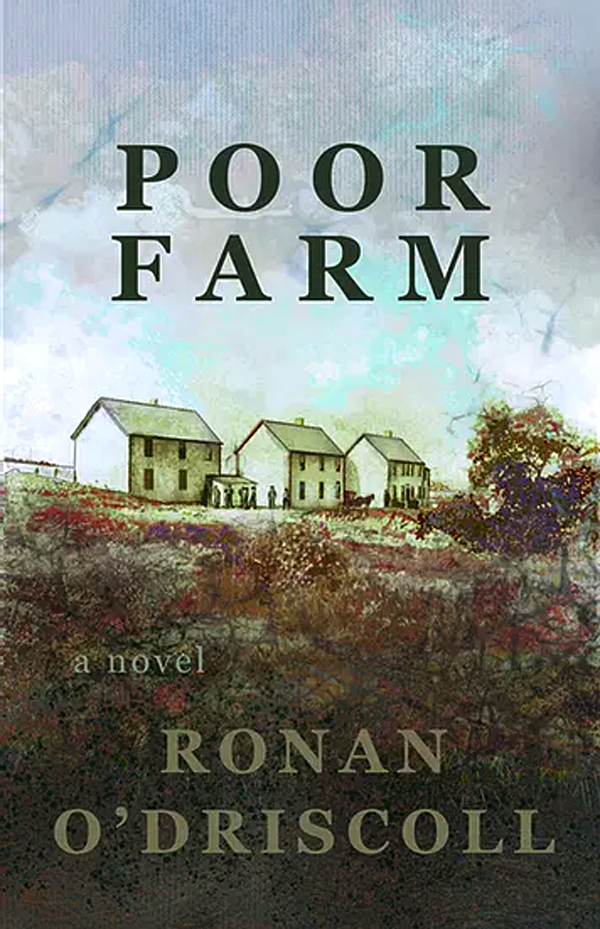
From the Bridgetown Reader, Moose House Publications celebrates two years of publishing books, written by rural Nova Scotian writers. The latest include Ronan O’Driscoll’s Poor Farm, Jan Fancy Hull’s The Church of Little Bo Peep and Jockie Loomer Kruger’s Until the Day we Die. Congratulations to both Brenda Thompson and Andrew Wetmore.


On Friday, I received a gift from Peter, my brother. It was the link, From BBC 4 Great Lives Series 26 Lonnie Donegan. Heather and I put our feet up for half an hour. It took me back to my teenage years in suburban West London. I am gifting it forward.


Meanwhile, we wait to hear whether the new owners of the farm from the Greater Toronto Area (GTA) plan to maintain Raymond Hunter’s organic orchard. Hope they do !

Acknowledgements

Heather and I are coming up for air, after a demanding week. Edward has given his full support. As indeed, has our extended family: Laurel, Andrew and Patrick.

References

BBC Radio 4 Great Lives Series 26 Lonnie Donegan.

Posted in biographical sketch

A Round Trip

Last Thursday, we had to drive to Shelburne for a Moderna vaccination at Lawton Drugs. We left around 8:30 am for the 1 pm appointment. Afterwards, we continued on Highway #103 to Yarmouth and back home by 4:30 pm.

The highlight of the trip was the stop at Pine Grove Park, just outside of Liverpool.

It contains a wonderful collection of rhododendron and azaleas planted by Captain Dick Steele. The park has been renamed in his memory. Online, later that evening, I found Jodi DeLong’s tribute, dated 17 March 2010, under Bloomingwriter: Gardening in Nova Scotia.The piece is titled: “The plant does all the work. Remembering my friend.”

The roads were empty. Across from Annapolis Royal to Liverpool on Highway #8, via Kejimkujik National Park. Along Highway #103 to Shelburne. We arrived early and had time for seafood chowder at the Sea Dog Saloon on the waterfront.

At the Shelburne Mall, I noticed a Trans County Transportation Society (TCTS) vehicle from Bridgetown. Obviously others were making the long trek across the province. The injection took one minute and then a fifteen minutes wait to ensure no reaction.

After talking to the TCTS driver, we decided to return to the Valley via Yarmouth. The end result was a round trip of over 500 kilometers.

Here are a couple of lessons:

  1. When you drive the south shore from Liverpool to Yarmouth you realize that the landscape is full of treed bogs and barrens. Imagine the United Empire Loyalists who arrived in Shelburne and Birchtown. What were the opportunities for making a livelihood, from the sea? Yes. From the land? No. This part of Nova Scotia is a Mecca for rare and unique coastal plain species. I remember from my days at the National Museum, developing the list of rare plants of Nova Scotia. Heather remembers it too from her graduate work on Agalinis neoscotica.
  2. Talking to the TCTS driver, it seems odd that residents from Annapolis County had to travel that far for a vaccination. Could the vaccinations not be offered on a geographic basis ? Why not Bridgetown? In remote communities in BC, they offer vaccinations for several age groups in the community.

IF BOOKS COULD SPEAK

Through Neptune Theatre, books can speak. Heather recently signed up for an audio book ‘We keep the Light by Evelyn Richardson (published in 1954).

Through Neptune Theatre books can speak. Heather recently signed up for an audio book ‘We keep the Light by Evelyn Richardson (published in 1954).

In looking through her collection of botanical books, Heather found three in need of repair:

Moss flora of the Maritime Provinces (1982)
Vascular Plants of the Pacific Northwest, Part 3 (1961)
Vascular Plants of the Pacific Northwest, Part 4 (1959)

A phone call to Gaspereau Press directed us to Legge Conservation Services in West Brooklyn, Nova Scotia. Next week, we will pick up rebound copies.

The first book was written by Robert Ireland. I recall working at the National Museum in Ottawa. Ireland was Curator of Bryophytes. I was working with George Argus on Rare Plants of Canada. We published Rare Plants of Nova Scotia (1978) and Rare Plants of Saskatchewan (1979).

Later in 2000, Heather worked on the Grasses of the Columbia Basin of British Columbia at the BC Museum in Victoria. At that time she acquired Vascular Plants of the Pacific Northwest.

Books do speak. They remind us of other places and times. Different geographies and different interests. In our case, forty and twenty years ago.

References

Robert Ireland, 1982, Moss flora of the Maritime provinces.

Cronquist et al. Vascular Plants of the Pacific Northwest.

Postscript.

I had the chance to check the work of George Argus, my mentor at the National Herbarium. George is a renowned expert on willows. http://skvortsovia.uran.ru

Acknowledgements

Heather and Siqsiq joined me on the round trip. Edward added the graphics and links.

Posted in biographical sketch, Video Review

A Global View

There are days when Spring has not arrived. It is cold rain and windy, a time for watching a video in front of the woodstove. This week, we watched two movies:

  1. The 100 Year March: a Philosopher in Poland.
  2. Seaspiracy

Klaus and Shirley recommended the first; Edward recommended the second.

A Philosopher in Poland looks at the events of the Second World War and the freedom of the Polish people. Seaspiracy looks at the global exploitation of the oceans: the killing of whales, sharks, tuna indeed it deals with all marine species. Both films provide a sobering perspective on today’s society.

A Philosopher in Poland raises the question of nation states. This is particularly poignant given the time of COVID. What lessons can/have been learned from the Second World War? It would be interesting to see similar documentaries on other countries e.g.Russia, China, the United States. And, at the local level, Canada and Nova Scotia.

The same is true for Seaspiracy given the Canadian (Nova Scotia) approach to the management of natural resources. What is happening off the coasts, in terms of the fishing industry? Canada is bounded by three oceans.

Looking for answers, I happened upon a short essay in Wendell Berry’s book Home Economics, titled ‘A Nation rich in Natural Resources’, p 133-136. It was helpful. (also, see HERE)

”Indeed, once our homeland, our source, is regarded as a resource we are sliding downwards towards the ash heap or the dump”.

The ‘icing on the cake’ was the recent Guardian Weekly, March 26, 2021. It included two items on the United Kingdom. Edward Docx ‘Send in the Clown’ Making sense of Boris Johnson and Priyamvada Gopal ‘Why can’t Britain handle the truth about Churchill?’

Both articles led to a reflection on the post-war era in England. My time was 1945-1969. I arrived at the University of Western Ontario to start graduate work in Geography, over fifty years ago. Canada is now my homeland.

Acknowledgements

Edward and Klaus/Shirley for their viewing recommendations. Edward added the graphics. Heather shared the viewing.

Postscript
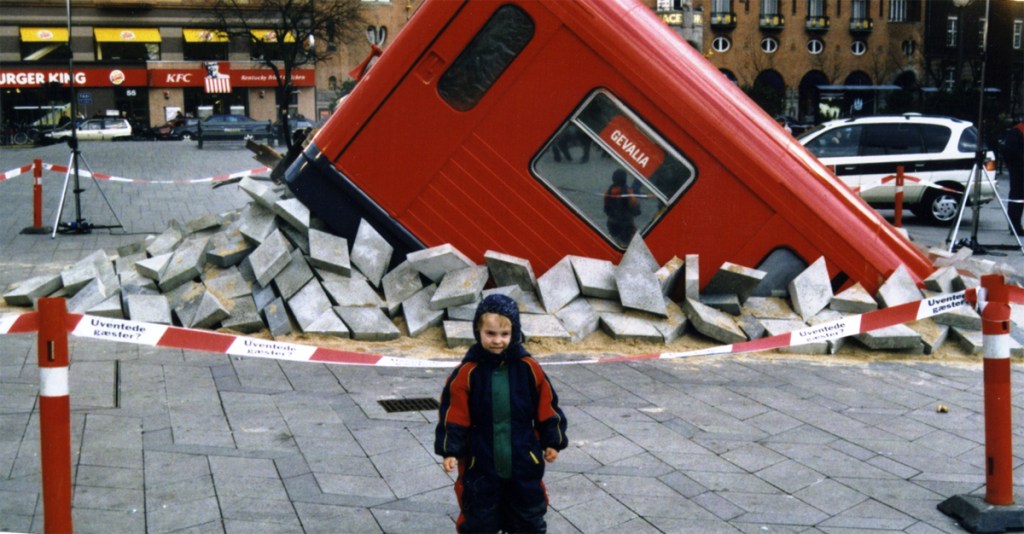
NEW SUBWAY CONSTRUCTION ACCIDENT IN COPENHAGEN DENMARK
Details HERE.

Image courtesy of Lars Andersen

Reminder of what day this is!

References

The 100 year March: A Philosopher in Poland. Stefan Molyneux, host of Freedomain Radio

Seaspiracy on Netflix

Wendell Berry, 1987, Home Economics: A Nation rich in Natural Resources, p.133-136, North Point Press

Posted in biographical sketch, Book Review

Happenstance

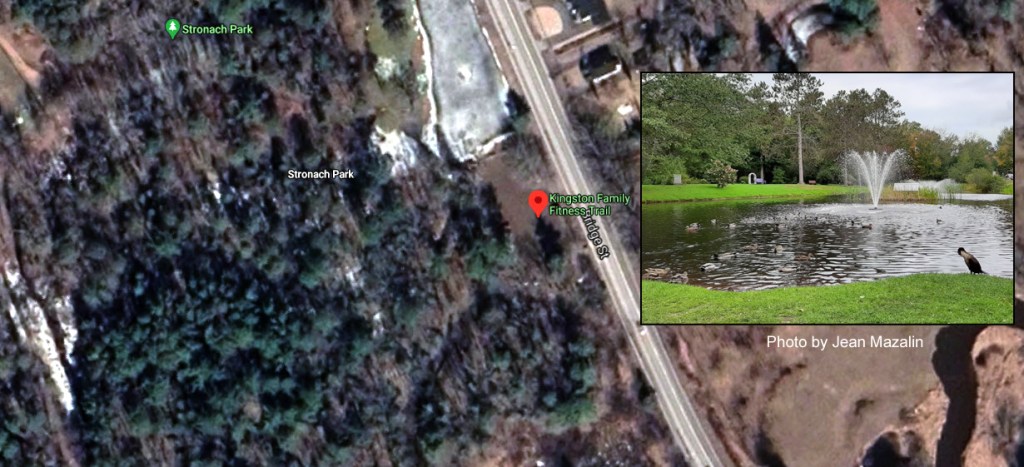
Siqsiq enjoys walking the trails in the Village of Kingston park. For her it is the chance to savour the scent trails, not found at home on the property in Paradise.

We added some extra dimensions to the trip. Rather than taking the direct route along Highway #1 or #201, we explored the country roads, along the edge of South Mountain from Nictaux Falls to Torbrook, Tremont to Greenwood.(page 55-56,Nova Scotia Atlas). This route offers spectacular views across the Valley to see the forest cover on North Mountain.

In Greenwood, we stopped at the Inside Story. On the newspaper rack, I spied A Plague Year Reader. It was free ‘Being a sampler of books issued by Gaspereau Press in the complicated year 2020’. The catalogue, of course, was beautiful in its black cover design.

For each publication, it includes the object, synopsis, about the author, Q & A with the author. The section headings are poetry, prose and limited editions. Within prose, I gravitated to Lost River: the Waters of Remembrance by Harry Thurston and Maud Lewis: creating an icon by Ray Cronin. Under limited editions, Wendell Berry. Notes: unspecializing poetry and Aldo Leopold Wherefore Wildlife Ecology ?

There was also time to purchase a book: Oliver Sacks’ Everything in its place, published in 2019. Sacks died in 2015.

So far, I have enjoyed ‘Remembering South Kensington’. I remember, too, the museums of South Kensington, especially the Natural History and Science museums. The result of a childhood, living in West London.

On the back cover, Maria Popova, Brain Pickings comments:

Everything in its place is a wondrous read in its entirety, irradiating Sack’s kaleidoscopic curiosity across subjects”.

I look forward to reading the remainder of Sack’s collection.

Check out, Brain Pickings, March 14, 2021 Wendell Berry’s poem, written in 1968, The Peace of Wild Things.

Postscript

With the occasional Spring day, we have been able to get into the orchard for the annual pruning. A delight !

Addendum
This is for Rocky Hebb

Let us read Nova Scotia Premier Iain Rankin‘s, Rethinking our health and wealth. Chronicle Herald D3, updated March 13th.

We will be asking whether existing programs are affordable, but more importantly asking whether they enhance our lives and livelihoods, and whether they sustain or harm the environment.”

Well, Mr Rankin, we will be watching closely how your actions sustain the environment. We have not been too impressed by your actions, when you had direct responsibility for this portfolio, under former Premier, Stephen McNeil. Specifically, the question of spraying and clearcutting of the forested landscape.

Acknowledgements

Heather and Siqsiq shared the walk and drive. Staff at Gaspereau Press and the Inside Story for their service to the community.

References

Andrew Steeves, 2021, A Plague Year Reader, Gaspereau Press.

Oliver Sacks, 2019, Everything in its place: first loves and last tales, Vintage Canada.

Maria Popova, Brain Pickings, March 14, 2021.

Iain Rankin, Rethinking our health and wealth. Chronicle Herald, updated March 13, 2021, page D3.