Posted in biographical sketch

The Railway Era

After going to Kings County Honda in Kentville to service my CRV, we stopped at the Maritime Express Cider Company.

They are located in the old Cornwallis Inn. We sampled a flight of different ciders, and had the chance to chat with the cider maker, Jimi Doidge. This peaked our interest in the best mix of varieties for hard cider from our organic orchard.

Friday, Alex Cole from Little Foot Yurts stopped by the house to harvest some of the coppiced poles for his yurt operation. He anticipates a couple of workshops later in the year, on both charcoal making and yurt construction.

QSaturday was the opening of The Station in Bridgetown (previously, The End of the Line pub). This will be the primary retail outlet for Lunn’s Mill brewery. We wish them every success.

In this week’s Reader, there was notice of Gordonstoun Nova Scotia Information Forum next Thursday at Cornwallis Park. You can submit questions. Here is mine.
“How will Gordonstoun School work with educational institutions and educators in Annapolis County to implement ‘place-based ‘ learning ?”
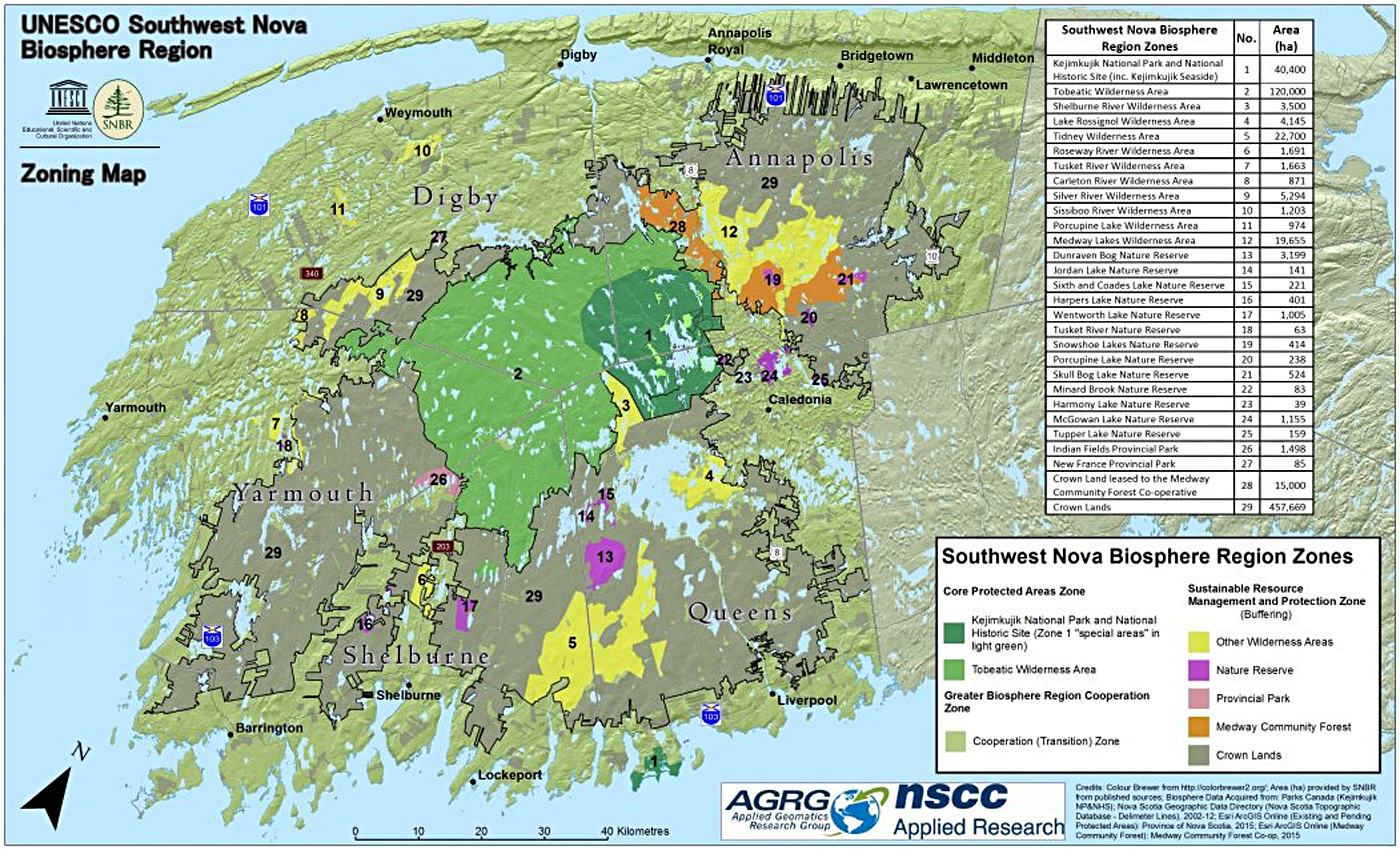
There has been some discussion locally about the Southwest Nova Biosphere Reserve. David Colville at COGS provide me with a link to the current map that shows the core, the buffer and the working landscape. The core is Kejimkujik National Park and the Tobeatic Wilderness Area. The area of concern is the buffer zone that includes crown land.

Don’t forget the showing of Striking Balance on CBC Sunday, November 29th. The focus is the Southwest Nova Biosphere Reserve.

Congratulations to Anne Crossman. She will be writing a weekly column in Saltwire’s Annapolis Valley Register every Thursday. Anne has been a watchful observer of local politics, especially at the municipal level. With a new council, it is even more important to keep citizens informed about any changes in direction or policy.

Postscript

I had intended to write about a ‘sense of place’ but recognized that this region has a deep history from the Mi’kmaq time onwards. That time goes back, way beyond the railway era. Hence I revised the title. (See reference in Curated Magazine)

Acknowledgements

Bill and Anne Crossman for hosting Chinese Food Friday. Heather for her engagement with safety planning and the encampment. Edward always adds graphic value and feedback to my draft blog.

Reference

Curated: Food and Drink Magazine. September 2020. Vol 9. Issue 40. Article on Maritime Express. A Sense of Place. p.36-40.

Posted in biographical sketch

Cider Pressing

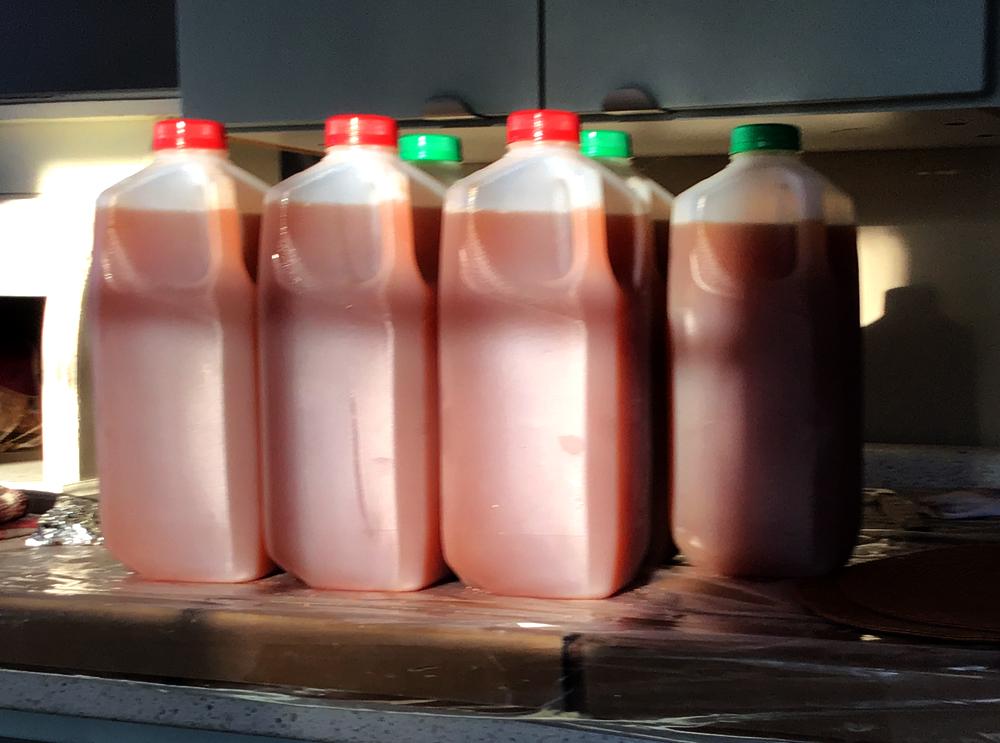
After shipping our apples in bulk to Brian Boates for vinegar and brandy, we had eight boxes left of the three varieties: NovaMac, NovaSpy and MacFree. From each box, we will likely get two, two-litre containers of juice.

On the left is the press. On the right, it is the grinder.We grind up the apples. Fill cloth bag. Add blocks. And screw down tight.Juice flows out the bottom. Liquid gold. Organic apple juice. Yes it was a fantastic day. We have been apple processing all day. I turned the Spies into pie filling. Heather turned Nova Mac into juice

The fun part is mixing the varieties for sweetness and flavour. Less fun, is the preparation: washing, cleaning, cutting etc.

There is a real pleasure in being so task-oriented. It contrasts strongly with those parts of rural living that we cannot change – COVID, politics in the US, and the related politics regarding forestry and resource management in Nova Scotia (we are trying). Then there are the vagaries of rural Internet.

Last night, we attended a meeting of the Annapolis chapter of Extinction Rebellion (ER) at the Centrelea Community Hall. We wanted to hear the update on the forestry practices in the Tobeatic region of Digby County. ER have been occupying a camp for the last couple of weeks. Because of our orchard commitments, we have not had the time or energy to join them on the ground. From their descriptions we will try to make a visit, to understand the level and type of cutting and the network of logging roads that have been put in place.

The single minded focus on wood supply at the expense of other values inherent in the landscape appears to contravene the philosophy and values of the designated UNESCO Man and Biosphere (MAB) program.

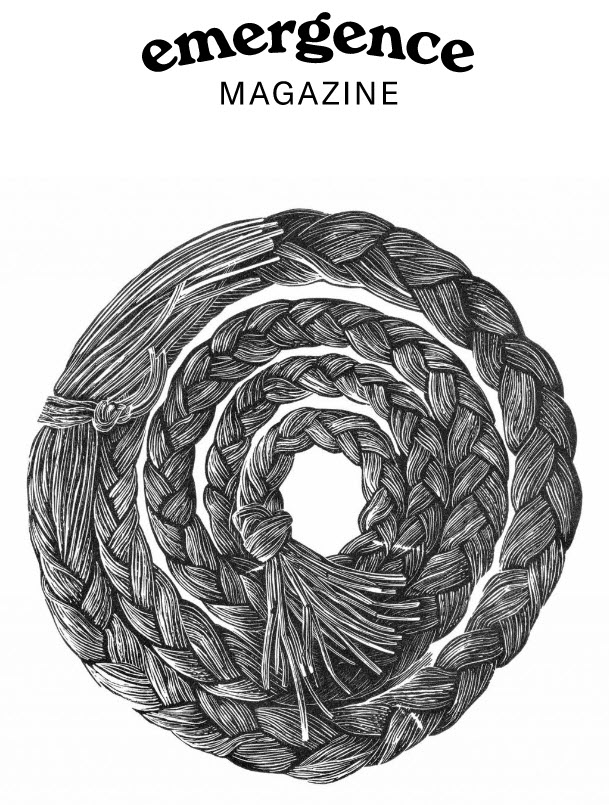
Artwork by Tony Drehfal

As Robin Wall Kimmerer expresses in Emergence Magazine today:

”What does it take to abandon what does not work and take the risks of uncertainty”

Acknowledgements

Nina Newington and the Annapolis ER for their work on the ground in Digby County. Heather shares the pleasures of cider making. Edward for his graphics.

Reference

Robin Wall Kimmerer, Sky woman Falling, Emergence Magazine. November 10, 2020.

Posted in biographical sketch

Harvest Over

We can officially announce that our apple harvest is over for another year.

Brian Boates has transported twenty three bins to his processing facility in Woodville. We are left with the final clean up: a few late apples still on the trees, a fair number of drops to be put into bags and given to local farmers for their animals. Perhaps, a few Nova Spy for pies, and some fresh pressed apple cider. The extra large harvest has taken its toll. Now, I have physiotherapy sessions to straighten out my sore back.

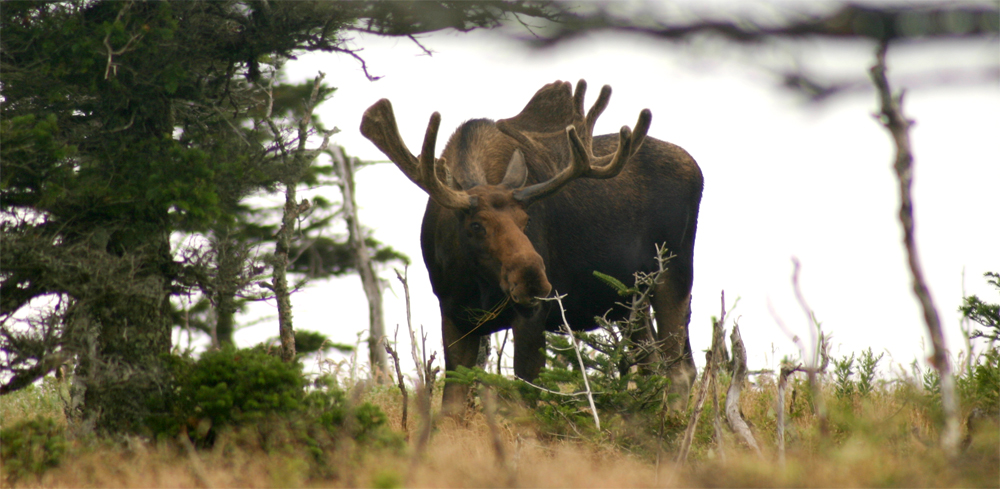
With the end of the harvest, I received notice of a new protest against industrial forestry in the Tobeatic region of Digby County. This area forms part of the habitat for the endangered Mainland moose (hear CBC Information Morning podcast interview).

Creative Commons attribution – ShareAlike 2.0 Generic (CC BY-SA 2.0)

It is disheartening to hear about these Forestry practices, just a few weeks before the airing of the Striking Balance episode on the Southwest Nova Biosphere Reserve (see previous Blog Post). All the hard work to obtain the UNESCO Man and Biosphere designation obviously carries no weight with the Nova Scotia Department of Lands and Forestry. It seems like a life time ago, when we used to meet at the Mersey Tobeatic Research Institute (MTRI). Surely, we cannot allow these forestry practices and retain our biosphere reserve status?

Under the COVID regime, we see a provincial government, and all its departments fixated on the bottomline. This includes forestry, fisheries and mining. The landscape is solely for exploitation. There is no interest in ‘striking balance’ or investing time and money in new ideas that can engage the skills and resources found in the larger community.

Wearing a mask is essential as the province attempts to keep its citizens healthy. Wearing a mask should not be seen as a symbol for not hearing the voices of its citizens. Or conversely, for not providing full explanations of government departments action or inaction. [contact Nova Scotia Deputy Minister Department of Lands and Forestry]

It seems odd. We delayed our apple harvesting because of the threat of glyphosate spraying. Now, at the other end, we see once again, a threat to our forested landscape and associated habitats. Surely, we can do better.

Acknowledgements

Nina Newington for bringing our attention to Mainland moose habitat issue. Heather Stewart and others who championed the Southwest Nova Biosphere Reserve designation. Edward for his support. In memory of Fred Roots, a strong proponent of the UNESCO MAB program.

References
CBC interview Information Morning October 20th. 2020 with Richard Amero

Posted in biographical sketch

Two Kinds of Thinking (Updated)

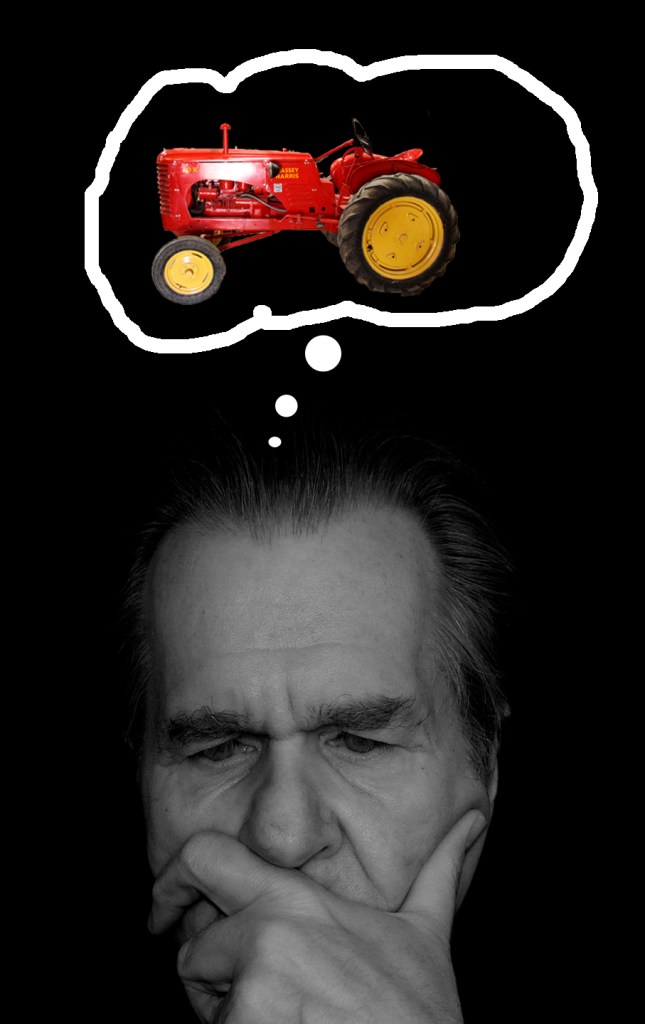
July 15, 2017, I wrote a blog ‘Two Kinds of Thinking’. It described the difference between an academic focused on abstract ideas and the practical, focused on understanding the mechanics of a tractor and it’s related parts.

Two kinds of thinking

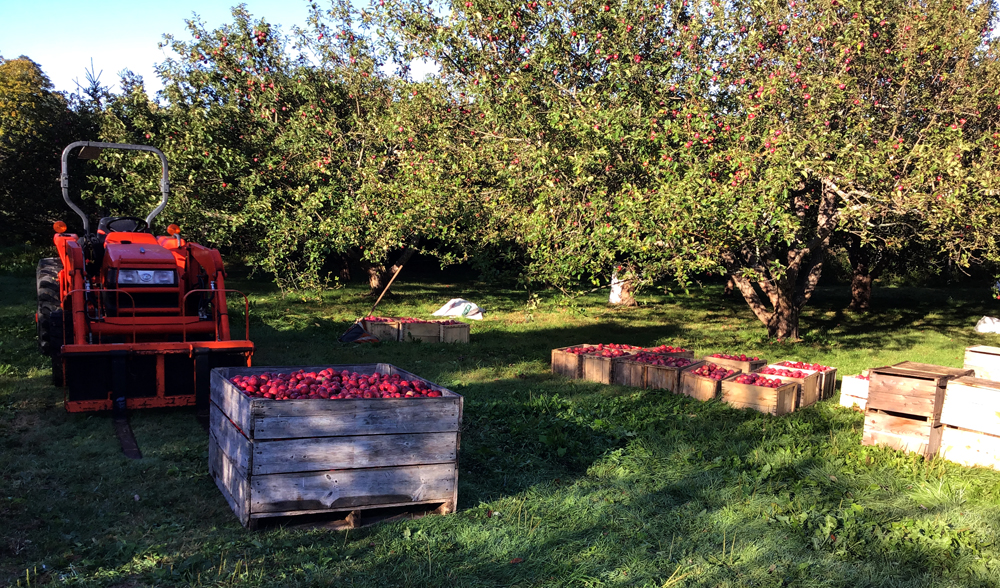
Move forward to September 26, 2020 we are harvesting a bumper crop of apples. The requirements are the same: pick into bushel boxes; 20 bushel boxes per bin.

I estimate that this year we will fill at least twenty bins. They will be transported to Boates Farm in Woodville. The drops will go to vinegar. The hand-picked apples from the tree will go to brandy.

The challenge is that I only drive the tractor in the orchard season. I need to move fully loaded bins from the orchard to the yard. Brian loads them onto a flat-bed and transports the apples to his farm for processing into juice.

The task of moving apples from trees to picking bags to boxes to bins to tractor to flatbed to processing plant to bottles of deliciousness.

The solution, as mentioned in 2017, is to find a mentor. Neil Bent, from Lawrencetown, has agreed to move the loaded bins from the orchard to the yard. The challenges are uneven ground, the counterweight of the bush hog mower, with the bins on the front fork lift. Plus the fine motor controls to place the bins on the flatbed.

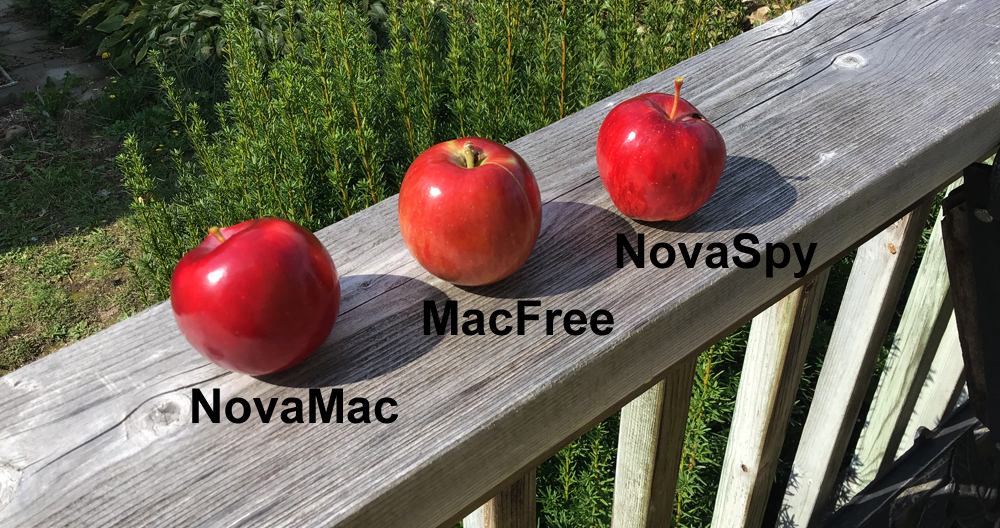
Some new lessons from this year. We have four varieties of apple : NovaMac, Liberty, Nova Spy and MacFree. The Apple varieties ripen in the same order. Interestingly, Raymond Hunter planted the trees in rows But the diagonal follows each variety.

The third lesson is finding the noxious weed, Wild Parsnip in the north east corner of the orchard. This weed seems to have spread from Lawrencetown, along the roadside of Highway #201.

Three of the four apple varieties in my organic apple orchard (missing is Liberty)

As the reader can attest, it has been a dry, sunny Summer. The result has been a bumper crop. Excellent pollination. The apples seem pest-free and have a beautiful coloration. The lack of rainfall at a critical time may have caused some reduction in apple size.

We are hoping to have everything harvested in the next two weeks. Perhaps a bit later than normal. Partly because we lost a week with the Spray Protest.

Acknowledgements

The harvesting of an orchard requires considerable fortitude from both Heather and myself. We thank Neil Bent and Brian Boates for their practical expertise. Edward for his encouragement and online graphics.

Postscript
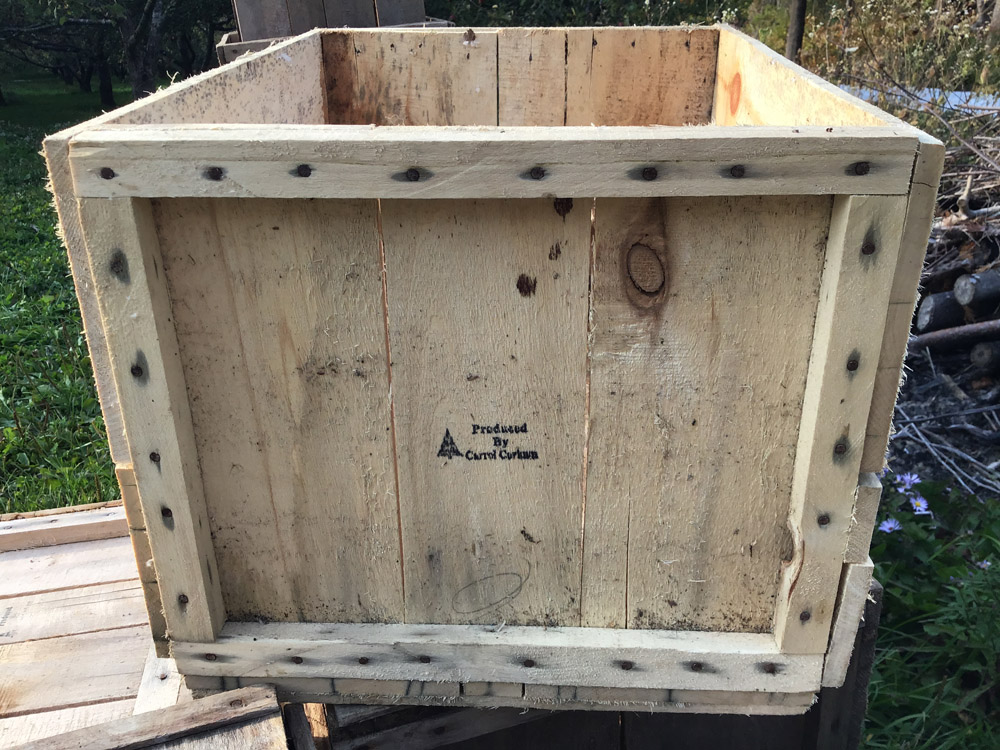
Our bushel apple boxes are made by Carrol Corkum in Inglisville

Posted in biographical sketch

After Teddy, Bear?

For the last twenty-four hours we have had a reprieve from apple picking. Tropical storm ‘Teddy’ gave us high winds and 50-100 mm. of rain. Fortunately, our organic orchard is somewhat protected, but the storm has added to the drops which need to be picked up and shipped to Brian Boates Farm for organic cider vinegar.

Boates Farm

In response to Edward’s post on ‘Maps Through the Eyes of Children’, I received the following comment from my graduate supervisor, Mike Goodchild.


“An interesting topic indeed. It reminds me of Allestone, William Blake and Benjamin Heath Malkin, imaginary maps in general and imaginary maps created by children in particular.”

“Grandson Alastair (now 15) has been fascinated with maps from an early age; when he was planting out broccoli in our garden this Spring he called his work Utah because of the shape of the area he filled with plants”

After going to the bank in Bridgetown, Heather and I casually dropped into Endless Shores Books. Within fifteen minutes, I had ‘discovered‘ three books.

1 Tim Smit, 2002, Eden. Edenproject Books


‘In March 2001, the completed Eden Project in Cornwall opened its gates for the first time. Out of a disused china clay pit the vision of a living theatre of plants and people, and refuge for the world’s endangered species, had at last been realized.’

2 Tim Homan (Ed.), 1991, A Yearning Towards Wildness. Peachtree Publishers.


The book is divided into three sections:
In Wildness is the Preservation of the World
Consider the Beauty of the Earth
Let Man tread gently through Nature

3 Gretel Ehlich, 1985, The Solace of Open Spaces. Penguin.

’Ehrlich’s best prose is in a league with Annie Dillard and even Thoreau. The Solace of Open Spaces releases the bracing air of the wildness into the stuffy, heated confines of winter in civilization’

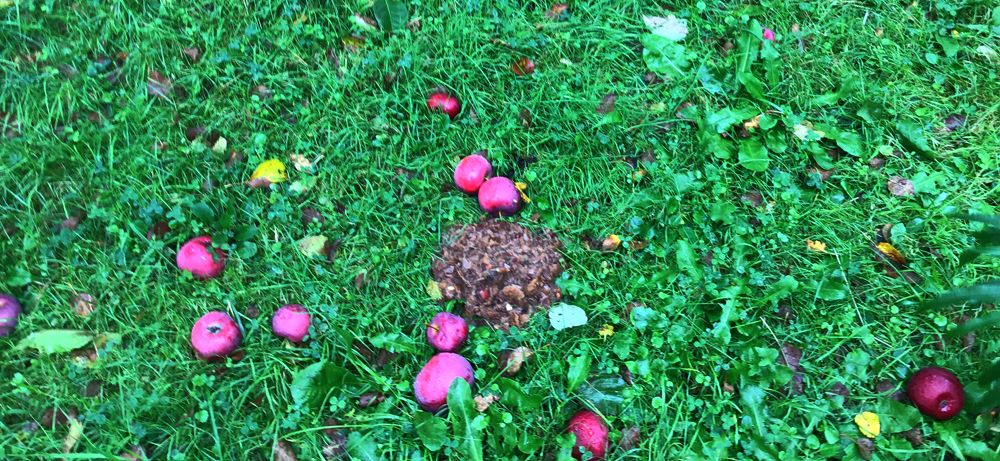
This morning, I checked out the orchard. The branches are still heavy with apples and droplets of rain. On the ground, it looks like another critter had enjoyed the fruit (bear scat).

Apple drop and animal droppings

Acknowledgements
Thank you to Edward on his blog post, and the feedback from Mike Goodchild. I will have to check the references. Heather has been working hard in the orchard picking from the trees, as I attempt to keep up with the drops.

References

Tim Smit, 2001, Eden. Edenproject Books.
Tim Homan (Ed.), 1991, A Yearning towards Wildness. Peachtree Publishers.
Greta Ehrlich, 1985. The Solace of Open Spaces. Penguin Books.

Posted in biographical sketch

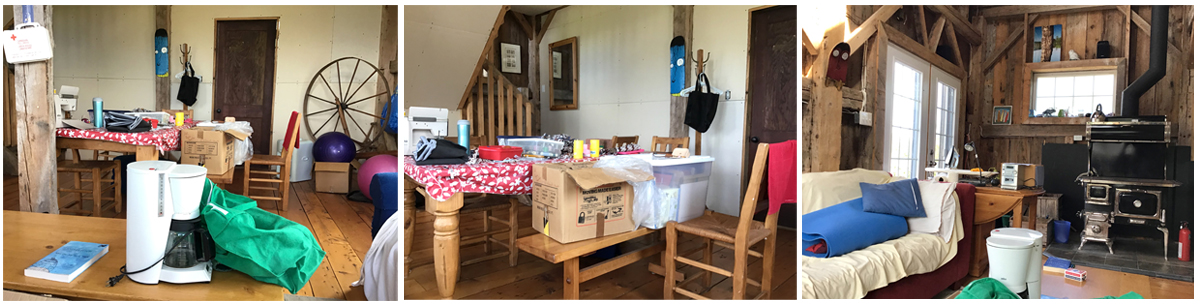
Inside the barn

pic_insideTheBarn_4
Inside the Barn

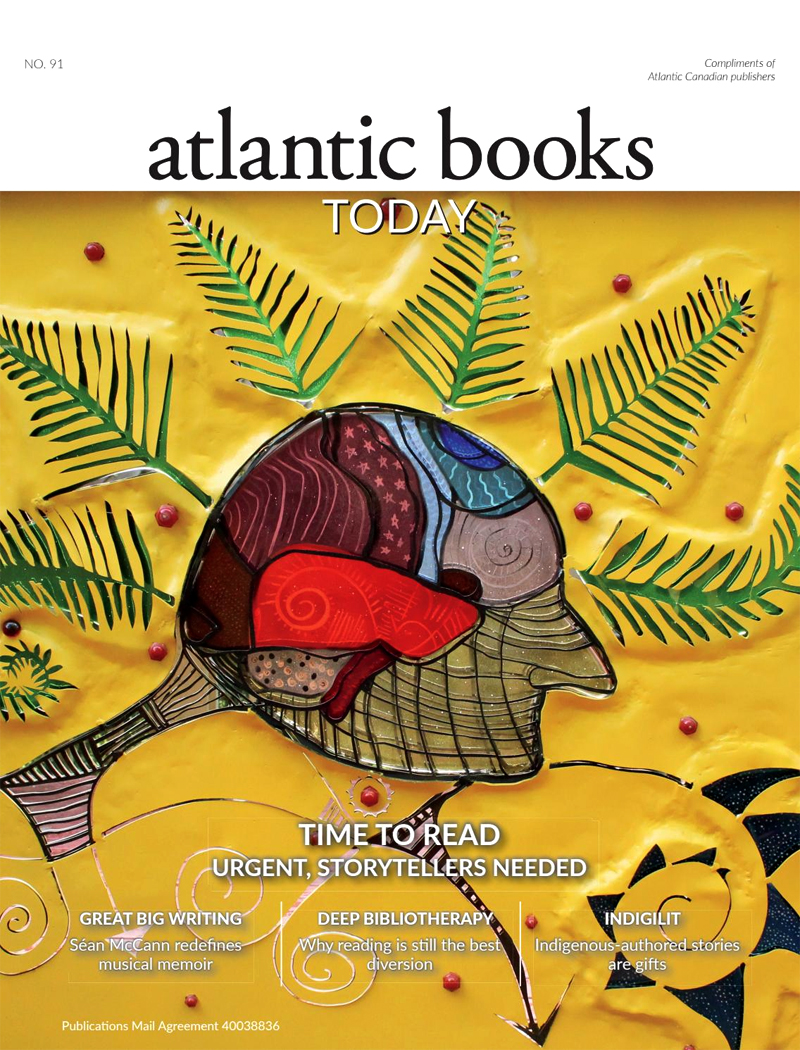
We made a quick trip to New Glasgow for a family BBQ at Sandy’s place in River John. bookCover_AtlanticBooksToday_91Before leaving town to return home, we made a quick stop at Coles bookstore in the Highland Mall. I picked up another copy of Thoreau’s Walden and Civil Disobedience. This version had a robust, attractive cover. (I had not realized that Thoreau died at age 45 years, 1817-1862).
While in Coles, I also picked up the latest issue of Atlantic Books Today (No. 91). With COVID there have been delays in book publishing. From the cover:

“Time to Read.
Urgent, storytellers needed.”

Inside, there is an interview with Lesley Choyce, author of a hundred books.
There was an advertisement for Breakwater Books. Recently, Antony Berger has compiled and edited No Place for a Woman. The Life and Newfoundland Stories of Ella Manuel’  was of personal interest since I recall visits to her house above Woody Point in the 1970s.

Leaving town, we stopped at Whistleberry Market (exit 20 on Highway #104) run by Mennonites at Green Hill. We wanted to try again the smoked Italian sausages. It was well worth the stop.

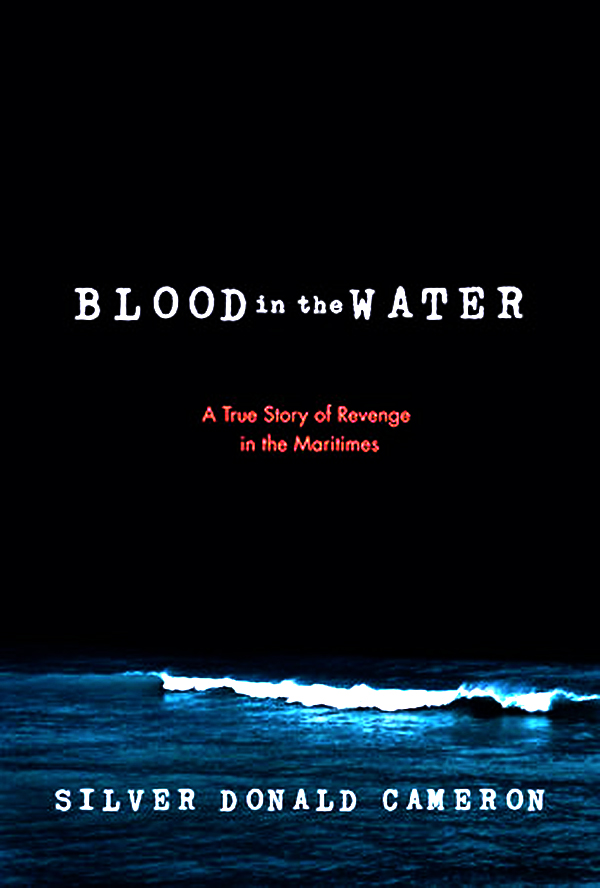
bookCover_bloodInTheWaterWhile on the road, I heard an interview about Silver Donald Cameron’s final book Blood in the Water. Checking online, I rediscovered his Green Interviews and watched the 2014 interview with George Monbiot. The Green Interviews represented a valued contribution. Silver Donald will be missed.
At home, there is the opportunity to get back to my fitness regime and enjoy the writing space inside Andrew’s barn. On the task list, it is time to get the tractor ready for Apple picking, and the orchard ready for its organic certification inspection.

Postscript

We are watching from the sidelines, the Nova Scotia government ‘Talk and Log’ strategy. Meanwhile, we have contributed to the local Protected Community Forests campaign in Annapolis County.

Acknowledgements

Heather has been working hard with the garden produce: garlic, tomatoes, beans and potatoes. Edward contributes his online graphics skills.

References
Atlantic Books Today. No. 91
Henry David Thoreau, 2014. Walden and Civil Disobedience. Word Cloud Classics.
Antony Berger, 2020. No Place for a Woman. Breakwater Books.
Silver Donald Cameron. 2020. Blood in the Water. Penguin Random House.

Posted in biographical sketch

Down Memory Lane #2

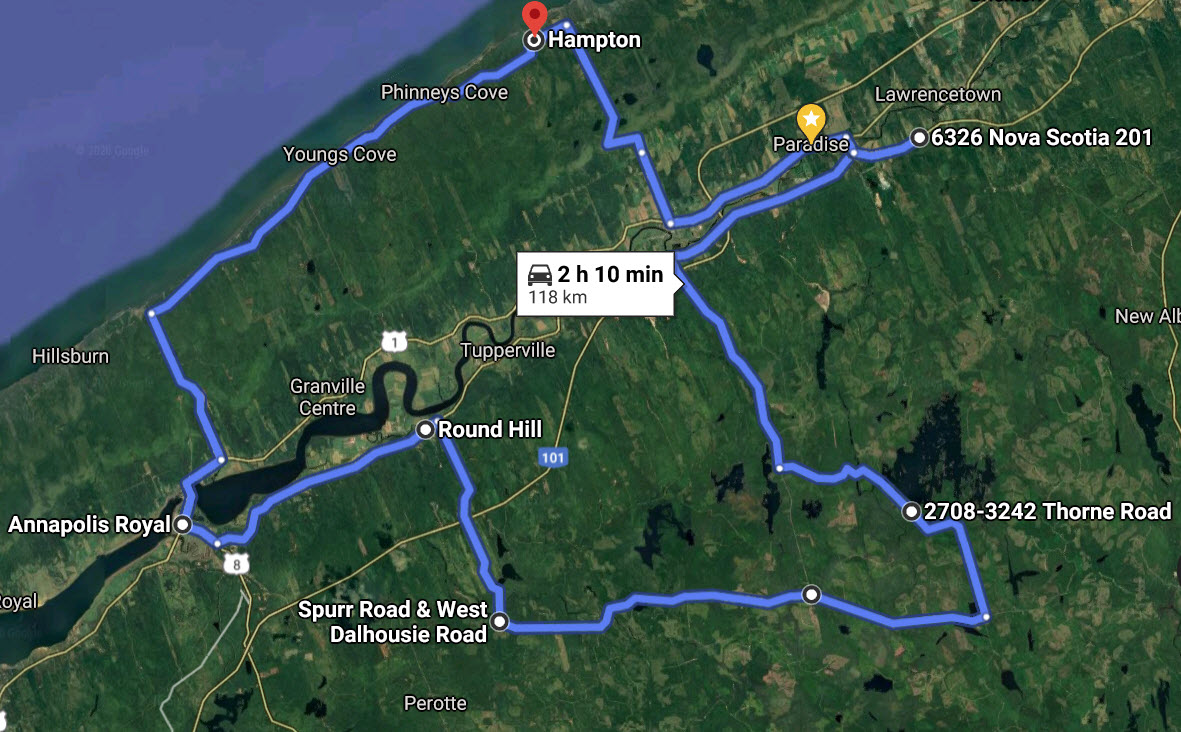
On Sunday, we went to Hampton Beach with Siqsiq to cool off in the Bay of Fundy. This was followed by a downtown walk at Fort Anne in Annapolis Royal.

map_downMemoryLane_2
Click interactive map link HERE

On our return, travelling along Highway #201 on a whim, we decided to take the Spurr Road in Round Hill up South Mountain to the West Dalhousie Road.

In 1980, we arrived from Alberta, for me to teach at the Survey School. With two young boys, we rented the Buckler house in West Dalhousie from Bill O’Neill. Each day, I would drive back and forth on Morse Road to Lawrencetown.

This was a new federally funded program at the school to teach Scientific Computer Programming. Each session was forty-eight weeks in length — three sixteen-week semesters, with the final semester dedicated to a co-operative project with industry or government.

Given the success of the intensive program, we went forward to develop new programs in Business Computer Programming, Computer Graphics, Geographic Information Systems. They complemented the Remote Sensing program. The other departments were Surveying and Cartography/Planning.

The success of these new technology programs led to the renaming of the Nova Scotia Land Survey Institute (NSLSI) to the College of Geographic Sciences (COGS).

After one year of living in West Dalhousie, we moved down to the Valley and bought a house in Clarence, at the foot of North Mountain.

Eight years of intensive technology teaching, on one-year contracts, took its toll. In 1988, we left for Indonesia as part of Dalhousie University, Environmental Management and Development Indonesia (EMDI) headed up by Arthur Hansen. We did not return to live in Nova Scotia until 2000, to set up the Applied Geomatics Research Group (AGRG).In between, we lived in California, Ontario and British Columbia.

On Sunday, after reaching West Dalhousie, Heather remembered that she used to visit friends, John and Inga’s family on the Thorne Road. From the road atlas, we located the road, found the old house, continued past Paradise Lake, until we joined the Morse Road.

I would not recommend the road, except in a four-wheel-drive truck. Over the last forty years, the road has not been maintained. We were lucky to make it through in our Honda CRV. The other major change has been the loss of forest cover. There has been significant cutting. It was with great relief that we hit the paved surface of the Morse Road.


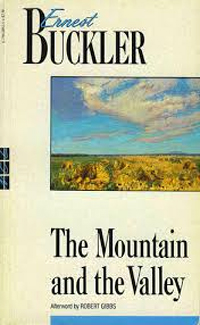
bookCover_MountainValleyThe afternoon adventure served, once again, to remind us of the two cultures captured by Buckler in ‘The Mountain and the Valley’. Indeed, it may be more extreme now than when he was writing in the post-Second World War era.
Postscript

Check out my blog on July 1st, 2019 for Down Memory Lane. They complement each other. Different time, different route.

Acknowledgements

Heather and I were struck by the adventuresome nature of our time in West Dalhousie in 1980. Likewise, the creativity of the new programs at NSLSI.
Edward shared that experience. He was a Remote Sensing instructor at the time.

References

Ernest Buckler, 1952. The Mountain and the Valley, McClelland and Stewart.

Posted in biographical sketch

Feral, Ferns and Feedback

Our neighbour has started a campaign to trap feral cats. Given my previous blog, this raises the definition of ‘feral’. Certainly, it is a positive for the migrant nesting bird species. Meanwhile, from my ongoing reading of George Monbiot, he is concerned about the reintroduction of wolves into our Northern ecosystems.

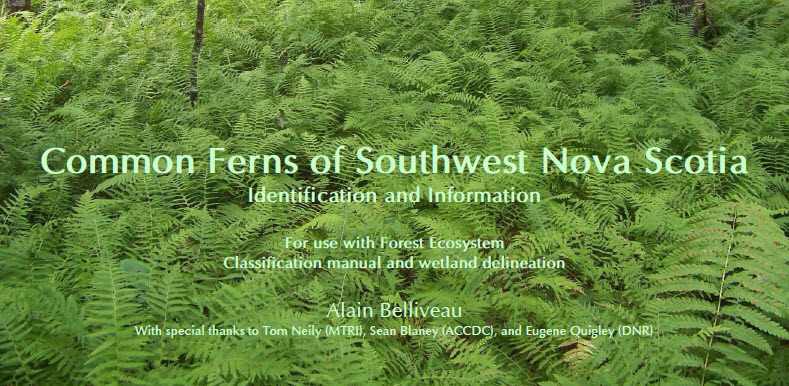
bookCover_fernsSWNovaHeather received an online publication by Alain Belliveau on the Common Ferns of Southwest Nova Scotia. This publication is supported by the Mersey Tobeatic Research Institute And the Nova Forest Alliance. Looks like a useful report.
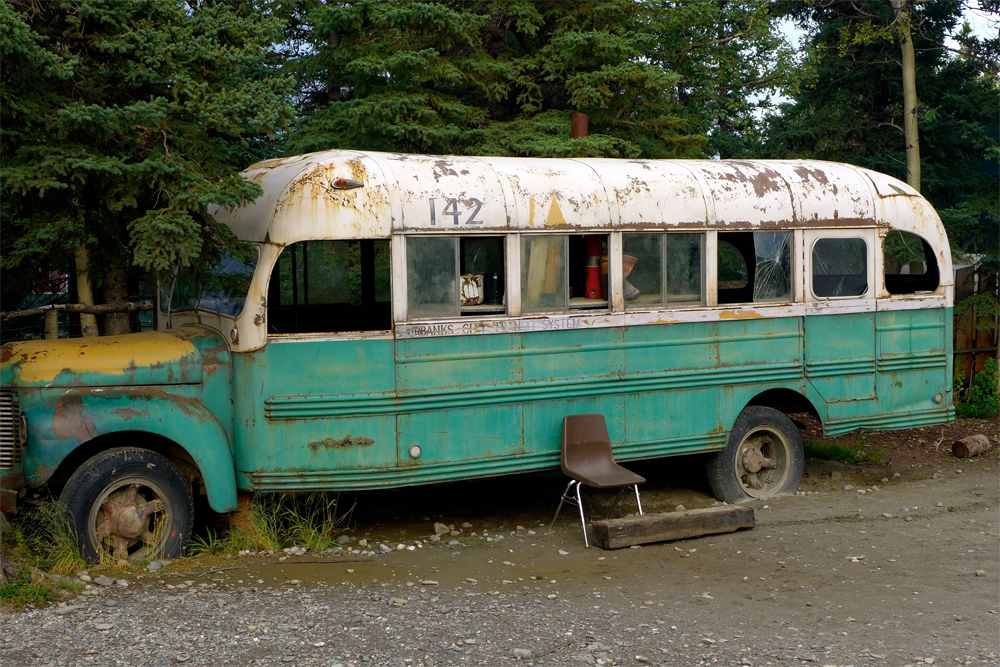
In response to my previous blog, Patrick, our eldest son had the following update.

pic_intoTheWildBus
Replica of the school bus Chris McCandless lived in.

‘Funny that you watched ‘Into the Wild’ – news last week was that the US Parks Service removed the bus he died in (flew it out slung under a double rotor helicopter). Too many tourists visiting it and dying themselves or getting lost in the process.’

At the post office in Lawrencetown, I bumped into Larry Powell. He told me that he had been terminated by the newspaper. That does not bode well for our local news coverage. A sign of the times!

Acknowledgements

Anne and Bill Crossman for an excellent Canada Day potluck supper gathering. Heather Stewart for sharing her botanical emails. Patrick Maher for his feedback. Edward for his graphics contribution.

Posted in biographical sketch, Book Review, Video Review

Heading to the South Shore

banner_nosyCrowFriday, we took a quick trip to the South Shore. In Mahone Bay, we stopped for coffee and a cinnamon bun at the LaHave Bakery. We discovered that it is now The Nosy Crow Bites and Brews. Many of the stores were either for rent or sale; presumably, the impact of COVID-19 on a small community dependent on the Summer tourist trade.

banner_lunenburgBoundBookstoreIn Lunenburg, we stopped at Lunenburg Bound bookstore. I picked up the last copy of George Monbiot’s book Feral, published by Penguin Canada in 2013. Heather found Zach Loeks’ book The Permaculture Market Garden with a Foreword by Joel Salatin, published by New Society in 2017.

‘Most market garden books start with plants, production techniques, marketing protocols and the like. This one dares to address the most basic climatic, topographical even community nuances into the process.’ p.vii.

The Introduction in George Monbiot’s book, Feral, admonishes the environmental plight of Canada.

‘The positive environmentalism I developed in Feral is intended to create a vision of a better place, which we can keep in mind even as we seek to prevent our government from engineering a worse one.

‘I will be happy if this book helps to stimulate new thinking about our place on the living planet and the ways in which we might engage with it. Nowhere, I believe, is in greater need of that than Canada’ p.xix.

That was written seven years ago.

Later, on Friday evening, somewhat inspired by Monbiot, I turned to watch the Netflix Movie ‘Into the Wild’, the film based on Jon Krakauer`s 1996 book of the same name. It tells the story of Christopher McCandless who hiked across North America into the Alaskan Wilderness, in the early 1990s.

This weekend, I continue with my reading of Feral.

Acknowledgements

Heather and Siqsiq were my companions on the trip to the South Shore. Edward, later, added the graphics.

References

George Monbiot, 2013. Feral: rewilding the land, the sea and human life. University of Chicago Press.
Zach Loeks, 2017. The Permaculture Market Garden: a visual guide to a profitable whole-systems farm business. New Society Publishers. Foreword by Joel Salatin.
Netflix movie, 2007. Into the Wild. Produced and Directed by Sean Penn.

Posted in biographical sketch, Book Review

Shelf Life Books

Tuesday, we had to go to town in Kentville. It was time for a car service at Kings County Honda. While waiting, I stopped at Shelf Life Used Books and picked up two items.

bookCover_bikingToBlissvilleFirst, Kent Thompson, Biking to Blissville: A cycling guide to the Maritimes and the Magdalen Islands. Written in 1993, before his book, Getting out of Town by book and bike. It includes two rides of interest to me in Nova Scotia. One was around Great Village, with a nod to Elizabeth Bishop, and a second, around Bridgetown, with a nod to Ernest Buckler and Ken Tolmie.

The second book, A Natural History of Kings County published by The Blomidon Naturalists Society in 1992.

“It would also be appropriate to dedicate the volume to Kings County itself, for it has had an inordinate capacity to nurture naturalists. A geographic area often becomes famous historically because of the endeavours of its people. We often overlook the obvious lesson that it is the terrain that manipulated people and elicits specific capabilities, and not the other way around.”

The book has sections on Geography, History, Habitats and appendices on field trips and naturalists of Kings County.

It makes me wonder about ‘A Natural History of Annapolis County’.

Through email, I have received three interesting notices. From Gregory Heming, I received the link to One Resilient Earth, ‘crafting new narratives for resilient communities in Atlantic Canada.banner_oneResilientEarth

‘A collaboration between the Centre for Local Prosperity and One Resilient Earth to design and facilitate a series of virtual workshops on transformative climate resilience and green recovery’.

‘Following the virtual Thinkers Retreat, the Centre for Local Prosperity will produce a publication compiling the final vision, insights and resources gathered through open dialogue’.

banner_UGuelphTheAtriumFrom Danielle Robinson, a copy of her PhD thesis defended at the University of Guelph Cultural Sustainability and rural Food Tourism in two Canadian Wine Regions. Danielle visited the Annapolis Valley in 2019 (before COVID 19). At four hundred pages, it will take me a while to digest the research results.
banner_sovereignSoil
Link to film trailer HERE

Finally, from Jane Borecky about the Hyland cinema, pay-for-view, NFB presentation Sovereign Soil about farming in the Canadian sub-Arctic.

Happy Birthday to my sister, Maureen. She is 72 years young today (24th).

Acknowledgements

Anne Crossman for remembering the name, Shelf Life. Gregory Heming, Danielle Robinson and Jane Borecky for forwarding the links. Heather for an enjoyable day in town, away from our parched garden. Edward for his Graphics contribution.

References
Kent Thompson, 1993. Biking to Blissville: A cycling guide to the Maritimes and the Magdalen Islands. Goose Lane.
Kent Thompson, 2001. Getting out of town by book and bike. Gaspereau Press.
The Blomidon Naturalist Society, 1992. A Natural History of Kings County. Acadia University.