Posted in biographical sketch, Book Review

People of Place

This week, after a prolonged break, I joined Heather on the bicycle ride from Paradise to Middleton. We left shortly after 9 am on a beautiful August morning ( Monday), cycled down into Lawrencetown, and turned right at the elementary school onto the Middle Road.

The Middle Road is straight, with a few gentle rises through fields of corn and hay. No traffic. It ends at the Nictaux Road where we turn left down into town. We stopped at the Bistro300 cafe for coffee and a cinnamon bun. Then came home. As we turned into the driveway on Highway 201, we heard the Lawrencetown Firehall siren for twelve noon. Set us up for the rest of the day.


Yesterday, I undertook another seasonal first. With the Z-track, I went down through Rob and Sinead’s property to the Triangle Field. It was infilling with Indian Hemp and Poplar seedlings. The total job took less than two hours. But there was immense personal satisfaction.


I dropped into the COGS Library to return the ESRI Press books on the Application of GIS. At the same time, I checked out the new acquisitions; one caught my eye. Tomi Hazel Vaarde’s, Social Forestry: Tending the Land as People of Place. Over 465 pages. I look forward to reading her definition of ‘People of Place’.

Meanwhile, I have been working through the two Paul Evans books, lent to me by Jeannie Shoveller (see blog post Two Hydrangeas). The first, Herbaceous, is a short collection of writing on different flowers in the British countryside, divided according to season and colour: yellow, white, pink, blue, and brown. A quick read.

’Herbaceous is gardening with words. It is a book of audacious botany and poetic vision.’

The second, How to see Nature, explores diverse landscapes: wastelands, meadowland, wild moors, and forests How to see Nature shares a title with a 1940 Batsford book, which was written with wartime evacuees in mind.

Acknowledgments

Andrew Hannam signed out Social Forestry to me. Heather joined me on the cycle ride. Jeannie lent me the Paul Evans books.

References

Toni Hazel Vaarde, 2023, Social Forestry: Tending the Land as People of Place, Synergetic Press.
Paul Evans, 2014, Herbaceous, Little Toller Books.
Paul Evans, 2018, How to see Nature, Batsford.

Posted in biographical sketch

Two Hydrangeas

At the front of the house are two hydrangeas.

They were there when we bought the property over twenty years ago. Today, one has died; the other continues to flower profusely. On either side of the steps, they seem to be growing under similar conditions.

After a busy week, we are taking a rest. Saturday we started in Bridgetown — bank, bookstore, coffee shop, grocery store, the library.

At the bookstore, I found Atlantic Forestry Review, July 2023. I read Nova Scotia ramping up forestry education. It describes the new program at the NSCC including an interview with Leif Helmer.

One of the programs is a one-year Forest Geomatics and Biometrics Technology program at COGS in Lawrencetown.

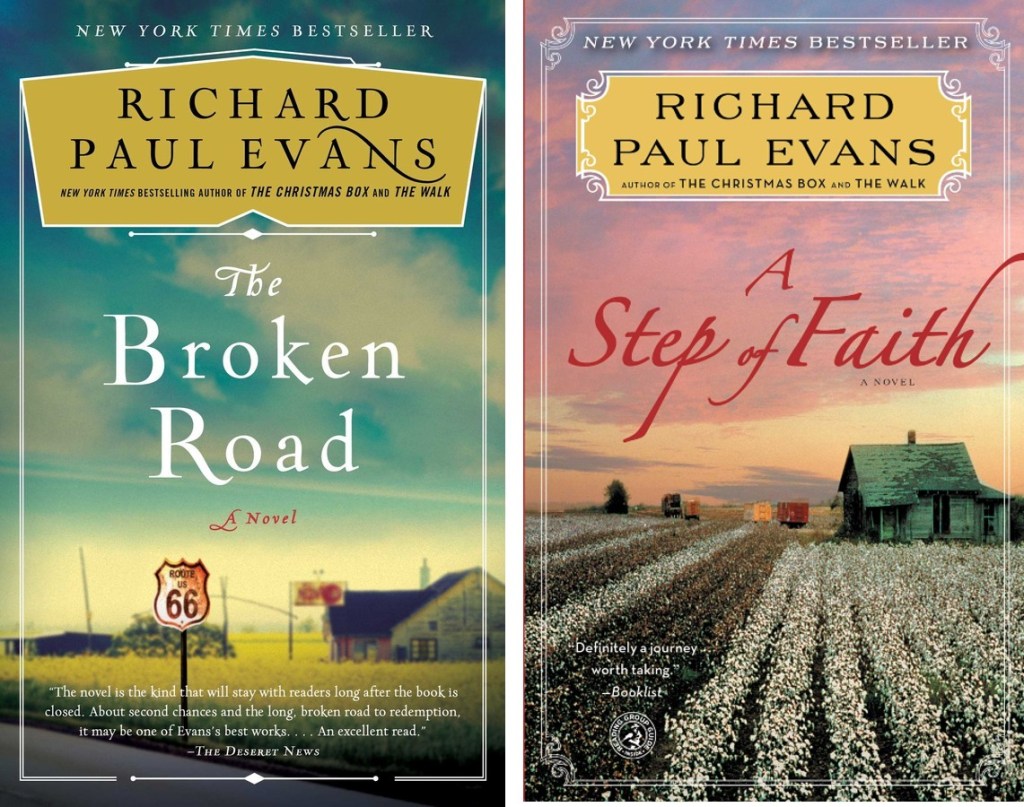
At the bookstore and the Library, I was seeking books by Paul Evans. Jeannie Shoveller (Barteaux) had recommended his writing to me. At the Library, I found the works of Richard Paul Evans, The Broken Road and A Step of Faith.

I checked back with Jeannie. Later in the afternoon, she dropped off Paul Evans Herbaceous and How to See Nature. They look excellent.


Four o’clock and off for a beer with John Wightman. We reviewed local politics and the connection between Greg Kerr and Carman Kerr. Kerr Lane is on Highway #1 on the way to Annapolis Royal.


Seven o’clock down to Annapolis Royal to see the new ‘Spectacle, Performance and Play’ exhibit at the O’Dell House Museum, Archive and Research Centre. At the same time, we reviewed the historic Acadian maps of Annapolis Royal.


Home, in time for fresh pesto made from basil, from our greenhouse, and watch As Time Goes By, and Doc Martin on the Maine PBS station. Heather made the astute observation that Doc Martin is about Health services in rural Southwest England. I could certainly recognize the parallels with rural Nova Scotia.

Postscript 1

Reading about the new Forest Geomatics program at COGS. I could not help but imagine a new Agriculture Geomatics program.

Postscript 2

Edward is back from his travels in the Footsteps of the Group of Seven. Thus, I have sent a draft of the blog for him to add graphics and links. Enjoy!

Acknowledgments

Jeannie Shoveller (Barteaux), Anjeanette LeMay, Sandra Barry, Edward Wedler, and Heather Stewart continue to offer support on this journey.

References

Atlantic Forestry Review, July 2023, Nova Scotia ramping up forestry education, Pages 14-15.
Paul Evans, 2014, Herbaceous, Little Toller Books.
Paul Evans, 2018, How to see Nature, Batsford.
Richard Paul Evans, 2013, A Step of Faith, Simon and Schuster.
Richard Paul Evans, 2017, The Broken Road, Simon and Schuster.

Posted in biographical sketch

Between Meetings

This week has been full. After the Liberal picnic on Sunday, I had a video chat with ESRI Press. The outcome was a proposal to ESRI on the feasibility of linking my blog, ernestblairexperiment.wordpress.com with their online StoryMap software. Edward had returned from his trek, Following in the footsteps of the Group of Seven, and has some excellent suggestions. Next month, the paintings of Edward and Anne can be viewed in Halifax at the Teichert Gallery.

His comments related to the possibility of corporate sponsorship, and to avoid the ‘herding of elders’.

The same day, I discussed the Annapolis Valley Exhibition with Brian Arnott. Specifically the juxtaposition of the exhibition grounds and COGS. There should be an opportunity to develop an educational partnership, centred around Agricultural GIS. From a visitor perspective, there could be workshops at the college, in the same time frame as the exhibition.

Thursday, I met with Carman Kerr. Following my meetings earlier in the week, we discussed experiential tourism and the opportunity presented by the Exhibition.

At the end of the week, Frank Fox, Paul and Ruth Colville, Heather and myself met at the Capitol in Middleton. We reviewed the above schedule and the untapped potential in the Annapolis Valley.

Between meetings, Heather and I escaped the heat of the Valley. We went across to the Bay of Fundy at Hampton Beach. On another occasion, we cleared a path down through the Hunter farm (across the road) to the Annapolis River. We returned to Highway #201 via the Tree Nursery. Stopped at Lunn’s Mill to purchase a growler of Brickyard Red.

Finally, Heather returned to her bicycle, after an absence,. enjoyed the ride along the Middle Road (Lawrencetown Elementary School) to Middleton.

Postscript.

Once again, I want to emphasize the value of The Bridgetown Reader to the community. In this week (August 25) issue, for example, the front page includes information on Mental Health Programs, ‘Living Life to the Full’ and an advertisement for Spectacle,Performance and Play, a collection of films and photographs from the Annapolis Heritage Society Archives at the O’Dell House Museum Saturday, August 26th 7:00 pm.

Acknowledgements

Appreciation to Edward Wedler, Brian Arnott, Heather Stewart, Ruth and Paul Colville, Frank Fox, Carman Kerr for their feedback on a very busy week.

Posted in biographical sketch, Event Review

Valley Daze

Yesterday, Saturday, was the final day of the Annapolis Exhibition. We started early with a drive to New Minas. Heather had some maps on her cell phone. She wanted them printed and laminated. We went to Staples.

Afterwards, I wanted to check out a book on the Acadia campus in Wolfville.The Bookstore, Student Union and Library were all closed. The town was busy with students being dropped off, by their parents or friends.

We stopped in Kentville for brunch at the Half Acre Cafe, before going to Greenwood. We needed salt for the water purification system.

At four o’clock, I was scheduled for a beer with John Wightman. We reminisced about the 1980’s at COGS. The involvement of Roger Tomlinson, ESRI. We talked about the changes in the family farms in the Valley. Also the socio-economic changes within the small towns e.g. Bridgetown, Middleton.

Afterwards, with a stop for a slice of pizza, Heather and I went to the Garnet Rogers concert at the Evergreen Theatre, East Margaretsville. We noticed that there were crowds of cars parked in Lawrencetown. The Exhibition was a buzz.

To get to the theatre, we took Highway #1 to Gouchers Farm Market, then North to East Margaretsville. It was a full house, started at 8 pm. Garnet was a musical delight.

The concert finished around 10:15 pm. We decided to return via the coastal road. Through Margaretsville, across Delusion Road, down Gates Mountain Road to Middleton. In Middleton, we hit Highway #1.

As we approached Lawrencetown, there was a stream of cars leaving the village. We decided to avoid the traffic. Left at the Mount Hanley Road, across the Annapolis River, right on the Middle Road. Pitch black. No street lights. Heather’s sharp eyes spotted the deer and the skunk crossing the road. Eventually, we joined Highway #201, street lights and home. It was past 11 pm.

We turned on the network news. Fires still raging in BC and NWT. We reflected on Andrew and family driving from Midland, Michigan to Rossland, BC. Remembering our earlier cross-Country drives from California to Ontario, BC to Nova Scotia.

At the end of the day, we recalled one of Garnet’s anecdotes.

“Life is like a toilet-roll. As you reach the end, it unrolls much faster than at the beginning”.
We have strong memories today, of the dark skies in rural Nova Scotia, whether Delusion Road or the Middle Road, at 11 pm.

Posted in biographical sketch

Library Books

Today, it was 4H day at the Annapolis County Exhibition (August 14). The 4H pledge remains relevant to society.

“I pledge my HEAD to clear thinking. My HEART to greater loyalty. My HANDS to larger service. My HEALTH to better living, for my club, my community and my country.

In the morning, I stopped at the COGS Library. Andrew Hannam was cataloguing new books for September. I was able to sign out three books from ESRI Press in their Applying GIS series.

Valuing Place and Purpose (Land Administration)

Designing our Future (Architecture, Engineering and Construction)

Creating a Smarter Campus (Education).

“The Applying GIS series explains how to become a spatial thinker, with ideas and strategies for building location intelligence into your profession, industry or discipline. Each pocket-sized book is divided into relevant topics that include a set of case studies and a road map for getting started with GIS.”

It was exciting to discover and access these new resources. For myself, it raised many questions about the change in technology and education, since my retirement (2011). It also raised questions about the application of GIS technology in rural Nova Scotia for Land Management; Architecture, Engineering and Construction; and Education. Has COGS maintained its position in creating a smarter campus ?

I look forward to conversations on this subject with COGS faculty, researchers, students and administration.

On the weekend, Heather and I enjoyed a drive to Blomidon. This was followed by lunch with Laurel’s in-laws from BC at Dickie Baxter Tap Room and Grill in Canning. Excellent food and ambiance.

Acknowledgements

Andrew Hannam allowed me to sign out three books in the Applying GIS series. Heather shared the Blomidon drive and meal.

References

Joseph Kerski and Matt Artz (Ed). 2022. Applying GIS. Education. Creating a Smarter Campus. ESRI Press.

Kathleen Kewley, Micah Callough, Keith Mann (Ed.) 2022. Applying GIS. Architecture, Engineering and Construction. Designing our Future. ESRI Press.

Brent Jones, Keith Mann. (Ed.) 2022. Applying GIS. Land Administration. Valuing Place and Purpose. ESRI Press.

Posted in biographical sketch

Hazel Close

A few years ago, Heather went to a Department of Agriculture workshop in Kentville. They were trying to persuade landowners to diversify their tree crops.She brought home and planted some hazel nuts.

The other evening, looking out of the living room window she noticed hazel nuts in the greenery, besides the house. This struck a chord.

In England, Peter and I, lived at 39 Hazel Close, Whitton, in Middlesex. Perhaps it is time to name our property on Highway #201: HAZEL CLOSE.

In response to my latest blog, Glen Langford, from BC, was wondering how and where Heather and I met.

The simple answer was the West Coast of Newfoundland, Gros Morne National Park in 1975. Heather was a seasonal naturalist. I was running ten day back-packing trips into the Long Range Mountains, for Black Feather, Wally Schaber in Ottawa. During the rest of the year, I was teaching in the Department of Geography, Memorial University of Newfoundland, St. John’s.

In turn, I should explain that I met Glen Langford in Edmonton , Alberta in 1979. I was working for Chip Ross at Alberta Recreation, parks and Wildlife. Glen had developed a GIS/ Image Analysis system (POLYGRID). This was before I established a relationship with ESRI in the early ‘80’s and the move to COGS.

Let. me fill in some of the missing pieces. University of Birmingham 1963-66. 1966-67 VSO in Montserrat. Upon returning to England, I had to find employment. My Mother encouraged me to take computer aptitude tests for both IBM and ICL I accepted the position of Junior Systems Analyst with IBM. This led to to a job maintaining IBM 360 computers at GCHQ ( Government Communication Head Quarters) in Cheltenham. After two years, I recognized that I did not want to become a corporate employee. The opportunity arose to return to Canada, as a graduate student at the University of Western Ontario, under the supervision of Professor Michael Goodchild. From 1969-1972, for both my M.Sc and Ph.D. The latter awarded in 1976.

Acknowledgements

It was Heather’s sharp eye that spotted the Hazel tree.

References

R.V Maher. 1971. Complexity Analysis of Vegetation Patterns in an Alpine Meadow. M.Sc. thesis. Department of Geography, University of Western Ontario.

R.V.Maher.1975. An Inquiry into the Nature of Biogeography. Ph.D. Thesis. Department of Geography, University of Western Ontario.

Posted in biographical sketch

Birmingham Days

Peter, my older brother, sent me the following link.

https://www.bbc.co.uk/sounds/play/m001p713

Open Book – Birmingham – BBC Sounds.

It is a half hour podcast discussing the literary scene in Birmingham, England today.

He sent it to me because, after Chiswick County Grammar School for Boys, I went up to Birmingham University. Within the context of the podcast, it references Hall Green, where I rented a room in my first year. Moseley, I had Geography friends in that neighbourhood. And Edgbaston, where the university is located in the City.

Suddenly, there are memories of hitch-hiking along the M1 from London to Birmingham. On the weekends a group of us would go caving in the Mendips or Derbyshire. I would return with a rucksack full of wet, dirty clothes. My landlady was appalled.

At Birmingham, I completed my first degree in Geography, with a minor in Mathematics. the Chair was Professor David Linton. Other notables, for me, were Roland Moss (Biogeography), Gordon Warwick ( Geomorphology) and Harry Thorpe (Historical Geography).

Each Summer, I would take a BUNAC flight to North America. This led to two field seasons working out of the McGill Sub-Arctic Research station in Schefferville. This allowed me to experience the Canadian Shield in interior Labrador. After a Summer in the wilderness, I would buy a Greyhound $99 dollar ticket for ninety nine days. The first year, I ventured South to Vera Cruz, Mexico, across to California, up to Victoria, BC, then back to catch my flight home from Montreal to Heathrow, London.

The second year, Peter had emigrated to Toronto. We travelled in his sports car down to Cape Cod.

The next leg was Voluntary Service Overseas (VSO) on the island of Montserrat, BWI. And so the story unfolds.

Posted in biographical sketch

Country Market

On Sunday, we decided to check out the Clarence Country Market. This was prompted by our reading of Ida Red. We were pleased to see Bob Bent manning a stall of his books. We picked up some postcards, as well as a map of Nova Scotia country markets. The postcards were produced by Woodshed Press in Port George. They were a quality product, which we sent to the children, as a reminder of our life in the community.

To remember the geography, we went up the Station Road, down the Fitch Road, and finally along the Mount Hanley Road. Passing through Clarence, we caught a wave from Vicki Barteaux. We stopped for a chat, and reconnected with Jeannie (her daughter) and her husband. Jeannie was a baby-sitter during the period 1981-87. She subsequently has had a career in Health Research at UBC and Dalhousie University.

This led to conversations about Ernest Buckler, and Graeme Wynn, Professor of Geography at UBC. I now have some homework; to re-read Wynn’s book The Nature of Canada. I also have to remind myself of the research by British geographers: Doreen Massey and Raymond Williams.

My last connection with UBC was Brian Klinkenberg. He was also a graduate student of Professor Michael Goodchild at Western University (UWO) in the early ‘70’s.

Saturday evening at John Wightman’s in Bridgetown, John passed me a salvaged copy of Acadiensis. It contained two items of interest.

John Wightman and the War of 1812. by GB Manzer.

The Mayflower. A poem by John McPherson

Acknowledgements

Heather joined me on the trip through Clarence and at the Country Market. Jeannie Barteaux identified the UBC and UK Geography connections. John Wightman discovered the back issue of Acadiensis.

References

Acadiensis 1908. Volume 8 Number 2. A Quarterly devoted to the interests of the Maritime Provinces of Canada.

The Mayflower. Verse 1 of 5 by John Mc Pherson.

Sweet child of many an April shower,

First gift of spring to Flora’s bower,

Acadia’s own peculiar flower,

I hail thee here !

Thou com’st, like Hope in sorrow’s hour

To whisper cheer.

Colin M. Coates and Graeme Wynn (Ed’s).2019. The Nature of Canada, UBC Press.

Doreen Massey. 2005. For Space. Sage Press.

Posted in biographical sketch

RALP 500

This week, I received email from Jeff Wentzell. Jeff worked with me at AGRG until 2011. He is now back with the provincial Department of Agriculture, as the RALP Coordinator. Resilient Agriculture Landscape Program (RALP). Programs for this year include reduced tillage equipment, pollinator strips, riparian and shelter belt development and water capacity through ponds.

This raised a number of questions in my mind. At AGRG we were strong proponents of GIS and other geographic technologies. With the RALP initiative in Annapolis County, I can imagine these technologies providing opportunities for detailed land use mapping and monitoring. I can also envisage these results being combined with data from a network of meteorological (weather) stations.

With the College of Geographic Sciences (COGS) in Lawrencetown, students and faculty could demonstrate /facilitate leadership, working with the farming community, within the context of a Resilient Agricultural Landscape.

Yesterday, Heather and I returned to the Gardens in Annapolis Royal, enjoying a light breeze on the dyke walk. Afterwards, we went over to Parker’s Cove, and then the Crow’s Nest at Hillsburn for a chowder lunch. The fog over the Bay of Fundy was a welcome relief.

Postscript

This is my 500th blog.

Edward and I had planned a celebration however he is somewhere, painting plein air with Anne, in Ontario. We will get together later in the Summer.

At the Lawrencetown library Caleb found the book on West Dalhousie, edited by Rachel Brighton.

From Atlantic Books, an interview with Sheree Fitch who received the Order of Canada.

Acknowledgements

Jeff Wentzell provided details on the RALP program.

References

July 2023. Atlantic Books newsletter. Sheree Fitch puts Canada in Order.

Rachel Brighton (Ed.) 2010. Out Home : a step back in time.

Lawrencetown Library (971 633 Out). I expect also, Bridgetown Library.

Posted in biographical sketch

An Authors’ Market

Saturday was a very ‘bookish’ day. After finding it hard to read in these difficult times, I was determined to finish Whit Fraser ‘Cold Edge of Heaven’, in advance of the EBLES event at West Dalhousie next Saturday (15th.). Besides the story relating the relationship of the RCMP and the Inuit on Devon Island in the 1920’s, I was intrigued by the reference to artists (AY Jackson) and scientists (Banting) in our understanding of Canada’s Northern Geography.

Part of our day was to follow up on door prizes for EBLES. We have had generosity from the nursery community (Bunchberry, Thexton’s and Neily’s) as well as the bookstores (Baintons, Endless Shores, MareGold and Gaspereau).

In Annapolis Royal at MareGold courtyard, there were over twenty authors. Many of them I recognized. The temptation was great. At the end of the day, I came away with Bob Bent’s book Ida Red, describing life in rural Clarence in the 1980’s. This was a time when Heather and I lived with three young children between the vanRoestel’s and the Elliot’s in East Clarence.

My second purchase was Geoff Butler’s latest book A Troubadour’s Journey from medieval times to the present day and age. Geoff is a resident of Granville Ferry, but was born on Fogo Island, Newfoundland. In 2012, he was artist-in-residence on Fogo Island courtesy Fogo Island Arts and the Shorefast Foundation. I have been following Zita Cobb at Shorefast as a model of community economic development that may be applied to the Annapolis Valley.

Returning home, after a stimulating day, I received an email from Edward from Footsteps East, including a couple of videos, as well as an update that they can now reclaim their camping gear. The impact of a severe storm in Quebec.

Acknowledgements

To Russell at MareGold for hosting the first Authors’ Market. It will be repeated in August. His bookstore is a dream for those of us who enjoy non-fiction. It complements the fiction across the road at Baintons.

References

Bob Bent. 2023. Ida Red.A love story. Self-published.

Geoff Butler. 2022. A Troubadour’s Journey from medieval times to the present day and age. Self-published.

Whit Fraser. 2022. Cold Edge of Heaven. Boulder Books.

Postscript.

Special kudos to Geoff Butler who combines art, poetry and music.

On Sundays I receive the Marginalian by Maria Popover. This week ‘How people change, Herman Hesse on wonder and how to be more alive, a tender modern fable about reversing the Anthropocene’.