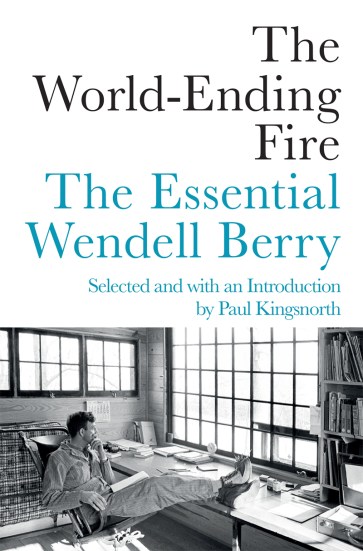
 In his essay ‘Two Minds’, Wendell Berry talks in terms of the Rational Mind and the Sympathetic Mind.
“We humans necessarily make pictures in our minds of our places and our world….. we live in two landscapes, one superimposed upon the other” p.177
“First there is the cultural landscape made up of our knowledge of where we are, of landmarks and memories, of patterns of use and travel.”
“And then there is the actual landscape, which we can never fully know, which is always going to be to some degree a mystery, from time to time surprising us.”
“These two landscapes are necessarily and irremediably different from each other.”
“If the cultural landscape becomes too different from the actual landscape, then we will make practical errors that will be destructive of the actual landscape or of ourselves or both” p178.
“And so conservationists have not done enough when they conserve wilderness or biological diversity. They also must conserve the possibilities of peace and good work, and to do that they must help to make a good economy.”p200.
Elsewhere, in the essay ‘In Defense of Literacy’.
“I am saying, then, that literacy – the mastery of language and the knowledge of books – is not an ornament, but a necessity. It is impractical only by the standards of quick profit and easy power” p295.
And so, I am facing two landscapes: the landscape of rural Nova Scotia and the landscape of suburban Greater Vancouver.

The landscape of rural Nova Scotia I can find described in the writing of Ernest Buckler or the recent column by John DeMont in the Chronicle Herald. Perhaps in the weeks ahead, I will find equivalent descriptions in British Columbia.
In the meantime, I shall enjoy the other essays in ‘The World-Ending Fire: The Essential Wendell Berry’.
Acknowledgements
To Anne Crossman for the Buckler and DeMont links. To John Rostron for early insights into BC living. To Edward Wedler for his graphics.
References
Wendell Berry. 2017. The World-Ending Fire: The Essential Wendell Berry. Selected and with Introduction by Paul Kingsnorth. Counterpoint Press.
John DeMont. Chronicle Herald July 16,2019. Most of Nova Scotia is Empty, Thank Goodness for That.
Ernest Buckler. Maclean’s. June 1,1949. Last Stop before Paradise.
https://archive.macleans.ca/article/1949/6/1/last-stop-before-paradise
Postscript ‘Praise for Wendell Berry’
“He writes at least as well as George Orwell and has an urgent message for modern industrial capitalism…..Nobody can risk ignoring him”. Andrew Marr, New Statesman.
AFTERWORD
This is chalkboard on the stairs in my daughter’s house.


 Combine these observations by Jacobs with the
 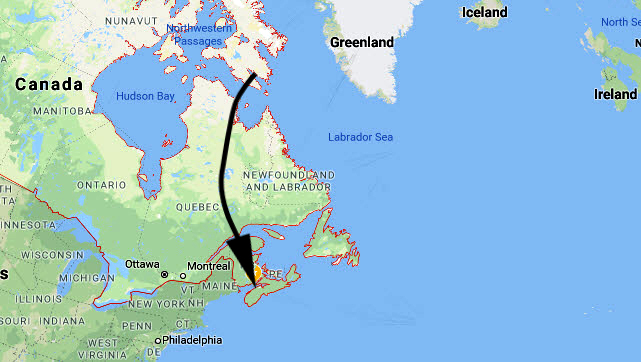 After five weeks in the North, what has changed on the home front? First, Dr Mackinnon has retired. This means no family doctor. Make sure that you have registered on the 811 list; not an encouraging sign, especially given the recent video that went viral on a young cancer patient. Second, Highway #201 is still full of logging trucks
  On a more positive note, courtesy of Amazon, I returned to find two new books by David Manners. You may recall from
 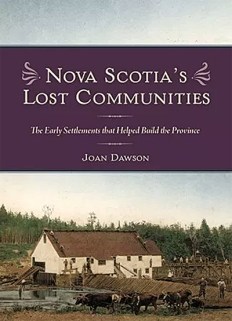 My last piece of reading, I picked up this week, at my father-in-law’s house in New Glasgow. The book is by Joan Dawson
 Number #99 was by George Orwell Some Thoughts on the Common Toad. It contained eight essays, including a defence of PG Wodehouse, an examination of Gullivers Travels, and a commentary on Tolstoy and William Shakespeare.
 The Orwell essays complemented my reading of Ernest Buckler. I had the opportunity to read Glance in the Mirror. This quotation caught my eye.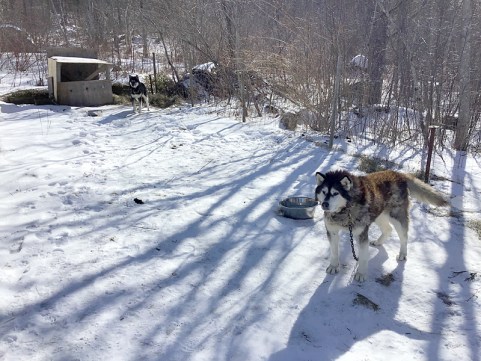

 Last night at the Centrelea Cinema, there was a showing of
  The idea for the Ernest Blair Experiment blog came from a combination of Ernest Buckler, writing about the Annapolis Valley and Eric Blair (aka George Orwell) known for his writing about England. When I came across John Sutherland’s book Orwell’s Nose – a pathological biography, it was hard to resist.


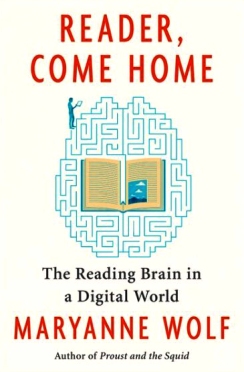
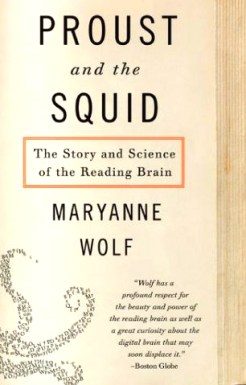
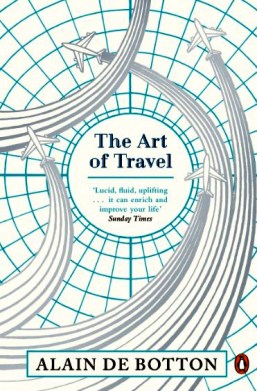 My second link relates to Alain de Botton’s book The Art of Travel. He describes the work of John Ruskin on word-painting.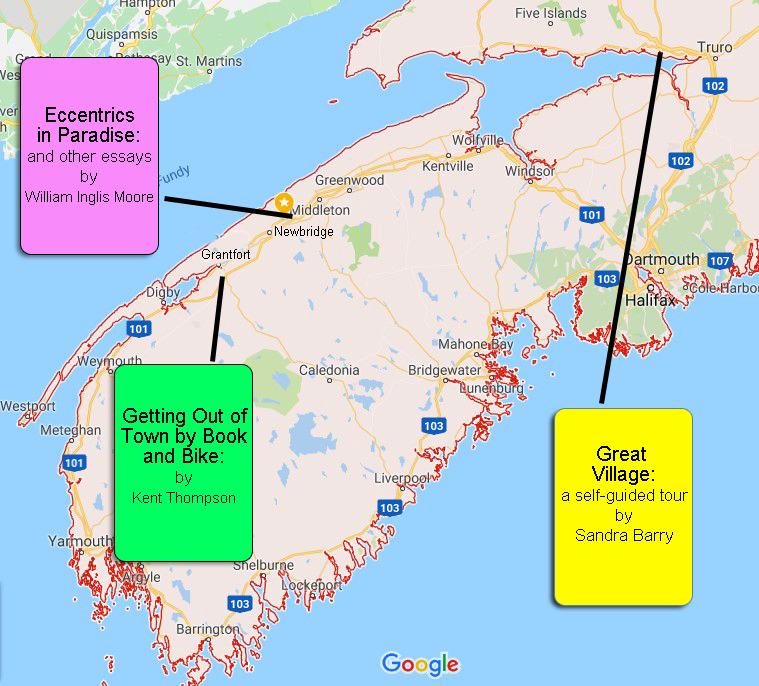
 In the latest issue of Saltscapes, two articles caught my attention. Jodi DeLong reviewed Sandra Phinney’s book ‘Waking up in my own backyard. Explorations in Southwest Nova Scotia. Or as DeLong titled her article ‘ Celebrating our own spaces’
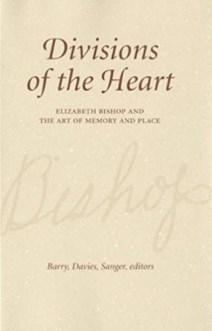 There, I discovered:
 Ernest Blair Experiment