Posted in biographical sketch, Book Review

Reflections on a Misunderstood Way of Life

Note:
The GoGeomatics conference review is now available. Check link on the right hand side of the Ernest Blair Experiment site.

This week, we had two accomplishments.

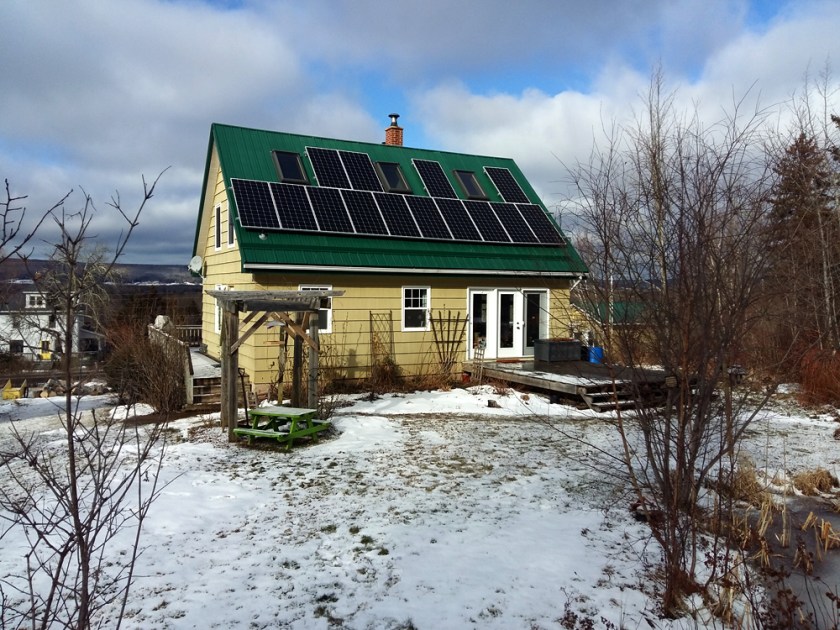
Neil Stanton and his team installed fourteen solar panels on our south-facing roof. 20200128_133625It was a good feeling to see the meter going in reverse. We were contributing electricity to the grid. Given the cost of the installation, it will be a few years, before we see a positive payback. But it seemed to be the right action in these times. Perhaps one day, we will be able to store the electricity in a battery which can provide power for an electric car, for short drives around the Valley.
bookCover_facingTheHunterThe second accomplishment was triggered by a visit to the Bridgetown library. I picked up Facing the Hunter: Reflections on a misunderstood Way of Life. This book, by David Adams Richards describes his life, growing up in the north woods of New Brunswick.

I particularly liked the following quotation from p.89.

“My neighbours do not understand me. That I am the fellow who devoted his life to writing books….
And I think of many of them like this:

”If people were actually paid for their value, these people of self-reliance would surely be living in the finest houses.”

“A nice enough woman novelist once told me I shouldn’t give too much credit to the working class. I don’t – it’s just that I refuse to give them less credit than I give anyone else.”

Here is a follow up to recent blogs. I managed with the help of Kyle to transfer all my blogs from GoGeomatics and Ernest Blair Experiment to a thumb drive. Integrity Printers will give me a quote on a hard copy version.

Yesterday, I had a meeting with Ed Symons, Planning Instructor at COGS. Ed told me that he had converted the blogs into a podcast MP3 file for use on his mobile phone. That way, he can listen to them on his Highway#101 commute from Port Williams to Lawrencetown. I will ask for the link.

Acknowledgements

Kyle Hackenschmidt at Bridgetown Computers for his technical skills. Likewise for Ed Symons and Edward Wedler.

Reference

David Adams Richards. 2011. Facing the Hunter: Reflections on a misunderstood way of life. Doubleday Canada.

PS. Perhaps, after I have curated my blog collection, it could be titled:
Seeking the Geographer: Reflections on a Misunderstood Way of Life’.

Posted in Book Review

The Overstory

This week, I have been busy reading the five hundred page novel, The Overstory by Richard Powers.bookCover_Overstory It was a challenging but worthwhile reading experience. The book is divided into four sections: roots, trunk, crown and seeds. The roots section introduces us to the lives of eight individuals. Each person has a relationship to trees on the earth.

The trunk brings together these individuals within the context of activism and the Timber Wars in the Pacific Northwest of the United States. It is a challenge to keep track of inter-twining of these individual stories (roots). The final sections play out the outcomes from their collective activist events (seeds).

The importance of trees, their inter-connectivity and their relationship to global climate change offers a sobering alternative to traditional scientific thinking.

bookCover_sacredSoilMy next book on the bookshelf is Sacred Soil: Biochar and the regeneration of the earth. On our small acreage, we need to develop a better understanding of the soils and their fertility.

Visiting the COGS Library, I discovered the biography of Dr. John Mitchell: The Man who made the Map of North America, written by Edmund Berkeley and Dorothy Smith Berkeley. Mitchell was a botanist, born in Virginia in 1711.

‘It was at the request of Lord Halifax and the Board of Trade that he made his famous map, one of the period’s outstanding cartographic achievements and perhaps the most important map in the history of North America.’

I thought that perhaps the book was part of the Walter Morrison collection at COGS. But apparently, that is not the case.

Acknowledgements

Andrew Hannam for his help at the COGS library. Heather for her empathetic reading. Edward for his graphics.

References

Richard Powers.2018. The Overstory. W.W. Norton and company.
Robert Tindall et al. 2017. Sacred Soil: Biochar and the regeneration of the earth. North Atlantic Books.
Edmund Berkeley and Dorothy Smith Berkeley. 1974. Dr. John Mitchell: The man who made the map of North America. University of North Carolina Press.

Posted in Book Review, New thinking

Repurposing the rail lines

In response to my last blog, Andrew Ronay in England reminded me that they had repurposed the Battersea Power Station in London.banner_BatterseaPowerStation Over the weekend, I have been reading a draft of Brian Arnott’s book Going to Town: the small town as micropolitan centre in the age of climate change. It should be published in 2020.pictou

One of Brian’s themes is the impact of the automobile on towns and cities.

Reflecting on the future of small towns in Nova Scotia, in an era of climate change, repurposing of the railway network would significantly reduce the impact of cars. Indeed, the railbed already exists.endOfTheLinePub

Of course, we may have to rename The End of the Line Pub in Bridgetown, especially, if there was high-speed rail between Halifax and Yarmouth.

This week, I walked down highway #201 to chat with Dave Whitman. Dave is both an author and a publisher. I was seeking his advice on the best approach to publishing my blogs. I have written over one hundred and sixty in the last two years at ernestblairexperiment.wordpress.com My fear was that a technology failure would erase the collection. It looks like I can find a solution, using the expertise of Kyle at Bridgetown Computers, and the folks at Integrity Printing.bookCover_Overstory

In addition to my books from Toronto, Heather purchased The Overstory by Richard Powers. From the back cover, Robert MacFarlane:

‘Dazzlingly written …… Powers is as brilliant on trees and arborescence as he has been in past novels on music, AI, and neuroscience’.

It looks at human lives in North America from the perspective of different tree species. Made me think about the voice of those species that are the remnants of the Acadian forest.

Acknowledgements

Heather for buying a copy of The Overstory. Andrew for his thoughts on repurposing. Brian for sharing a draft of his forthcoming book. Edward for the graphics. Dave Whitman for his timely advice.

References

Brian Arnott. Going to Town. The small town as micropolitan centre in the age of climate change. Expect to be published in 2020.
Richard Powers.2018. The Overstory: A Novel. W.W. Norton and Company.
Battersea Power Station. Check website. batterseapowerstation.co.uk

Posted in Book Review, Event Review

Arts Space

glennPatschaTrioMusique Royale brought the Glenn Patscha Trio to the Dawn Oman Art Gallery in Bridgetown on Friday, December 13th. The trio included Glenn Patscha on piano, Tom Roach on drums and Larry Bjornson on bass. It was a unique setting surrounded by the rich colours of Dawn Oman’s art. To complement the experience, I picked up a book. Have Yourself a Silly Little Christmas, self-published by Bob Bent, with illustrations by Andrea Wood. So far, I have only read ‘The North Pole is Melting’; a story of four children visiting Santa Klaus at the North Pole, including David Suzuki. Today, it speaks well to the ‘climate crisis’.

Friday, 13th. Black Friday. Following the election of Boris Johnson, Conservative in the UK. The resignation of Andrew Scheer, Conservative Leader in Canada. From The Reader, on this date, Emily Carr was born in 1871 in Victoria, BC.

bookCover_haveYourselfSillyLittleXmasBob Bent’s book put these events into their proper perspective. It was only the day before (12th.) we had Kevin from Stanton installing the racks for solar panels on the south-facing roof. Ernie was at the house, removing a large ash tree, which threatened the roof. Now, it has added to our winter wood supply. Down below, on Andrew’s property, Alex Cole, Silas and Rick were unpacking charcoal and tidying up coppiced wood. Eventually, we may be able to produce Biochar to enhance our garden fertility.

It is truly remarkable that on a dark evening, we can head to Bridgetown and enjoy an arts space, far removed from the political agenda.

snowFlakesWith Bob Bent’s book in our suitcase, we can enjoy a Silly Little Christmas with grandchildren in Ontario. Best wishes for the Christmas season. I look forward to 2020 with its music, art and books.
Acknowledgements

To Rick Ketcheson for reminding us about Musique Royale. To the Reader, for memories of Haida Gwaii (Emily Carr). Bob Bent and Andrea Wood for a children’s perspective on Christmas. Edward Wedler for his steadfast support.
Roger Mosher for his valued conversations at the End of the Line pub on Friday evenings.

Reference

Bob Bent and Andrea Wood. 2013. Have Yourself a Silly Little Christmas. Self- published.

POSTSCRIPT
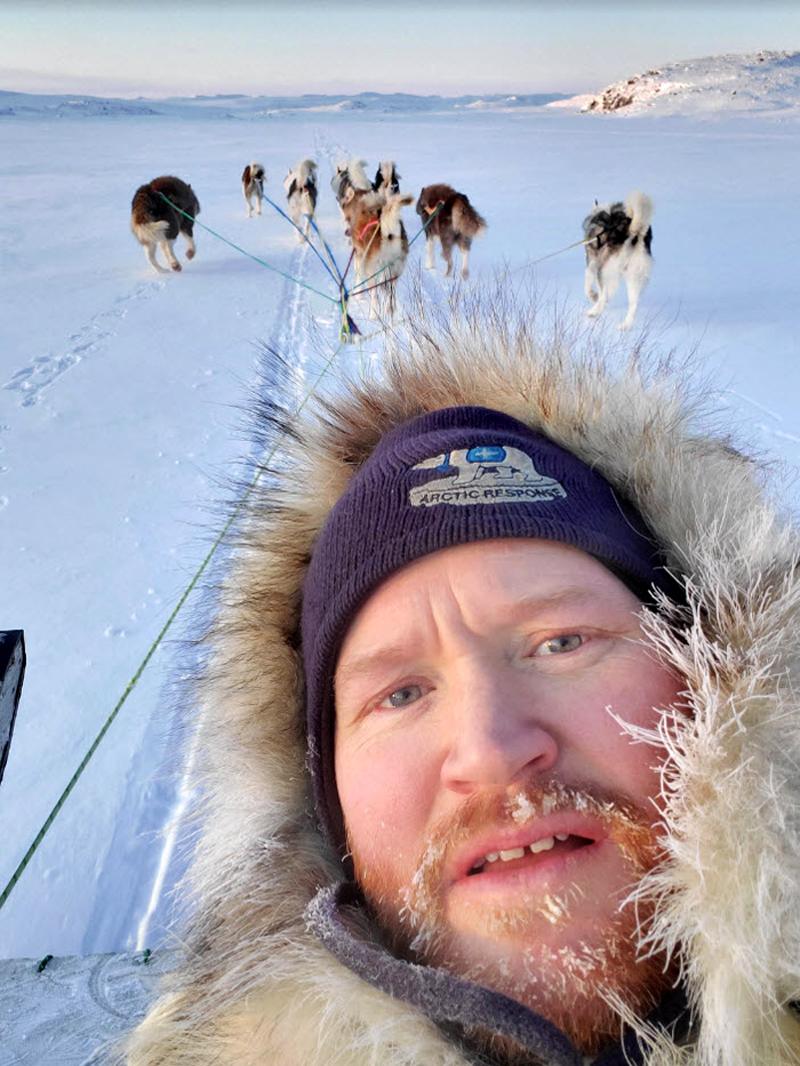
Meanwhile, from up North, this gorgeous-day, “dog team selfie” came in from my son, Andrew Maher.
upNorthDogTeamSelfie_AndrewMaher


Posted in Book Review, Opinion

Blue Water and Gold Brandy

After we returned home from the West Coast in late Summer, we noticed that the water in our bathtub had a blue tinge to it. Upon further investigation, we learned that the water treatment system for arsenic and uranium had the side effect of creating water with a low ph (ie. acidic). The combination of acidic water with copper piping resulted in copper sulphate deposition. Fortunately, we have never used our well water for drinking or cooking.map_arsenicNS

This combination of events triggered memories of Health Geomatics Research with Dr Judy Guernsey at Dalhousie University. At that time (early 2000’s) we recommended the mapping of incidents of different cancer that could be potentially attributed to water quality. Then, it proved impossible to obtain statistics.

Moving to 2020, with the shortage of doctors, particularly in rural areas, it may be time to re-visit the question of human health and especially its relationship to water quality in arsenic/ uranium prone bedrock parts of the province.

This week, I have been trying to catch up with re-reading the Heather Menzies book.bookCover_reclaimingTheCommons After attending the Climate Action Summit, my recommendation would be for both citizen groups and politicians to do some reading.
“The commons model offers a hopeful third choice: re-enfranchising people as responsible co-participants in the governance of the larger habitats that sustain them, including their individual lives.” p.184.

“ It’s about placemaking as I said, quoting Nicholas Blomley earlier: claiming our place as part of the picture from the local to the global. p.184.

“It involves people taking up the power of agency that is latent in every situation requiring change and becoming implicated participants in changing the status quo”. p.184.

Nicholas Blomley is Professor, Geography at Simon Fraser University.

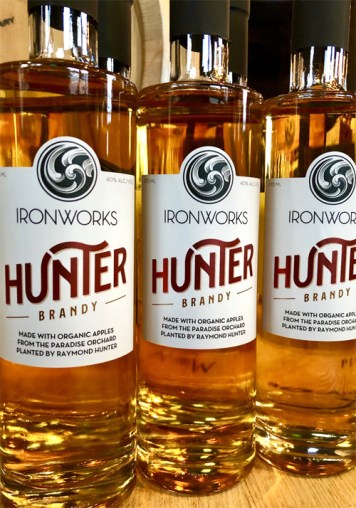
hunterBrandyYesterday, we went over to Lunenburg and picked up six bottles from the first shipment of Hunter Brandy by Ironworks Distillery. If you go online to their website, you can read a brief backstory to the product. It has been three years in the making.
Acknowledgements.

Steve at R & S Clear Water Specialists, Kentville for the blue water diagnosis. Pierre and Lynne at Ironworks Distillery, Lunenburg. Edward for his graphics contribution.

References

Heather Menzies. 2014. Reclaiming the Commons for the Common Good. New Society Publishers.
Nicholas Blomley. 1994. Law, Space and the Geographies of Power. Guilford Press.

Posted in Book Review

My Bookcase

kilnQuick Note

Last week, I was asked to list my top ten books on the Geography of Canada. The results appear in a blog for GoGeomatics. You can link to this site from here. (see entry for November 13 on the right-hand side).

Meanwhile, I am expecting Alex Cole, Little Foot Yurts here tomorrow.
He has been coppicing the red maple for yurt poles, and he plans to reignite his charcoal kiln over the next two days.

Acknowledgements

Jon Murphy for his continued interest in things ‘geographic’. Alex Cole for his pursuit of traditional woodland skills. Instagram: @littlefootyurts
Edward inserted the image for me.

Posted in Book Review, Event Review

Tantramar Marshes

This week, Heather and her Dad had an appointment at the Cumberland County Genealogy Centre in Amherst. They wanted to research the history of the Stewart and Ross families in the region. It gave me a wonderful opportunity to check out the bookstores in Sackville and Amherst.

bookCover_cultureAndAgricultureAt the Tidewater Books and Browsery, I found a small book by Graeme Wynn. Graeme is Professor, Geography at UBC. The book, Culture and Agriculture on the Tantramar Marshes is based on his M.A thesis at the University of Toronto. It describes the utilization of the Chignecto Marshlands between 1750-1800, the Acadian settlement, the Planters and the Yorkshire and Loyalist influxes.

Wynn is also the co-editor, with Colin Coates, of The Nature of Canada. This is a recent publication, which I picked up on my travels to BC this Summer.

Returning to Amherst, I stopped at Dayle’s Grand Market.bookCover_seasVoice I had noticed on a previous visit that they had a good selection of books by Harry Thurston, who lives at Tidnish Bridge. This time, I purchased Animals of my own kind: new and selected poems and The Sea’s Voice: An Anthology of Atlantic Canadian Nature Writing. Two poems caught my eye. Chimney Swifts and Geography: on first discovering Elizabeth Bishop in a used bookstore in Manhattan. Heather had been part of the CARP chimney swift monitoring program in Bridgetown this Summer.
The Geography poem is dedicated to Sandra Barry, friend and writer living in Middleton.

The anthology includes excerpts from Joshua Slocum, Harold Horwood, Peter Sanger, David Adams Richards and Harry Thurston.

On our way home, we stopped for a late lunch at the Masstown Market. What an amazing example of entrepreneurship!

bookCover_artOfLoadingBrushOne last literary reference. Last Summer in Langley, BC I was reading Wendell Berry’s The Art of Loading Brush. It was a library book and I did not get to finish it. Last week, it arrived in Lawrencetown through inter-Library loan. As we were travelling to Amherst and New Glasgow, I was able to read Berry’s new agrarian writings. It is a combination of essays, stories and poetry. In the ‘stories’ section, I read ‘The Order of Loving Care’. It starts as follows.

“By now many of Andy Catlett’s mentors and old schoolmates among the writers, in Kentucky and elsewhere, have left the visible world to take their places only in the convocation of his mind. With that company of friends, while it lasted, he carried on a many-branched conversation that he had grown into and so had grown up in his trade.” p.179.

Check out the story: page 179-216.

Acknowledgements

Heather and John Stewart for their company on the road trip. The independent bookseller, Tidewater Books (see their bookmark below).

‘We employ local independent thinkers, artists, writers, musicians all with their unique point of view. Money spent at our store goes to support these important members of our community’.

Edward for his graphics contribution. Edward and Anne Wedler were previously owners of the independent bookstore, The Inside Story in Greenwood.

References

Graeme Wynn. 2012. Culture and Agriculture on the Tantramar Marshes. Tantramar Heritage Trust.
Colin Coates and Graeme Wynn (Ed) 2019.The Nature Of Canada. OnPoint Press.
Harry Thurston. 2009. Animals of my own kind. Signal Edition.
Harry Thurston (Ed) 2005. The Sea’s Voice: An Anthology of Atlantic Canadian Nature Writing. Nimbus Press.
Wendell Berry. 2017. The Art of Loading Brush: New Agrarian Writings. Counterpoint Press.

Posted in Article Review, Book Review

Somewhere/ Anywhere

This weekend, we spent Thanksgiving in New Glasgow. While there, I had the chance to browse a book by Tim Marshall, The Age of Walls.brexitWalls This is his third book in the Politics of Place series. It includes chapters on walls in China, the United States, Israel and Palestine, the Middle East, the Indian subcontinent, Africa, Europe and the United Kingdom. Of particular interest was the chapter on the UK and its relationship to the Brexit vote. Looking at the map of voters who want to stay in the European Union and those who want to leave. Scotland, Northern Ireland, some of the cities in England want to stay whereas ‘rural’ England want to leave the EU.
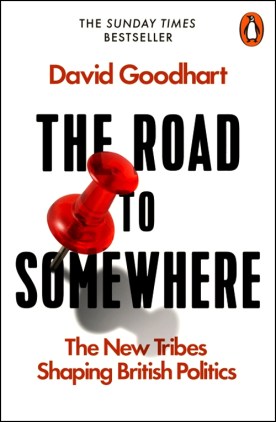
bookCover_roadToSomewhereMarshall quotes from the book by David Goodhart, The Road to Somewhere. According to Goodhart, there are ‘people who see the world from anywhere’ and ‘ people who see the world from somewhere’. It seems that it is that part of the population who see the world from somewhere who want to leave the EU.

Another Marshall quotation is taken from George Orwell’s essay The Lion and the Unicorn, written in the early ’40s.

“England is perhaps the only great country where the intellectuals are ashamed of their own nationality”.

Given the absence of Conservative and Liberal candidates at our local climate change debate last week, it was fortuitous that the Saturday, Chronicle Herald had a full page on the candidates from West Nova: Chris d’Entremont (Conservative), Jason Deveau (Liberal), Matthew Dubois (NDP) and Judy Green (Green).

For West Nova, the ‘somewhere’ in this case, the bottom line expressed by the candidates.
Conservative: resource industries and rural jobs
Liberal: health care, international trade in lobster
NDP: climate change
Green: poverty

Note. Gloria Cook, Veterans Coalition did not provide a profile.

Let me try to ‘join the dots’. If in Marshall’s words, we are ‘prisoners of Geography’. What can we say about West Nova in terms of the impact of place? Do we agree with our federal candidates? In Nova Scotia rural communities what is the balance between somewhere and anywhere? Are we talking about nested scales of geographic viewpoint?

Acknowledgements

John Stewart for access to his library book The Age of Walls.John DeMont for his column ‘NDPer running without much hope’ in Chronicle Herald, Saturday, October 12th. p. A13. Edward for adding the graphics.

Reference

Tim Marshall. 2018. The Age of Walls: How barriers between nations are changing the world. Scribner.
Chronicle Herald. Saturday, October 12, 2019. page A13.

Posted in Book Review, Opinion

Fantasy-Land

I have been in contact with Willy Hunter about his family memories of Paradise and the Born Again Barn. This relates to Raymond Hunter’s biography. The first two volumes take us up to 1968 when Raymond and Rona emigrated to Clarence, Nova Scotia.

bookCover_fantasylandMy interest was the relationship between the different religious and education movements in rural Nova Scotia. Willy brought to my attention the book Fantasyland by Kurt Andersen which describes the different movements in the United States over the last five hundred years.

“America was founded by wishful dreamers, magical thinkers, and true believers, by impresarios and their audiences, by hucksters and their suckers. Believe-whatever-you-want fantasy is deeply embedded in our DNA.”

“In Fantasyland, Andersen brilliantly connects the dots that define this condition, portrays its scale and scope, and offers a fresh, bracing explanation of how our American journey has deposited us here.”

Relevant to my own lifestyle, was the era of the ‘hippies’ and the ‘back to the land‘ movement.

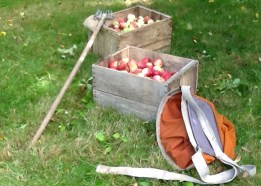
bookCover_crystalSpiritThis week, there has been very little time or energy for reading. Picking apples in the orchard consumes both time and energy. I have fallen behind on my reading of George Woodcock’s story of George Orwell, The Crystal Spirit. Indeed, Orwell’s life in mid-twentieth century seems far removed and romanticized from the current state of world affairs.

In terms of ‘fantasy’ land, we need to understand how to change our use of the landscape. What can we do to improve the quality of the soil, under changing climate conditions? What crops should we grow? What does it mean to grow apples for brandy, hops for beer, cannabis for recreation? What are the real food alternatives under these changing conditions?

At the community level, we do not need to seek evangelical solutions but a rather inclusive town hall-style gathering where we solicit input from a wide range of citizens. This is a different style of democratic process than we see being played out in the current election.

Meanwhile, we still have a few more apple bins to fill this week. It is so refreshing to be high in the tops of the tree and see the size and quality of the fruit, with so little evidence of insect damage. Reminding us, once again, of the horticultural efforts by Raymond Hunter at Super Organic Produce in this part of Annapolis County. That is not a ‘fantasy’.

Acknowledgements

Willy Hunter for his book recommendation. To Jaki at the Lawrencetown library for tracking down various books. Heather for putting her shoulder to the apple harvest. Edward for his graphic contribution.

References

Kurt Andersen. 2017. Fantasyland: How America went Haywire, a 500-year history. Random House.
George Woodcock. 1966. The Crystal Spirit: A study of George Orwell. Little Brown (download PDF).

Posted in Book Review

Wandering Home

Last week, at Shelf Life Used Books in Kentville, I picked up Wandering HomebookCover_wanderingHome by Bill McKibben. It is subtitled ‘a long walk across America’s most hopeful landscape. McKibben walked from Vermont to the Adirondacks in New York State, often accompanied by friends or colleagues. The book was originally published in 2005, as part of a series of small books about ‘writers taking walks’. In his afterword (2014) he describes the impact of Hurricane Irene in 2011.

“But the psychological effects linger: each season of weird weather makes it harder to maintain the idea that our local progress will be enough to forestall the press of global decline.”

McKibben is the founder of the environmental organization 350.org and was among the first to warn of the dangers of global warming. Other books include The End of Nature, Oil and Honey, Eaarth, and Deep Economy.

His efforts remind me of our effort to walk ‘The Road to Georgetown’. As we hear about changes to the Nova Scotia landscape through forest cutting, one approach is to walk, cycle or paddle through the interior of Nova Scotia, recording our observations along the way … ‘Wandering Home’ in the footsteps of McKibben.

maher_apple_1Meanwhile, at home, we are busy picking up the apple drops in the orchard. We wait for the apples to grow larger on the trees. We also wait for the first batch of Hunter’s brandy at Ironworks Distillery. Interspersed, with walking Patrick’s retired Inuit sled dogs: Uqaliq (rabbit) and Siqsiq (ground squirrel).

This weekend, we are off to New Glasgow for Grandad John’s ninetieth birthday party.
Next week, it is time to check out Extinction Rebellion, Annapolis County.

Acknowledgements.

Heather Stewart, Edward Wedler and Bodhi who shared the Road to Georgetown.

Reference

Bill McKibben (2014) Wandering Home. St. Martin’s Griffin. New York.