Posted in Common Place, New thinking

Community Geography

What is the importance of knowing the geography of your community?

What is the difference between rural and urban geography? In the rural environment, it is possible to understand the changes that happen in the local landscape.

What happens when communication is electronic, and it is not related to place?

With these questions in mind, what is the ‘definition of a ‘community college’? On top of that, what does it mean to manage a ‘centre of geographic sciences’ in a community college context, in a rural landscape?

This leads my thinking to CORAH. A Centre of Rural Aging and Health. What exactly is rural aging? Aging in Place? Where does technology fit into the picture? What is the relationship between health in a rural landscape, when compared to an urban landscape?

Certainly, there are many citizens who elect to live in a rural landscape, where it is easier to monitor the changes in the wildlife populations, old growth forests, agricultural practices. Human densities are lower. There are less of the trappings of the ‘built’ environment.

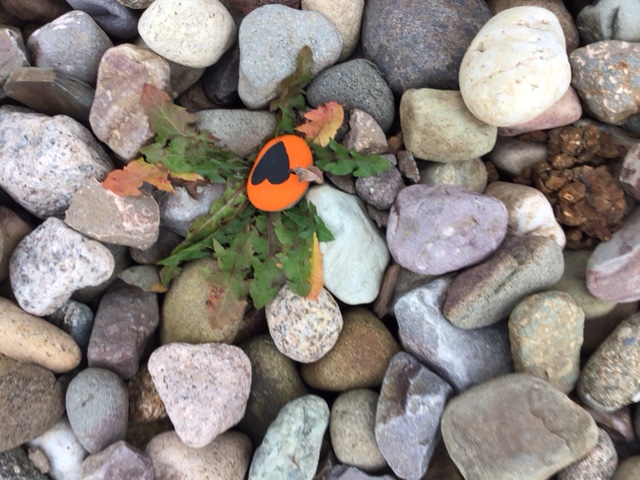
Recently, I have been exploring ‘hidden treasures’ (see posts Hidden Treasures, Landscape and Food, Treasure Hunt and Micro Adventure) in its various forms. Paul Colville informs me that there are painted rocks at the Margaretsville wharf.

Edward has challenged me to define the role of community in understanding our local geography, our sense of place. To complement the role of our educational institutions.
Many years ago, we instituted this relationship with MapAnnapolis.

Perhaps it’s time for a second thought, with CORAH in mind, as well as the changes in access to new technologies.

Certainly, Edward and myself would be happy to join others in the community to see what is possible. We have all the elements. We just need to continue the conversation.

Posted in Common Place, New thinking

Treasure Hunt

Yesterday, Heather and I walked in Valley View Park.

I did not take my phone or iPad. On the walk, we discovered some interesting stones. One thing led to another.

Today we returned to the Park with my iPad. I took the following photographs.

Can you find the treasure ?

Today, I had a second iteration. I noticed some stones at COGS. Again, this could provide material for a second treasure hunt (or geocache).

Let’s take the concept to a higher level. Imagine you wanted to engage students at COGS in exploring the landscape of Annapolis County. You could locate ‘geocache’ or treasures on various trails, bicycle routes, canoe routes etc. The treasures should be hidden on accessible public land.

Would this be a way to engage students at COGS with the surrounding community? Conversely, could this engage the community with resident students?

The common denominator would be a better understanding of our landscape.

The end result could be a book of hidden treasures of the Annapolis Valley. Ideally, the treasures would be natural features. They could be viewpoints or picnic sites too.

POSTSCRIPT FROM EDWARD

I sent a note to Bob, to include the following link and graphic in one of his posts. He hesitated, then wrote, “Please adapt the blog to include the information. I am biased. I do think the Brits have a better handle on Geography, the discipline than Canada“.

This global survey supports his “bias”.

2024 Shanghai Global Ranking of Academic Subjects
in GEOGRAPHY

Note how well the UK schools rank. Seven schools in the top 10 tell me they’re doing something right. Maybe COGS should look closely at this to unearth what makes the UK institutes so strong. Going out on a limb here, COGS could adapt or adopt valuable lessons from this ranking (and invite some UK geography talent?). UBC didn’t do too badly.

Posted in Common Place, Travel

Joining the dots

Edward responded to my earlier blog post (Passport Renewal). He recalled David Bowlby and Allison Maher (no relation) who owned Dempsey Corners farm.

Photo taken by Edward of Dempsey Corners farm several years ago.

Apparently, Allison was a supporter of the Ride the Lobster unicycle relay race event. Bowlby more recently worked at the Kentville Research station. Allison is a local author.


This week, I contacted Celes Davar. He has been instrumental in Experiential Tourism (see my post, Nisoge’katik), including Food-Art-Nature (FAN) in Kings County.

My interest was whether FAN fare extended into Annapolis County.


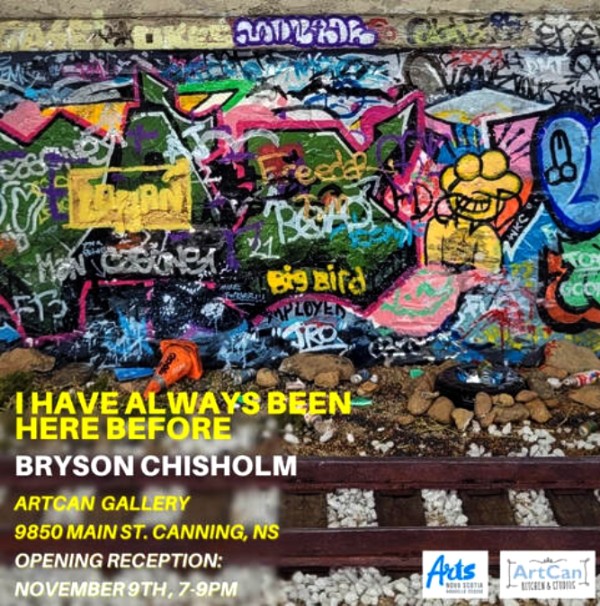
Today we planned to go to the Wolfville Farmers Market. We had forgotten that, at this time of year, Wolfville is hosting Christmas Craft Markets. So, quickly, we diverted to Canning to enjoy the ambience of the ArtCan Cafe.

In particular, I enjoyed the exhibition by Bryson Chisholm, “I have always been here before”.

Afterwards, we took the back road to Berwick, then home to Middleton on Highway #1.


In contact with Dave MacLean at COGS, I learned that next week is Geography Awareness Week and Tuesday will be GIS Day.

From CORAH, I have learned that COGS will be hosting a used book sale at COGS. Perhaps, I can donate a couple of full boxes.


Finally on the theme of ‘joining the dots’ Edward queried OpenAI Chat GPT on a conference “Beyond the boundaries : Reimagining Nova Scotia” at COGS for 2025.

It came back with ten topics.

  1. Geography as a Tool for Health Equity
  2. Decolonizing Geography: indigenous knowledge and land stewardship
  3. Geospatial Technology and the Future of Smart Cities
  4. Climate change through a Geographical Lens
  5. Reclaiming Geography for Political Discourse
  6. The Geography of Education: mapping access, equity and opportunity
  7. Reimagining geographies of Work in a digital age
  8. Cultural Landscape: mapping arts, identity and place
  9. Geopolitics and the global supply change
  10. Spatialize Justice, rethinking equity in urban and rural contexts.

Acknowledgements

Edward for joining the dots. Dave for an update on COGS Geography Awareness Week. Heather for sharing lunch at the ArtCan Cafe. Celes for the link to the Food-Art-Nature newsletter.

Posted in Art, Common Place, New thinking

My Mind is Racing: looking at geography through a refreshing lens

MY EMAIL THREAD WITH Dr BOB MAHER:

Tonight, I plan to attend a discussion panel at Dal University triggered by an article in The Coast, “In This Economy, Try Art“.

The panelists will pull on narrative threads in “Strange Birds”, including creative ways to engage with the climate crisis, and add their perspectives on curation, academic perspectives on environmental sustainability and the ways art can bring awareness, action and optimism to the struggle for the planet’s future.

I explored the backgrounds of the panelists, particularly, celebrated exhibition curator Ray Cronin and Dal U environmental studies professor Melanie Zurba. They approach geography through a very different lens than I have been used to — Ray Cronin through place-based art and artists, and Zurba through community and indigenous collaborators of our environmental spaces.

Then, to continue this thread, I could not then help but explore who, to me, is one of the most interesting professors I HAVE NEVER MET — Acadia U prof Dr Jon Saklofske. If there is one thing I would ask of you today is to grab a coffee and watch his 17-minute YouTube video “Creating Worlds Together“.

Here, is a really exciting way to view geography, literature, books, virtual worlds, and place-based stories; together. The type of work he does with undergraduates and a COGS-Acadia collaboration would blow my mind [I would jump at the chance to be one of his students].

How do I know of Jon Saklofske? He once requested some promotional literature/book posters we had when I ran The Inside Story bookstore. Again, I have never met him but his research mind-space excites me.


This then got me thinking … this time following a Jon Saklofske-thread into an Esri and virtual world.

Since Saklofske has delved into the geographic world of gaming, has Esri ever explored or embraced the type of geographic-gaming explored by Saklofske — especially since the entertainment world is such a large part of current culture?

I wonder where an Esri-Saklofske collaboration would lead — hmmm, maybe a COGS-Esri-Saklofske collaboration.

Let’s explore the ending “S” in “Centre for Geographic Sciences“.

Posted in Common Place

Window on the World

On the weekend, Heather and I walked down through the marsh below our new house to the Annapolis River. We were interested to check out the riverine vegetation species.

Yesterday we were surprised to hear the sound of a tractor. They were cutting the marsh grasses for the hay. This reminded us that it is that time of year for the farming community.


With good intentions, we are increasing our daily walks. Today, it was back to Valley View Park. At our regular parking spot on the Hampton Mountain road, we found the entrance to the Chalet Road trail. Previously, we had hiked this trail to the communication tower.

The trail had not been maintained, however we did locate new chalets, as part of the Hampton Mountain Chalets. We came back to Hampton Mountain Road via Dragonfly Lane. This proved to be about an hour-long walk.

Invigorated, later in the evening, we loosened up the legs with a short fifteen-minute stroll around the CARP Marsh Trail.


Edward sent me a link he judged to be a challenger to Esri’s StoryMaps in Newfoundland and Labrador.

Create a digital book and share your story with the world.
These are the words of Newfoundland’s storyexchange.com

This platform may be an effective way of sharing place-based perspectives that are not “map-centric”.

Posted in Common Place, Nature

Red and Blue

Some days are defined by external events, others by small coincidences. Heather has been putting out sunflower seeds for the birds, along the deck railing. This morning, we were treated to a beautiful display from the Red Cardinals and the Blue Jays.

Otherwise, the day was by defined by the appointment at Honda in Kentville, to change to Summer tyres.


Anne Crossman forwarded a link about land ownership on Haida Gwaii, bringing back good memories (read posts Reaching Out, A Short Story, Lessons From Haida Gwaii Part 1, and Lessons from Haida Gwaii Part 2).

Landmark deal recognizes Haida Nation’s title over Haida Gwaii
The Canadian Press | Posted: Sunday, April 14th, 2024 8:15 PM | Last Updated: April 15th

John Wightman forwarded an aerial photograph (image taken by The Valley Eye) of the construction site for the new Mountain Lea residence in Bridgetown.

Edward shared a link to “Work in the Age of Artificial Intelligence”, an online seminar hosted by the Brookings Institute in the USA.

At the end of the Day, I could not resist a photograph of the Scilla, flowering amongst the lupin leaves.

Surely, Spring has arrived; followed by the tick season; and then the lady-slipper orchids.

Acknowledgements

Thanks to Anne Crossman, John Wightman and Edward for their emails. Heather encourages the bird life in the backyard.

References

Haida Gwaii
Mountain Lea
AI and work

Posted in Common Place

Trenton Park

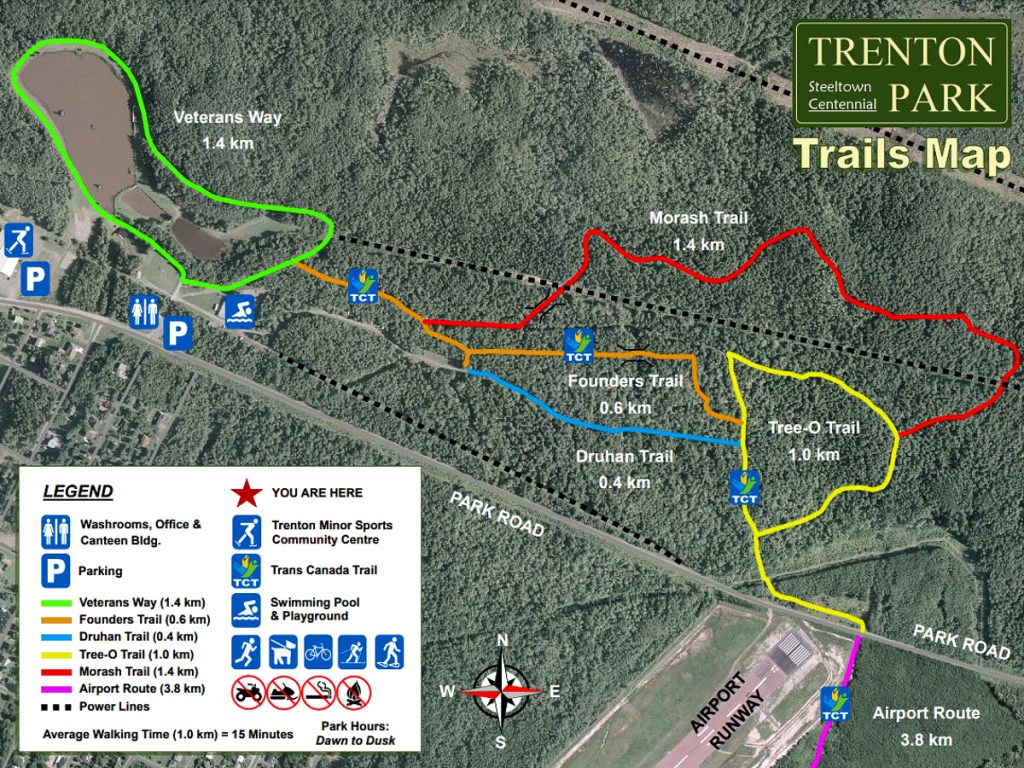
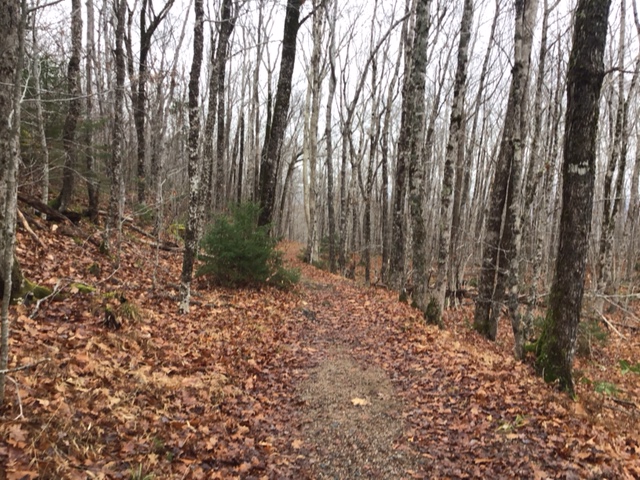
When we go to New Glasgow, we often take the opportunity to walk the Veterans Way around the lake at Trenton Park. This time, we took a different path, the Morash trail and Tree-O trail. We were surprised by a number of items.

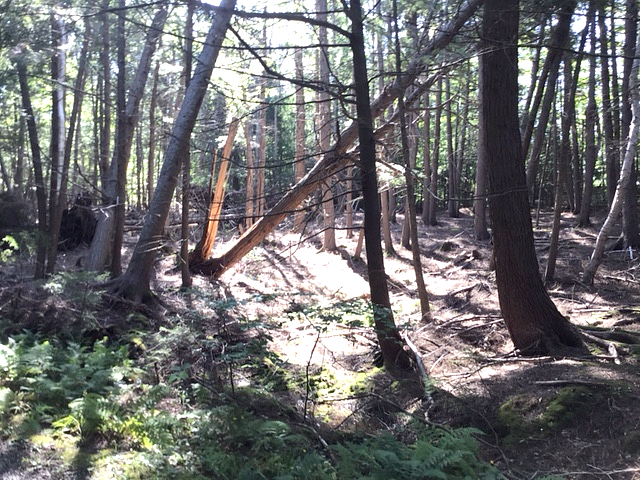
The trail was still heavily impacted by the results of Tropical Storm Fiona. It seemed that the trails permitted severe blowdown in the Hemlock forest. Almost a year later, the uprooted trees remained, and the trail was almost impassable.

There was no signage to warn about the condition of the trail. Indeed the trail maps showed on the legend a symbol, “You Are Here” but the symbol was not on the map.

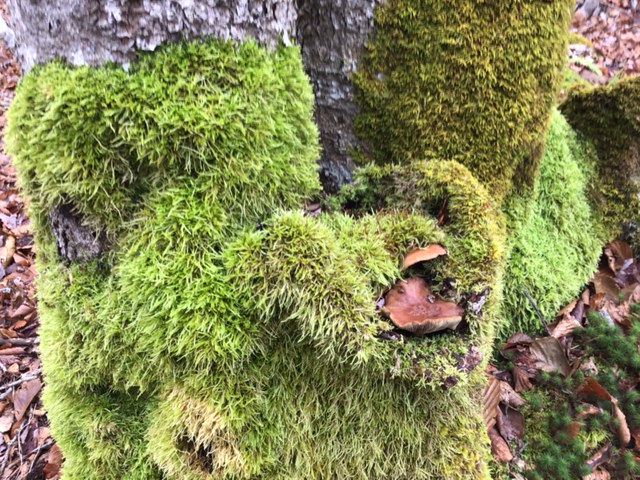
On the positive side, there was considerable growth of fungi, along the trail edge.

Trenton Park is a remarkable community resource for all ages. Besides the trail system, there is a pool, playground and cafe. It is well used by a wide range of age groups from pre-school to seniors.

I find it surprising that there appears to be no consistent province-wide attempt to clean up the deadfall, particularly on crown land. Perhaps, we need Social Forestry in Nova Scotia.

Postscript

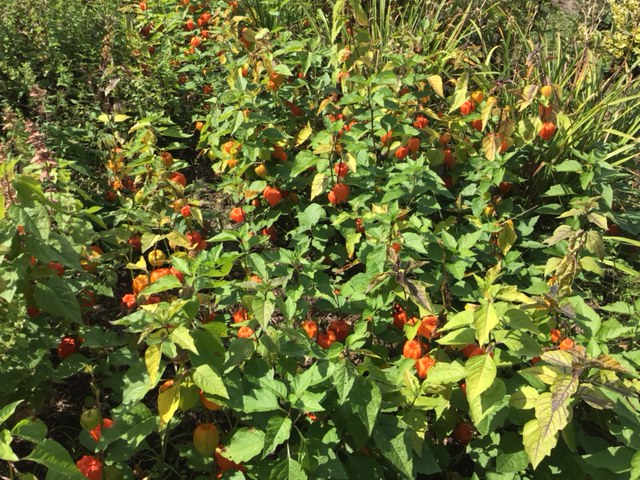
Chinese Lanterns in the garden

Acknowledgements

Heather and I walked the Morash trail.

Reference

Tomi Hazel Vaarde, 2023, Social Forestry: Tending the Land as People of Place, Synergetic Press.