Posted in biographical sketch, Event Review

The Joy of Travel

This week, Heather and I flew to Toronto. We wanted to see my brother, Peter, and his extended family before he returned to France. It was a quick four day trip. We noticed a couple of changes.

To fly we had to scan our vaccination certificate QR codes. Interestingly, while waiting at Halifax airport we had breakfast at the Firkin and Flyer. To view the menu we needed to scan the QR code.

Once in Toronto, we took the bus to Kipling TTC station, subway to Victoria Park, and another bus to Julia’s house in Scarborough. Almost as long as the flight from Halifax to Toronto. Later, on the return trip, we used Uber. From the house directly to the Air Canada domestic departure terminal.

The theme of the trip was story-telling. Peter had been listening to BBC Radio 4 series ’Telling Tales’. While in Toronto, I received email from Chris Hopkinson which included a link to a video on his research, Our Changing Mountains & Water Resources.

In addition, Melissa Ristow sent me links to her story maps (Bats on the Radar, and Kespukwitk).
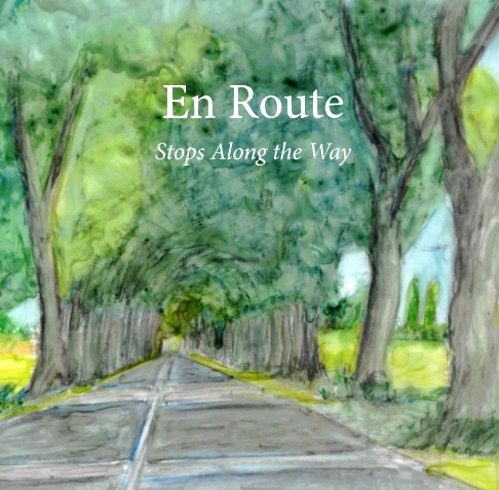
Peter provided me with a copy of his latest book, En Route, which covers his life through the houses in which he has lived. Jason kindly forwarded a list of all Peter’s publications.

At Julia’s house, where Peter and we were staying, there was a significant collection of recent books. Twenty two and counting. You need to know that Peter is a graphic artist and book designer. I had time to investigate only three.
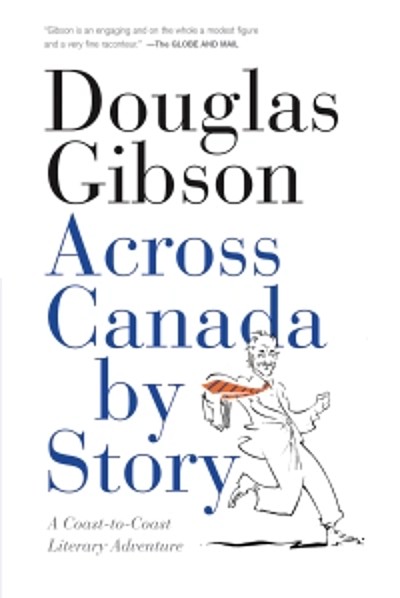
I checked out the chapter on the Maritimes, as well as Haida Gwaii. In Haida Gwaii, Gibson describes his visit to James Houston’s cabin at Tlell on a salmon river.
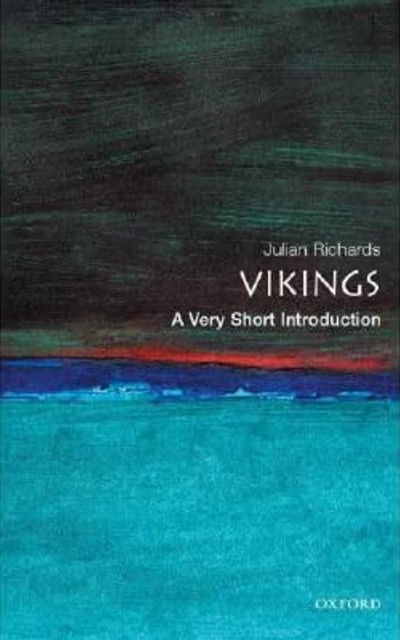
Julian Richards’ The Vikings: a Very Short Introduction Oxford University Press series.

Expert, concise but far from bland. Oxford’s Very Short Introduction series must rank by now as a thinking readers Wikipedia.” Boyd Tomkin, The Independent.
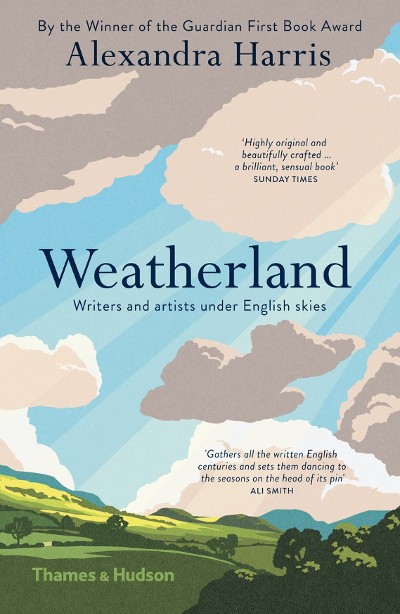
Alexandra Harris’, Weatherland: Writers and Artists under English skies,

”A dazzling journey through the weather-worlds of English culture and history, remarkable for its range of reference and its subtleties of thought”, Robert Macfarlane.

It will take a while to digest the four day trip. Certainly, there is much food for thought on city vs rural living. At this time, we can simply say ’they are very different’. As you age, you can appreciate the plus and minus. For the Peter Maher clan, Toronto remains the hub; for the Robert Maher clan, we are spread from British Columbia, Ontario, Nunavut to Nova Scotia. But for both of us, the journey started in West London (Whitton).

Postscript

Heather picked up Michele Kambolis’ book When Women Rise from the library. Each chapter includes a QR code for everyday practices to strengthen your mind, body and soul.

Acknowledgements

A heartfelt thanks to Julia, Peter, Carole, Daisy, Jason and family for making the trip memorable. The stimulation was palpable after months, years with Covid restrictions. After our trip, Heather and I enjoyed a quiet supper of reflection at the Capitol pub in Middleton. Edward later added the links and the graphics.

References

BBC Radio 4. Making History: the Storytellers who shaped the Past. by Richard Cohen.

Chris Hopkinson video link, Our Changing Mountains & Water Resources.

Melissa Ristow Story mapping links, Bats on the Radar, and Kespukwitk

Peter Maher publications link, including
A Life – A collection of self-portrait postcards from important phases of my life. – https://www.blurb.ca/b/8997959-a-life|
A Place – This is a window on my childhood in Whitton to age 11. A collection of childhood memories – https://www.blurb.ca/b/9921235-a-place
Maureen – Images from a suitcase of family memories – https://www.blurb.ca/b/9936151-maureen
En Route – Places that dad has lived in – https://www.blurb.ca/b/11086688-en-route
Le Rhonel – Sketches of the sewers in Cleremont – https://www.blurb.ca/b/6502894-le-rh-nel
25 Chalk Drawings – These drawings are of the interior of my 300 year old house in Clermont l’Hérault. – https://www.blurb.ca/b/2657860-25-chalk-drawings
Mas Bellevue – A collection of images from a friends house in Cleremont L’Herault – https://www.blurb.ca/b/7327177-mas-bellevue
The Ride – The Ride, is a series of etchings done based on a bike ride I used to take each morning – https://www.blurb.ca/b/921672-the-ride

Douglas Gibson, 2015, Across Canada by Story: a coast to coast literary adventure, ECW Press

Julian Richards, 2005, The Vikings: a Very Short Introduction Oxford University Press

Alexandra Harris, 2015, Weatherland: Writers and Artists under English skies, Thames and Hudson
Posted in Event Review

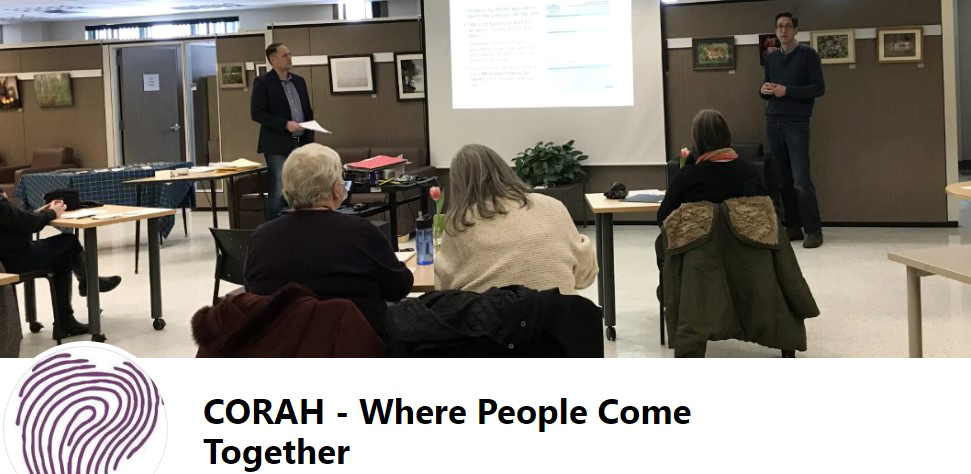
Applied Geomatics/ CORAH presentation

The NSCC campus in Middleton is the home of both the Applied Geomatics Research Group (AGRG) and the Centre of Rural Aging and Health (CORAH).

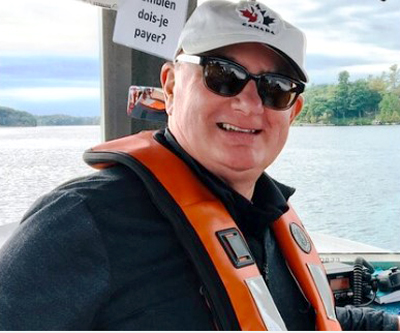
Consequently, it made sense for Dr. Tim Webster, Research Scientist at AGRG to give a presentation on ’The role of Geomatics in Managing our Coastal Zone’. The audience included, but was not limited to, retired faculty and other researchers who live in the region. Under CORAH, the presentation was also available at satellite sites in Canning and Cornwallis Park. Given my intimate knowledge of the AGRG story, I wanted to hear first hand the type of research currently being undertaken by AGRG.

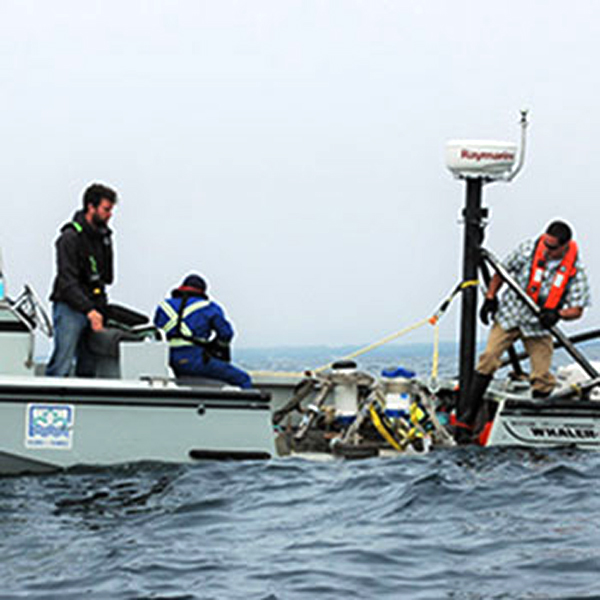
Despite COVID, Tim and his group of associates (about a dozen) continue to be competitive in the application of different Geomatics technologies, especially in the coastal zone. As a coastal province, it is important that we access and manage high quality information. (Image Source)

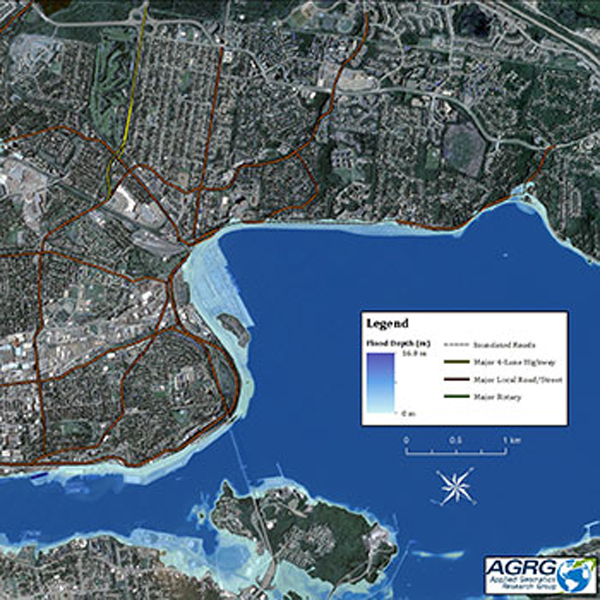
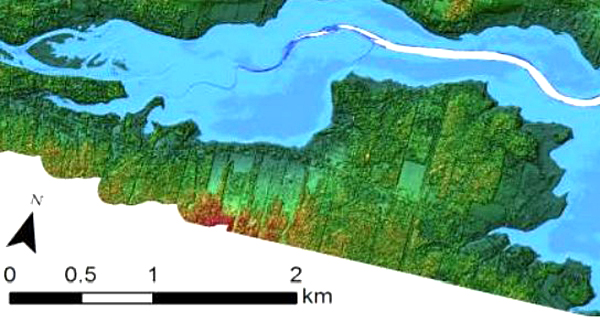
Tim provided an excellent overview of the technologies, the increased resolution of LiDAR, both terrestrial and topo-bathymetric. Climate change and sea level rise impacts flooding, erosion, ice jams, storm surges and salt water intrusions. (Image Source)

Specific projects by the group include flood risk mapping e.g. Annapolis Royal, Chignecto Isthmus. With topo-bathymetric LiDAR, it included mapping of eel grass beds in Little Harbour, contaminant monitoring in Boat Harbour. In Southwest Nova, in collaboration with Acadian Seaplants, mapping rock weed biomass. (Image Source)

In the twenty two years, since the formation of AGRG, we see that the resolution has improved significantly and it is possible to build seamless land/sea models. If we are talking in terms of ’marine spatial planning’ then access to Geomatics technologies are critical to municipalities, the federal and provincial government, marine industries, Nova Scotia Power, Halifax Water etc.

Tim also provided insight into the application of the same technologies for his Ph.D research on the geology of North Mountain. He referenced the ability to separate tree cover from the ground surface. In rural Nova Scotia, with all the power outages, it would be a tremendous boon, if we could separate out the above ground power lines from the surrounding tree growth. Perhaps that is a ’fantasy’.

It is encouraging to see CORAH sponsoring Tim’s presentation. In the rural communities of the Annapolis Valley, there are a significant number of ’retired’ scientists and teachers who appreciate the application of Geomatics in managing our ecosystems, whether terrestrial, marine or in-between. This community-based learning model should be entertained elsewhere, where technology and technical institutions co-habitat the same landscape / the same geography.

Acknowledgements

Heather McCormick manages CORAH. It offers Health related courses and seminars in Middleton and at five satellite sites. Examples are Tai Chi, Computer Skills and guest seminars. Tim Webster delivered the seminar on Applied Geomatics research. Edward added the graphics and links. Heather attends Tai Chi.

Posted in Book Review, Event Review

Book Hunt

After reading, Running TO Paradise (see earlier blog post), I was interested in reading more by Donna Smyth. Fortunately, I had a copy of Harry Thurston’s The Sea’s Voice, an anthology of Atlantic Canadian Nature Writing.

It included Smyth’s stort story, Women Flying, the eschatology of Nature. I could relate well to the following statement.

Some celebrate this transcendence of Nature, declaring a liberation from the material world, from the flesh … But some of us believe this kind of future holds within itself its own dark virus of destruction. Some of us have taken to living in strange, remote places. We’re hunkered down on the land, on small farms, rethinking our connections to Nature.” p.251-2.

Donna Smyth taught English at Acadia University and now lives and writes on an old farm in Hants County.


This weekend, Heather and I were off to the Flying Apron in Summerville.

Enroute, I recalled a second-hand bookstore in Windsor, Readers’ Haven. We stopped briefly. I found two books. Donna Smyth’s Among the Saints and Silver Donald Cameron;s The Living Beach. Heather also found two books, Elizabeth Balmer’s A Pocketguide to Butterflies and Moths, and Ruth Ware’s, The Death of Mrs. Westaway.

We continued on our way to the Flying Apron. We checked into our room at the Inn and were greeted by a bottle of white wine, Tennycape from Avondale Sky Winery and chocolates from Peace by Chocolate. After a filling brunch, we decided to explore the Rising Tide shores, driving along Hwy #215 to Burncoat Head. We returned to the Inn, just in time to walk down and catch the sun setting behind Summerville Wharf.

Saturday evening, I was able to relax and read the selected stories. From the back cover, Joan Coldwell.

Whether in novels, stories, plays or poems she (Donna Smyth) creates a sense of the holiness of all living things, the need for loving community in the face of violence and destruction, and a belief in the power of words to change the world”.

Sunday, we had a pre-Valentine’s Day lunch. For the second day, I would only need one meal. Now, I can look forward to reading Silver Donald Cameron.

The beach is magic, an infinitely complex and beautiful ballet of the shore and the land, a pas deux between change and resistance. Caught up in the dance are the animals and plants that live there. The beach is not just a strip of sand: it is a community, a wild and living thing.

This becomes self-evident, as you explore the Rising Tide shores of Hants County.

Postscript

Harry Thurston’s The Sea Voice includes Silver Donald Cameron’s Gaia’s Fingernail Chapter 1, from the Living Beach.

References

Donna E. Smyth, 2003, Among the Saints, Roseway Publishing.

Silver Donald Cameron, 1998, The Living Beach, MacMillan Canada.

Harry Thurston, (Ed), 2005, The Sea’s Voice, Nimbus Publishing.

Ruth Ware, 2018, The Death of Mrs. Westaway, Simon and Schuster.

Elizabeth Balmer, 2007, A Pocket Guide to Butterflies and Moths, Parragon Books.

Readers’ Haven readershaven@eastlink.ca

The Flying Apron Inn and Cookery, flyingaproncookery.com

Acknowledgements

Heather shared the Romantic Getaway at the Flying Apron. It was a celebration of my Valentine’s day birthday. I share the date with Edward. Edward added the graphics and links from his Florida base. Thanks to the staff at the Flying Apron Inn and Cookery.

.


Posted in Event Review

Celestial Body

This Tuesday, I attended the Strategic Tourism for Areas and Regions (STAR) meeting at the MacDonald Museum in Middleton.

There were five sessions over two days in Windsor, Kentville, Wolfville, Annapolis Royal and Middleton. The hosts were ACOA and the Valley REN. The keynote speaker was Richard Innes, Brain Trust Marketing and Communications. He has been hired as the STAR consultant. The project is designed to lay a foundation for responsible, collaborative, sustainable community-based tourism.

Richard provided an overview of the planning context, the creation of a working committee and steps leading to a plan. At the Middleton meeting there were approximately twenty community members in the audience.

The concept is to develop sustainable tourism for areas and regions. Richard Innes has completed a similar assignment for the Eastport Peninsula, Newfoundland.

Comments from the audience included: need for infrastructure, sustainable tourism, augmented reality.

My own comments are along following lines.

We should develop sustainable tourism consistent with the values for sustainable forestry and sustainable agriculture. There are many opportunities for experiential tourism which include hiking, bicycling and canoeing. If the focus is on ’areas’ and ’regions’ then it is critical that we develop ’geographic information’ infrastructure, available both online and hard-copy products.

We may want to learn from other jurisdictions, for example in Newfoundland we have the Shorefast Foundation on Fogo Island. Likewise, tourism destinations in the UK, USA and Europe.

Part of the tourism infrastructure is training guides to lead infrastructure opportunities. There are many stories about ’The Mountain and the Valley’. This could be extended in support of experiential tourism.

The region has never fully realized the potential of the Annapolis Heritage River. There should be links to existing festivals, like Devour and Deep Roots festival.

Given the unique character of the landscape from the Bay of Fundy, North and South Mountain, and the Valley, there are many stories that can be developed within the context of Sustainable Tourism.

Given my own personal experience at COGS, I would promote the concept of a new program which combines ’geographic information’ with sustainability in forestry, agriculture and tourism. This would also permit access to new software tools e.g. AI, Augmented Reality, and new devices. Sustainability could include different modes of transportation for all segments of society e.g. from electric bikes to fishing boats.


Tonight (Wednesday) I plan to attend the Municipality of Annapolis County meeting in Bridgetown (weather permitting). I did attend. It was a town hall style meeting for residents of Bridgetown hosted by Warden Alan Parish and Councillor David Hudson.

The CAO was unable to attend because of the weather. Topics, under discussion, were the sale of the elementary school, the sale of the town hall and the current tax rate. It was encouraging to hear the voices of both long term residents as well as newcomers to the community. I had planned to raise the question of sustainable forestry in Annapolis County , but felt that it was outside this context.

Acknowledgements

Thanks to Celes Davar for information on the STAR event. Anne Crossman on the Municipal event in Bridgetown. Edward for adding the graphics and links.

Reference

The Self-guided PiRat Ghost History Hunt, Available at the App Store PiratGhostHistoryHunt.com It is an Illustration of Augmented Reality concept.

Posted in Book Review, Event Review

Mythology

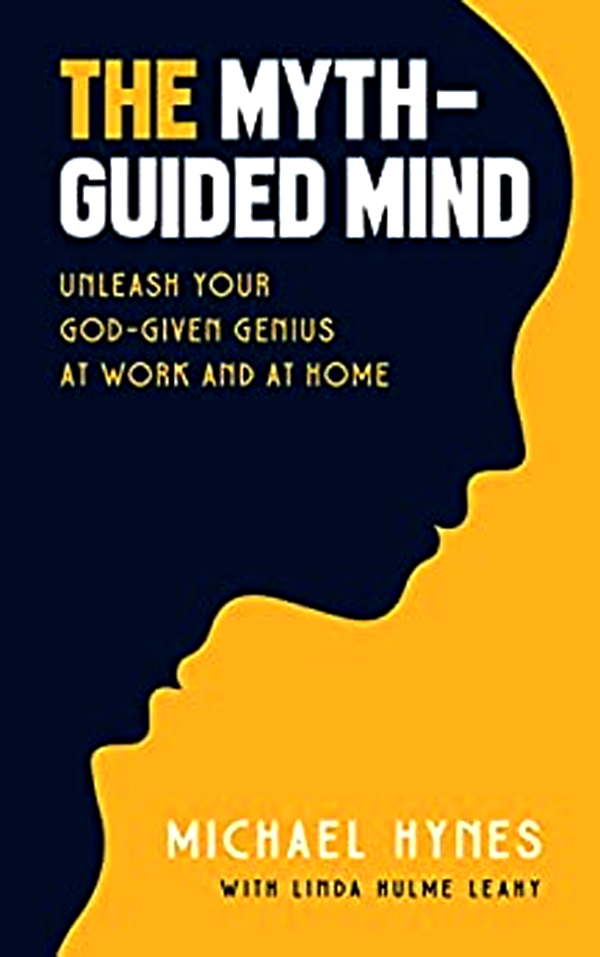
I finished reading Michael Hynes, “The Myth-Guided Mind: Unleash our God-given Genius at Work and at Home“. The book was written with Linda Hulme Leahy, who has a heritage apple farm in Round Hill. That likely explains why I was able to obtain a copy at Endless Shores Books in Bridgetown.

I found this to be a remarkable book. From the beginning, the title could be a word play on the mis-guided mind. I particularly enjoyed the references to the work of Joseph Campbell. It is a short book (123 pages) with chapters titled:

e.g.
Mental Health, Not Mental Wealth;
Somatics and Embodiment – A Primer;
The Myth will Choose You;
Becoming an Expert in Being You.

I plan to read it a second time, very shortly.


There is planned clearcutting again on South Mountain. Heather and I drove along the Trout Lake Road (from Highway #10) and then walked along the woods road towards Inglisville. To date, there has not been any new cutting, however, along with Extinction Rebellion, we shall monitor the situation.


I did receive a report from Jeff Wentzell on the MIT Agri Tech seminar this week. Presentations included drone technology, greenhouse AI tech and aquaponics.

My vision is somewhat different. How can we use Geomatics technology to better understand the changes in agricultural land use in the Annapolis Valley? Better information, leading to better decision making.

Acknowledgements

Jeff Wentzell for his feedback on the Agri Tech seminar. Heather Stewart joined me on a walk in the woods, near Cranberry Lake. Edward added the graphics from Florida.

Reference

Michael Hynes with Linda Hulme Leahy, 2021, “The Myth-Guided Mind: Unleash your God-given Genius at Work and at Home, Catapult Press. (Michael Hynes is a Toronto-based corporate and personal coach).

Posted in Event Review, Opinion

Almost fifty years of earth observation

NASA just launched the Landsat 9 satellite this past Monday, 27 Sep 2021.

For me, this is exciting since my engineering career began with Landsat back in 1975, three years after the launch of the first Landsat satellite.

Later, between 1982-1989, having joined NSLSI (Nova Scotia Land Survey Institute), later known as COGS (College of Geographic Sciences), my job was to train students in Remote Sensing. Landsat was an important platform for monitoring the earth. Some of the student co-op projects were memorable for me for their cutting-edge research and implications; such as measuring farmlands in Saskatchewan for tax evaluation, mapping forest clear cutting, and monitoring the impact of human activity on water availability and conditions.

I’m now retired but still follow developments in this field. Much has changed and much has been learned. We now have a range of extremely high resolution and spectrally sensitive sensors. Platforms range from satellites to drones. We mash data to extract new insights, and more developments lie on the horizon — artificial geo-intelligence, for example.

While I fondly look back on my first teaching class (a class, by the way, that inspired an award-winning humorous speech), I am in awe of the legacy NASA’s Landsat series has given to us on earth and the continuing opportunities we have to be responsible stewards of our planet, our home.

FURTHER READING/VIEWING

https://landsat.gsfc.nasa.gov/landsat-9/interactive/

Posted in Art, Event Review

PIPAF Atlantic Edition 2021

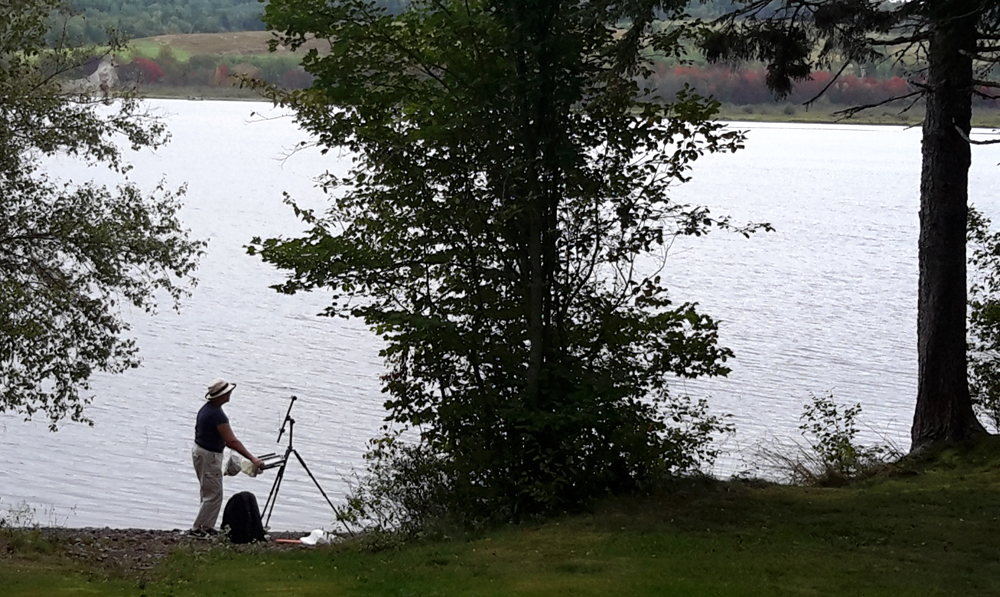
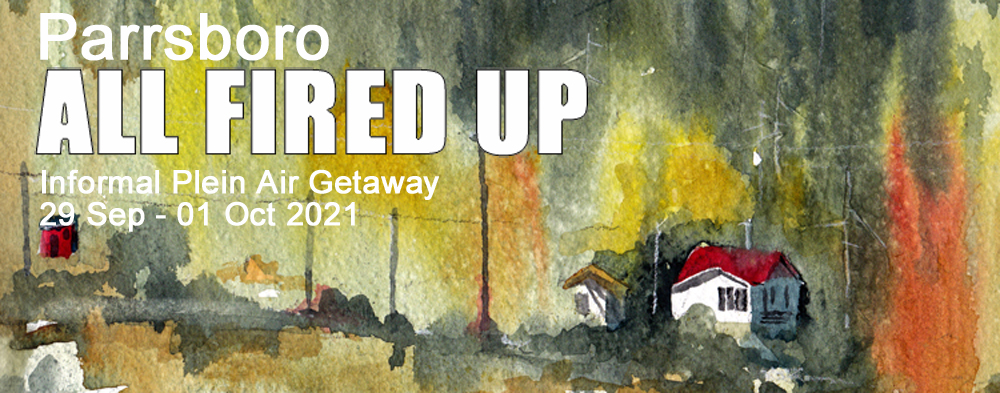
Last week, for three days, twenty artists competed in the Parrsboro International Plein Air Festival Atlantic Edition (PIPAF).

The spectacular Parrsboro coastline offers artists great inspiration.

For the first time, Anne and I were juried in to compete alongside great talent from across the region — from Weymouth, Nova Scotia, to St Andrews, New Brunswick.

Each morning and afternoon we scattered out between Advocate Harbour to Five Islands to pick our spot and paint the landscape. One day, Anne painted inland at Newville Lake, north of Parrsboro.

I seemed to gravitate to the built (and decaying) environment. Two of my watercolours captured abandoned buildings and trucks at “Parrsboro’s Bone Yard“. Others avoided this site. Once completed, we posted our artwork online at the PIPAF website and also to our online gallery.

On Saturday evening at “The Gala”, artists’ entries were judged by the owner of Zwicker’s Gallery in Halifax, Ian Muncaster. Aside from “Best in the Show”, categories included “Best Use of Light”, “Best Seascape”, “Best Nocturne” and more.

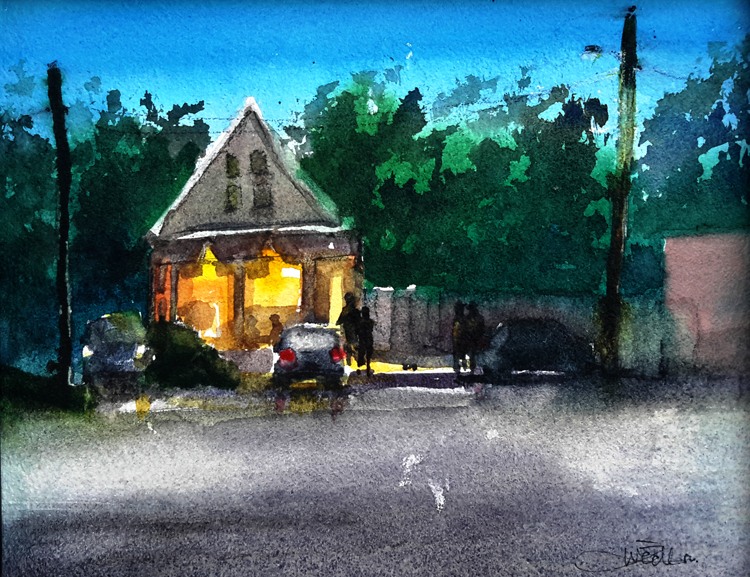
My nocturne entry, “Late Night Donuts“, was painted at night opposite Tim’s. People claim I left Anne stranded on a dark rural road to paint Partridge Island bathed in moonlight. Not true. She insisted I leave her there to paint. Her painting resulted in, “I Might Have Heard a Bear“.

Sunday, the last day of the competition, saw these twenty artists joined by others to paint in the Quick Draw event.

PIPAF 2021 Quick Draw Event attracted other artists and art lovers.

In addition to seeing our art-loving friends from the Annapolis Valley, we got to see our Halifax Urban Sketcher friends from Halifax who join in on the Quick Draw event.

While Anne and I did not win any prize, we reached an important milestone in our art journey. We were “juried in” to compete against the best in Atlantic Canada. We grew our network of like-minded artists, met new friends, discovered friendly townsfolk, and grew to love the land. So much so, that Anne booked us a cabin to return at the end of the month to capture the colours of fall in Parrsboro.

REFERENCE

PIPAF 2021 Special Edition: Anne & Edward Fine Art Newsletter XVIII
(Here, is included the full story behind “I Might Have Heard a Bear”, several of our paintings, and more.)

Posted in Event Review

Trees and Water

This Wednesday, John Wightman invited me along as a guest on a field trip to the Pockwock watershed. The trip was organized by the Western Region Stakeholders Interaction committee. The partners were WestFor Management, Halifax Water, Elmsdale Lumber, the forWater Research network and Dalhousie University.

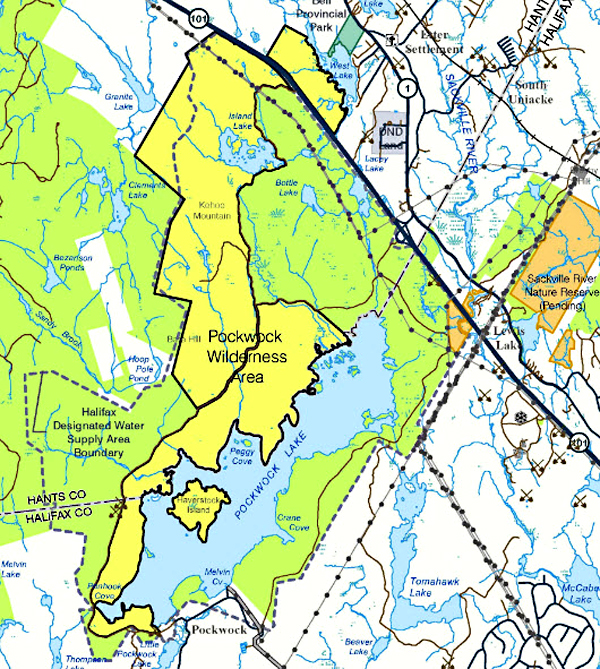
Link to map source.

We left Bridgetown at 8 am, met the other members of the field trip at the firestation in Mount Uniacke. From there we crossed Highway 101 into the Pockwock watershed, the watersupply for the City of Halifax. In the watershed, we visited three sites: road and bridge construction, commercial thinning and group selection. David Foster, Ph.D student at Dalhousie University, School of Resource and Environmental Studies (SRES) produced an excellent twenty page guide detailing his research as well the role and contribution of the partner organizations. In total, there were approximately forty participants on the trip.

Besides reconnecting with Peter Duinker (Dalhousie University), Peter Neily (NS Lands and Forestry) and Peter Jones (previously with Bowater Mersey). I had the opportunity to see forest management collaboration in action.

Given the delays in the Lahey report implementation, I was encouraged by this obvious collaboration to secure a sustainable watershed future for Pockwock.

After a long day in the field, John dropped me off in Paradise around 6 pm.

Peter Duinker defined the key research question.

“What approaches to managing the watershed forest, focused mainly on harvest system and regeneration techniques, have the greatest potential to reduce the flow of terrestrial carbon into the lake?”

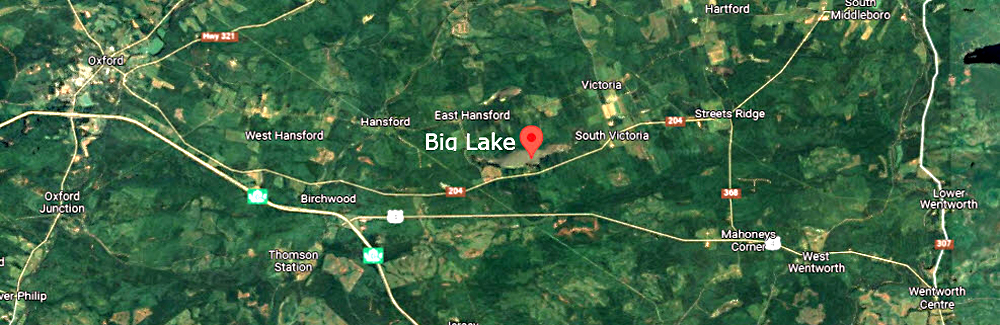
This same week, Heather and I received notice of aerial spraying around her family property near Big Lake, Cumberland County.

Obviously the clearing cutting / spraying option is not relevant to the Pockwock watershed however other parts of the province remain at risk.


Earlier this week, Niki Toomey at NSCC contacted me about their forthcoming 25th Anniversary. She was interested in the history behind the technical institutes that became incorporated into the community college.

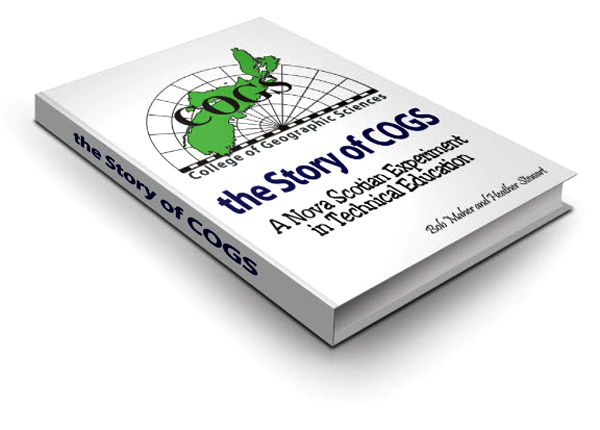
I did pull out the PDF that Heather and myself wrote and researched on the Story of COGS: a Nova Scotia experiment in Technical Education.

It was written in 2014 and is still worth re-reading. Especially, within the context of the type of collaboration demonstrated in the Pockwock watershed project

Acknowledgements

John Wightman for inviting me to join the field trip. Jillian Weldon-Genge for driving the forest roads of Pockwock. The quality of the presentations in the field from industry, government and the academic community was noteworthy. Edward added the links and graphics.

References

David Foster, September 2021, Field Tour handbook for the Pockwock Watershed, 20 pages.

Bob Maher and Heather Stewart, 2014, The Story of COGS, 42 pages.

Posted in Event Review

AF Church Historical Maps Specialist Workshop

On Saturday afternoon, I attended the AF Church Historical Maps workshop at the Rath Eastlink Community Centre in Truro. Through David Raymond, I was invited to present the keynote address on Historical GIS in Canada.
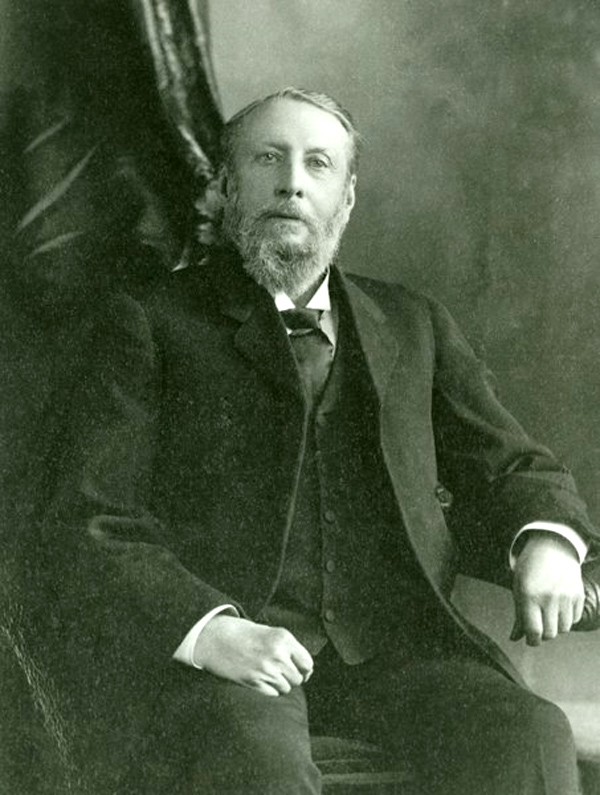
(Image of AF Church)

In practice, I was able to provide some background on the history of GIS in Canada and some of the personalities. In reality, I was there to learn about the progress to date on the steps in the transformation of the large format late nineteenth century county maps into a digital database to support genealogical research.

The presentations explained four steps in the process.

  1. Julia Landry described the conservation of these county maps. It included the cleaning and repair.
  2. Christian Laforce presented the challenges in the compilation of high level digitization using overhead photography.
  3. The third step was described by David Raymond who used GIS software to geo-reference the images delivered by Christian.
  4. The last presentation on open source programming was scheduled for Shaun Johansen but had to be presented by Paul Armstrong. It described software that would allow the genealogist to link digital data derived from the AF Church maps to the 1881 census.

In the Chronicle Herald (August ,14) there was a half page on E3 ‘Help Us Map Your People’ placed by the Kith Observatory Inc. It confirmed that they have conserved and digitized maps for Antigonish, Hants and Halifax counties. They are seeking help in matching the names and locations on these maps with the 1881 census. They are seeking ‘doers’, ‘knowers’ and ‘benefactors’.

Prior to attending the workshop, I had a very fuzzy notion of Historical GIS. After the workshop, I had a much better appreciation of the practical challenges faced by the Genealogy community in working with the large format AF Church maps, using current technology.

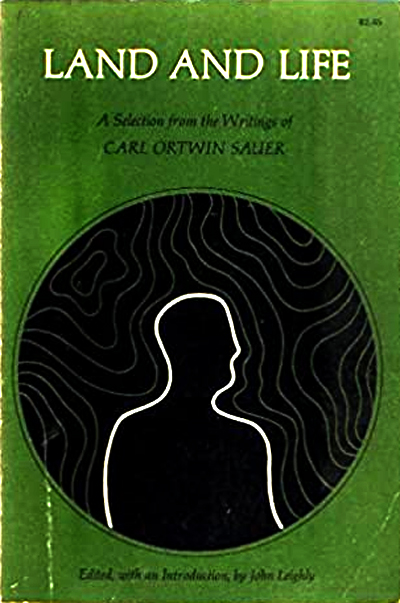
I concluded my keynote, citing the writings of Carl Sauer ‘Land and Life’. By understanding the lives of rural Nova Scotians in the late nineteenth century, we also develop an appreciation of land management in that time frame. That may serve us well, as we move forward.

Acknowledgements

David Raymond for suggesting my participation in the specialist workshop. Paul Armstrong for his work at the Kith Observatory Inc. Edward added the graphics and links.

References

Kith Observatory Inc. kithobservatory.ca

Carl Sauer, 1967, Land and Life, University of California Press, Berkeley.

Postscript

It is interesting that the acronym GANS stands for both the Genealogical Association of Nova Scotia as well as the Geomatics Association of Nova Scotia. Hope this does not lead to any confusion.

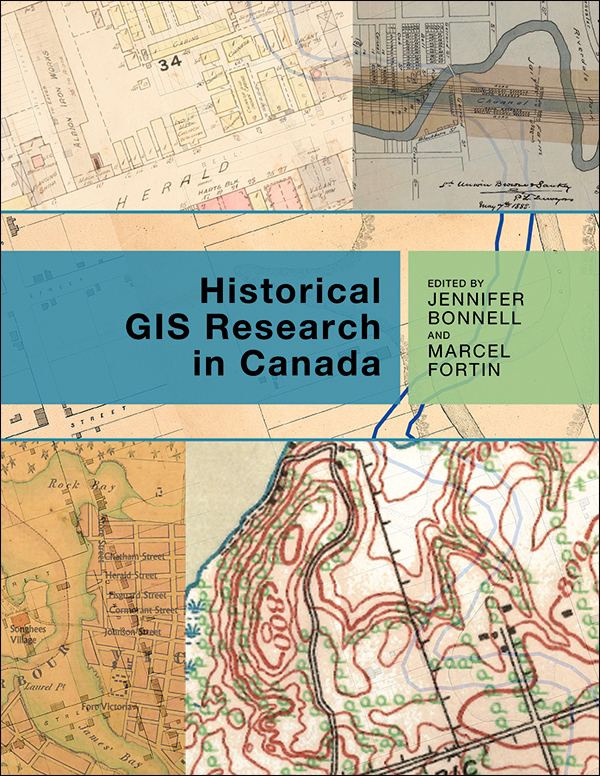
You may be interested in “Historical GIS Research in Canada“, Jennifer Bonnell and Marcel Fortin (eds), University of Calgary Press.

Posted in Event Review

COGS visit

On Friday, I went to COGS to drop off a couple of library books. The building was deserted, and COVID protocols were in place. I did manage to spend time in the Board Room to look at the maps from the W.K.Morrison Special Collection. Walter joined the NSLSI as a Cartography instructor in 1966. He retired in 1985.

I had the opportunity to look closely at the eighteenth century nautical charts of DesBarres’ Atlantic Neptune, as well as the Herbert Moll map 1736-45 that shows the location of Annapolis Royal.

Perhaps for the first time, I fully appreciated the geographic content, the workmanship and creativity in design. Cartography is a wonderful combination of both scientific and artistic endeavour.

Ancestral Landscape of Sikniktuk

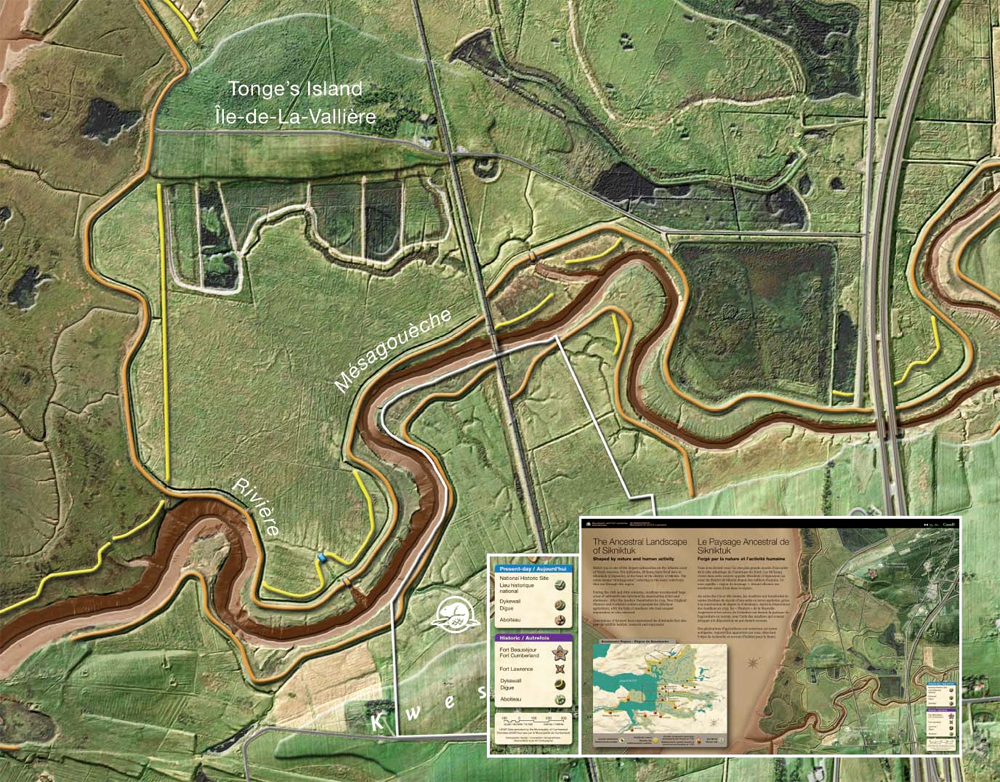
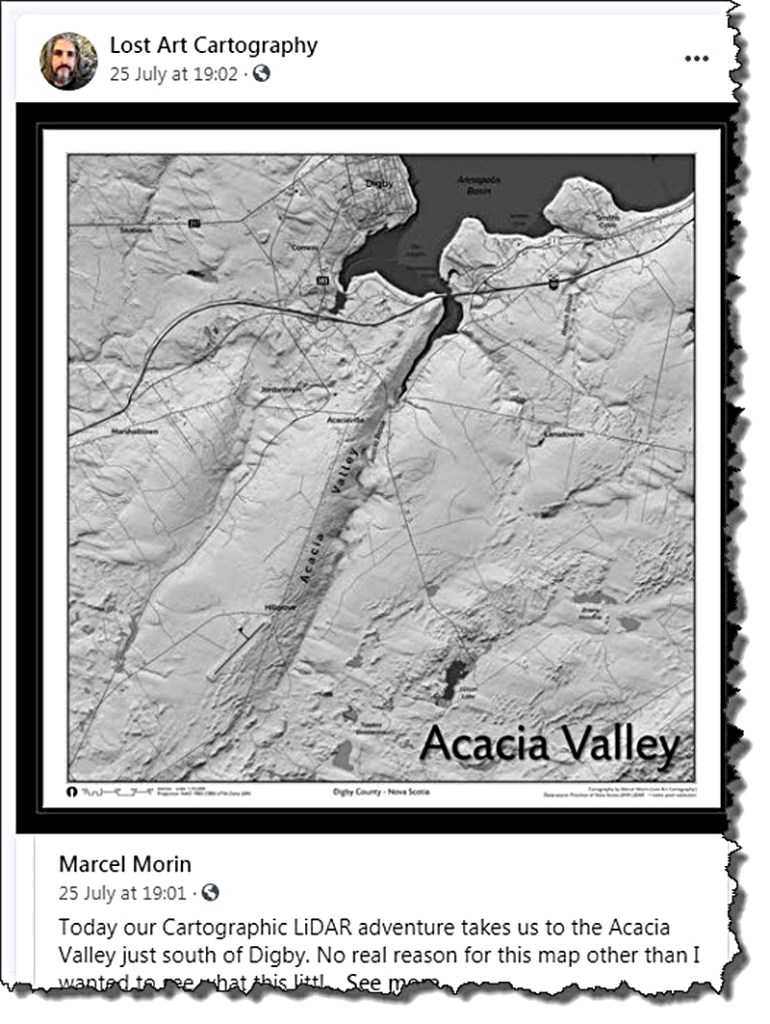
On the ramp leading to the Library, outside the AV Room, there is a stunning modern day exhibit of the maps by Marcel Morin, Lost Art Cartography. Maps include Wines of Nova Scotia, Landscape of Grand Pre, the Ancestral Landscape of Sikniktuk and the eighteenth century trade at Beaubassin.

In these maps, Morin adds three dimensional representation of topography derived from LIDAR. Again, a modern example of scientific and artistic integration. Morin is a graduate of the COGS Cartography program, living in the Annapolis Valley.


ACRONYMS

In the late afternoon, I joined John Wightman for a beer. We talked about the story behind the different acronyms.

COGS: College of Geographic Sciences

This was invented in 1986 to replace NSLSI. With the formation of the NSCC, it became the Centre of Geographic Sciences. John liked the concept of cogs in a wheel. The different disciplines working together to drive forward an engine or machine. Again, the combination of artistic design, science and the enabling technology.

CANMAP

Another JFW invention. It stands for Canadian Numerical Mapping Applications. This suggests the use of computer technology, a focus on applied science, and a uniquely Canadian perspective. CANMAP has traditionally supported student graduation awards at COGS.

AGRG: Applied Geomatics Research Group

AGRG is located at the Middleton site of the Annapolis Valley NSCC campus. Again the acronym suggests a focus on applied science, using Geomatics technology, undertaken by a group of researchers.

These acronyms reflect the values and interests of a community of individuals, based in rural Nova Scotia, Lawrencetown. There are , of course, many side stories. For example, the establishment of a similar program, modelled on the COGS curriculum in Indonesia. Or the relationship between COGS and the Environmental Systems Research Institute (ESRI) in California.

Postscript.

Last night, Heather and I enjoyed listening to the nyckelharpa at the Dawn Oman Art Gallery in Bridgetown. Presented by the Harpaflojt Trio.

Acknowledgements

John Wightman for his memories of NSLSI and COGS. David Raymond for encouraging a closer look at the WK Morrison Special Collection. Edward and Heather for their ongoing support.

VISIT COGS ! Preferably, once the students and faculty have returned in September. Check out the Story of COGS web site.