This week, I received in the mail from Guernica Editions a copy of Nina Newington’s forthcoming book, Cardinal Divide.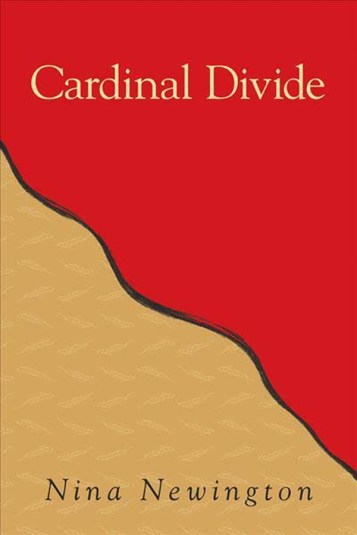 Nina has asked me if I would write a review. That is my current homework. This encouraged me to do some background research. I read an interview in open-book.ca Nina Newington on Canada, Uncertainty and her newest book.
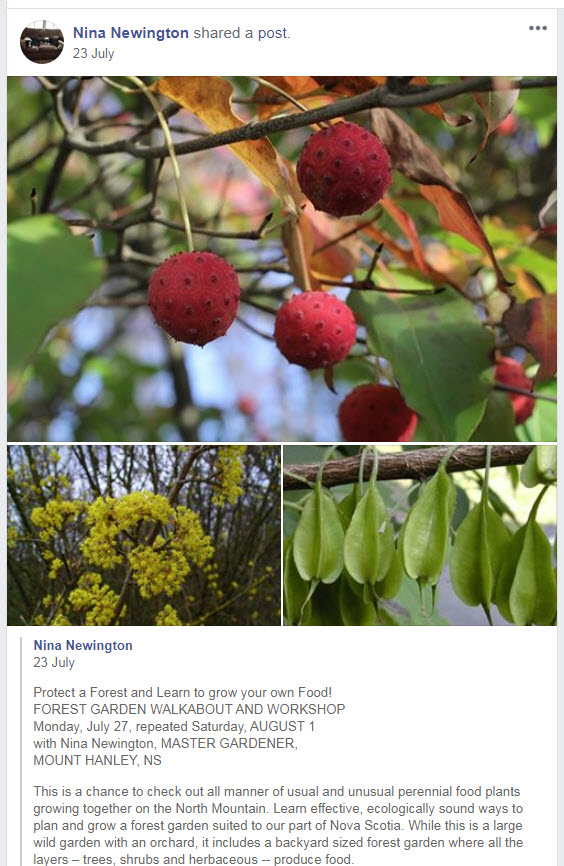
I also discovered that there is a Forest Garden Walkabout and Workshop this Saturday, August 1st.
Meanwhile, Heather and I had been trying to meet up with Rick Ketcheson and his wife, Kathy. We had been interested in the properties of biochar. On Thursday, we enjoyed a tour of their amazing garden on St.James Street in Annapolis Royal. Later on our walk to the Elm Tree Cafe at the Historic Gardens, we discussed a wide range of topics from food sustainability, community gardens, two-eyed seeing to the writing of Wendell Berry.
 Afterwards, in the afternoon, I stopped at the Lawrencetown library. Jaki informed me that once again we can request books through inter-library loan.
It was obvious that I should request The Well-gardened Mind, in the spirit of both Nina and Rick.
In answer to one of Rick’s questions about bringing about change, my somewhat facetitious answer was ‘fungal networks’. To appreciate our local geography, we must recognize the richness that exists or has been attracted to this part of rural Nova Scotia.
Meanwhile, a footnote from Peter Pula in Axiom News ‘What piano and social procurement have in common’.

Acknowledgements
Rick Ketcheson for the walkabout in Annapolis Royal. Nina Newington for the review request. Heather for her interest in garden improvement. Edwards for his graphics contribution.
References.
Nina Newington, 2020. Cardinal Divide, Guernica Editions. (Forthcoming in September)
Forest Garden Walkabout and Workshop. August 1, 2020.
Raven Wood Biochar
Sue Stuart-Smith, 2020. The Well-gardened Mind: the restorative power of Nature.
Axiom News, July 30th. What piano and social procurement have in common.


 Arthur Ransome was a war correspondent in Russia who gave up journalism in 1929. Between 1930-1945 he wrote the
  I had noticed the Elizabeth Bishop letters on the shelf during the previous visit. Fortunately, it was still there.
 Anne and I arrived in Halifax by plane in the wee hours of last Saturday and were instructed by border officials to self-isolate for 14 days. We had returned from our stay in Bradenton, Florida. I read the interesting article Bob’s brother, Peter Maher, sent
 In these turbulent times, I notice how people are, lately, appreciating the little things in life. One of my favourite artists,

 “The writers from whom Dark Mountain has taken inspiration are grounded in a sense of place and time. In the deep time of geology and myth, in the rooted relations to the place of a tree or the navigational feel for place of a migrant bird.”
 Sandra Barry forwarded to me an event notice, featuring Rita Wilson and Emma FitzGerald ‘
 I had the opportunity to attend the Geoff Butler celebration at the Kings Theatre. It was a full house. The first half included a short film by Tim Wilson ‘
 The book includes forty-six lullabies, from ‘At the Tiller’ to Wherever the wind blows’. Each lullaby has a painting and a musical score.
 (Photograph from 2019 conference).
 The takeaway message from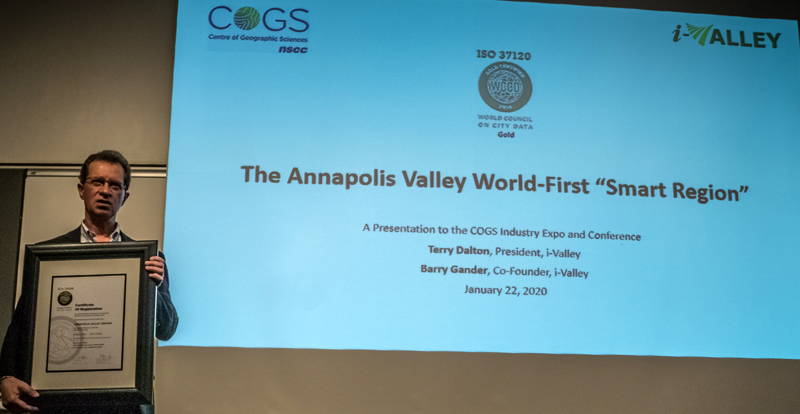
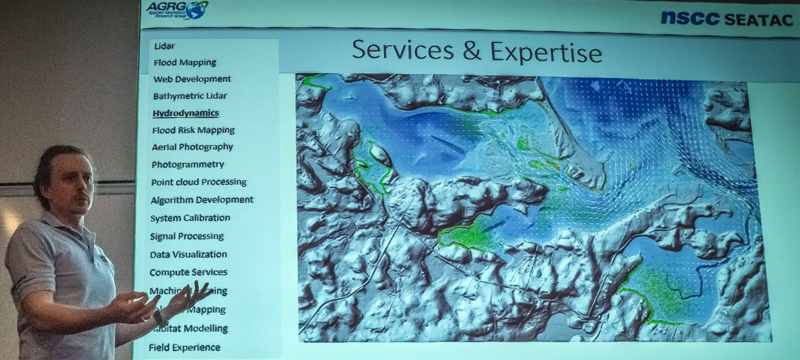 As informed citizens, we need to WAKE UP. We need to be talking about an Innovation Hub in Lawrencetown, evidence-based decision making, the use of current Geotechnologies.
 Musique Royale brought the
  Bob Bent’s book put these events into their proper perspective. It was only the day before (12th.) we had Kevin from
  With Bob Bent’s book in our suitcase, we can enjoy a Silly Little Christmas with grandchildren in Ontario. Best wishes for the Christmas season. I look forward to 2020 with its music, art and books.
 The day was structured into three parts:
 Thinking about the complexity of the climate change agenda, and our inability to comprehend the interaction between the discussion topics in the afternoon; on returning home, looking for solace, I pulled down off the bookshelf
  At the Tidewater Books and Browsery, I found a small book by Graeme Wynn. Graeme is Professor, Geography at UBC. The book, Culture and Agriculture on the Tantramar Marshes is based on his M.A thesis at the University of Toronto. It describes the utilization of the Chignecto Marshlands between 1750-1800, the Acadian settlement, the Planters and the Yorkshire and Loyalist influxes.
 I had noticed on a previous visit that they had a good selection of books by Harry Thurston, who lives at Tidnish Bridge. This time, I purchased
  One last literary reference. Last Summer in Langley, BC I was reading Wendell Berry’s
 In Wolfville earlier this week, I picked up the
 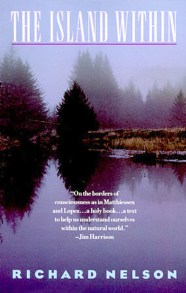 At the
  Ernest Blair Experiment