Posted in New thinking

The Bus Experiment

Today, we had a good opportunity to conduct the ‘bus experiment’.banner_kingsTransit Heather had a full day Buddhist retreat in Annapolis Royal. With early morning temperatures of -20C, she walked from our house on Hwy#201 in Paradise to the CRIA gas station in Lawrencetown. She caught the 3W bus to Bridgetown. In Bridgetown, she changed to the 4W bus, and continued on to Annapolis Royal. This evening, she will catch the 4E bus at the Annapolis Royal Fire Department at 5:31 pm, I will pick her up at CRIA around 6:11 pm.

The purpose of the experiment is to see the world through a different lens. Not from a car, bicycle or on foot, but rather through public transit.
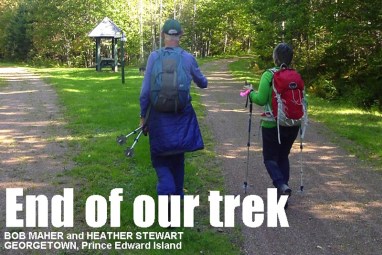
r2gTrekIn my conversations with Edward Wedler, this relates back to the time when we decided to walk from Yarmouth to Georgetown, PEI, as part of our Road to Georgetown Trek. Many things have changed since those days.

Later, talking to Ed Symons at COGS, as part of his community mapping research, he is producing Kings Transit maps. Think of the value of adding the senior (citizen) experience to these maps. Ed’s students are working on a number of other sectors: food, forestry, culture, First Nations, community services and climate change. All of them can benefit from community (citizen) input.

At COGS, there has been a migration of staff from AGRG Middleton to Lawrencetown. From the outside, this appears to be a recognition of project-based learning. It will be interesting to see whether this corporate directive is reflected in the business plan for the new Innovation Hub (read this blog post). Rather than driven by business needs, the hub could be driven by the needs of the rural community and then to develop a geographic technology-related solution for these communities. The solutions can be transferred, and scaled, to other non-urban geographies. Use the intelligence of rural citizens in these communities to drive the design process right from project inception.

I hope on our return from Iqaluit (end of April) we will be able to review a business plan for the Innovation Hub, which reflects both our geographic reality and our citizens. Meanwhile, until we head North, we shall continue to ‘ride the buses’.
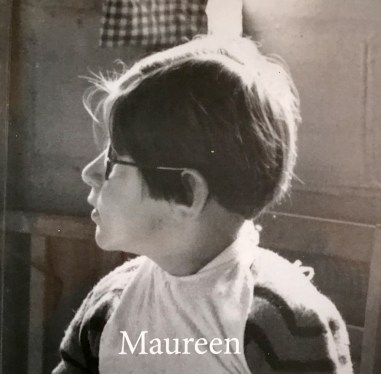
bookCover_maureenToday, I received a second book from my brother Peter. It is called ‘Maureen’ and is a collection of historic photographs, commemorating the life of my younger sister; thus, indirectly, our lives too.

Acknowledgements

Heather for her enthusiastic embrace of the bus fieldwork. Edward for fond memories of the Road to Georgetown. David Colville and Ed Symons for conversations on community mapping at COGS. Peter for another treasure from our common past.

References
Peter Maher. 2020. Maureen. Self-published.
Posted in New thinking, Opinion

A Vision for the Annapolis region

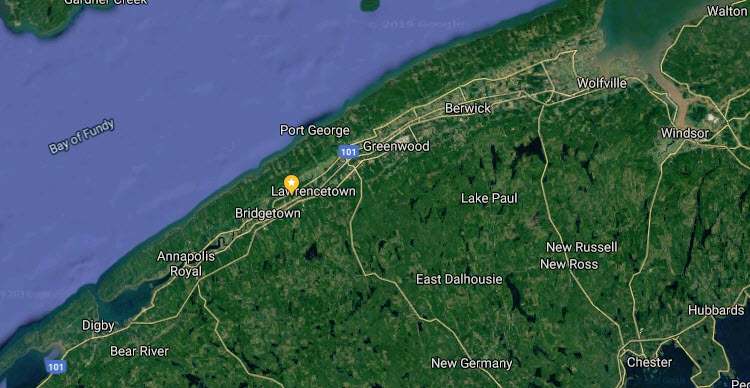
As a Geographer, I think of the Annapolis Valley as a physiographic unit. Travelling from Halifax, you enter the Valley around Windsor on Highway #101. It is bounded on two sides by North Mountain and South Mountain and extends down towards Digby. It also includes the Fundy shore.map_annapolisValley_satelliteView

Despite, the recent i-Valley definition, my definition includes Annapolis County and Annapolis Royal.

From an educational perspective, Annapolis County has much to offer the region. At the recent COGS conference, the resources at both Middleton and Lawrencetown demonstrated national significance. Middleton campus is the home to the Applied Geomatics Research Group (AGRG). The Lawrencetown site has a long tradition of teaching Geographic Sciences (Surveying, Cartography, Planning, GIS, Remote Sensing and the associated IT). There is now a plan to establish an Innovation Hub and residence at COGS.

Other educational dimensions include the Environment and Agriculture Technology Laboratory (EATLAB) and access to Geomatics technologies as part of the corporate NSCC SEATAC initiative.

All of these activities bode well for education and research in the Annapolis Region. It links to high school activities in Annapolis Royal. If we are successful with Gordonstoun School, the resident expertise in the County can offer pathways from secondary school through to graduate work. There is an existing joint Masters degree in Applied Geomatics between Acadia University and the NSCC.

What is needed to support this vision?

1) we need to extend the Valley Computer Fibre Network and high-speed Internet throughout the Valley region.
2) the expertise at i-Valley should not stop at Middleton.
3) the Innovation Hub at Lawrencetown needs to be part of the Valley network.
4) Municipal government needs to work with the existing educational institutions to support all citizens in the larger geography.
5) the Geomatics technologies at the NSCC should be used to address sustainability issues in the region.

Ultimately, better collaboration, better communication, and leadership that respects the needs of all citizens in the larger region.

Many years ago, John Wightman, former Principal at COGS, created a non-profit entity, CANMAP. That acronym remains relevant today!

Acknowledgements

To those colleagues who have worked hard, to build up the educational resources in the region.

Posted in New thinking

Postcard to Maureen

My sister was born June 24th 1948. She was the youngest of three children, including myself and my older brother, Peter. Early on, she was identified as ‘mentally handicapped’. From that time forward, both of us, were encouraged ‘to go out into the world and build our own future ‘.postcardToMaureenEventually, Maureen was placed into long term care, funded and initially directed by our parents. In time, they were unable to provide the necessary support. Today, she lives in a home in Sandhurst, Berkshire,England.

My centre of gravity has become Canada. Peter divides his time between Europe and Canada.

Recently, with help from Jason, his son, they produced a video for Maureen. It gives insight into our childhood through a series of family photographs. I hope Maureen will enjoy those memories too.

Acknowledgements

Credit for the video goes to the team of Peter and Jason Maher. Much appreciated.

Posted in Book Review, New thinking

Repurposing the rail lines

In response to my last blog, Andrew Ronay in England reminded me that they had repurposed the Battersea Power Station in London.banner_BatterseaPowerStation Over the weekend, I have been reading a draft of Brian Arnott’s book Going to Town: the small town as micropolitan centre in the age of climate change. It should be published in 2020.pictou

One of Brian’s themes is the impact of the automobile on towns and cities.

Reflecting on the future of small towns in Nova Scotia, in an era of climate change, repurposing of the railway network would significantly reduce the impact of cars. Indeed, the railbed already exists.endOfTheLinePub

Of course, we may have to rename The End of the Line Pub in Bridgetown, especially, if there was high-speed rail between Halifax and Yarmouth.

This week, I walked down highway #201 to chat with Dave Whitman. Dave is both an author and a publisher. I was seeking his advice on the best approach to publishing my blogs. I have written over one hundred and sixty in the last two years at ernestblairexperiment.wordpress.com My fear was that a technology failure would erase the collection. It looks like I can find a solution, using the expertise of Kyle at Bridgetown Computers, and the folks at Integrity Printing.bookCover_Overstory

In addition to my books from Toronto, Heather purchased The Overstory by Richard Powers. From the back cover, Robert MacFarlane:

‘Dazzlingly written …… Powers is as brilliant on trees and arborescence as he has been in past novels on music, AI, and neuroscience’.

It looks at human lives in North America from the perspective of different tree species. Made me think about the voice of those species that are the remnants of the Acadian forest.

Acknowledgements

Heather for buying a copy of The Overstory. Andrew for his thoughts on repurposing. Brian for sharing a draft of his forthcoming book. Edward for the graphics. Dave Whitman for his timely advice.

References

Brian Arnott. Going to Town. The small town as micropolitan centre in the age of climate change. Expect to be published in 2020.
Richard Powers.2018. The Overstory: A Novel. W.W. Norton and Company.
Battersea Power Station. Check website. batterseapowerstation.co.uk

Posted in New thinking

Repurposing the Northern Pulp mill

While in Toronto, we visited the Don Valley Brick Works Park.donValleyBrickworksPark

‘From 1889-1989 the Don Valley Brick Works was the location of a thriving brick making and distribution industry in the heart of Toronto. The City of Toronto began restoration in 1995 with the generous support of The W. Garfield Weston Foundation’.

Today, the park includes a garden market, a school, future cities centre, as well as the Weston Family Quarry Garden.

Just before Christmas, Stephen McNeil upheld the government decision on Boat Harbour and hence the impact on the Northern Pulp Mill.bookCover_theMill

Can we use this decision to repurpose the mill facility?

Can we take the opportunity to signal to the world the change in Nova Scotia’s Forest industry?

Initially, the focus will be on the necessary steps to clean up the impact on the terrestrial and marine environment. We could showcase the history of the industry (Baxter 2017) leading up to this momentous decision. Parts of the mill could be refurbished to illustrate the new forestry practices. In the spirit of the Brick Works Park, the site would include a mix of educational and tourist facilities, compatible with the new thinking.

The new vision would emphasize the relationship between Nova Scotians and their marine and terrestrial environment. It would demonstrate the inclusiveness of the different communities in the region. To support the new vision will require input from all sectors of society: the communities, government, private corporations and non-profit organizations. As we make progress on the cleanup, there will be a new story to be told. That story is a new vision and shows a real change in our relationship to the environment.

Acknowledgements

Heather Stewart, a former resident of New Glasgow, and passionate advocate for our ecosystems. Edward Wedler, a firm believer, in the power of communication technology.

References

Don Valley Brick Works Park. Web site: Toronto.ca/Brickworks
Joan Baxter. 2017. The Mill: Fifty Years of Pulp and Protest. Pottersfield Press.

Posted in New thinking

Rural Curriculum

“We abuse the land because we regard it as a commodity belonging to us. When we see land as a community to which we belong, we may begin to use it with love and respect”. Aldo Leopold. A Sand County Almanac. 1949.

yurtConstruction
Yurt construction, taken from https://www.lfy.ca/workshops/links

These last two days we have been supporting Alex Cole and his team: Silas, Chris, Rick and Gord produce charcoal from the leftovers of the coppicing of red maple. The coppicing produces poles for yurt construction.


This community collaboration reminded me of David Orr’s essay on Re-Ruralizing Education. It emphasizes practical woodland skills for managing the land. The products provide materials for nomadic shelters. In some way, not dissimilar to the Mi’kmaq dwellings used for their movement through the landscape. The charcoal can form the basis of biochar that adds fertility to our gardens, at home and in the forest.

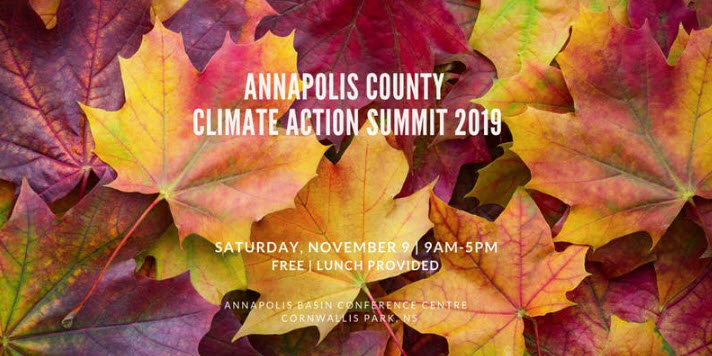
At the Climate Summit last weekend, Danny Bruce, an organic farmer from Centrelea stated:

“There are lots of skills that we could relearn and use to forward us. I think maybe we can do it a little simpler than our grandmothers did, but it’s all possible.”

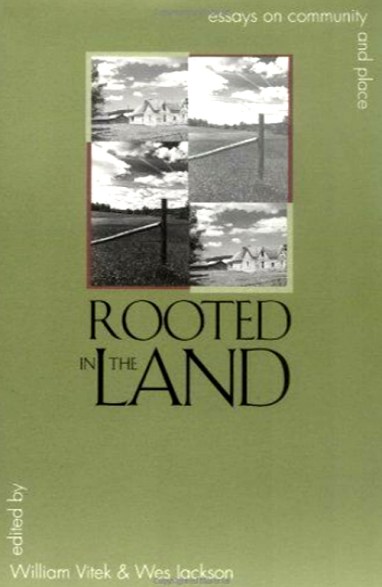
bookCover_rootedInTheLandAnother concept, from Rooted in the Land essay by Susan Witt and Robert Swann is the Community Land Trust (CLT) concept developed by the Schumacher Society.

“A community land trust is a not-for-profit organization with membership open to any resident of the geographical region or bioregion where it is located. Its purpose is to create a democratic institution to hold land and to retain the use-value of the land for the benefit of the community.”

It appears that we are seeing a new ‘back to the land’ movement. Or as Heather Stewart, astutely observes ‘back to the land with green $$$’ (money). The Annapolis Valley is well situated to be part of this creative rural economy, at a time of climate crisis.

Talking last night, we speculated whether the proposed Gordonstoun Nova Scotia school would adopt this type of rural curriculum.

Lawrencetown inter-library loan service has delivered Wilding by Isabella Tree. First glance shows the fascinating history of land use and farming at Knepp in West Sussex. ‘The Knepp ‘wilding’ project is a vitally important experiment for working out what we can do to let nature back into our farmed landscapes’.

Acknowledgements

To Alex Cole and his work crew of Silas and Chris, supplemented by the expertise of Rick and Gord for the charcoal making event. Heather for her insights and enthusiasms. John Wightman for his thoughts on the Gordonstoun school. Edward Wedler for graphics contribution.

References

From Rooted in the Land edited by William Vitek and Wes Jackson,
David Orr. Re-ruralizing Education. p.226-234.
Susan Witt and Robert Swann. Land: challenge and opportunity. p.244-252.
Handbook on establishing a Community Land Trust can be obtained from the Schumacher Center for New Economics. https://centerforneweconomics.org

Posted in Art, Event Review, New thinking

AI in Plein Air Art

pleinAirArtists
My goal at the recent Art Impact AI workshop held in Dartmouth, Nova Scotia, was to see how AI (Artificial Intelligence) might play a role in plein air art. The workshop was headed by Valentine Goddard and Jerrold McGrath.

The participant numbers were of a convenient size that we could delve into the subject matter at some depth. What struck me first was the diversity of backgrounds in attendance — from wood sculptor to theatre-savvy software developer, from cellular biologist to explorers of biologic/geologic forms, from filmmaker to former art director. But we all had the creative artistic mind and AI interest in common.

I learned all sorts of AI concepts such as Neural Networks, Machine Learning, CV, and Deep Learning, and dominant AI values such as transparency, fairness, accountability, and more. We were shown a book entitled Neural Networks for Babies by Fernie and Kaiser. We played games to immerse ourselves in the mechanism of AI thinking. “Finding the Criminal” game taught us about the significance of algorithm development, application, confidence, bias, and use/abuse. That type of game, upon later discussions with filmmaker Kimberly Smith from Canning, could have implications in his Movie Games project.

So, how does AI apply to my plein air art world? In the short term, I do not see AI having immediate impact. I do see where AI has the potential for the visual artist; playing a role in my art, down the road, as mentor, coach, teacher and critic. I do not see AI in art as something to be feared. I see AI as something to augment the creative learning process and development of the human artist — where AI and human collaborate.

In plein air art that AI augmentation also includes the process of seeing and interpreting the geography that surrounds us as an artist.

ACKNOWLEDGEMENTS
Participants in the Art Impact AI Dartmouth workshop, for their lively and insightful discussions.
Valentine Goddard and Jerrold McGrath for heading the Art Impact AI workshop.

REFERENCES

Neural Networks for Babies, by Chris Ferrie and Dr Sarah Kaiser,  Sourcebooks, March 2019
Movie Games, by Kimberly Smith

Posted in New thinking

It is Time

This week, we received an invitation to the Annapolis County Climate Action Summit, scheduled for Cornwallis Park on November 9th.banner_ClimateChangeWorkshop I also received email from Brian Arnott that Robert MacFarlane will be on CBC Sunday Morning with Michael Enright. (see the previous blog)

The questions from County are:

1) what climate changes are you most concerned about in Annapolis County?
2) have you identified any solutions?
3) what local action (both individual and collective) and resources are needed to achieve these solutions?
4) are you willing to be a climate action ambassador for your neighbourhood?

Last night, the Federal Riding of West Nova elected Conservative Chris d’Entremont to represent us in Ottawa.

All of these questions suggest that it is time. Time to recognize the abilities of all citizens in the region. To hear their voices. It is time for the educational and research institutions to step up and contribute to our understanding of the issues (see, for example, a AGRG-developed Emergency Coastal Flooding Decision Support System, test result below).

map_floodRisk_Wolfville23Oct2019
Floodtide prediction and coastal inundation query 6:00am 23Oct2019 at Wolfville, Nova Scotia

In the 1980’s we renamed the Land Survey Institute to the College of Geographic Sciences. We recognized that there were many new technologies available to manage our geography. If we are going to have three levels of government deciding on the future of the landscape and its use/abuse. Let us work from a common shared digital representation of that landscape and its climate.

It is time to remind the educational institutions that educators when they retire they do not stop contributing to the thinking in their chosen discipline. In other cultures, there is recognition of these educators/elders.

20190927_114423It is time to realize that the movement of individuals from elsewhere in Canada, or other countries, to Annapolis County is positive. It is time to stop thinking that more citizens who have reached retirement (arbitrarily, say 65 years) is negative. It is positive.
Living in rural Nova Scotia, where it is possible to grow your own food, is positive.

So let’s answer the county’s questions.

1) What climate changes are you most concerned about in Annapolis County?
No specific change. Rather our ability to be well-informed, able to make the necessary adaptation, and have emergency preparedness action plans.

2) Have you identified any solutions?
Yes. Full engagement of educational institutions. Access to shared community information on our environment, land use, ocean use, demographics.

3) What local action and resources are needed?
Resources to maintain the existing climate network and a community information utility.

4) Are you willing to be a climate action ambassador?
Yes. If this includes education and research of our representatives, citizens and educational institutions.

It is time for citizens to demand more from our representatives, institutions and ourselves.

Acknowledgements

To many friends and colleagues in the county, Nova Scotia, Canada and elsewhere.Edward added the excellent graphics and is pleasure to collaborate on this blog.
AGRG, Emergency Coastal Flooding Decision Support System.
Climate Change in Nova Scotia.

References

Annapolis County Climate Action Summit. November 9,2019 at Cornwallis Park.

Posted in Article Review, New thinking

The Language of Place

I have enjoyed the writing of Robert MacFarlane for several years.

headshot_robertMacFarlane
Link: https://emergencemagazine.org/story/speaking-the-anthropocene/

This week, I received notice of a new web site: Emergence Magazine. It includes a podcast interview with the author: Speaking the Anthropocene.

RM. “Language and landscape are the two braids that have twined and untwined in my life, and in my writing to this point. I teach in a literature department but really, I think I’m a bit more of a geographer these days.”

EM. “In Landmarks, is the idea that the words assembled in your book are a possibility of how we can re-wild our contemporary language for landscape. You described that as being the hope, so to speak.”

In Landmarks, MacFarlane provides a series of glossaries for different landscapes: flatlands, uplands, waterlands, coastlands, underlands, northlands, edgelands, earthlands, woodlands.

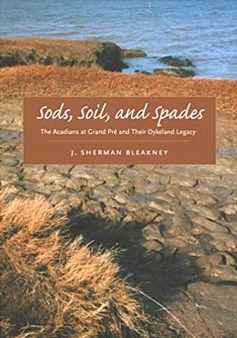
bookCover_SodsSoilSpadesThis discussion of the Language of Place took me back to my bookshelf. For Nova Scotia, I retrieved Sherman Bleakney’s book Sods, Soils and Spades: The Acadians at Grand Pre and their dykeland legacy. The word that triggered this search was aboiteau and its role in dykeland construction.
A second Nova Scotian author was Peter Sanger. In particular, I had enjoyed Spar: words in place ( check my blog Place in Words, October 31, 2018).

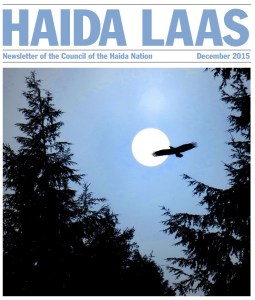
From time spent on Haida Gwaii, I found a back copy of Haida Laas, the newsletter of the Haida nation. (December 2015).BookCover_HaidaLassDec2015

Thinking in Haida. With a slip of the tongue describes a Haida language class. The class is studying Massett Songs, a collection of songs and stories recorded by anthropologist John R. Swanson and translated by John Enrico.

“Xaad Kil is highly directional, the language is constantly creating a picture of motion and place. Xaad Kil prioritized things like wind direction, water currents and one’s own relative location to the ocean.

“ Lost in translation.
Xaad Kil (Haida) Sahgwii ltl
Literal English
Upstream- Direction I’m going.
Colloquial English
I’m going up town

Explanation

To get downtown from Gaaw, you must travel upstream along Gaaw Kaahli (Massett Inlet). That’s why we say uptown and not downtown like city people. Explained by Rev. Lily Bell.”

Here is my thesis: the language of Place is shaped by the specific geography, e.g. Nova Scotia or British Columbia. It is also shaped by the rules of the language, in this case, either Haida or English.

Regardless of the language, we need to understand the underlying processes, i.e. landscape ecology. In Nova Scotia, we are influenced by our position on the North American continent; the different air masses and ocean currents. These influences are changing within the context of the climate crisis.

I would love to believe that changing our language would help. In practice, we have to deepen our understanding of the landscape, it’s history, ecology and the associated processes.

Acknowledgements

Edward Wedler and Heather Stewart for their thoughtful conversations.

References

Emergence Magazine. emergencemagazine.org
J.Sherman Bleakney. 2004. Sods, soil and spades. McGill Queens Press.
Haida Laas.Newsletter of the Council of the Haida Nation. December 2015. p.8
Peter Sanger. 2002. Spar: words in place. Gaspereau Press
Robert Maher. ernestblairexperiment blog. October 31, 2018. Place in words.

Posted in New thinking, Video Review

Rewilding the Annapolis Valley

This week was the end of the Apple harvest.appleHarverst2019_4b Brian Boates picked up eight bins for juicing in Woodville, before transporting it to Ironworks Distillery in Lunenburg. At the same time, I heard from Pierre that the first shipment of Hunter Brandy should be available later this month.

bookCover_wilding

On Wednesday, I stopped at Books Galore in Coldbrook. I found a revised edition of Wendell Berry’s A Place on Earth. Berry describes life in Port William, Kentucky. It was first written in 1967 and extensively revised in 1983. I also unearthed Thomas Raddall’s Memoir, In My Time.

Another place-related book was the discovery of Isabella Tree’s Wilding: the Return of Nature to a British Farm. This set me thinking about “wilding the landscape”. The primary inspiration was a pair of YouTube videos by George Monbiot and Alan Featherstone, describing the Rewilding Movement in the United Kingdom, especially in Scotland.


George Monbiot is a well-known columnist for The Guardian. The Rewilding message is a very positive one. It is to bring back species that were part of the landscape and to work with ecological processes in its recovery. In the Scottish Highlands, the main focus has been replanting native tree species.

The concept and philosophy could be applied to the Annapolis Valley. For example, in collaboration with the Clean Annapolis River Project (CARP) we could remove the tidal power dam at Annapolis Royal and allow the river and its Ecology to return to a pre-dam condition. We could also manage the runoff from the small communities and the surrounding farmland. With this type of action, it may be possible to reapply for heritage river status. This application was tried a couple of decades ago.

Monbiot, in his presentation, speaks to the palaeo-ecology in the British Isles. What would be the palaeo-ecology of the Annapolis Valley region, before the arrival of the settler culture? What have been the transformations of the landscape since the settlement of Annapolis Royal? What is the relationship between the marine environment and its ecology with the terrestrial landscape; in the past, pre-settlement era and today?

To develop an appreciation of these changes in landscape ecology, we must be able to map the ecology over time. This would make a remarkable research project for students and faculty at the Centre of Geographic Sciences (COGS), alongside the local NGOs.

Meanwhile, reading the latest AIRO newsletter I noted a reference to Royal Acres Estate and their Scottish Highland cattle and the MareGold Retreat Centre at Victoria Beach. Both supported by AIRO, these initiatives seem compatible with the Rewilding Movement in the UK.

Please check out the YouTube videos.

Acknowledgements

Nina Newington for the Isabella Tree reference. Jane Nicholson for her work at Annapolis Investments in Rural Opportunity (AIRO). Heather for help with the apple harvest. Edward for his continued graphics support.

References

Wendell Berry 1983. A Place on Earth. North Point Press.
Thomas Randall. 1976. In My Time. A Memoir. McClelland and Stewart.
Isabella Tree. 2019. Wilding: the Return of Nature to a British Farm. Pan MacMillan.
George Monbiot. 2016. Rewilding and its Place on the Global Development agenda.
Plymouth University. YouTube video.
Alan Featherstone. 2016. Presentation at Plymouth University. YouTube video (see above).