On Monday, we attended the Council meeting of the Municipality in Annapolis Royal. There was a motion before council for a Declaration of Climate Emergency. It was supported with a short presentation by Nina Newington from Extinction Rebellion. A sizeable gathering of citizens were in the Council chamber to witness the event. Of course, interest had been raised by Hurricane Dorian.
Tim Habinski, the Warden made the point that action on the ground happens at the municipal level. This is true, although it does require the collaboration of all three levels of government. This reminded me of a song by Dave Gunning from Pictou County. He performed at the Evergreen Theatre in Margaretsville the previous evening. The song was ‘These Hands’. These lyrics have been included in a children’s book. To be successful, we need ‘all hands on deck’.
That includes a wide array of citizen groups, as well as the educational institutions in the county. For example, David Colville at COGS has developed and maintained a network of climate stations throughout the Valley. Would that be a useful resource ?
Or if we want to monitor changes in land use, whether through natural events or human activities, we could use drone photography.
Or if we are concerned about changes in the coastal zone, we could use the LiDAR technology at AGRG ?
To slightly change the subject. This week at the North Mountain coffee shop in Berwick, I picked up a copy of Christy Ann Conlin’s new book Watermark. I wanted to see whether today’s authors are addressing the questions raised by rural society and its values ( in the spirit of Ernest Buckler).
Watermark is an interesting word. From Wikipedia,
“It is an identifying image or pattern in paper that appears as various shades of lightness/darkness when viewed by transmitted light. Watermarks are used to discourage counterfeiting.”
In Conlin’s work, it refers to a human quality that is inherent from upbringing. In my world, I think in terms of ‘watermarks’ on the landscape. For example, this week, we picked up thirty bushels of drops in the orchard, planted by Raymond Hunter.
As part of our background research into Hunter brandy, I received the following email from his son, Willy Hunter (September 16th.)
“Ray often said, that even when he planted trees when he was 80, he wouldn’t know who would harvest the apples, but someone would.”
Next week, we shall start picking from the trees.Heather and I are that ‘someone’.
Acknowledgements
Willy Hunter for sharing the rich stories of the Hunter family life in Clarence, Paradise and Lawrencetown. Heather for sharing the orchard work.
Edward is travelling in Cape Breton this week. We will add his graphics later.
Reference
Christy Ann Conlin. 2019. Watermark. Anansi Press.
 We started to reflect on the difference. ‘Connected’ suggests a network of relationships between the elements of our natural environment and the people and culture that lived on the land. ‘Rooted’ suggests more a sense of permanence, with both feet on the ground.
 We have been working with them to produce a product, ‘Hunter’s Brandy’. Raymond and Rona Hunter were early organic farmers in the Annapolis Valley. In the late ‘80s, Raymond planted a small orchard in Paradise, less than a hundred trees, primarily NovaMac and MacFree varieties with the occasional Liberty and NovaSpy. We took responsibility for the orchard around 2008. Initially, we would hand-press the apples into sweet cider for sale at the farmers’ markets.
 More recently, we have reached an agreement with Brian Boates in Woodville to juice the apples and then deliver the liquid to Pierre Guevremont at Ironworks Distillery, Lunenburg. This week, we conducted the final tasting of Hunter’s Brandy. It has been two years in the making. Look out for it at your local farmers’ market or take a drive over the top to Lunenburg on the South Shore.
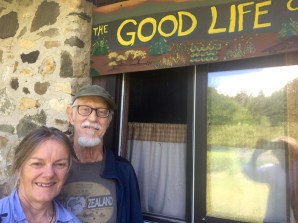
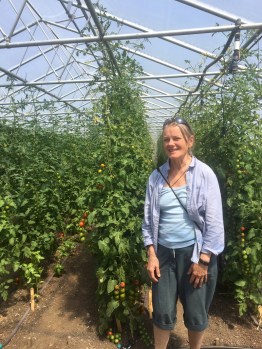
 This week, between Canada Day and Independence Day, we went down to Brooksville, Maine to visit Andrew, Julia and family at Julia’s Mothers house. Besides the kayaking, sailing and beach access we discovered a part of ‘the back to the land’ history.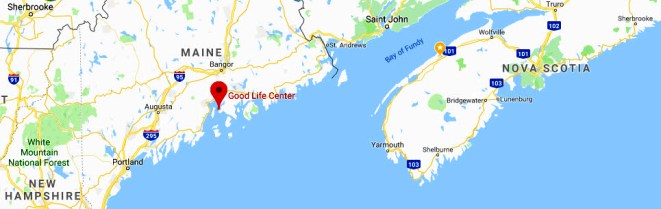
 For those interested, check out the following web site
  To get there is very simple. Take the Digby-St John ferry, drive to the Canada/US border at St Stephen/Calais. Take the Airliner, Route #9 towards Bangor. About two thirds along head south on #179 to Brooksville. Specifically, both The Good Life Centre and Four Season Farm are at Harborside.
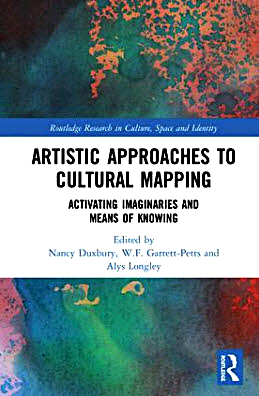 A couple of conversations caught my attention. The first was a chat about the conversion of a LiDAR-derived topographic landscape into a hooked rug. This resonated with a new book that I had signed out from the COGS library. Artistic Approaches to Cultural Mapping: activating imaginaries and means of knowing. The second conversation, with Ed Symons, related to my experience at the walk-in clinic in Berwick, looking for a doctor. There, I had picked up a brochure describing the process for 811 registration. Here was my question: why not allow communities to actively engage in the doctor shortage issue. Can we not map citizens who do not have a family doctor from the registry? Can we not map the communities where doctors are retiring? This would allow individual communities, without government oversight and control, to be
  Yesterday, Heather and I joined a group of about thirty woodlot owners for a field trip organized by the
 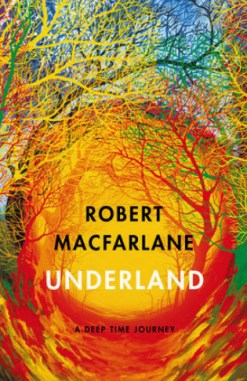 This week, I received emails, from my brother and Frank Fox, about the new book by Robert MacFarlane,
  In True North Rising, Whit Fraser describes meeting Mary Simon’s parents in the Arizona Desert (p.138). For nearly twenty years, the in-laws made winter camping trips. Bob May started work for the Hudson Bay Company at Arctic Bay, where he met his wife, Nancy. This story reminds me of the changes in technology, and its relation to elder travel.
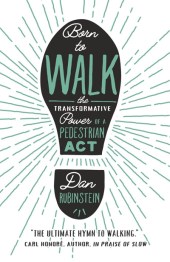 On our way North, we had a stopover in Ottawa. This was our chance to visit an urban Chapters bookstore. I picked up Dan Rubinstein’s
  Click on any numbered site to see details of when paint-out is/was scheduled.
 They mentioned the following objectives:
 In an earlier blog post (
 The next step in my David Manners research has been to track down his writing, after he moved to California, after the second world war. Fortunately, courtesy of Amazon, I am able to order David Morgan Jones (ed) The Wonder within You: From the Metaphysical Journals of David Manners and Awakening from the Dream of Me.
 Manners died in Santa Barbara, aged ninety-eight in 1998. I hope to find them in my mailbox when we return from Iqaluit.
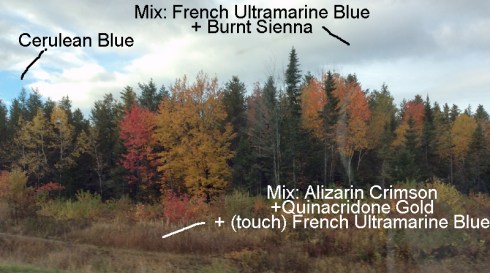 The sky wasn’t just overcast or sunny. The sky was a mix of Burnt Sienna with a touch of French Ultramarine Blue or was a variegated wash from Cerulean Blue to Cadmium Yellow. We were not just engulfed in fall foliage of colours. Hills became brushstrokes of Alizarin Crimson, Quinacridone Gold (I love that colour) and Prussian Blue.
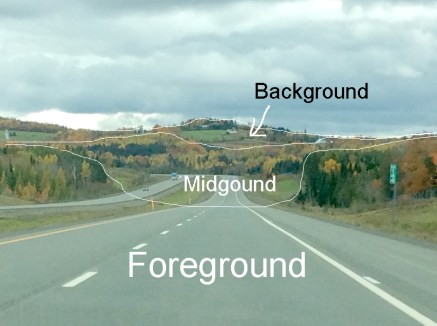 We divided the landscape into zones (foregrounds, mid-grounds, and backgrounds) and described how we would paint aerial perspective, “treat edges” and change tonal contrasts, to give a sense of distance.
 Many times we would identify a focal point in the landscape (almost with “eye-spy-with-my-little-eye enthusiasm) and would suggest ways to direct viewers’ eyes to that point. Would it be the slope of the hills, the line of our winding road, edges of forest stands or the illumination of light breaking through the clouds? How would our favourite artists, or The Group Of Seven treat that focal point?
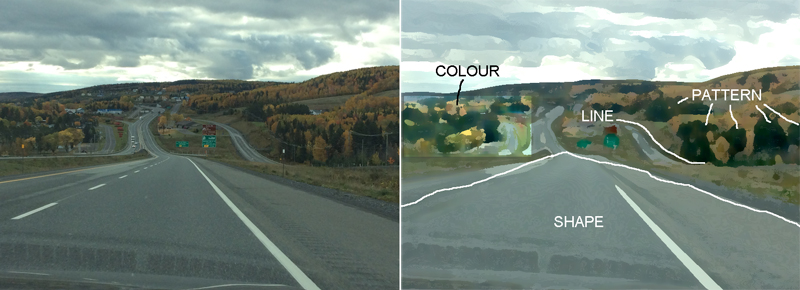 As we drove, we unpacked our landscape NOT in terms of “things” (such as houses, fence rows, barns, silos or cows) but in terms of shape, line, colour, patterns, gradation and composition. We became exhilarated, as artists, to not only view the landscape but to offer ways to interpret the landscape — whether it be as a realist, impressionist or abstract artist — in oils, acrylics, watercolours or inks.
 POSTSCRIPT:
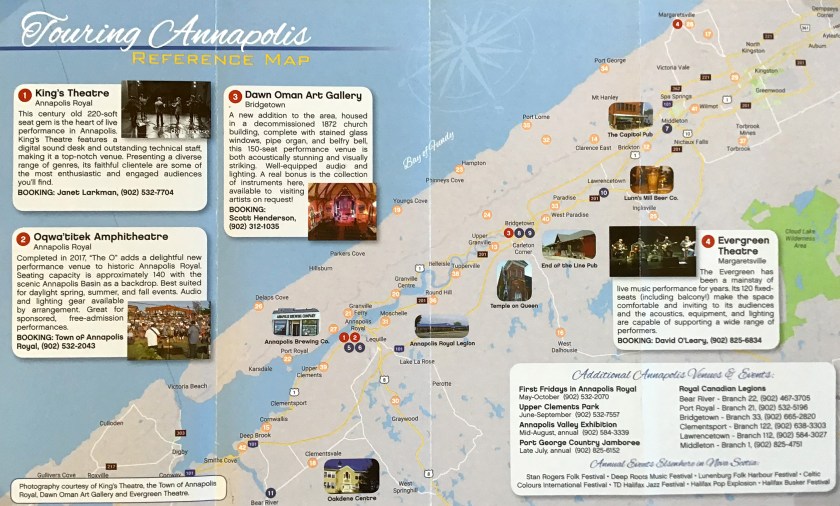 There are several examples of positive outcomes from this relationship e.g. MapAnnapolis, as well as local innovations. This week, I received a copy of Touring Annapolis, Venue guide for Artists produced by
 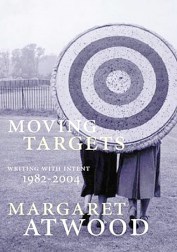 On the Ernest Buckler front, I want to share a couple of books that crossed my desk this week. Margaret Atwood published Moving Targets, Writing with Intent 1982-2004. It includes two essays that struck a chord.
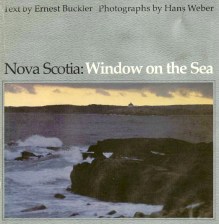 The second book is Nova Scotia: Window on the Sea. It combines a text by Buckler with photographs by Hans Weber. While the text and photography can stand alone, it would be interesting to see a map of the photo locations. The book was published in 1973 – forty-six years ago. Perhaps we need an updated photographic version for the fiftieth anniversary.
 This week, courtesy of the Internet, I received
  The other recent challenge was the French cooking at the
 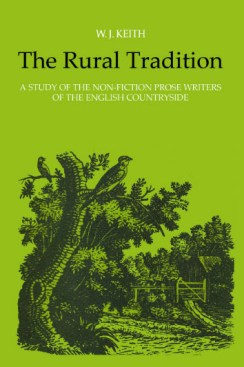 In attempting to understand ‘rural’. I pulled off the bookshelf, The Rural Tradition, written by W J Keith, Professor of English at the University of Toronto.
 Ernest Blair Experiment