After watching TV yesterday, we took a drive down to Kejimkujik National Park. Highway #8, from Annapolis Royal to the Park, was empty. We wanted to see if we could rent a canoe from Whynot Adventure at Jakes Landing. Not until May 19th.
Driving Highway #8, we were surprised by the amount of standing dead (from fires), clearcut and blow down. A wasted resource. the National Park remains a ‘pristine’ island.
This week I started reading again; Flower Hunters (see post Reading List); the chapter on Joseph Banks (1743-1820).
Banks sailed with Cook on the Endeavour in 1768. Banks was 25. He had studied Botany at Oxford. Banks collected more than 1300 new species and discovered 110 new genera. Banks was only 35 when elected President of the Royal Society.
“ We only have space here, though, to look at his legacy he bequeathed to botany by developing Kew Gardens into the leading botanical institution in the world, encouraging the activity of plant hunters and promoting the use of plants from different parts of the globe in new locations where they could bring economic benefits.” p.94.
Heather and I attended Cindy Staicer’s talk on birds at risk at the ArtsPlace, Annapolis Royal. We had the chance to view the exhibition in the Chapel Gallery. I particularly enjoyed Wayne Boucher’s display ‘Healing Skull Lichens’.
Acknowledgements
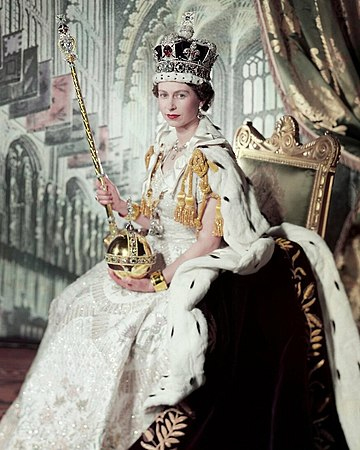
Heather shared the road trip to Kejimkujik Nationsl Park. She set the alarm for 5 am on Coronation morning. Edward added the graphics.
References
Mary Gribbin and John Gribbin, 2008, Flower Hunters, Oxford University Press.
Having been back in the Annapolis Valley for a couple of days, it was time for second thoughts. While away in Toronto, I did not feel much like reading. Perhaps, I found too much interaction in the city.
It is a tremendous example of ‘buy local’, offering a wide variety of farm products, including several different varieties of cider. We exchanged books by Merilyn Simonds (Woman, watching) and DJ Wiseman ( The Death of Tommy Quick and other Lies).
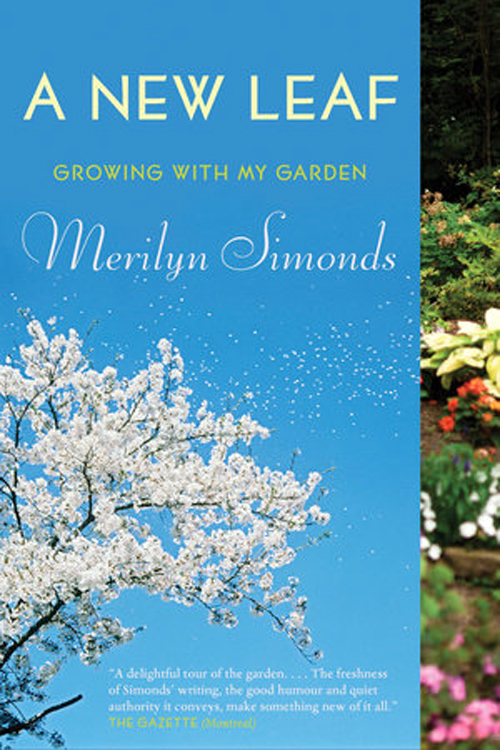
Later in the day, I stopped at the Lawrencetown library to request through interlibrary loan two other books by Simonds (Gutenberg’s Fingerprint and A New Leaf. I had been impressed by both her writing style and the detailed research in Woman, Watching.
I dropped off my chainsaw at Green Diamond, Middleton. I hope that I will be able to get it started again. Unfortunately my left arm remains weak.
From The Reader, I note that Cindy Staicer is speaking this week on Forest Birds at Risk and how we can help, at the Arts Place in Annapolis Royal. This is part of an exhibition ‘For the Love of Lichens and Old Forest’, sponsored by the Arlington Forest Protection Society, as part of the Save Our Old Forests (SOOF) campaign.
With a change in weather, Heather and I are looking forward to catching up on our gardening.
The other second thought relates to access to technology. From Toronto, I realized the need to improve my use of cell phones. Fortunately, CORAH is offering a tech talk on the topic, Wednesday, May 24th.
Acknowledgements
Sandra Barry offered insight into the relationship between writing and place. Heather is looking to turn a new leaf. Edward added the graphics.
“During the Summer of 1964, from the end of June until the end of August, I was a field assistant at the McGill Sub-Arctic Research Laboratory at Schefferville, Quebec …”
In 1964, I was in my second year of my B.Sc (Hon) degree in Geography at the University of Birmingham. This letter was sent to The Lamp, the school magazine at Chiswick Grammar School for Boys. It was sent to me this week by Andrew Ronay, an old school friend, who had retained a copy.
Last Thursday, Heather and I attended the Kings Edgehill School IB Arts Show in Windsor.
Heather’s sister Sandy is the Art teacher. Afterward, we went to Bent Ridge Winery. From the patio, we could see the white, ski runs at Martock. I had not fully appreciated the local geography before.
From Sandra Barry, I received the link to an online presentation by Merilyn Simonds on her book ‘Woman, Watching’.
Of particular interest to me was her other writing: ‘A New Leaf: growing my garden’ and ‘Gutenberg’s Fingerprint’. In the video, she also referenced her latest non-fiction ‘Still Life with Beth’ (to be published).
These three experiences lead me to the following observations. I was struck by the contrast. Between my grammar school education in England, over sixty years ago, and the private school, multi-national program offered at KES in Windsor. I then contrast the lifelong learning described by Merilyn Simonds. In this case, a woman (Beth) and her life between 70-100 years.
How do we share our experiences with the next generation (or two, or three)? What do we gain from teaching the next generation, given the changes in society, and technology? Does a teacher ever retire? Or are they simply transformed into an elder? Or a watcher?
Postscript
Sandra Barry forwarded to me a blog by Sarah Emsley ‘Old Rusty Metal Things’. I thought it was relevant to this discussion.
Acknowledgements
Andrew Ronay forwarded the ‘Letter from America’ text in the Lamp. Sandy Stewart invited us to the IB Art Show. Sandra Barry shared the link to Merilyn Simonds’ presentation. Edward added the graphics and links. Heather shared both the Art Show and watching the Simonds video.
Reference
Merilyn Simonds video presentation on her book ‘ Woman, Watching’.
i sign, opposite Beaver Creek vineyards. NTMK is a software development/consulting company. They have purchased the River Bend Cranberry building. This was previously operated by Don Taylor. The pond is still there.
This caused me to reflect on the various software development, programming and consulting businesses in the Lawrencetown community of Annapolis County.
In Lawrencetown, Lynn and David Roscoe maintain their SKE Inc business. Brian Reid operates a health services software shop, BriTech Information Systems. Now we have NTMK.
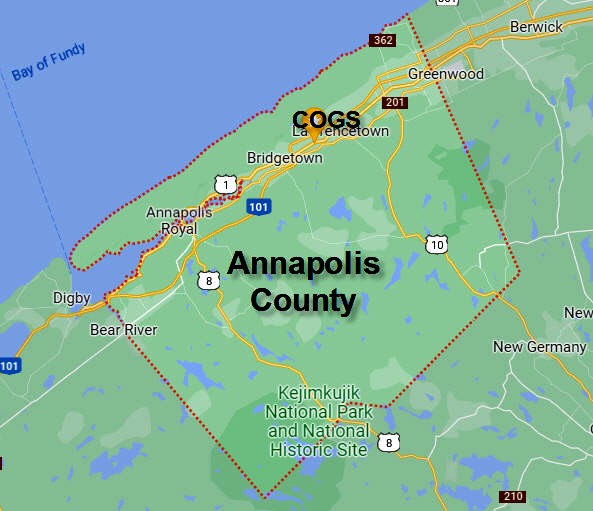
If I go back to the 1980s, we delivered intensive programs at COGS in Scientific Computer Programming, Business Computer Programming, Computer Graphics and GIS programming. A number of key graduates/instructors remain in the County: Barry Mooney, Roger Mosher, David Colville, and Kevin Bauer; choosing to live in a rural community, and apply their programming/software design skills.
There is certainly room for these skills to be applied to ‘community economies’ (see Community Economies“).
Perhaps, it is also time for the NSCC (COGS) to reintroduce some of these intensive programs, in support of the surrounding rural communities.
Acknowledgments
Thanks to my earlier co-workers at COGS: Barry Mooney, Roger Mosher, and David Colville who still reside in the County. Heather shares country living. Edward adds his artistic touch.
It was 1980 when I joined the Nova Scotia Land Survey Institute (NSLSI) to teach Scientific Computer Programming (SCP) with Bruce Peveril. Bruce was primarily responsible for computer languages. I was responsible for the applications. The administration at the Institute had recognized the need for computer technology in their current programs.
Over the next few years, we added Business Computer Programming, Computer Graphics, GIS programming, and Business Geographics. By 1986, we had three departments: Computer Programming, Cartography and Planning, and Surveying. It was time to change the name from Land Surveying to Geographic Sciences, thus the College of Geographic Sciences (COGS).
In terms of content, there was recognition that there was new software for GIS and Image Analysis. Edward Wedler was teaching Remote Sensing, along with Manou Akhavi. It was important to be able to customize the software. The relationship with the private sector included ESRI, DIPIX, and later PCI. The second realization, reflected in the curriculum, was major cooperative projects with industry and government partners. These projects demonstrated the application of technology to real-world problems, including Forestry, Geology, Statistics Canada, Health Sciences, and more.
The emphasis was on geographic science, and less on technology. Over time, there were changes in the academic community; Surveying, with its link to the University of New Brunswick, became more aligned with Geomatics Engineering.
My background is a Ph.D. in Biogeography under Dr. Michael Goodchild at the University of Western Ontario and later teaching at the Memorial University of Newfoundland in the Geography department. Geographic Science encompassed Physical Geography, Human Geography, Cultural Geography, Historical Geography, Economic Geography, Fisheries Geography, and Cartography. Through John Wightman, Vice-Principal at COGS, we were connected to Roger Tomlinson,’ Father of GIS ‘ in Canada.
After the Centre of Geographic Sciences (COGS) became part of the Nova Scotia Community College (NSCC), the emphasis was more on technology and less on the landscape. Surveying remained focussed on property boundaries. I left COGS and joined the Dalhousie EMDI project in Indonesia, subsequently, joined ESRI in California and later the Ontario Ministry of Natural Resources, working with Sir Sanford Fleming College on GIS education with Tim Easley.
When I returned to COGS in 2000, the emphasis was on Applied Geomatics research. This was a period when the focus shifted more toward technical employment skills.
What is the situation at COGS today?
a) are there still three departments? Computer programming? Cartography and Planning? Surveying?
b) do we still teach the application of geographic technologies to a wide range of landscape issues?
c) what has happened to the use of GIS technology in municipal planning, health planning, agriculture, forestry, and biodiversity studies?
d) do students still undertake projects with business and government agencies on the best application of these computer-based technologies to the landscape (seascape)?
e) what has happened to our knowledge of the landscape? To the different cultures and species who share this landscape? What are the impacts of climate change?
Postscript
We were at the Bookmark on Spring Garden Road, Halifax. Heather bought me an early Christmas present. Barry Lopez, posthumous book of essays,’ Embrace fearlessly THE Burning World’. Last night, I read the essay, ‘An Intimate Geography’. At the same wonderful store, I found the Harry Thurston poem ‘Icarus, Falling of Birds’, photography by Thaddeus Holownia.
’On the night of September 13th, a flock of songbirds on their migratory journey south was attracted ‘like moths to a flame’ to a hundred-foot-high flare at the Liquified Natural Gas Plant in Saint John, New Brunswick. The result was tragic, with 7500 to. 10,000 birds of twenty six species – being killed by the heat and the flames’.
References
Barry Lopez. 2022. Embrace Fearlessly THE Burning World. Essays. Random House.
Harry Thurston. 2022. Icarus, Falling of Birds. Photography by Thaddeus Holownia. Anchorage Press.
Earlier in the Summer, I noticed that recreational vehicles (RVs) were stopping overnight at Lunn’s Mill on Carleton Road, outside of Lawrencetown (Hwy #201).
This week, I made my regular beer run to pick up growlers of Brickyard Red.
”Producers throughout Canada welcome and share their passion with member travellers.”
This information meshed with an email from Edward Wedler. Edward had been approached by the Valley REN to share his passion for Plein Air Art. Combine these with the work of Celes Davar at Earth Rhythms and I can see an alternative model for the Creative Rural Economy in Nova Scotia.
Yet, contrast these ideas with the current destructive economy of Nova Scotia, whether mining (Goldboro), fisheries, or forestry ( just look at this Weekend Chronicle Herald).
What are some of the differences?
Ecologically sustainable relationship between the people and the land/sea/air.
Valuing the creativity of the people whether artists, writers, musicians, farmers, chefs, wine-makers etc.
A different set of values between community members and the landscape. This is long overdue.
In my estimation, exactly the values that should be an integral component of the curriculum at the Centre of Geographic Sciences (COGS), NSCC in Lawrencetown.
Postscript
My son, Andrew, borrowed my Honda CRV to take some family possessions down to Maine. He left us with the RV. We could Terego at Lunn’s Mill.
Acknowledgements
Kudos to Chantelle and the team at Lunn’s Mill and The Station. Edward and Celes for espousing these values.
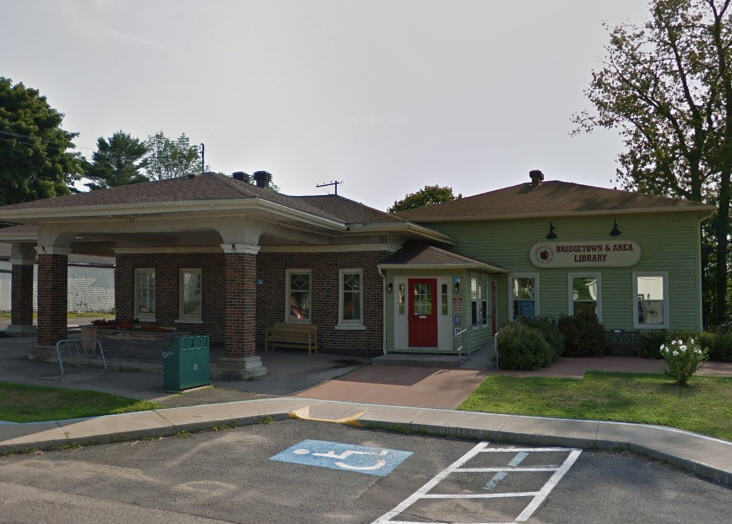
Saturday, we stopped at the Bridgetown library. You can pick up, for free, back issues of magazines. I found the New Scientist. It reminded me of my school days at Chiswick Grammar School for Boys.
In the evening, I shared a beer with John Wightman. We walked down to his neighbour’s dock on the Annapolis River. As we sipped, a river boat came up from Annapolis Royal’s direction and turned round at Jubilee Park.
It reminded me of Summer Institutes at COGS in the 1980s. We would rent a boat for a trip down the river towards Annapolis Royal. Always an enjoyable adventure through the rural landscape, between North Mountain and South Mountain.
This week, Heather and I met Rocky and Debbie Hebb for breakfast at Shakes on Main, in Lawrencetown, run by CRIA, only to discover the restaurant closes for good, Friday this week (29th). Given the Annapolis County Exhibition in August, it is unfortunate for the local economy that both the Wine Makers tavern and the only restaurant in the village are closed.
There was also notice this week that Municipal staff are being relocated from Lawrencetown to Annapolis Royal. Meanwhile, the Centre of Geographic Sciences (COGS) is in Summer mode and looking for student accommodation.
I can recall COGS operating forty-eight weeks per year (three 16-week semesters) and offering a Summer Institute. How things have changed!
From the Marginalian are Beatrix Potter’s little-known scientific discoveries
“Potter soon began conducting her own experiments with spores she germinated herself. She was particularly captivated by lichens, considered at the time ’the poor peasants of the plant world.“
Acknowledgements John Wightman shares my memories of COGS and a good beer. Rocky and Debbie Hebb for our last breakfast at Shakes on Main with Heather, and myself. Edward has been away plein air painting on the South Shore. Hence any delay in the blog post.
Anne Crossman’s column focused on the buildings. Whereas the lead article, Generational Duty, emphasized the work of Avery Jackson and the Clarence Community Club, restoring the United Baptist Church and the Clarence East school.
Here we are thirteen years later, and a local student recognizes the opportunity from this collaboration.
How many students have followed this path?
It builds on the one-year technology diploma at COGS and allows the graduate to apply their technical skills to a significant problem at Acadia University in the second year.
This is not dissimilar to the original one-year diploma at COGS in the 1980s. In that case, it was a three-semester program, culminating in a cooperative project.
Avery’s example shows that post-secondary education is available in a rural setting. If we are to change the relationship between rural and urban Canada, we need more examples where students can learn and apply their skills in a rural context. This was well understood by Major Church and JB Hall. It does require a willingness for collaboration between the community college and the universities.
Many of today’s global issues occur in a rural setting, whether agriculture, forestry, fisheries or planning, within the context of climate change, changing demographics, transportation, and new employment models.
A simple first step would be to provide a list of graduates from this institutional collaboration. What type of projects did they complete for their thesis? Where are they now?
Clearly, the Register article on Avery Jackson illustrates the recognized potential for these graduates in rural Nova Scotia, and beyond.
Acknowledgements
Appreciation to faculty at COGS and Acadia who have kept this option alive. Edward added the graphics. Anne Crossman expressed her interest in our historic infrastructure.
Postscript
From David Colville. After tomorrow’s graduation, I think there will be about 32 students that have completed the MSc Applied Geomatics program. A few more are somewhere along the completion process.
Last weekend, I met with John Wightman for a beer. As we reminisced on the state of provincial and municipal politics, John offered up the quote from Major J.A.H. Church, founder of NSLSI (Nova Scotia Land Survey Institute) almost 75 years ago:
”Never Retire.”
John, himself, is a wonderful example of this motto. After finishing employment at COGS, John continued his interest in mineral exploration and has discovered that the geology of Nova Scotia provides numerous opportunities for the prospector, whether in gold or other valued elements, including lithium and molybdenum.
With the federal budget last week, provinces are realizing the importance of these minerals to the country, in a changing global economy. John’s business interests continue to be supported by the technical skills of Mike Donnelly and David Raymond, both previous instructors at COGS.
I take Major Church’s motto to heart. Likewise, I continue to find that the landscape and people of Nova Scotia offer a richness and diversity that can support our population into the future.
Today (Wednesday) I received Axiom News, inviting me to attend Cultivating Connection, Practicing Relational Presencing, on Good Friday.
Meanwhile, my reading desk contains: Donald Sturrock, Storyteller: the authorized biography of Roald Dahl. Torbjorn Ekelund, A Year in the Woods: Twelve small journeys into Nature.
Coltsfoot (left), Blue Scilla (right)
Walking through our property to the West Inglisville road, I noticed a first sign of Spring, the yellow flowers of Coltsfoot (Tussilago farfara) on the side of the gravel road. At John’s house, he has a wonderful display of blue Scilla flowers in bloom, under a large White Oak.
Postscript 1
Imagine the resource at COGS, if they embraced Major Church’s motto. Do away with ’ageism’. It boggles the mind.
Postscript 2
Just watched British Columbia Knowledge Network, Tugan Sokheiv conducts Alison Balsom. It raises the question: what would it be like to work in an environment like a symphony orchestra? Everyone has a particular instrument skill. Together, they produce a symphony. Wonderful collaboration!
Acknowledgements
John Wightman for setting a ’gold standard’. Frank Fox for the Ekelund reference.
Heather continues to keep my biogeographic interests alive. Edward added the graphics.
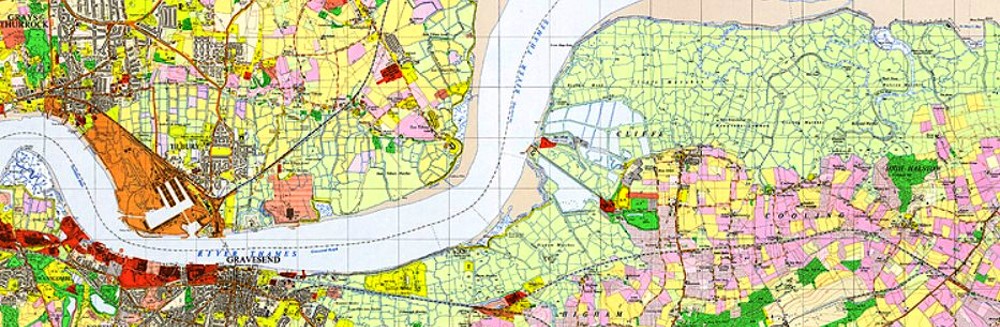
Second Land Utilisation Survey of Britain Directed by Alice Coleman, Gravesend, (Sheet 207)
The challenge of land use mapping came to mind within the context of understanding agricultural land use in Annapolis County. If we wish to promote agriculture in this part of the Annapolis Valley, a first step is to understand the existing land use.If the next generation wishes to expand agriculture or agricultural tourism, we need to know what we are growing, and where.
Recently, in a meeting, Brian Arnott floated the idea of a ’digital 4H’. What would it take to empower 4H members in the Valley to apply current geographic technologies (and “Learn by Doing”)?
At COGS we have access to range of technologies from Cartography, GIS and Remote Sensing.
We could take an idea from Kent Thompson’s book ’Biking to Blissville’. For each ride, he provides a context, where to stay, and a map of the ride. It is easy to imagine with the completion of a current land use map we could develop an experiential tourism guide which not only describes the agricultural land use but highlights places to stop, to sample different products of the landscape, provide information on seasons, hours of opening etc. — for example, road side stands, U-pick operations, local restaurants, breweries.
This type of mapping should not be limited to Annapolis County. It should certainly extend to Kings County and the ’Harvest Highway’, and could indeed be a provincial initiative.
Given the historical experience in Britain, there is a high probability that geographers elsewhere have developed similar applications using current technologies. It is the potential access to resources at COGS which makes the idea so appealing.
The creation of a new family of digital land use maps would follow in the tradition of the A.F. Church wall maps from over a century ago (see blog post HERE).
It would focus attention on the landscape of rural Nova Scotia. It would engage 4H and the staff and technology resources at the Centre of Geographic Sciences (COGS). Go COGS go !!
Postscript
This is written in New Glasgow. I have just discovered the latest issue of Ah! At Home on the North Shore. It includes the article: Little Shop of Treasures: Bidding Farewell to Water Street Studios, Pictou (see blog post “Travels with Heather“).
As we entered New Glasgow along the Abercrombie Road, I speculated on the location of the new Gordonstoun Nova Scotia school. Too early to tell.
Acknowledgements
Brian Arnott, Leslie Wright, John Wightman provided a context for these ideas. Rachel Thevenard and David Colville exemplified the context. Heather found the Kent Thompson book. Edward added his magic touch.













 Ernest Blair Experiment