Posted in biographical sketch

Twice to Annapolis Royal

Heather and I attended two venues in Annapolis Royal this week. On Tuesday, we went to Frances Anderson’s talk on Lichens. It was part of the Save Our Old Forests (SOOF) program. We were fortunate to pick up a copy of her field guide Common Lichens of Northeastern North America.

This brought back good memories from 1977. I was employed at the National Herbarium in Ottawa to work on the rare plants project with George Argus (willows). Other resident scientists were Irwin Brodo (Lichens), Robert Ireland (Mosses), James Soper, Jack Gillett and AE Porsild. Consequently, our basement is full of their publications (see also previous post “Enlightenment“).


On Wednesday, we went to watch the documentary The Quiet Epidemic, at the King’s Theatre, in partnership with the Nova Scotia Lyme Advocacy Group. This proved to be a somewhat distressing movie. By 9:30 pm we were ready to hit the road home.

Today, Thursday, we regained our perspective, following the Bridgetown Walks route from Jubilee Park, along the railway tracks to the High School.

Returning via Centennial Drive. Stopping downtown for a coffee, and drop in to Endless Shores Books. Heather could not resist The Garrett Bluenose Patterns. Celebrating Nova Scotia’s Rug Hooking Heritage. Garrett was a store by the river bridge in New Glasgow. Heather remembers it well from her daily walks to school.

Acknowledgements

SOOF and Kings Theatre for their interesting venues, Heather for her company and Edward for his graphics.

References

Troy McMullin and Frances Anderson, 2014, Common Lichens of Northeastern North America: A Field Guide, NY Botanical Gardens Vol 112.

The Teachers Branch, Rug Hooking Guild of Nova Scotia, 2022, The Garrett Bluenose Patterns, Nimbus.

Documentary. The Quiet Epidemic: as close as your backyard, Plus Q and A with NS Lyme Advocacy Group, May 17, 2023, Kings Theatre.


Posted in Book Review

New Reading

This week has ended on a high note. After car inspection at Kings County Honda in Kentville, we went to Tides Contemporary Art Gallery.

They had on display three books by Dick Groot: one on the closure of Minas Basin Pulp and Power; a second — more biographical — on his interest in photography. I picked up the third, “Come from Away: Artists of the Minas Basin”. Dick photographed twelve local artists, all drawn to the Bay of Fundy landscape. He also references the poet John Herbin and the collection, The Marshlands and the Trail of the Tide. Herbin lived here from 1860 to 1923(see previous post “Canning Trip“)

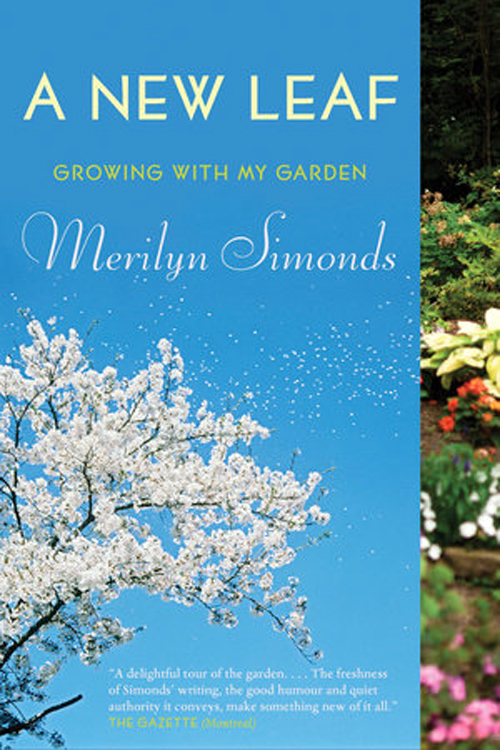
Through Lawrencetown library I received two books by Merilyn Simonds. Gutenberg’s Fingerprint and A New Leaf. Since I am only part way through the first, I passed A New Leaf to gardener, Heather.

Gutenberg’s Fingerprint has a similar style to “Woman, Watching”. It interweaves the personal experiences of the author within the context of the book theme ‘Paper, pixels and the lasting impression of books’. To date, I am at the paper stage. How paper was invented and used through the ages. This reminded me of the look and feel of the books published by Gaspereau Press. Another hidden jewel in Kentville.

We closed off the week with the purchase of a growler of Brickyard Red at Lunn’s Mill. This will sustain us, this weekend, after the drive to New Glasgow, for our regular family visit.

Postscript

From Nicholas Hoare, Toronto bookmark:

A Taste for Books is the Pleasure and Glory of my Life. I would not exchange it for the Riches of the Indies.

Acknowledgements

I look forward to Heather’s review of A New Leaf. It describes Simonds garden, outside of Kingston, Ontario.

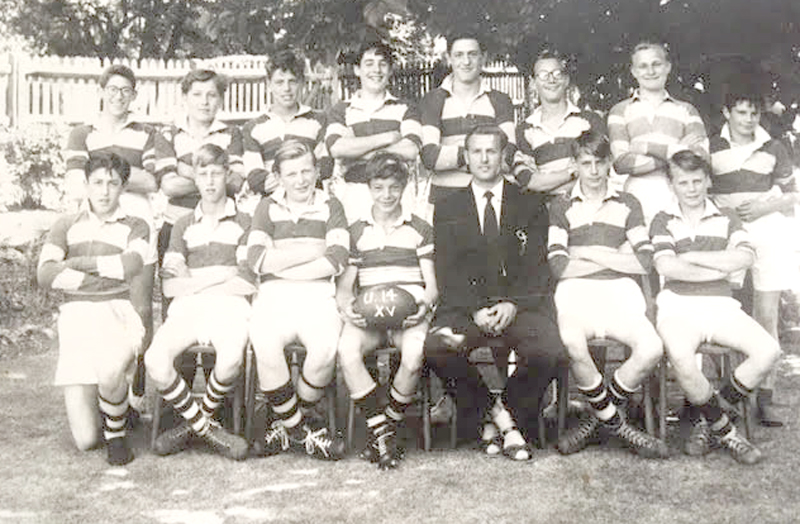
Andrew Ronay sent me a photograph of the Under 14 rugby team at Chiswick Grammar School, shot in 1958 (Which one is the author?).

Edward applied his graphics talent.

References

Dick Groot, 2012, Come from Away: Artists of the Minas Basin, a documentary of a little known migration, Light Through Studio.

Merilyn Simonds, 2017, Gutenberg’s Fingerprint: paper, pixels and the lasting impression of books, ECW.

Merilyn Simonds, 2011, A New Leaf: Growing with my Garden, ECW.

Posted in Opinion

Joys of Technology

This week has been challenging, living in the country. Because we were away last Fall, I have not kept abreast of the systems that support rural living: house security system, water purification system. In addition, while in Halifax, I purchased a mobile phone to be cell phone compatible with Heather.

This challenge was heightened when we suffered a scamming attack. (Scamming cartoon by Edward)

Some lessons.

  1. have access to next generation technical support.
  2. develop a system for maintaining passcodes.
  3. there is a gap between the use of technology and access to educational programs on the technology, especially for elders. There are some resources from the Library and NSCC (CORAH).

On the positive side, through interlibrary loan, I received notice of Merilyn Simonds “Gutenberg’s Fingerprint”. And, on another positive note, from The Grapevine, I see that photographer Dick Groot, is the new gallery artist at Tides Contemporary Arts Gallery in Kentville. Dick had a career in Geomatics with ITC, Enschede in the Netherlands.

Heather remains enthralled by the new plantings in the greenhouse, especially the herbs. For inspiration, she is reading “The View from Great Dixter: Christopher Lloyd’s Garden Legacy”. (From Lawrencetown Library).

Postscript

Windsor Salt is on strike. We checked all stores between Lawrencetown and Greenwood. No salt for purification systems.

Acknowledgements

Heather and I have been busy outside in the garden, enjoying the physicality and the changing temperatures. Weeding offers a respite from the technological woes. The Z-track started first time, for mowing the lawn. The chainsaw has been serviced. Must see if I have the strength to get it started.

Peter McAllister came by the house and helped resolve the security system issues. Edward added the graphics.

References

Merilyn Simonds, 2017, Gutenberg’s Fingerprint: papers, pixels and the lasting impression of books, ECW Press.

The View from Great Dixter, 2010, Timber Press Portland, London.

Posted in Opinion

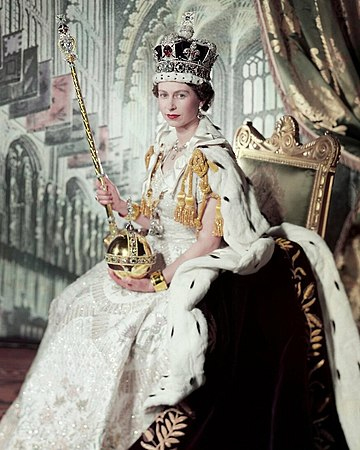
Post-Coronation

Yesterday (6th, May) I was reminded of the Queen’s coronation in 1953.

(Official coronation portrait taken by Cecil Beaton)

I was at Nelson Road Primary School, Whitton, Middlesex. We had an excellent celebration tea. Peter, my brother, reminded me that we saw the coronation on our first TV at home.

After watching TV yesterday, we took a drive down to Kejimkujik National Park. Highway #8, from Annapolis Royal to the Park, was empty. We wanted to see if we could rent a canoe from Whynot Adventure at Jakes Landing. Not until May 19th.

Driving Highway #8, we were surprised by the amount of standing dead (from fires), clearcut and blow down. A wasted resource. the National Park remains a ‘pristine’ island.


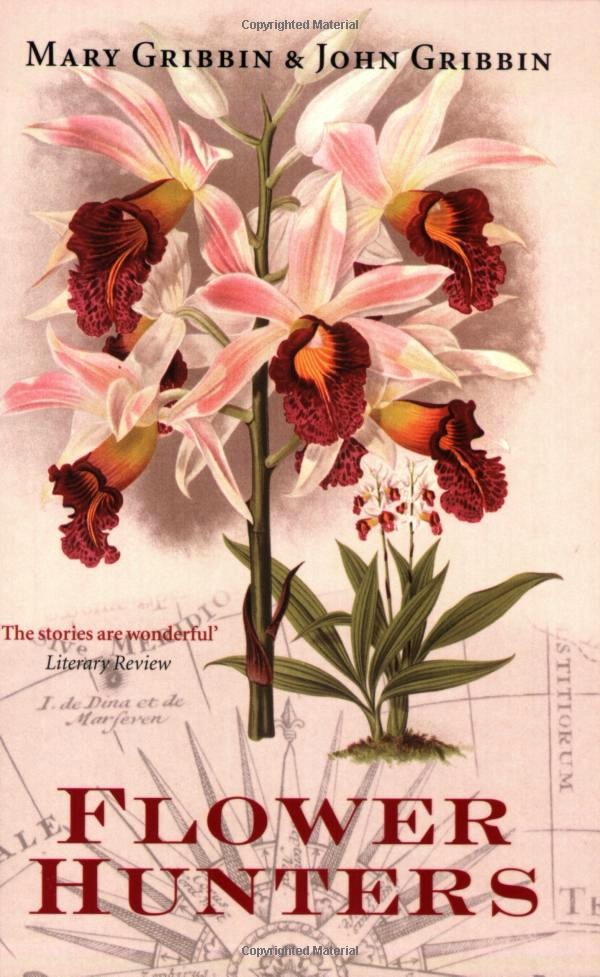
This week I started reading again; Flower Hunters (see post Reading List); the chapter on Joseph Banks (1743-1820).

Banks sailed with Cook on the Endeavour in 1768. Banks was 25. He had studied Botany at Oxford. Banks collected more than 1300 new species and discovered 110 new genera. Banks was only 35 when elected President of the Royal Society.

We only have space here, though, to look at his legacy he bequeathed to botany by developing Kew Gardens into the leading botanical institution in the world, encouraging the activity of plant hunters and promoting the use of plants from different parts of the globe in new locations where they could bring economic benefits.” p.94.

Kew Gardens is near Richmond, Surrey and Whitton, Middlesex UK (see post The Royal Landscape).


Heather and I attended Cindy Staicer’s talk on birds at risk at the ArtsPlace, Annapolis Royal. We had the chance to view the exhibition in the Chapel Gallery. I particularly enjoyed Wayne Boucher’s display ‘Healing Skull Lichens’.

Acknowledgements

Heather shared the road trip to Kejimkujik Nationsl Park. She set the alarm for 5 am on Coronation morning. Edward added the graphics.

References

Mary Gribbin and John Gribbin, 2008, Flower Hunters, Oxford University Press.

Exhibition at ARTSPLACE Gallery, For the Love of Lichens and Old Forests, Group Show May 2 June 24, 2023.

Posted in Opinion

May. Second,Thoughts

Having been back in the Annapolis Valley for a couple of days, it was time for second thoughts. While away in Toronto, I did not feel much like reading. Perhaps, I found too much interaction in the city.

Today, we met Sandra Barry at the Spurr Brothers Farm in Wilmot.

It is a tremendous example of ‘buy local’, offering a wide variety of farm products, including several different varieties of cider. We exchanged books by Merilyn Simonds (Woman, watching) and DJ Wiseman ( The Death of Tommy Quick and other Lies).

Later in the day, I stopped at the Lawrencetown library to request through interlibrary loan two other books by Simonds (Gutenberg’s Fingerprint and A New Leaf. I had been impressed by both her writing style and the detailed research in Woman, Watching.

I dropped off my chainsaw at Green Diamond, Middleton. I hope that I will be able to get it started again. Unfortunately my left arm remains weak.

From The Reader, I note that Cindy Staicer is speaking this week on Forest Birds at Risk and how we can help, at the Arts Place in Annapolis Royal. This is part of an exhibition ‘For the Love of Lichens and Old Forest’, sponsored by the Arlington Forest Protection Society, as part of the Save Our Old Forests (SOOF) campaign.

With a change in weather, Heather and I are looking forward to catching up on our gardening.

The other second thought relates to access to technology. From Toronto, I realized the need to improve my use of cell phones. Fortunately, CORAH is offering a tech talk on the topic, Wednesday, May 24th.

Acknowledgements

Sandra Barry offered insight into the relationship between writing and place. Heather is looking to turn a new leaf. Edward added the graphics.

References

Merilyn Simonds, 2012, A New Leaf: growing with my garden, Penguin Random House.

Merilyn Simonds, 2017, Gutenberg’s Fingerprint: papers, pixels and the lasting impression of books, ECW Press.

Posted in biographical sketch

Home Run

In Toronto, we had to get the car serviced before leaving for Nova Scotia. We retraced our route. Enjoying the drive on Highway #7 from Peterborough to Madoc, down south to Belleville. It was a long day on the Highway 401, Route. 20 East through Montreal. Late evening, we again stayed at the Howard Johnson in Woodstock, New Brunswick.

Today, Sunday, we were up early, truckers breakfast at Murray’s and arrived home in Paradise, Nova Scotia, mid-afternoon.

While in Toronto, we visited Allan Gardens Conservatory.

Afterwards, we walked to the House on Parliament for lunch and a beer with my brother, Peter.

On another day, we wanted to find Just Be Woodsy (see my blog post Home Place). We were staying at Julia’s house at Kingston Road and Warden Avenue. It seemed like a simple walk North to 772 Warden Avenue. In fact it was a two hour Return walk.

Our rationale, our neighbours in Paradise, NS, who bought Andrew’s farm, across Highway #201, Rob Jarvis and Sinead Wills own this business. In fact, 772 was a few blocks too far.

Our objective for the road trip was to see if we could navigate the drive to central Canada. This we achieved. The second objective was to bring home our new canoe from Peterborough. Given the rainy conditions, we decided to leave the canoe for another day.

Lessons learned:

  1. Peterbough is a very manageable southern Ontario town, well positioned to cottage country.
  2. Greater Toronto is much more challenging — a stark contrast to rural Nova Scotia (Really?)

Acknowledgements.

Thanks to Julia, Jason, Carole and Peter in Toronto; Pat, Emily, Fraser and Logan in Peterbough for their hospitality. Heather shared the driving. Edward edited the graphics.

References

ExploringToronto Gardens, toronto.ca/gardens
Just Be Woodsy, justbewoodsy.com

Posted in Book Review

Reading List

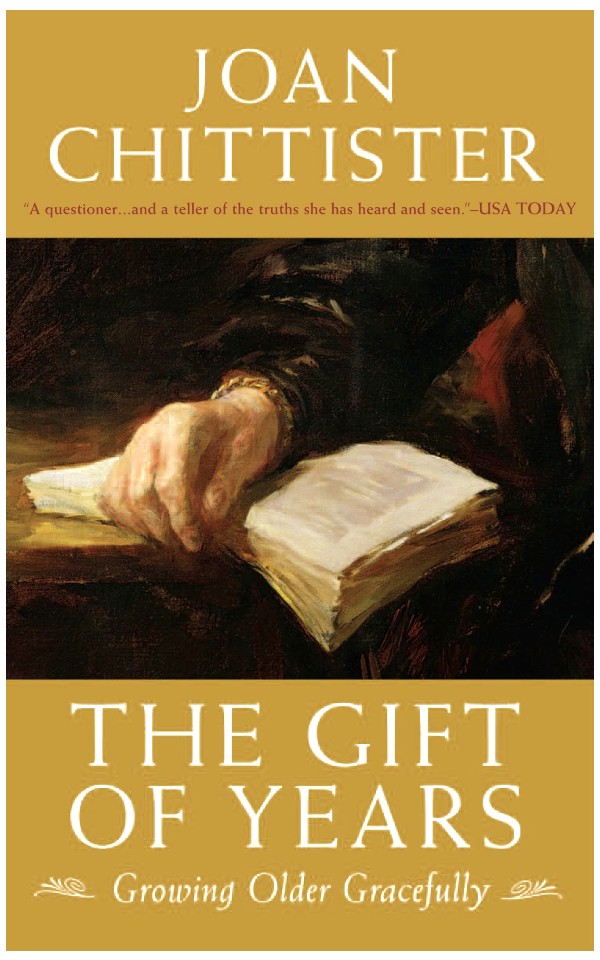
One of the delights of visiting family is sharing reading lists. In Peterborough, this means Patrick’s interests in Scandinavia and Iceland from the perspective of culture and nature; from Emily, place-based and indigenous education. In Toronto, I can catch up with Peter’s reading. In this case, questions about ‘growing old gracefully’ or alternatively “a father and son discuss the meaning of life”.

In addition to the compilation of lists, Peterborough has an excellent set of second-hand bookstores, filled with contributions from the local academic community. Heather found ‘Flower Hunters’. It includes stories from Linnaeus to Marianne North and Joseph Hooker. I found a couple of David Quammen’s books: The Reluctant Mr. Darwin and The Boilerplate Rhino. Essays.

After the journey, we can relax with these new-to-us texts.

References

From Patrick Maher:

Meik Wiking, 2016, The Little Book of Hygge, Penguin Random House
Meik Wiking, 2017, The Little Book of Lykke, Penguin Random House
Meik Wiking, 2019, The Art of Making Memories, Penguin Random House

From Emily Root-Maher:

Naomi Krogman and April Bergstrom, 2022, The Future of Sustainability Education, U of Alberta Press.
Marcia McKenzie, et al. 2019, Fields of Green: Restoring Culture, Environment and Education, Hampton Press.
Karen Osmond, 2011, Iceland Imagined: Nature, Culture and Storytelling in the North Atlantic, U of Washington Press.
Eve Tuck and Marcia McKenzie, 2015, Place in Research Theory, Methodology and Methods, Routledge.

From Fraser Root-Maher:

Margaret Webb, 2008, Apples to Oysters: A Food Lover’s Tour of Canadian Farms, Viking Canada.

From Peter Maher:

Jean Chittiste,. 2008, The Gift Years: Growing Old Gracefully, Bluebridge Publishing
Jean-François Revel and Matthieu Ricard, 1998, The Monk and the Philosopher, Schocken.

The English Landscape with introduction by Bill Bryson. 2001. Viking Studio.

From Heather Stewart:

Mary Gribbin and John Gribbin, 2008, Flower Hunters, OUP.
David Stuart and George Stuart, 2008, Palenque: Eternal City of the Maya, Thames and Hudson.

From Robert Maher:

David Quammen, 2000, The Boilerplate Rhino, Touchstone.
David Quammen, 2006, The Reluctant Mr. Darwin, Atlas Books.

Acknowledgments.

Thanks to everyone for sharing their literary interest: Patrick, Emily, Fraser, Peter and Heather.

Thanks to Edward for enlivening the blog with suitable graphics and links.


POSTSCRIPT CARTOON by Edward

Posted in biographical sketch

Road Warriors

We have been travelling for a week. Hence no blog. The purpose is to pick up our canoe from Patrick’s house in Peterborough. We left Paradise on Tuesday afternoon, after our latest doctor’s appointment and car service. We drove hard to reach Woodstock, New Brunswick, by late evening.

On the second day, we survived the traffic in Montreal and managed to travel Highway #401 to Belleville. This allowed us to cut North to Madoc and then Highway #7 into Peterborough — essentially, 2000 kilometres in twenty hours of driving.

Peterborough has changed significantly since the days we lived there in the 1990s. At that time, we worked for the Ontario Ministry of Natural Resources.

In contrast to the Annapolis Valley, Peterborough seemed to have maintained a dynamic economy in the face of COVID. Besides visiting family, we were able to enjoy the MindGame cafe, various second-hand bookstores, and Wild Rock Outfitters.


Our second adventure was to visit my brother and family in Toronto. This required us to head down to Highway #401 and negotiate the suburb of Scarborough. We arrived safely after several hours in Toronto traffic.

A few salient observations …

It was a shock to drive through Montreal on the TransCanada, especially as we did not have a Quebec map. Once we reached the Ontario border (and Highway #401), the biggest surprise was the volume of truck traffic. The goods that are being moved by truck through the industrial heartland of Canada and the expenditure of gasoline to fuel these trucks must be massive.

Of course, we endured changes in the weather: cold rain, ice pellets, and snow. And yet in Toronto, we saw flowering cherry trees, forsythia. In the gardens of Peterborough, were harbingers of Spring: cardinals and robins.

Visiting Patrick, Emily, and Peter, I have accumulated a long reading list. That, I will save for another day.

We plan to return to the Valley by May 1st.

Posted in Opinion

Learning Links

Letter from America.

During the Summer of 1964, from the end of June until the end of August, I was a field assistant at the McGill Sub-Arctic Research Laboratory at Schefferville, Quebec …

In 1964, I was in my second year of my B.Sc (Hon) degree in Geography at the University of Birmingham. This letter was sent to The Lamp, the school magazine at Chiswick Grammar School for Boys. It was sent to me this week by Andrew Ronay, an old school friend, who had retained a copy.

Last Thursday, Heather and I attended the Kings Edgehill School IB Arts Show in Windsor.

Heather’s sister Sandy is the Art teacher. Afterward, we went to Bent Ridge Winery. From the patio, we could see the white, ski runs at Martock. I had not fully appreciated the local geography before.


From Sandra Barry, I received the link to an online presentation by Merilyn Simonds on her book ‘Woman, Watching’.

Of particular interest to me was her other writing: ‘A New Leaf: growing my garden’ and ‘Gutenberg’s Fingerprint’. In the video, she also referenced her latest non-fiction ‘Still Life with Beth’ (to be published).

These three experiences lead me to the following observations. I was struck by the contrast. Between my grammar school education in England, over sixty years ago, and the private school, multi-national program offered at KES in Windsor. I then contrast the lifelong learning described by Merilyn Simonds. In this case, a woman (Beth) and her life between 70-100 years.

How do we share our experiences with the next generation (or two, or three)? What do we gain from teaching the next generation, given the changes in society, and technology? Does a teacher ever retire? Or are they simply transformed into an elder? Or a watcher?

Postscript

Sandra Barry forwarded to me a blog by Sarah Emsley ‘Old Rusty Metal Things’. I thought it was relevant to this discussion.

Acknowledgements

Andrew Ronay forwarded the ‘Letter from America’ text in the Lamp. Sandy Stewart invited us to the IB Art Show. Sandra Barry shared the link to Merilyn Simonds’ presentation. Edward added the graphics and links. Heather shared both the Art Show and watching the Simonds video.

Reference

Merilyn Simonds video presentation on her book ‘ Woman, Watching’.

Sarah Emsley blog ‘Old Rusty Metal Things’.

Posted in biographical sketch

Mid-week Relaxation

Heather attended Jane White’s presentation at CORAH, NSCC Middleton campus, ‘Return of the Birds’.

This motivated us to drive down to Annapolis Royal to birdwatch along the French Basin trail. There was an amazing variety of ducks (see French Basin Trail video in my post Walking Paths).

Afterwards, we stopped at the Sissiboo coffee shop.

While there, I noticed a book on the shelf. ‘Puzzles for Spies. GCHQ’. This took me way back to my time working for IBM in Cheltenham , England.

In 1967, I was a trainee Systems Analyst. My first assignment was with the Government Communication Head Quarters (GCHQ). IBM computer technology was used to monitor foreign communication.

Our second stop in Annapolis Royal was MareGold bookstore, an excellent addition to the town. It complements the Mad Hatter Books..

I wanted to see a copy of Steve Skafte’s new book ‘The Dead die twice – abandoned cemeteries of Nova Scotia’. I decided not to purchase. Instead, I picked up Robert MacFarlane ‘The Old Ways: A Journey on Foot’.

From GoGeomatics, I received the Canadian Spatial Times for April 12, 2023.

In the magazine section,Tim Webster contributed a profile on the Applied Geomatics Research Group (AGRG). AGRG was founded in 2000 by COGS faculty members.

Earlier in the day, I stopped at COGS to catch up on the programs in Lawrencetown. I happened to meet Wayne Regier, Darren MacKinnon and Andrew Hannam. From the bookshelf, I picked up a copy of the Graduate Profiles 2021-2022. There have been many changes since I left in 2011. However, the parking lot remains full.

Acknowledgements

The CORAH talk set the tone for the day, giving us an excuse to walk the French Basin trail. It was also good to see old colleagues at COGS. Thank you Heather for the company. Edward, thanks for the graphics and links.

References

Puzzles for Spies, GCHQ, 2022, Puffin Books.

Steve Skafte, 2023, The Dead Die Twice: Abandoned Cemeteries of Nova Scotia, Nimbus Publishing.

GoGeomatics April 12, 2023, Canadian Spatial Times, AGRG profile.

Robert MacFarlane, 2012, The Old Ways: a journey on foot, Penguin Randon House.

Centre of Geographic Sciences, Graduate Profiles, 2021-2022.