Posted in biographical sketch

Road trip to New Glasgow

This weekend, we visited Heather’s Dad in New Glasgow.

While there, I finished Colm Toibin’s book (see previous post) and picked up Dan Leger’s biography of Stephen McNeil. From Toibin, I gained some insight into the role of religion in Irish culture. Perhaps from Leger, I will gain insight into the role of politics in rural Nova Scotia.

Having read Cronin’s book on Syliboy, I was interested to hear that he had presented a mural to Kings Edgehill School. Heather’s sister (Sandra) is the art teacher at KES. His visit seemed to be well received by both teachers and students.


The return trip to the Valley was idyllic on a blue sky Sunday afternoon. We took a circuitous route.

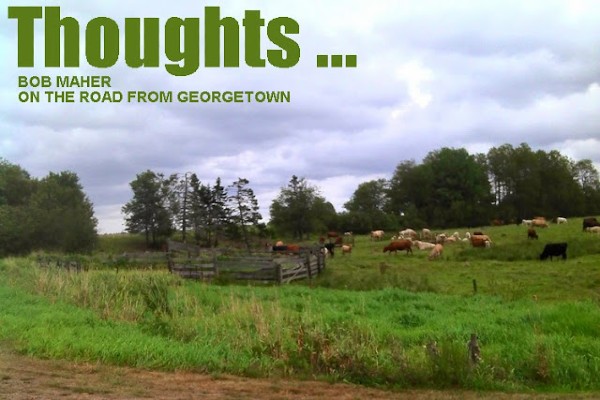
First, we visited Sandy and Don at their farm, outside of River John. We were surprised by the number of trees down from the Autumn storms. Our return took us through Denmark, Earltown to Truro. We stayed on Highway #102 until Exit #10, Indian Brook. We turned off to go through the Rawdon Hills and ended up at Windsor. From Windsor, Highway #101 to Lawrencetown/Paradise.

The roads were dry; blue skies; the landscape was covered in a fresh snowfall. Depending on the orientation of the road, and wind direction, there were occasional patches of snow on the highway. It was the type of day, where you wanted to make a movie of the landscape, dressed in white, in full sunlight. This is normally a three-hour drive.

Acknowledgements

Heather shared the road trip. We enjoyed Stewart’s hospitality in both New Glasgow and River John.

Edward added the graphics and links.

References.

Dan Leger, 2022, Stephen McNeil: Principle and Politics, Nimbus Publishing.

Colm Toibin, 2023, Essays: A Guest at the Feast, McClelland and Stewart.

Posted in biographical sketch

Culture is our Medicine

This week, we were in Kentville to discuss financial matters.

We took the opportunity to stop at the Half Acre Cafe. I went across to Gaspereau Press to see what new books had been published recently.

As part of the Gaspereau Field Guides to Canadian artists by Ray Cronin, I found #7 Alan Syliboy Culture is our Medicine. Cronin writes an essay on Syliboy’s career. The field guide also includes seven plates, illustrating his work.

Meanwhile, I have been struggling to read Colm Toibin’s essays. In Part one, Toibin describes his experience growing up in Ireland. Part 2 concerns the Roman Catholic Church, the Vatican and various Popes. The third Part includes essays on ‘Putting religion in its Place: Marilynne Robinson’. Right now, I am stuck in Part 2.


Wednesday, we gathered at Anne and Bill Crossman’s in Annapolis Royal. Roger Mosher and Keith Egger joined us from Centrelea. It was an opportunity to enjoy Chinese food, and to catch up on our respective lives in Paradise, Centrelea and Annapolis Royal.

Acknowledgements

To Anne and Bill for hosting the get together. Sandra Barry swapped the Colm Toibin essays. Heather, Roger and Keith shared the lunch. Edward, returning from Florida, added the graphics.

References

Ray Cronin, 2022, Alan Syliboy: Culture is our Medicine, #7 A Gaspereau Field Guide to Canadian Artists, Gaspereau Press.

ColmToibin, 2023, Essays: A Guest at the Feast, McClellan and.Stewart.

Posted in Book Review

Community Engagement

This week, we have started to reduce our book collection.

Two boxes were taken to the Endless Shores. This gives us a credit on future purchases. In response, I obtained The Blomidon Naturalist Society’s ‘A Natural History of Kings County’. This excellent text would provide a wonderful template for Annapolis County.

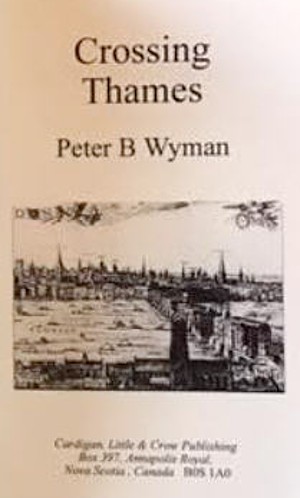
I had hoped to pick up Peter Wyman’s short story ‘Crossing Thames’. This will have to wait until March 11, when he will be launching the book at the Annapolis Royal Library (11am – 2pm).

Today, I made a book swap with Sandra Barry. Heather had two copies of Robie Tufts’ ‘Birds of Nova Scotia‘. Sandra had Colm Toibin’s essays ‘A Guest at the Feast’.


Saturday, we met with Rick and Cathy Ketcheson at the Green Elephant Cafe in Kingston. Unfortunately, the cafe was closed for the staff winter holiday. We headed to Middleton to Bistro 300. Again closed. We ended up at the Capitol Pub.

Later, that evening, I met with John Wightman. One of the many topics, was Walter Morrison, Cartographer Emeritus. Walter donated his historical map collection to the COGS library.

This raised the question of retired COGS faculty who continue to make a contribution to geographic sciences, and the community. This seems normal within the university culture. Not so much, at the Nova Scotia Community College. From CORAH , I noticed that Trish LeBlanc will be speaking on historic maps in Nova Scotia at COGS. (see below)

Organizing the bookshelves, within the framework of a future house move, is a harrowing task. Many of the texts have a context from earlier research, in Canada, as well as overseas.

Acknowledgements

Heather joined me in the challenge of reducing the number of text books from different disciplines and different geographies. Sandra Barry engaged in the book swap. John Wightman continues to exemplify Major Church’s dictum ‘Never retire’. Edward contributed the graphics and links.

References

Robie Tufts, 1986, Birds of Nova Scotia, Third Edition, Nimbus, Nova Scotia Museum.

Colm Toibin, 2023, A Guest at the Feast: Essays, McClelland and Stewart.

The Blomidon Field Naturalist Society, 1992, A Natural History of Kings County, Acadia University.

Trish LeBlanc, Antique Maps of Nova Scotia, March 14 1-2 pm, NSCC COGS campus.

Posted in Book Review, Creative writing

Community Development

This week, I visited Integrity Printing in Bridgetown to pick up Volume 7 (2022) hard copy of my blog texts. This allows me to visit previous years’ work.

For example, under GoGeomatics for February/March:

Under the Ernest Blair Experiment:


Reading Jim Lotz, the Lichen Factor, he describes a number of community development projects including the Prince Edward Island Ark (John Todd) and L’Arche ( Jean Vanier).

Lotz quotes Vanier, Community and Growth 1979 (p.199)

People can only put down roots in a community when that meets their deep and secret desire and their choice is free – because putting down roots, like any commitment implies a certain death. We can only welcome this death if there is a call for a new life that yearns to grow.

Our orchids at home tended by Heather

References

Jim Lotz, 1998, The Lichen Factor: The Quest for Community Development in Canada, UCCB Press.

Jean Vanier, 1979, Community and Growth: Our Pilgrimage Together, Griffith House, p70.

Acknowledgements.

Heather has been tending these orchids in the bathroom window for several years. Edward has added the graphics and links.

Posted in biographical sketch

Buddha Spring

A few years ago, Heather placed Buddha on her meditation rock, on the slope behind the house.

Over time, he has developed a coat of moss and lichens. Today, in near celebration of Spring (ten degree temperatures) we paid him a visit. Does he still wear the same species?

Yesterday, we made our walking circuit to the Annapolis River. Starting at Lunn’s Mill you can walk through the Lawrencetown Tree Nursery to the river. We returned via the neighbours property (previously belonging to Andrew) and the Hunter orchard.

Later in the day, I wanted to show Heather the low tides on the Bay of Fundy. Walking along Hampton beach, I am always overwhelmed by the variety of size and colour of the beach pebbles.

(“Blue Barrels of Hampton” watercolour by Edward)

Last Fall, we did not prune the hydrangea flower heads (I was in the hospital). Today, with the warm temperatures, it was time to catch up, and fill the ‘green bin’.

This week, we are planning to reduce the number of books on the shelf. There are several that I picked up, but do not remember reading.

References

Isabella Tree, 2018, Wilding: the return of nature to a British farm, Picador. (see post Rewilding the Annapolis Valley)

Peter Wohllenben, 2021, The Heartbeat of Trees: embracing an ancient bond with forests and nature, Greystone.

Acknowledgements

Heather rediscovered Buddha in the woods. Edward added the graphics.

Postscript

I have returned The Road Here to the Library.

For your “Winter enjoyment”, here is a link to “Anne & Edward Wedler Fine Art Newsletter XXXIII

Posted in Book Review

The Road Here

I dropped into the Bridgetown Library. Heather had a dental appointment. I noticed a well-designed book, The Road Home: Stories from Senior Women in Rural Nova Scotia, edited and photographed by Rachel Brighton and published by the Western Area Women’s Coalition in Bridgetown in 2008. The book was printed and bound by Gaspereau Press. It traces the journeys of twenty one women living in rural Nova Scotia, in Digby and Annapolis Counties. The contributions are divided into four parts: Journey, Work, Community and Culture.

In the words of Brighton:

I would like to thank each of the women you meet in this book. One of them Frances Mills Clements who established a bursary for women pursuing a post-secondary education. The Women’s Place Resource Centre in Bridgetown is providing the proceeds of this book to that bursary – so the stories here are doubly inspiring.

My response to this 2008 publication is “The Road FROM Here?

It is fifteen years later. What has happened since 2008? Where are we going, in terms of Journey, Work, Community, Culture?

It would be wonderful, if Rachel was able to revisit these topics.


This afternoon, I had to take the CRV into Kings County Honda. While waiting, I read: “Honda: the Boy Who Dreamt of Cars.

Likewise published in 2008. My question for the Honda staff,
When can I trade my CRV for an electric car?“.

Acknowledgements

Heather enjoyed reading The Road Here. Edward added his magic touch.

References

Rachel Brighton, 2008, The Road Here: Stories from Senior Women in Rural Nova Scotia, The Western Area Women’s Coalition, Bridgetown, Nova Scotia.

Mark Weston, 2008, Honda: The Boy who dreamt of Cars, Lee and Low Books, New York.

Posted in biographical sketch

Wild Mind / Wild Earth

From Emergence Magazine, an interview with David Hinton starts with the Chinese poem, Egrets.

Robes of snow, crests of snow, and beaks of azure jade,
They fish in shadowy streams.
Then startling away into flight, they leave emerald for lit distances.
Pear blossoms, a tree-full, tumble in the evening wind.

The interview is a forty minute podcast.


This week, I plan to visit Integrity Printing in Bridgetown. They have created a printed volume of my blogs. The year 2022 will be Volume 7. This blog represents #456.

This week, too, I plan for lunch with Heather, Rocky and Debby Hebb at the Ebb Tide cafe. Today, I stopped at the Winemakers Tavern. It is now under new management, as the Bee’s Knees General Store and Bakery.

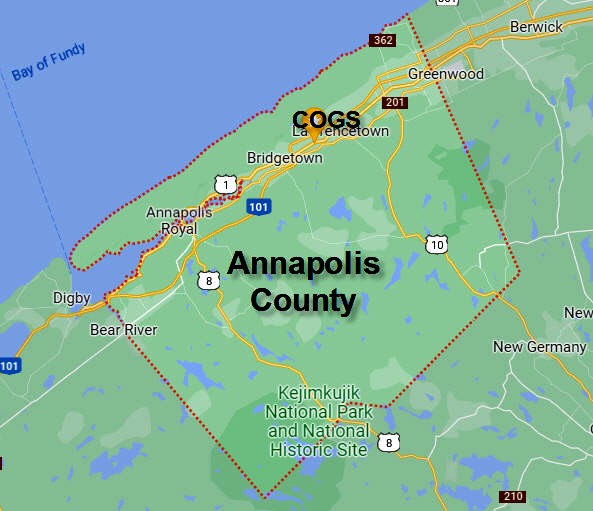
It is open Wednesday to Sunday, 10 am – 6 pm. This represents a re-invention of commercial activity in the Village of Lawrencetown. If we can recruit a family doctor for the community, in combination with educational initiatives at COGS, there will be the Hope of Geography.

From my conversation, recently, with Brian Arnott in Lunenburg, this energy may also extend to the Annapolis County exhibition and the surrounding agricultural community. Here’s hoping !

Acknowledgements

Rocky and Debby Hebb joined Heather and myself for lunch at the Ebb Tide cafe. The fish burger was excellent, and at a good price. Brian Arnott provided an update on the Annapolis County exhibition. Edward added the graphics.

Reference

Emergence Magazine, February 12, 2023, An Ethics of Wild Mind, Interview with David Hinton, Podcast.

Posted in Book Review

The Power of Geography

This week, I met with Sandra Barry at Bistro300. She wanted to return a couple of books by Peter Wyman. In return, she gave me Tim Marshall’s The Power of Geography:Ten maps that reveal the future of our world.

To date, I have only read the United Kingdom chapter. The book leaves me thinking about the map of Canada, and then, more specifically Nova Scotia.

Through inter-library loan, I received The Lichen Factor by Jim Lotz. It came from Cape Breton Regional Library. The sub-title is ‘the quest for community development in Canada.’

From Lotz:

‘What I have called the Lichen Factor is elusive and mysterious. It offers a way of restructuring human relationships, providing a basis for mutual aid and co-operation, indicating the potential for generating harmony among diverse peoples.’ p.17.

‘Lichens are not intellectual constructs, theories, concepts, hypotheses, paradigms. They do not exists to teach or preach about better ways of surviving or thriving in harsh environments. They simply are, integral parts of nature. Their symbiotic form, break through the entrenched ‘either/or’ mindset that divides people and communities’. p.18.

Perhaps now is the time to translate the Hope of Geography into the Power of Geography, with a little help from the lichens.

The Canadian North harbours over a thousand separate species of lichen. They are symbioses between two different forms of life, algae and fungi. One cannot live without the other.’ p.15.

We have a number of unique lichens in Southwest Nova Scotia.

Postscript

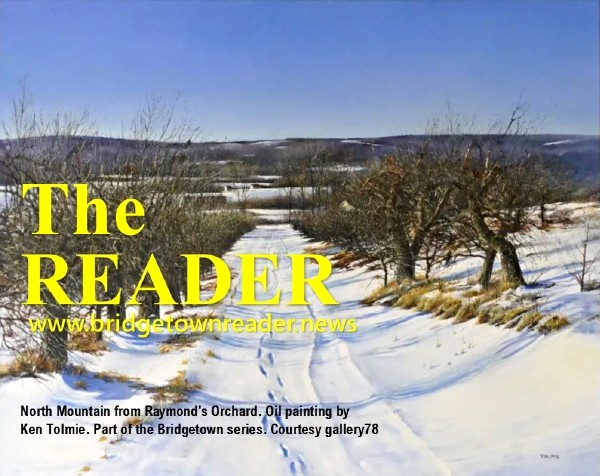
Sandra and I discussed access to information in Annapolis County. We agree that The Bridgetown Reader, published every Thursday is a wonderful resource. Lewes deserves special recognition.

Finally, I see that the End of the Line pub in Bridgetown has changed its name. Junction Sixteen, Kitchen and Bar is opening soon, under new ownership.

Acknowledgements

Sandra Barry shared the books. Edward added the graphics.

References

Tim Marshall, 2021, The Power of Geography, Scrivener.

Jim Lotz, 1998, The Lichen Factor, UCCB Press.

Posted in Event Review, New thinking

The Hope of Geography

Yesterday, we attended the hospital information session at the Middleton Fire Hall. There had been various rumours in the media about closure of the Emergency Room (ER). This was one of three sessions. While the emphasis was on the different services available through the Middleton hospital. My concern was the lack of family doctors in the region. With a shortage of family doctors, many citizens end up at the ER.

After the information session, I met with Carman Kerr, MLA Annapolis County, at his office. I wanted to understand his perpective, representing Annapolis County.

This gave me the opportunity to question the provision of doctors in the Lawrencetown area. I was well aware of the efforts of Brian Reid, Lynne Roscoe and Kurt, the pharmacist to attempt to find a family doctor for the village. Carman confirmed my understanding,


In the afternoon, I attended a meeting at COGS on Sustainable Development goals and Nova Scotia Quality of Life.

This included a panel discussion with diverse, active members in the community. While this presented a different definition of Sustainable Development, it offered insight into community outreach.

Driving home, I listened to CBC Ideas in the Afternoon. The topic was Wallace Stegner, The Geography of Hope.

It was a documentary on his writing and life, and his role in documenting the disappearing west, especially around the Cypress Hills.

This set off the following train of thought. Less than a week ago, we returned to rural Nova Scotia. In order to understand the present initiatives in the Annapolis Valley, we attended the three meetings: hospital information session, MLA, Sustainable development goals.

My reaction. I turned the Stegner quotation upside down. Instead of ‘geography of hope,’ let’s talk about ‘Hope of Geography’.

Individuals come to live in the Annapolis Valley because of the hope of Geography. The landscape offers a microcosm of variety: fishing, forestry, agriculture plus the opportunity to interact directly with the natural environment.

In addition, we have an education institution here dedicated to the geographic sciences. It is not only possible to enjoy the landscape diversity but also to obtain an education in the relevant technologies and sciences.

If we package up this story, work together, we can attract family doctors who would want to be members of this larger community.. There is an alternative to the ‘geography of Hope’. It is the HOPE OF GEOGRAPHY.

Acknowledgements

For Heather and myself, it was a busy day. And yet we need to evaluate the sustainability of our Geography. Edward, thanks as always for your contribution.

POSTSCRIPT
Here is the Geography of “Last Hope Camp” as noted in a previous blog post.

References

CBC Ideas in the Afternoon, February 6th 2023, Wallace Stegner: The Geography of Hope.

Posted in biographical sketch

Home

We have returned to our rural home on Highway #201 in Paradise.

The cost of the condo at Bishop’s Landing was becoming prohibitive. But more critically, we needed to develop an understanding of the health services in the Annapolis Valley, and the best approach to transitioning from the services in Halifax. (Spring is coming !). In the five months in the city, we were able to address a number of concerns, related to hearing, swallowing, and memory. How do we ensure continuity of health services through the Primary Care Clinic in Middleton? Without a family doctor?

Maintaining two residences, Paradise and Halifax, means maintaining two sets of infrastructure: computers, TV, telephone, heating, etc. Fortunately, we have our trusty iPad and mobile phones.


Yesterday (Wednesday) I walked down to Lawrencetown. I wanted to meet our new librarian (who replaced Jackie Fraser) and check out the interlibrary loan. I wanted to make sure that our mail was no longer being forwarded to the condominium. I also wanted to see if the Ebb Tide Cafe (previously Firehall restaurant) was open. The note on the door says Monday, February 6th.

At the library, I picked up one of Jim Lotz’s books: The Gold of the Yukon, and one by Harry Thurston, The Sea among the Rocks.

What will we miss from Halifax?

  • Convenient walks through treed neighborhoods
  • The harbour boardwalk.
  • Easy access to food stores, coffee shops
  • Book shops.
  • No need to drive a car.
  • Public resources – Halifax Library and the Public Gardens.

To-Do items?

  • Leaving the car behind
  • Electric cars.
  • Electric bicycles.
  • Charging station.
  • More solar panels on the roof.

We look forward to reconnecting with our community in the Valley. We look forward to recording the changes (e.g. new bookstore in Annapolis Royal, See earlier blog post HERE).

Acknowledgements

To all our Valley friends who have kept us in mind. Edward for his ongoing contribution.

References

Jim Lotz, 2012, The Gold of the Yukon, Pottersfield Press.
Harry Thurston, 2002, The Sea among the Rocks: Travels in Atlantic Canada, Pottersfield Press.