Posted in biographical sketch

Swallows and Thrushes

To my regular readers, the reason for the hiatus is that two months ago, I had a heart attack, followed by open heart surgery at the Halifax Infirmary.

It was quite a weekend because Heather, my wife, also went to the hospital for a pacemaker.

The good news is that these events were preemptive, as we went together to Emergency at the Aberdeen Hospital in New Glasgow in early September.

After two months in the Infirmary. I have a detailed understanding of hospital routines, staffing levels, as well as the DOs and DO NOTs of hospital life. In this blog, I will focus on a few lessons we have learned as well as some of the sustaining factors.

Lesson1.

In traditional Western marriages, day-to-day tasks are usually split between husband and wife. For example, financial matters may be the purview of the husband. Not a good idea, both partners need to be equally informed about all aspects of living.

Lesson 2.

In a marriage, each partner may select their own technology of choice. My life is iPad and emails. Heather’s life is mobile phones. It is critical in a crisis that both partners understand the common technology.

Lesson 3.

The community network is vital. Foremost is the contribution from family. In our absence, they organized a rental condo in Halifax where Heather can live, while I was in the hospital for two months. The other community can extend from neighbours to work colleagues from the last forty years. Or even old-school friends from England. In our communications, we can share news, and the local Geography, including photographs. My photos are simple; from the view of Halifax Citadel to the interior of my room.

Back to the title of my blog, ‘Swallows and Thrushes’. This goes back to a book by Arthur Ransome “Swallows and Amazons“. I read this as a child.

In my case, Swallows refers to the ‘Swallow Test’ taken to evaluate your throat muscles for food consumption. Thrush refers to a throat infection that can impact your digestion ability.

For most of my hospital stay, food was delivered through feeding tubes. This severely restricted my mobility.

To end on a positive note, my physiotherapist, Pascal loaned me a book that he had enjoyed — Graham Hancock’s “Magicians of the Gods“.

It is a long read, full of facts and hypotheses about a previous civilization, about 9600 years ago, before a comet destroyed the earth’s climate and civilization.

POSTSCRIPT

I was released to join Heather at the Halifax condo on November 14th. This blog was delayed because of technical difficulties encountered by Edward with WordPress on his Chromebook in Florida. As we explore the geography of the Halifax waterfront, I hope to return to regular weekly blogs

The other book, I would recommend, is “Paddling Pathways“, a collection of essays on the significance of paddling by canoe, in the northern rivers of Canada. This is very timely since, in September, we purchased a new canoe. It is now sitting in Patrick’s garage in Peterborough.

To everyone who has emailed me these last two months … Heartfelt thanks!

Posted in Art, Nature

Fiona

As of this writing, I am awaiting the approach of Hurricane Fiona.

Even after driving for about five hours yesterday, away from our Cape Breton paint-out base at Margaree Harbour to Halifax, we still seem to be headed for a difficult time. This is the second time a hurricane has affected our plein air plans; the previous storm was named Dorion.

We still got in two days of painting at the coastal community of Margaree Harbour and Inverness and on the gravel bars of the salmon fishing Margaree River. These paintings will form the early part of our Footsteps East project (see our current map at tinyurl.com/FootstepsEast).

For those in Fiona’s path, stay safe.

Posted in biographical sketch

Heartbeat

From the BC Knowledge Network, I received the link to ‘Heartbeat – still going strong’.

A classic British comedy series, it is about the lives of the Aidensfield and Ashfordly townsfolk.


This week, I have been investigating real estate in Haida Gwaii. We lived there in 2015.

My first discovery was that the village of Queen Charlotte has been renamed; it’s Haida name is Daajing Giids.

The second discovery was that of my blogs from that time, on the GoGeomatics website.

  1. Local Action and Geomatics: the Gowgaia Institute on Haida Gwaii. This includes an interview with John Broadhead.
  2. Landscape and language: Haida Gwaii.

It feels like it is time for a return visit to the West coast. Both blogs appear relevant today. I wonder what has happened at the Gowgaia Institute.


On the reading front, I have two new books. In New Glasgow, I picked up Back to the Forest.

In this case, the forest referenced is the Forest of Dean. It describes the move of a young family from the suburbs of London to the West Country at the end of the Second World War. About the time that I was born. It is a sequel to A Child in the Forest; both written by Winifred Foley.

The second book, Heather found at The Bookman in Charlottetown, The Tao of Inner Peace by Diane Dreher.

It adapts the ancient principle of Tao to today’s world by showing how to integrate the many facets of everyday life to create a balanced, dynamic harmonious whole. In particular, I am interested in the subject of mindfulness.

Without the active yang of career commitment, life becomes too yin for many retired people. They need to find new interests, new challenges.’ p.32.

When we take time to live more consciously, we don’t react mindlessly to our environment. Our days are filled with active choices, balancing the current of yin and Yang into greater harmony.’ p.33.

While reading about Scott Fitzgerald, I noted that one of his four books is entitled This Side of Paradise. That’s exactly where we are today. Perhaps better known by Fitzgerald is The Great Gatsby. Fitzgerald lived from 1896-1940.

Acknowledgements

Support from Heather and the families of Patrick, Andrew and Laurel. Edward added the graphics.

References

BC Knowledge Network, Heartbeat, Still going strong.
GoGeomatics blogs
Winifred Foley, 1981, Back to the Forest, MacDonald and Co.
Diane Dreher, 2000, The Tao of Inner Peace, Plume, Penguin Group.

Posted in biographical sketch

Habitat Destruction

On Thursday, we went to 2600 McNally Road, Burlington for a rally to stop glyphosate spraying of the forests on North Mountain.

Next week, there is a meeting at the Hampton Community Hall on the same topic.


Friday, while in Berwick at the pharmacist, I noticed a book “From the Brow to the Bay”. This describes the historical geography of the Burlington area. It was published by the Burlington Community Club.

This type of publication is a model of the relationship between the human community and the landscape. It makes me realize that each of us lives in the landscape. We interact with other members of our community, at work, as well as at play. We invest time and energy into that landscape. At the same time, we maintain a network of community relationships.

Over a period of time, we see changes in the staff of our institutions, the institutional goals, as well as the infrastructure.

The single-minded pursuit of forest products occurs at the expense of other species, and their communication networks. This type of habitat destruction can also occur in the human species.


I have followed the writing and career of Sheree Fitch. Therefore, it was a pleasant surprise to read her article ‘Still kissing the Joy as it Flies’ in the weekend Chronicle Herald. I look forward to revisiting their habitat, on the back road outside of River John.

Acknowledgements

The organizers of the Burlington rally, including Anna Osborn, Nina Newington and Leo Glavine. Heather shared the journey to Burlington and Berwick. Edward contributed the graphics.

References

Burlington Community Club,2012. From the Brow to the Bay: Historic Burlington and Area, Published by the Burlington Community Club.

Sheree Fitch, 2022, Still Kissing the Joy as it Flies, Chronicle Herald, September 2nd Page D3.

POSTSCRIPT

We stopped at Beaver Creek Vineyard cafe for Saturday lunch. We were well fed. (see my blog post “The Alpine Path“)

Posted in Book Review

The Alpine Path

After PEI, I read two books about Anne of Green Gables and LM Montgomery.

Catherine Reid’s book focussed more on the gardens and flowers in PEI. While including beautiful photographs, the text did not really address the variety of landscapes in the province.

From a geographic perspective, this includes the extent of the Acadian forest, the different soils and geology, plus the nature of coastal wetlands and shorelines.

The second book is a collection of essays by LM Montgomery on her career as a writer.

It was originally published in 1917. It describes her craft, her story and her time.

The title The Alpine Path comes from a verse that had been her inspiration during the long years when success as a writer seemed remote, and only dogged determination kept her on “The Alpine Path; so hard, so steep, that leads to heights sublime.”

It was nearly ten years after the publication of Anne of Green Gables. This will be my next read.


Today, I stopped at Beaver Creek Vineyard and met the new owner, Brenon MacNeil.

This Labour Day weekend, they are re-opening the cafe. It will be wonderful to have this resource, just five houses east of us, on Highway #201.


Finally, it is “stop the glyphosate spraying season“.

Map compiled by Shanni Bale

Two years, after the initial encampment, there are again plans to spray the parcels on South Mountain. The Extinction Rebellion group are marshalling their resources. From the provincial map, it seems there are even more parcels designated for spraying. Again, citizens and communities must voice their concerns.

The province, regardless of the party in power, continues to see the landscape as a collection of resources for exploitation. This does not bode well, as we attempt to respond to climate change.

Acknowledgements

Nina Newington provided the link to the map of parcels scheduled for glyphosate spraying. Edward added other links and graphics. Heather shares the Green Gables reading.

References

Catherine Reid, 2018, The Landscape of Anne of Green Gables, Timber Press.
LM Montgomery, 2005, The Alpine Path, Nimbus Publishing.
Beaver Creek Vineyard
Shanni Bale, Glyphosate Spraying in Mainland Mi’kma’ki, 2022.
Pesticides Applications Approvals, Nova Scotia Government, Environment and Climate Change.

Posted in biographical sketch

PEI trip

Last week, we went to PEI — over by the ferry and return via the bridge.

It is the first time since 2014 to PEI. We attended the Georgetown conference on economic development. At that time, we initiated a project called ‘The Road to Georgetown’. This time, we were travelling with our grandchildren.

The highlights of the trip included Green Gables, the Confederation Centre Art Gallery and the island landscape.

It is remarkable to see this small province with its capital city of Charlottetown, to appreciate the nature of the economy with tourism, agriculture and fishing, and to draw comparisons with Nova Scotia.

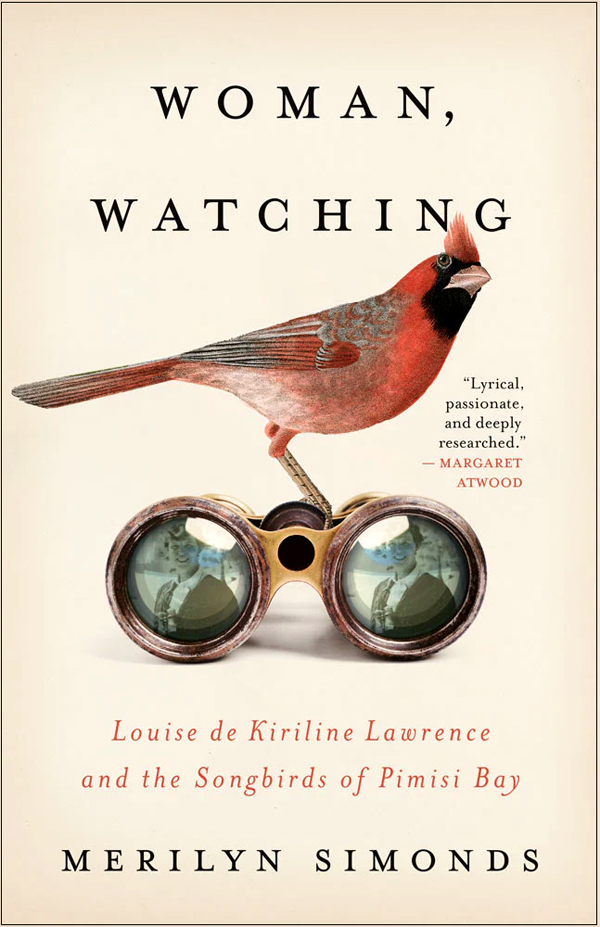
At Green Gables, I picked up three books. First, Anne of Green Gables, but also LM Montgomery’s, The Alpine Path and Catherine Reid’s, The Landscapes of Anne of Green Gables.

It is tempting to contrast these books with the work of Ernest Buckler in the Annapolis Valley.

At the Confederation Centre Art Gallery, I found a book on the work of Kathleen Munn and Lowrie Warrener, from an exhibition in 2010, The Logic of Nature, the Romance of Space. I thought this might be of interest to Edward Wedler.

On Queen Street, we found a wonderful bookstore, The Bookman.

I did not realize that second-hand bookstores could be so well organized.

The other phenomenon in the PEI economy is the COWS brand.

With young grandchildren, this created considerable interest. There is an excellent article in Saltscapes magazine.

Acknowledgements

Heather and I enjoyed the company of Laurel, Nick and the grandchildren, Marcus and Owen. Edward contributed the graphics.

References

LM Montgomery, 1908, Anne of Green Gables, Nimbus (1998).

LM Montgomery, 2005, The Alpine Path: The Story of my Career, Nimbus.

Catherine Reid, 2018, The Landscape of Anne of Green Gables, Timber Press.

The Logic of Nature, the Romance of Space: Elements of Canadian Modernist Painting, 2010, Art Gallery of Windsor, The Robert McLaughlin Gallery.

The Culture of Cows, Saltscapes Magazine

Postscript

To date, I am halfway through Catherine Reid’s book. It includes both stunning photography and insight into both the PEI landscape and its literary history.

Posted in biographical sketch, Book Review

Entangled Life

A few weeks ago, I discovered a reference to Trevor Goward and his work, in Merlin Sheldrake’s book Entangled Life (see blog post, Entangled Life).

It made me realize that the definition of a lichen species was much more complex than I had previously understood.

This led me down the road to question the classification by Carl Linnaeus as well as Darwin’s work on evolution.

This week, I had to spend several hours waiting at the ER at Middleton Soldiers Memorial hospital (I have no family doctor). I took Entangled Life with me. Previously, I had been stuck on the ‘magic mushroom’ section.

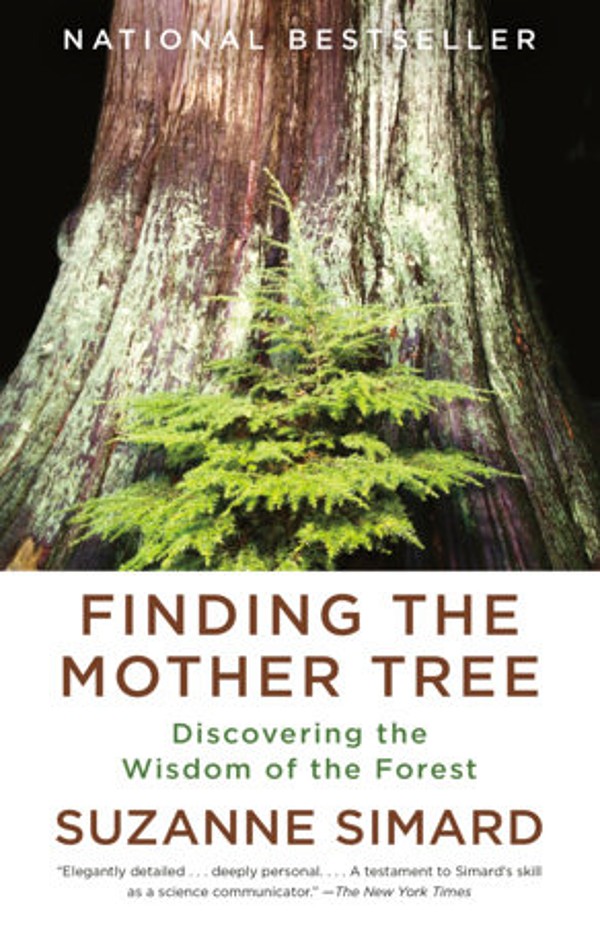
Reading the last three chapters Wood Wide Web (in contrast to World Wide Web), Radical Mycology and Making Sense of Fungi, en route, I visited the writing of Peter Kropotkin, Robin Wall Kimmerer and Ursula Leguin. The book is meticulously referenced. The writing is excellent, as witnessed by the praise from a wide range of commentators.

As we recognize that a stand of trees is so much more than what we see above the ground. Likewise, we start to appreciate the three-dimensional complexity of our natural landscape.

With grandchildren arriving in Nova Scotia for the next few weeks, a blog break should allow me to fully digest this seminal work.

Postscript

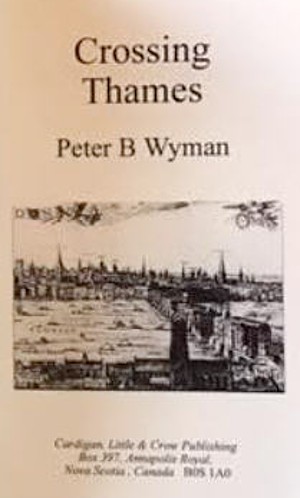
This week I did manage to catch Margaret Atwood on CBC Ideas, talking about George Orwell and 1984. Meanwhile, I continue to search out Iceland and Crossing Thames by Peter Wyman, in the Endless Shores books.

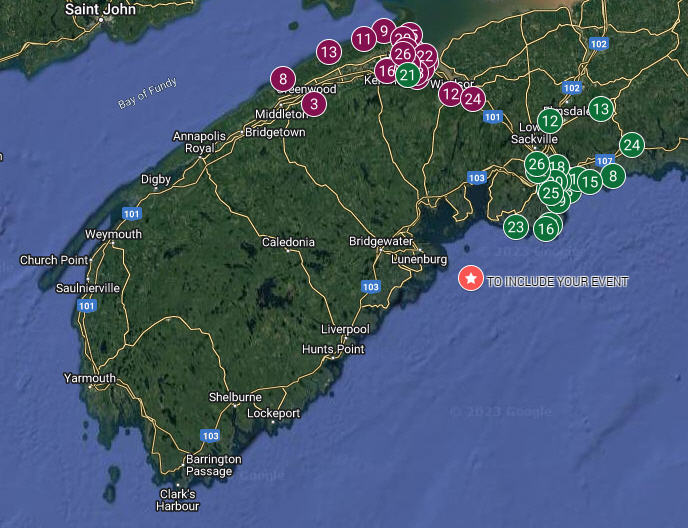
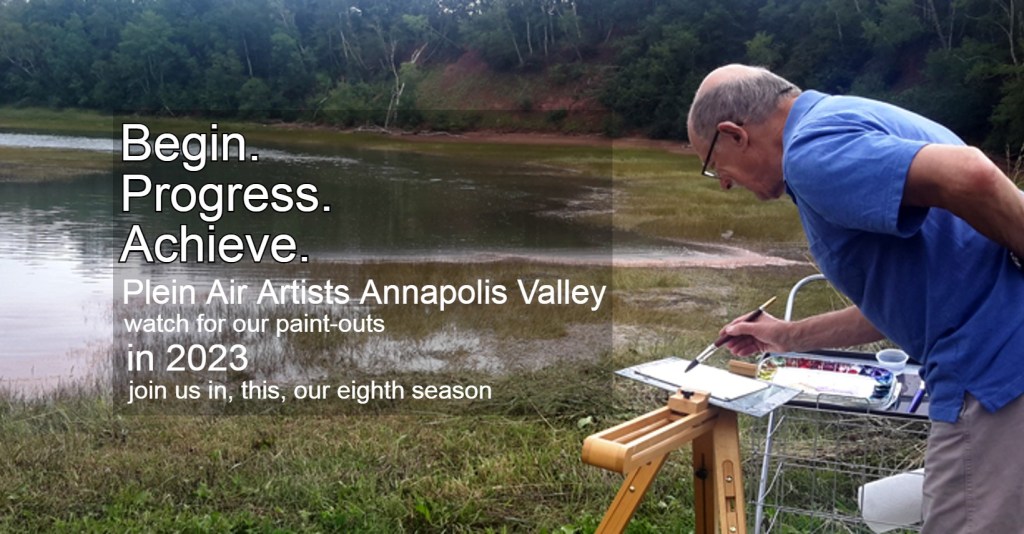
Finally, this is the Annapolis Valley Exhibition week, August 15-20th. In Lawrencetown. King’s County Museum hosts the SHORT BRUSH plein air paint-out in Kentville and the Miner’s Marsh, where about 30 artists paint on Saturday morning 20Aug2022 then display their works.

Acknowledgements

Heather encouraged me to return to the Entangled Web. Its focus on fungi connects well with our organic gardening. Edward added the graphics and links.

Reference

Merlin Sheldrake, 2020, Entangled Life, Random House.

Posted in New thinking, Opinion

Terego

Earlier in the Summer, I noticed that recreational vehicles (RVs) were stopping overnight at Lunn’s Mill on Carleton Road, outside of Lawrencetown (Hwy #201).

This week, I made my regular beer run to pick up growlers of Brickyard Red.

On the counter, they had a flier for “Terego: a tasty alternative to camping“. Going online, I discovered that Lunn’s Mill was one of their stops.

Producers throughout Canada welcome and share their passion with member travellers.”

This information meshed with an email from Edward Wedler. Edward had been approached by the Valley REN to share his passion for Plein Air Art. Combine these with the work of Celes Davar at Earth Rhythms and I can see an alternative model for the Creative Rural Economy in Nova Scotia.

Yet, contrast these ideas with the current destructive economy of Nova Scotia, whether mining (Goldboro), fisheries, or forestry ( just look at this Weekend Chronicle Herald).

What are some of the differences?

  1. Ecologically sustainable relationship between the people and the land/sea/air.
  2. Valuing the creativity of the people whether artists, writers, musicians, farmers, chefs, wine-makers etc.
  3. A different set of values between community members and the landscape. This is long overdue.

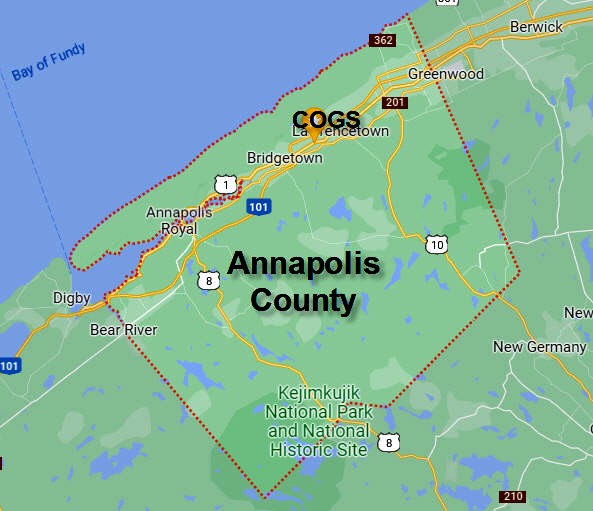
In my estimation, exactly the values that should be an integral component of the curriculum at the Centre of Geographic Sciences (COGS), NSCC in Lawrencetown.

Postscript

My son, Andrew, borrowed my Honda CRV to take some family possessions down to Maine. He left us with the RV. We could Terego at Lunn’s Mill.

Acknowledgements

Kudos to Chantelle and the team at Lunn’s Mill and The Station. Edward and Celes for espousing these values.

References

Terego, a Tasty alternative to camping. terego.ca

Celes Davar, Earth Rhythms
(see posts Rethinking Tourism, Preparing for Experiential Tourism, and Nisoge’katik)

Edward Wedler Plein Air Art.
(see posts Mapping Art, Footsteps East, and Brush with Nature)

Posted in Nature

Middleton False Foxglove

After our field trip to Brier Island, we decided that it was time to revisit the site location for Agalinis neoscotica (see posts, Brier Island and Biogeography). The botanist, Greene, stepped off the train in Middleton and found the species.

A few years ago, we walked through the sports fields by the school, adjacent to the abandoned railway track, and found it. Time to return. We walked past the new Al Peppard recreation centre and looked closely along the woodland edge. We found a few scattered plants in flower (August 8th).

Today, the common name is the Middleton False Foxglove. There are likely few communities in rural Nova Scotia whose name is attached to a unique flowering plant.

Buoyed up by our success, we shared this obscure botanical fact with one of the maintenance team members for the park.

This week, I returned to the Endless Shores Books seeking the other books by Peter Wyman: Iceland and Crossing Thames. No luck! Jennifer Crouse, the owner of the store, told me that the author used to teach English in Annapolis Royal. I look forward to the next consignment of his books.

Postscript

From Atlantic Books (August 2022), posthumous interview of Silver Donald Cameron on the Green Interview, by Chris Benjamin.

Acknowledgements

Heather shared in the search for Agalinis neoscotica at Middleton. Edward added the graphics.

Posted in biographical sketch

Brier Island

In 1990, Heather enrolled in the graduate program in Botany at the University of Guelph. Her field of study was Agalinis neoscotica, a diminutive plant growing in Nova Scotia (see blog post Biogeography). One of the sites was Brier Island.

On Sunday, we checked our records. It should be in flower, in early August. Up early, we drove down Digby Neck and took two ferries to Westport, Brier Island. It is a different world to the Annapolis Valley, shrouded in early morning fog and cooler temperatures from the Bay of Fundy.

The first stop was Brier Island Lodge. We needed to pick up a map to negotiate the backroads and trails on the island. It has been thirty years, and we needed help remembering the site locations.

We found Big Meadow Bog, a restoration project supported by the Nature Conservancy of Canada.

The species of interest here was Eastern Mountain Avens (Geum peckii), an endangered species found only in the White Mountains and on Digby Neck

(photo by Gary Tompkins from Lake Winnipesaukee, New Hampshire, USA).

Afterwards, we took Gull Lake Road to Big Pond, and also the road to Western Light. In both locations, we found Agalinis neoscotica in flower.

Photo by Heather Stewart

We left early, around 7:30 am and we were back home by 3:30 pm. between we had taken two ferries, each way. One surprise, the ferries are free!

If you want to step into a different world, go to Brier Island. At the same time enjoy the story of Joshua Slocum, the first person to sail alone around the world. He has roots in both Mount Hanley and Westport (see blog post Joining the Dots).

Acknowledgements

Heather and I were stunned by the changes to Brier Island, over the last thirty years. Fortunately, the flora has not changed. All photographs are by Heather. Edward added the graphics.

References
Heather Stewart, 1993, Reproductive Biology and Developmental Morphology of Agalinis Neoscotica (Scrophulariaceae), University of Guelph, Department of Botany.

Postscript

How many plants in Nova Scotia, have a species epithet neoscotica?
This is Heather’s story to tell. She is the true author of this blog.

On the Road to Joshua Slocum Hill, Brier Island
watercolour by Edward Wedler