Posted in biographical sketch

Rediscovering Home Place

After being away for almost a month, it is tough to return to Nova Scotia in a COVID winter. There is, of course, good news.
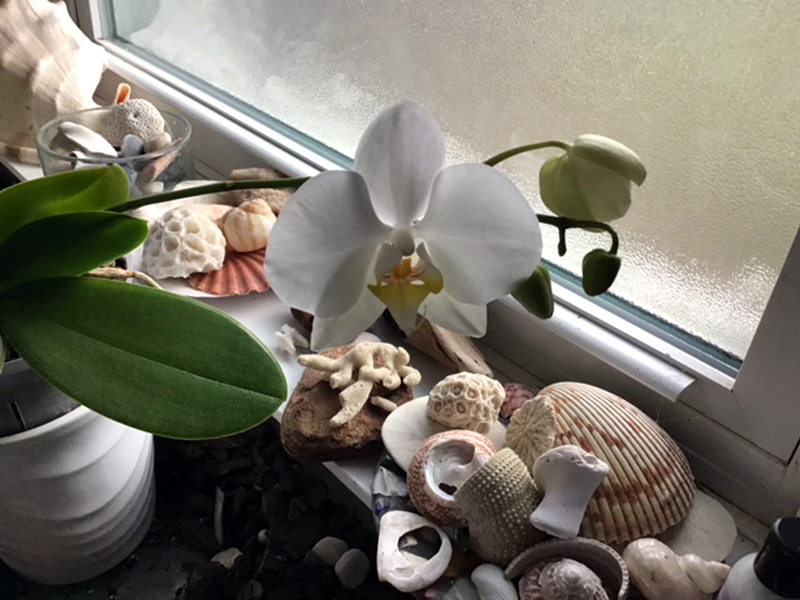
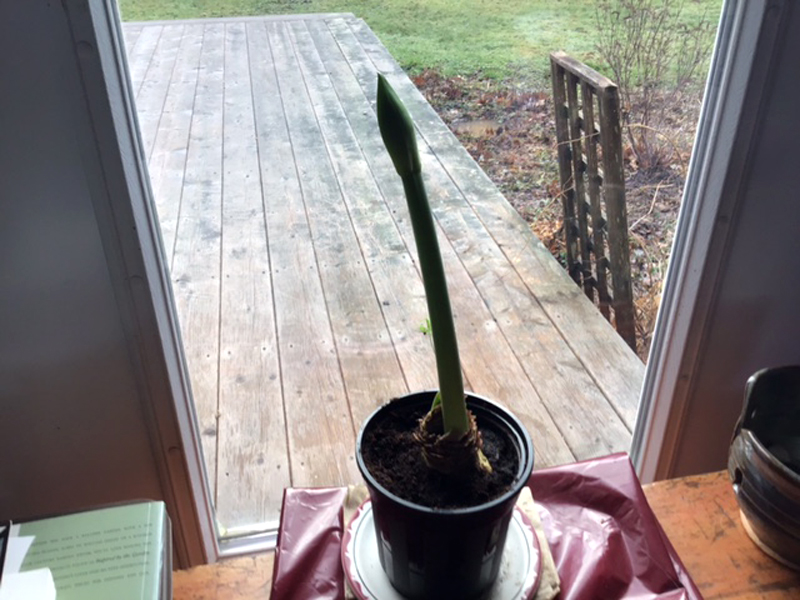
While we have been absent, the orchids and Amaryllis continue to grow and flower. It is warm outside. We can appreciate the clover cover crop and the chipper mulch.
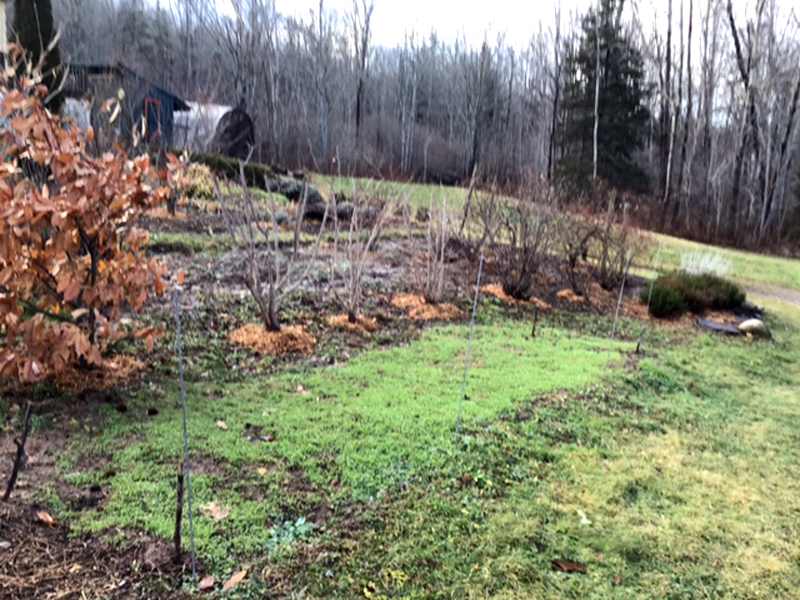
It is warm outside. We can appreciate the clover cover crop and the chipper mulch.

We dream about an electric car, charging station and additional solar panels on the garage roof. Time to think about Spring renovations.


What did we learn from the North that has direct application in Nova Scotia? It is a global society. We can effectively apply geographic technologies to our management of the landscape, whether forestry, agriculture, fisheries or mining.

The issues of climate change and COVID are both global concerns. We must, at our home place, understand and monitor these changes in our environment. It begins at the community level.

There is a role for the private sector in developing new technologies, and for educational institutions in both research and the application of these technologies.

We must continue to be vigilant, as we react to government response. Changes can happen at the political level, but we must monitor closely the actions of our institutions, e.g. civil service, schools, hospitals, universities and colleges, and continue to question the values evident in day-to-day society.

This week, my reading has diminished. Perhaps a trip to Gaspereau Press, Kentville will provide inspiration.

Postscript

A sign of the times. While we were away, we now have new neighbours on our side of Highway #201. Across the road, our neighbours have rented to a couple looking to move from BC. In addition, new owners are building a house on the West Inglisville road. Change, a new demographic, is healthy for rural communities.

Acknowledgements
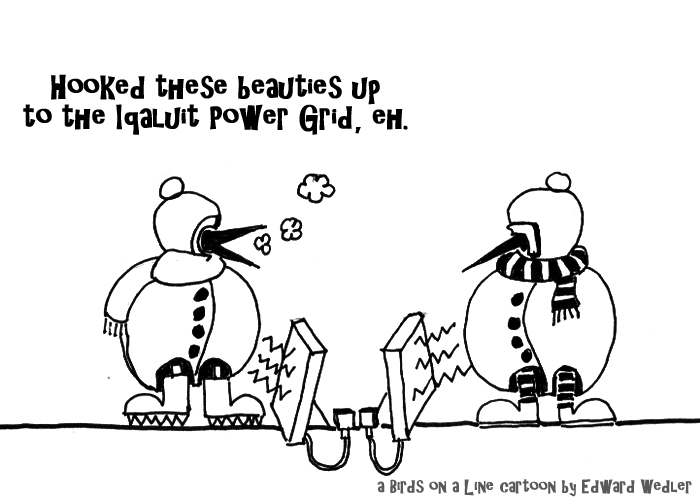
Edward added the graphics. Heather’s green thumb grows the plants.
Posted in biographical sketch

Lessons from the North

Winters are changing in the North.

The sea ice is not closing in as early. It is more difficult to reach the flow edge.

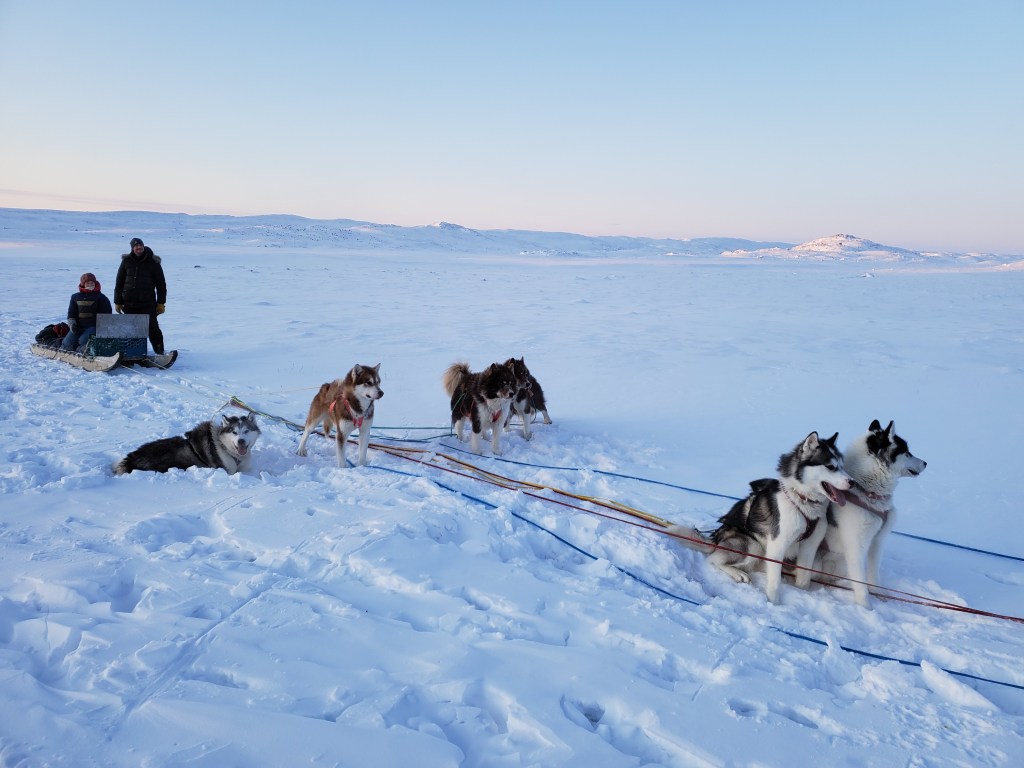
This year, we were not able to dog sled or skidoo out to the cabin because of ice conditions.

Under COVID, the importance of electronic devices and Internet service is critical to the sense of community.

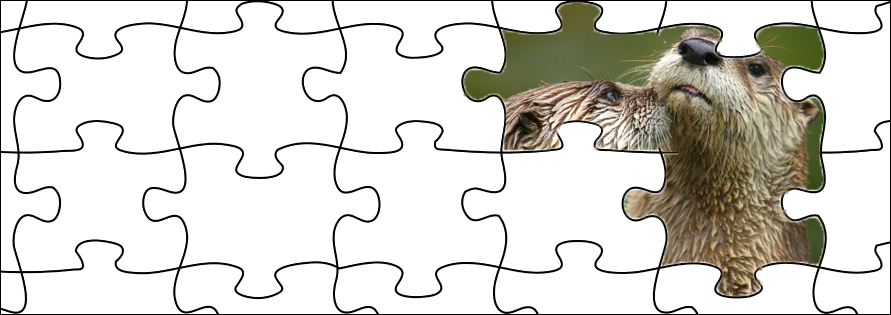
We spent more time indoors, playing traditional games: jigsaws, crosswords. Also, a new suite of board games: Swish, Photosynthesis, Ticket to Ride. These games showed the sophistication of game design.

It would appear that there is an opportunity to marry game design with GIS technology. We could develop new games based on the lifestyle of different geographies.

Imagine games that explore the lifestyle of living close to the land in Nunavut?

Another lesson is the food availability in the North. During our stay, we were treated to musk ox, ptarmigan, and Arctic char. Perhaps this is the basis of the ’palaeo-diet’ in the North?

Visiting Nunavut in the festive season, there was the opportunity to share some of the bizarre entertainment rituals of the South (e.g. TV shows). Take, for example, Mr. Bean’s Christmas or the National Lampoon Christmas; a far cry from present-day reality but a bridge across the generations.

The overriding message is that it is easier to explore these different geographies if you can access supportive geographic technologies.

“A Taste Above the Rest”

Understanding the impact of global changes, whether COVID or climate, on lifestyle and communities in different parts of Canada and beyond, demands such access.

That does not diminish the fact, with aging, these environments present added challenges. We look forward to our return to Home Place, and the nearby, suitably named Last Hope camp.

Acknowledgments

To Andrew, Julia, Quinn and Isla who made our stay possible and enlightening. Heather showed her usual adaptability. Edward added his touch.

Posted in Photo Essay

Iqaluit: the landscape

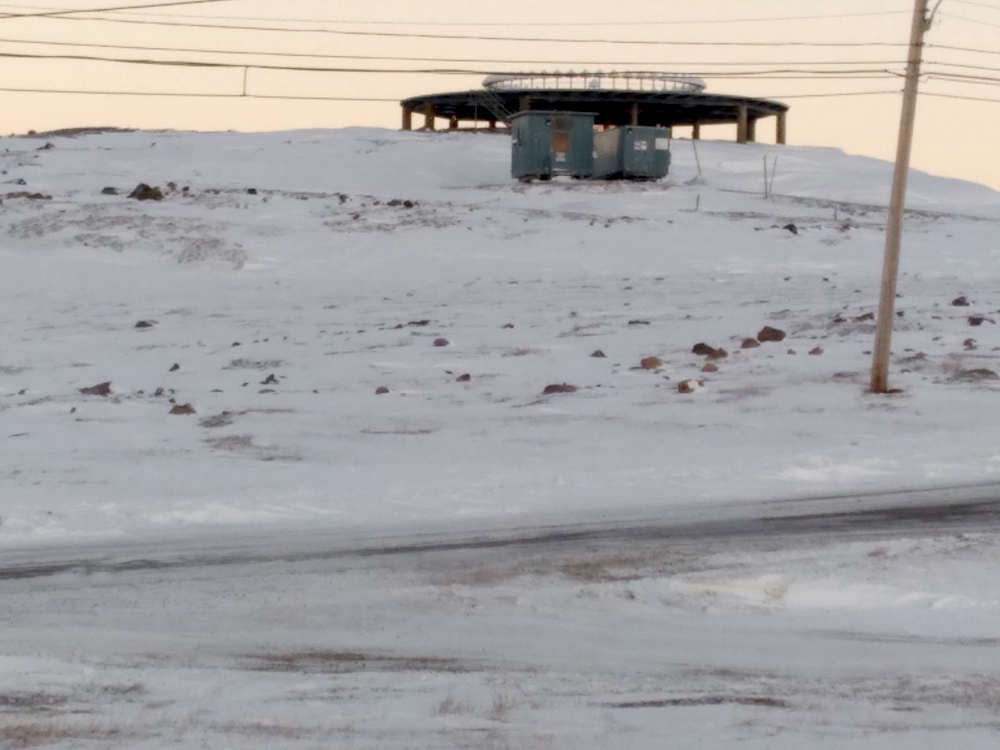
Since Christmas, we have stayed away from the downtown. Indeed, given COVID, most of the stores are closed. Instead, we have preferred to walk across the tundra, and rediscover ’old haunts’ from the time when we lived here. For example, we rediscovered the ski trails to the Road to Nowhere.

Heather has photographed the Winter landscape.

With the cold weather, we increased our time with books, crossword puzzles, jigsaw puzzles and various board games (new to us). The main challenge has been the BIG crossword, with 579 clues down and 594 clues across. Fortunately, perhaps, there seems to be an online Google industry for those addicted to the Christmas crossword. Although, for the purists, this may be considered ’cheating’.

We hope to be back in Nova Scotia next week, in 2022; COVID willing.

Meanwhile, enjoy the landscape.

Acknowledgments

Edward inserted the graphics. Heather was the photographer.

Posted in Photo Essay

Iqaluit , Nunavut

The day after we arrived, Iqaluit had its first Winter storm. It is now a week later. Most days, we have managed to get out for a walk downtown. Although with COVID many stores are closed.

The days are short. Sunrise 09:23. Sunset 13:44.

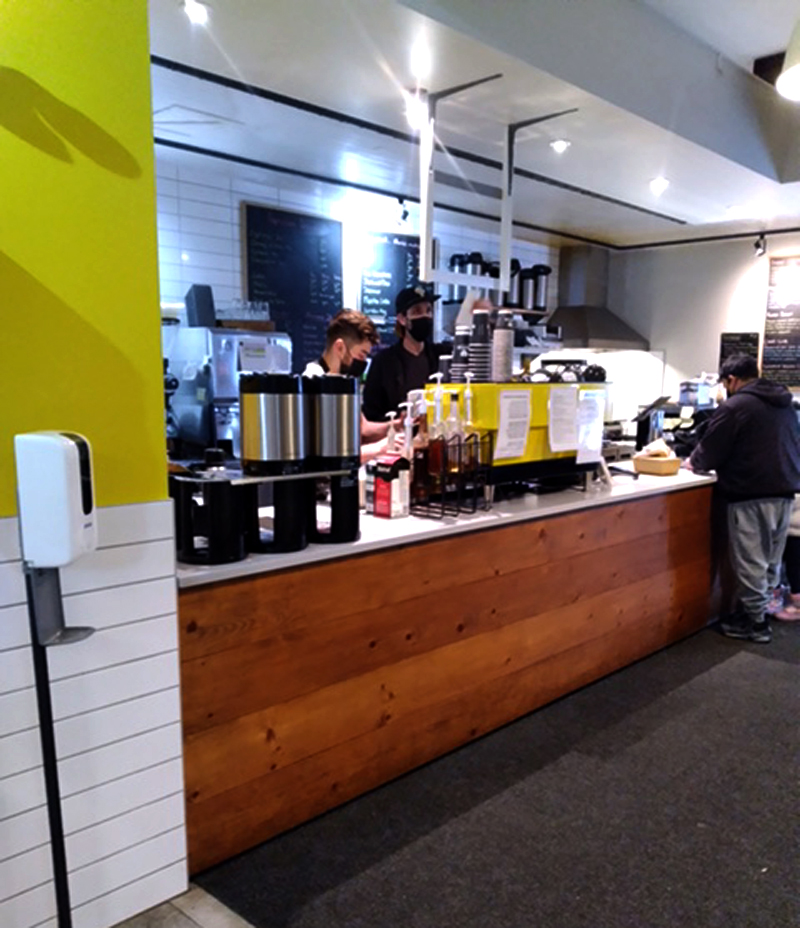
The Black Heart Cafe is only open for take out.

The North Mart is one of three grocery stores in town.

The legislative building is downtown.

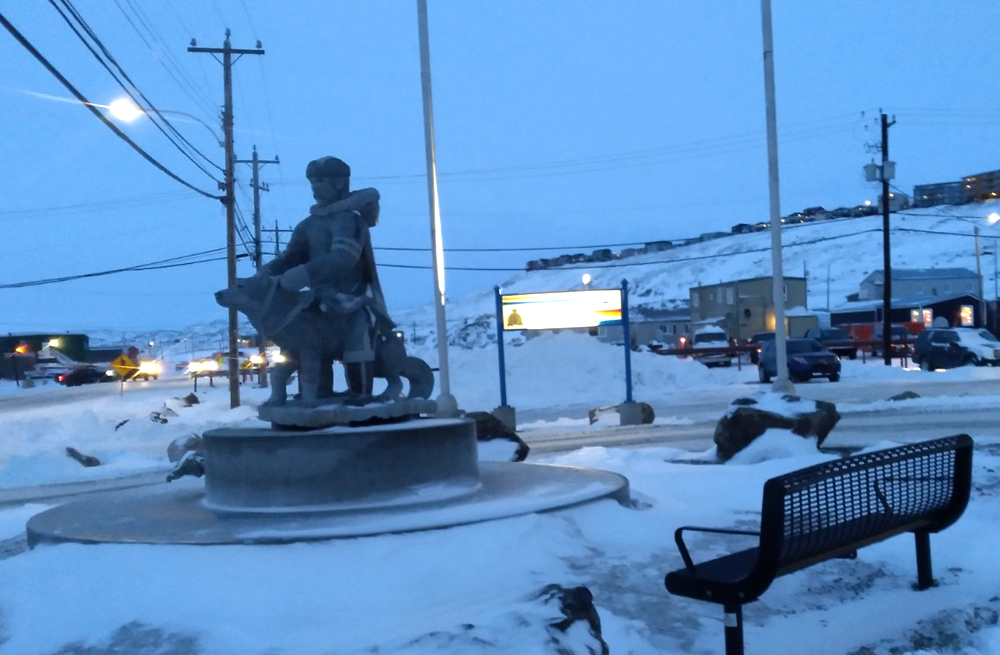
The building with the sculpture is the RCMP.

Of course, you can find the CBC in the North.

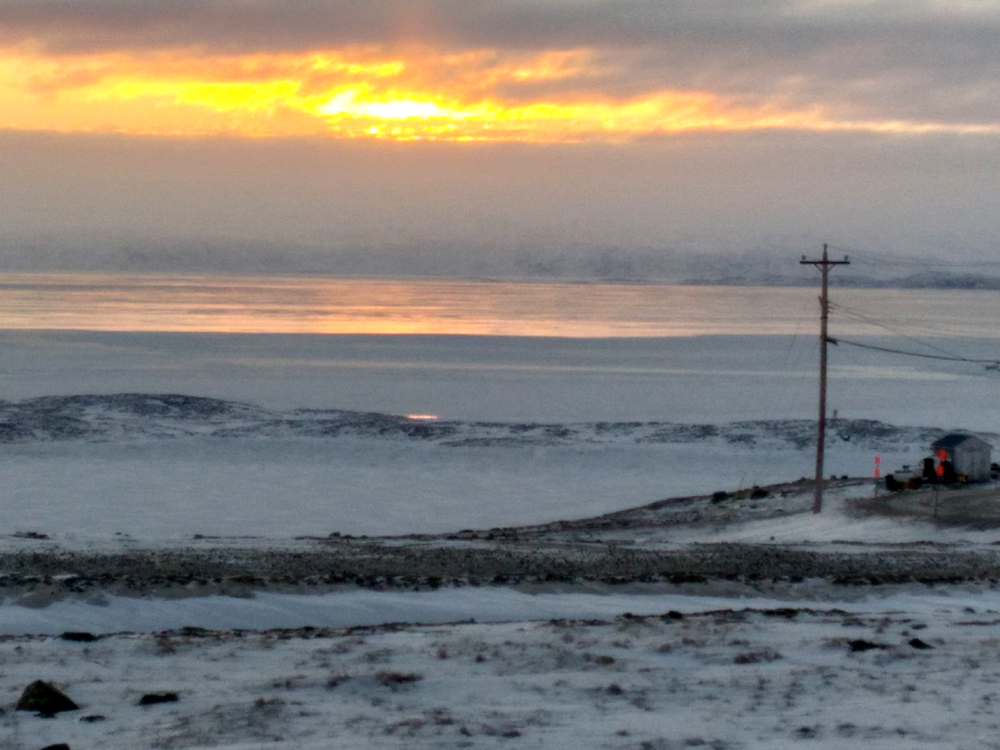
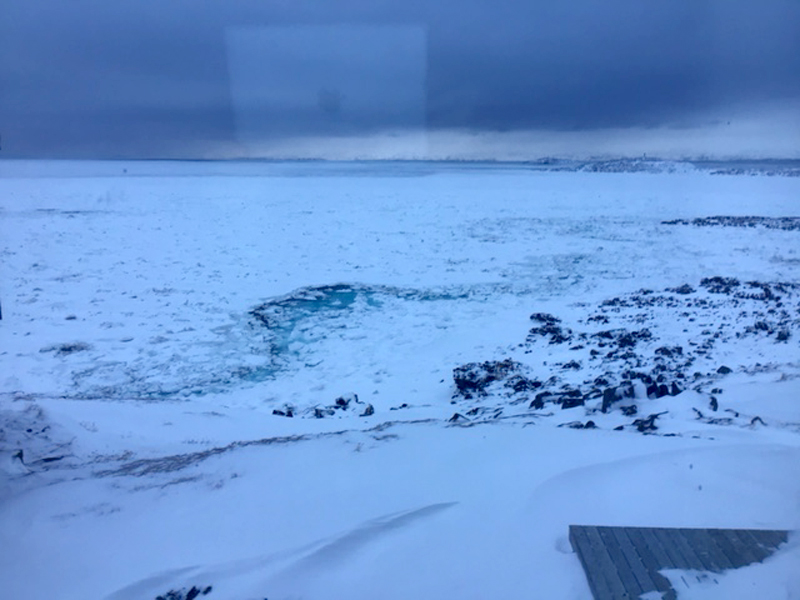
From Andrew and Julia’s house, we overlook the sea ice on Frobisher Bay.

Hope everyone has a wonderful family Christmas !

The sun rises on Christmas Day in Iqaluit.
Posted in Book Review

Arctic Dreams II

Sunrise over Iqaluit

Returning to Iqaluit, I find old books on the shelves from previous visits. That includes Barry Lopez, Arctic Dreams (see post Arctic Dreams). Meanwhile, this week’s issue of Emergence Magazine gives a tribute to the author, who died over a year ago.

The Internet service in Nunavut makes it a challenge to watch the film Horizons by Jeremy Seifert or read the essay ’An Unbroken Grace’ by Fred Bahnsen. First published in Notre Dame Magazine.

”Starlings show us a way around the dilemma of scale, a model for human cooperation and deference towards others. A murmuration shows the idea of genius residing in one individual, and recognizes that genius is actually possessed by community. Human genius ”might rise up and become reified in a single person in a group.” Barry said ’but it doesn’t belong solely to that person.”

Barry Lopez: ”one of the reasons we’re lonely is that we’ve cut ourselves off from the nonhuman world and have called this ’progress.’

Yesterday, we walked to downtown Iqaluit. It takes about forty five minutes each way. Stopped at the Arctic Ventures store. No new books jumped out at me. Sun sets around 3:15 pm.

Acknowledgements

Edward added the graphics and links. Heather shared the cold walk in the snow.

References

Barry Lopez, 1986, Arctic Dreams: Imagination and Desire in a Northern Landscape, Bantam Books.

Emergence Magazine. A Tribute to Barry Lopez. December 19, 2021.

Posted in biographical sketch

From the North

Friday, we safely made the transition from the Annapolis Valley to Iqaluit, Nunavut. Two flights through well-masked airports. This will be the last blog about the South for a while. (Woke up this morning to blizzard conditions).


From Laura Bright, at the Last Hope Camp.

Last Hope Camp image from Extinction Rebellion Facebook Page

”A storied landscape is the opposite of a commodity. Commodities are anonymous, interchangeable. They are bought and sold without feeling. The Mi’kmaw people never believed anyone could own Mi’kma’ki. They entered into Treaties of Peace and Friendship with Settlers. They never ceded the land. No indigenous culture treats land as a commodity. Land is sacred. Land is storied. It is time to listen and learn a different way to respect the land and the animals and each other.”


From Edward, CBS News: Fogo Island: Bringing new life to a remote Canadian fishing community (view the video).

Fogo Island image via CBS News

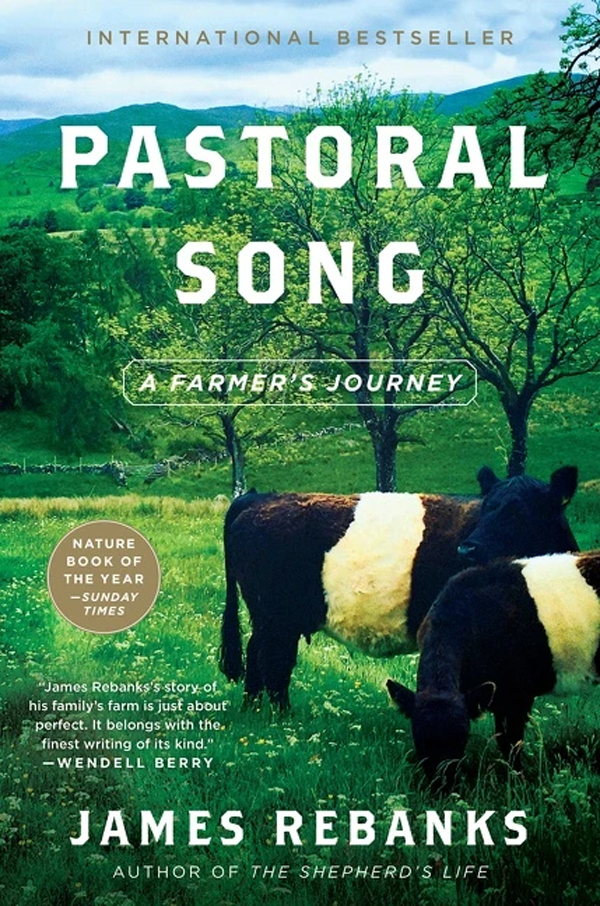
The final story about Place is James Rebanks’, Pastoral Song: A Farmer’s Journey about farming in the Lake District.

This is a book about what it means to love and have pride in a place and about how, against all odds, it may still be possible to build a new pastoral.”

Acknowledgements

Laura Bright for the quotation about storied landscapes. Edward for finding the Fogo Island link. Heather has travelled North with me.

References

James Rebanks, 2020, Pastoral Song: A Farmer’s Journey, Custom House.

Postscript

We look forward to rediscovering the changes in Northern life. It has been a couple of years. From the Qikiqtani Inuit Association, Inuit Myths and Legends. Inuitmyths.com

From the bookshelf, Qaunaq Mikkigak and Joanne Schwartz, 2011, The Legend of the Fog, Inhabit Media.


Posted in Book Review

The Stepsure Letters

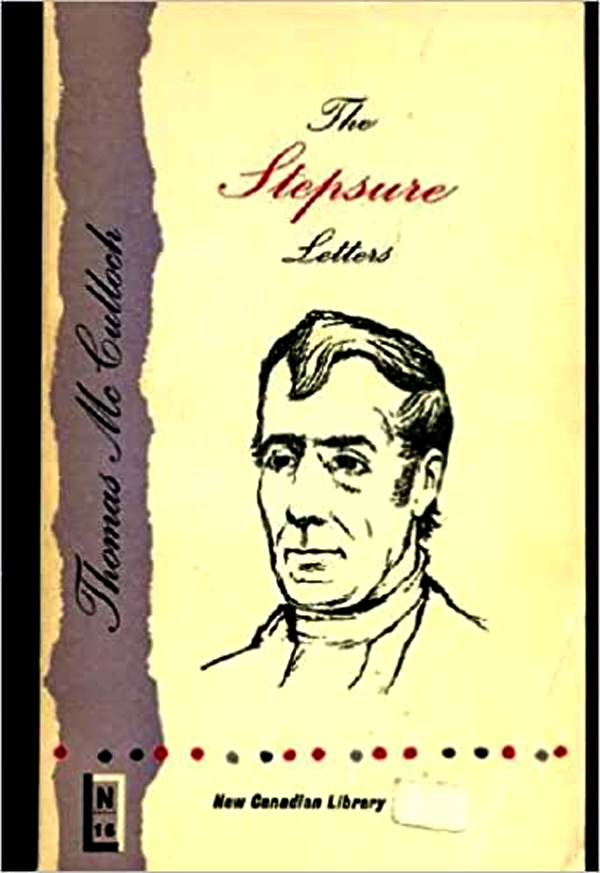
Through interlibrary loan, I received Thomas McCulloch ’s The Stepsure Letters. Published in the New Canadian Library series by McLelland and Stewart in 1960. It contains eighteen letters written by McCulloch to the Editor, Acadian Recorder in 1821-22. The letters were originally published under title The Letters of Mephibosheth Stepsure.

In the New Canadian edition, there is an Introduction by Northrop Frye.

”McCulloch is the founder of genuine Canadian humour: that is, of a humour which is based on a vision of society and is not merely a series of wisecracks on a single theme.” p. ix.

In the words of John A. Irving,

”When he died in 1843, Nova Scotia lost its ablest and most persistent champion of liberal education.” p.153.

“Long before Joseph Howe began his work, McCulloch was teaching the people of Nova Scotia the new ideas which were ultimately to change the whole system of government. Howe himself used to say that he learned the principles of responsible government from a man in Pictou.” p.156.

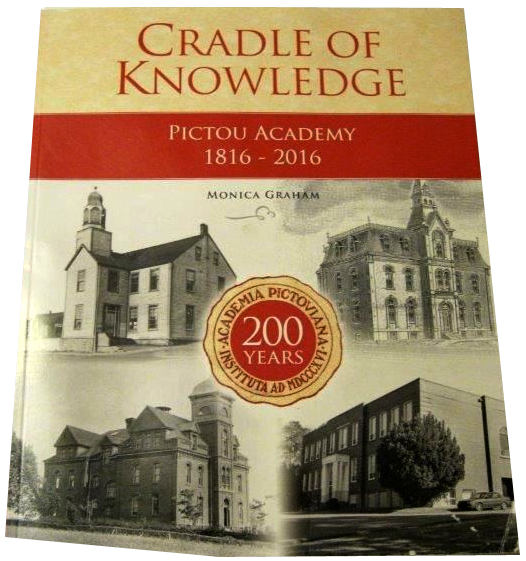
This weekend, I found in the New Glasgow library, Monica Graham ’s book Cradle of Knowledge, Pictou Academy 1816-2016.

McCulloch’s Dream p.1
”Rev Dr. Thomas McCulloch stepped ashore in Pictou in 1803 with a globe mapping the earth tucked under one arm. Under the other arm, he carried a second globe mapping the stars.”

p5.
“A liberal education involves training and study that develops students’ intellectual abilities, piques their curiosity about the world and teaches them how to learn, rather than instructing them in specific professional or manual skills. The term is not a political label.”

p.12.
”Also about 1824-25 Academy supporters and its liberally-educated graduates became increasingly outspoken against the oligarchic political system that saw the province governed by a wealthy minority of Halifax Anglicans. Pictou’s rebelliousness gained the town a reputation as the provincial centre of reform politics.”

When I visited the MacDonald Museum last Tuesday, I found a second-hand copy of Joshua Slocum ’Sailing Alone around the World’.

It starts:
“In the fair land of Nova Scotia, a maritime province, there is a ridge called North Mountain, overlooking the Bay of Fundy on one side and the fertile Annapolis Valley on the other. On the northern slope of the range grows the hardy spruce-tree, well adapted for ship-timbers, of which many vessels of all classes have been built”.

Slocum was born in Mount Hanley.

What are the lessons ?

Over two hundred years ago, McCulloch was championing liberal education. We need McCulloch today to challenge our educational institutions, to provide genuine Canadian humour. Perhaps, too, we need more Joshua Slocums from rural Nova Scotia.

Acknowledgements

Thanks to Library staff for access to these books. Edward added the graphics. Heather joined me on the trip to New Glasgow.

References

Thomas McCulloch, 1960, The Stepsure Letters, McClelland and Sewart.

Monica Graham, 2015, Cradle of Knowledge, Pictou Academy 1816-2016, Pictou Academy Educational Foundation.

Capt. Joshua Slocum, 1999, Sailing Alone around the World, Reprinted Sheridan House.

Posted in Event Review

Celestial Body

This Tuesday, I attended the Strategic Tourism for Areas and Regions (STAR) meeting at the MacDonald Museum in Middleton.

There were five sessions over two days in Windsor, Kentville, Wolfville, Annapolis Royal and Middleton. The hosts were ACOA and the Valley REN. The keynote speaker was Richard Innes, Brain Trust Marketing and Communications. He has been hired as the STAR consultant. The project is designed to lay a foundation for responsible, collaborative, sustainable community-based tourism.

Richard provided an overview of the planning context, the creation of a working committee and steps leading to a plan. At the Middleton meeting there were approximately twenty community members in the audience.

The concept is to develop sustainable tourism for areas and regions. Richard Innes has completed a similar assignment for the Eastport Peninsula, Newfoundland.

Comments from the audience included: need for infrastructure, sustainable tourism, augmented reality.

My own comments are along following lines.

We should develop sustainable tourism consistent with the values for sustainable forestry and sustainable agriculture. There are many opportunities for experiential tourism which include hiking, bicycling and canoeing. If the focus is on ’areas’ and ’regions’ then it is critical that we develop ’geographic information’ infrastructure, available both online and hard-copy products.

We may want to learn from other jurisdictions, for example in Newfoundland we have the Shorefast Foundation on Fogo Island. Likewise, tourism destinations in the UK, USA and Europe.

Part of the tourism infrastructure is training guides to lead infrastructure opportunities. There are many stories about ’The Mountain and the Valley’. This could be extended in support of experiential tourism.

The region has never fully realized the potential of the Annapolis Heritage River. There should be links to existing festivals, like Devour and Deep Roots festival.

Given the unique character of the landscape from the Bay of Fundy, North and South Mountain, and the Valley, there are many stories that can be developed within the context of Sustainable Tourism.

Given my own personal experience at COGS, I would promote the concept of a new program which combines ’geographic information’ with sustainability in forestry, agriculture and tourism. This would also permit access to new software tools e.g. AI, Augmented Reality, and new devices. Sustainability could include different modes of transportation for all segments of society e.g. from electric bikes to fishing boats.


Tonight (Wednesday) I plan to attend the Municipality of Annapolis County meeting in Bridgetown (weather permitting). I did attend. It was a town hall style meeting for residents of Bridgetown hosted by Warden Alan Parish and Councillor David Hudson.

The CAO was unable to attend because of the weather. Topics, under discussion, were the sale of the elementary school, the sale of the town hall and the current tax rate. It was encouraging to hear the voices of both long term residents as well as newcomers to the community. I had planned to raise the question of sustainable forestry in Annapolis County , but felt that it was outside this context.

Acknowledgements

Thanks to Celes Davar for information on the STAR event. Anne Crossman on the Municipal event in Bridgetown. Edward for adding the graphics and links.

Reference

The Self-guided PiRat Ghost History Hunt, Available at the App Store PiratGhostHistoryHunt.com It is an Illustration of Augmented Reality concept.

Posted in Creative writing

Tale of Two Buses

Last week, Heather and I went to check out the new encampment by Extinction Rebellion. It was September 2020 when we camped with them to protest against clearcutting and spraying parcels of forest off the Rifle Range road in West Inglisville (see Anatomy of a Protest).

The protest was deemed a success. Here we are, fifteen months later, facing the same issue in the Beal’s Meadow area, closer to Trout Lake. Obviously, nothing has changed in terms of Clearcutting on Crown Land in Annapolis County.

On both occasions, we discovered old derelict school buses, like this one shown, lost in the woods. It is our assumption that these buses were used as administrative vehicles for harvest crews or tree planters.

The buses are a poignant reminder that this landscape has been used (abused) for several decades. Imagine the stories that could be told about the relationship between the communities, the people, the wildlife and the land.

We have a literature that recognizes this relationship. It could be the writing of Ernest Buckler, or Dave Whitman writing about Roxbury, or the work of Mike Parker, or go back further to the Tent Dwellers. The lakes and wetlands have been given names: Eel Weir Lake, Beal’s Meadows, Crispe Bog. Where do they come from?


This week, we see two events.

  1. Strategic Tourism for Areas and Regions (STAR). STAR is an industry led regional tourism development planning process to help grow the tourism economy in the Annapolis Valley. Imagine the stories which could be told about this landscape.
  2. Community of Bridgetown meeting. December 8,2021. In September 2020 the then warden Timothy Habinsky and Larry Powell came out to the camp and expressed support for Sustainable Forestry and against Glyphosate spraying and its potential impact on our water supply. What is the position of the new Council?

Finally, from Emergence Magazine, Amitav Ghosh, in “Beings Seen and Unseen” (listen to the interview), ’discusses how the widespread silencing of nonhuman voices deeply entangled in capitalism and the geopolitical structure that sustains it, and calls on storytellers to lead us in the necessary work of collective reimagining: decentering human narrative and re-centering stories of the land. (photo by Sumit Dayal via Emergence Magazine)

Acknowledgements

Heather shared in our discovery of the landscape and wildlife on South Mountain, whether by bicycle, ski or on foot. Nina Newington has provided an inspiration. Edward contributed the graphics.

References

STAR meeting. Tuesday December 7th MacDonald Museum, Middleton. 2 pm

County of Annapolis meeting. Wednesday December 8th. The Legion, Bridgetown. 7 pm.

Postscript

Today (Sunday) we went to find the ’blue bus’. There was fresh snow on the ground. Unfortunately, we ran out of light. I will find it, and share in a future blog.

Posted in Book Review, Event Review

Mythology

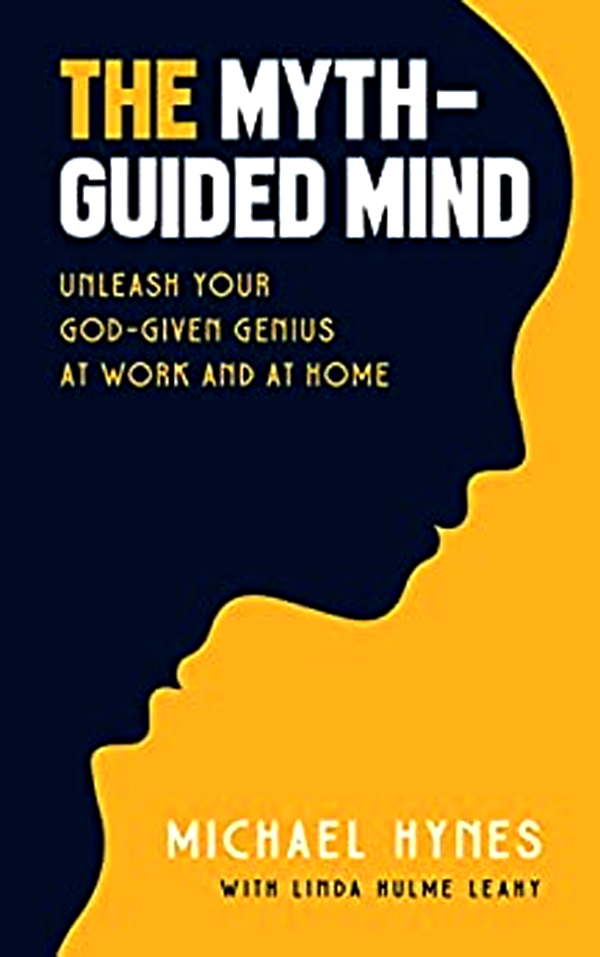
I finished reading Michael Hynes, “The Myth-Guided Mind: Unleash our God-given Genius at Work and at Home“. The book was written with Linda Hulme Leahy, who has a heritage apple farm in Round Hill. That likely explains why I was able to obtain a copy at Endless Shores Books in Bridgetown.

I found this to be a remarkable book. From the beginning, the title could be a word play on the mis-guided mind. I particularly enjoyed the references to the work of Joseph Campbell. It is a short book (123 pages) with chapters titled:

e.g.
Mental Health, Not Mental Wealth;
Somatics and Embodiment – A Primer;
The Myth will Choose You;
Becoming an Expert in Being You.

I plan to read it a second time, very shortly.


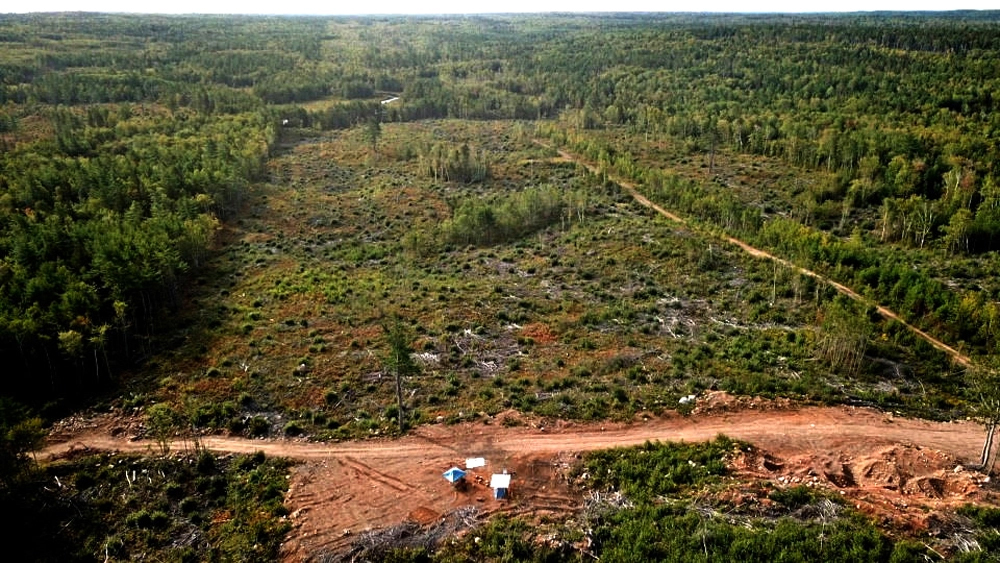
There is planned clearcutting again on South Mountain. Heather and I drove along the Trout Lake Road (from Highway #10) and then walked along the woods road towards Inglisville. To date, there has not been any new cutting, however, along with Extinction Rebellion, we shall monitor the situation.


I did receive a report from Jeff Wentzell on the MIT Agri Tech seminar this week. Presentations included drone technology, greenhouse AI tech and aquaponics.

My vision is somewhat different. How can we use Geomatics technology to better understand the changes in agricultural land use in the Annapolis Valley? Better information, leading to better decision making.

Acknowledgements

Jeff Wentzell for his feedback on the Agri Tech seminar. Heather Stewart joined me on a walk in the woods, near Cranberry Lake. Edward added the graphics from Florida.

Reference

Michael Hynes with Linda Hulme Leahy, 2021, “The Myth-Guided Mind: Unleash your God-given Genius at Work and at Home, Catapult Press. (Michael Hynes is a Toronto-based corporate and personal coach).