Posted in Opinion

Historical Image Analysis

In 1980, the Nova Scotia Land Survey Institute (NSLSI) had programs in Surveying, Cartography, Planning, Photogrammetry.

The arrival of the Scientific Computer Programming (SCP) program brought access to modern computer technology. It included mini-computer systems from Prime and DEC. Shortly thereafter, the Remote Sensing program was applying Dipix image analysis technology, the GIS program was applying Esri Arc/Info technology. Programming students, whether in the SCP program, the Business Computer Programming program or the Computer Graphics program were able to customize these systems to meet the needs of both government and industry partners.

In the world of GIS, digital objects were identified as points, lines, polygons. In the world of Image Analysis, digital objects were identified as pixels and rasters. Digital photogrammetry allowed for the manipulation of aerial photographs. Digital image analysis gave us the same capability with satellite imagery.
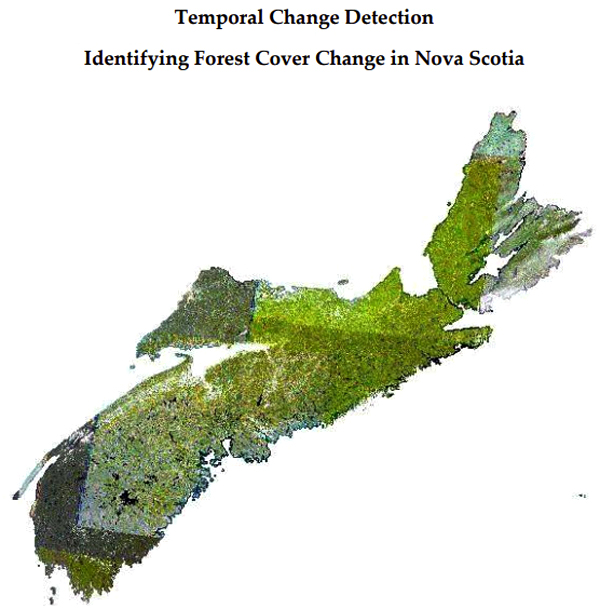
As we move forward from the AF Church maps, we can add images/photographs of the changes in the landscape. We can identify changes in forest cover. How much clear-cutting has taken place on crown land? When, and where? (Image taken from HERE)

We can identify changes in agricultural practices. The removal of Apple orchards in the Annapolis Valley. The increase in the acreage of vineyards.
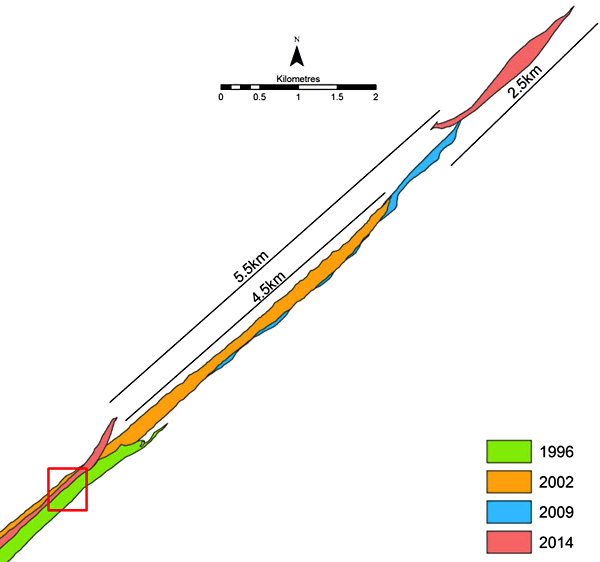
Or we can obtain historical imagery for Sable Island. And identify the changes in the shoreline over the last sixty years. (Image taken from HERE)

The task at hand is to go back to the aerial photograph and satellite imagery libraries whether in Halifax or Ottawa, and to undertake change analysis and marry these changes with settlement patterns and census information. These types of analyses can be undertaken in today’s Geomatics environment.
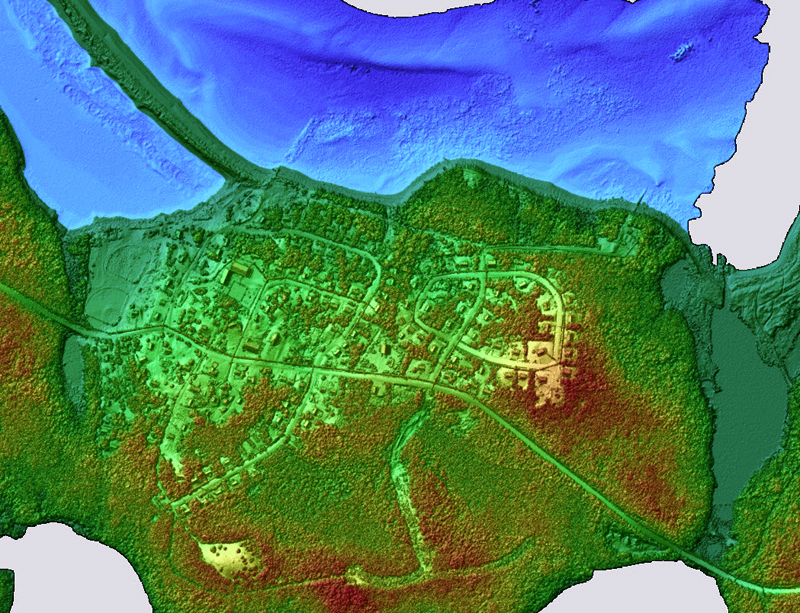
With the availability of LiDAR and other sensors, the results can be analyzed and displayed in three dimensions. In a perfect technological world, we would be able to use a calendar slider that allows us to view the landscape at any particular moment in time, given the appropriate imagery, and the corresponding base maps. (Image extracted from HERE)

Acknowledgements

David Colville provided the link to the Sable Island project. Edward Wedler and John Wightman advised on Remote Sensing.

References

David Colville, Sarah-Marie McDonald, and Suzanne Monette, 2013, (PDF) Temporal Change Detection: Identifying Forest Cover Change in Nova Scotia.
David Colville, Brittany Reeves, Bill Livingstone, Heather Stewart, 2019, (PDF) Mapping the Landscape of Sable Island.
CBC Sable Island undergoing coastline retreat.
AGRG TopoBathy LiDAR website

Postscript

The Truro workshop on the AF Church Historical Maps, Truro, August 14, 2021, includes presentations on Map Conservation, Map Digitization, Geomatics, and Programming.

Posted in Article Review

Historical GIS

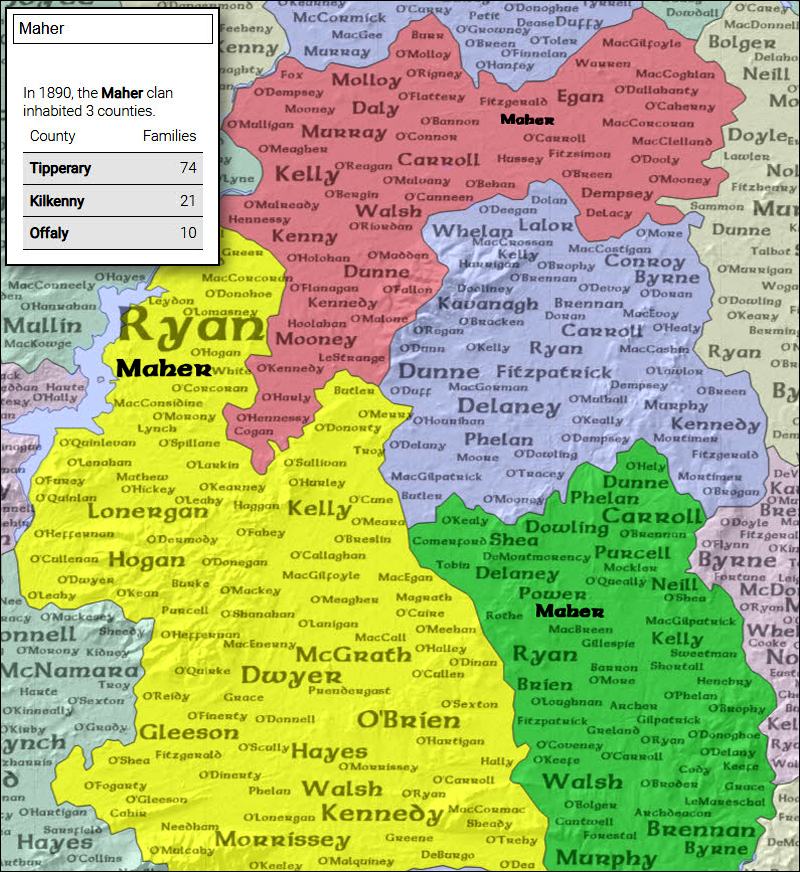
In preparation for a presentation at the specialist workshop on AF Church Historical Maps in Truro on August 14, I checked with David Raymond on his current definition of ‘Historical GIS’. In return, he sent me a link to a product developed by Esri’s StoryMaps team ‘Mapping Irish Surnames ‘. Of course, I could not resist keying in my surname, Maher.

In 1890, the Maher clan inhabited three counties.

County Families
Tipperary 74
Kilkenny 21
Offaly 10

How does this relate to the AF Church historical maps?

The Church maps give us cartographic coverage for Nova Scotia. The maps show us the existing road infrastructure, schools, churches, stores, mills, post office etc.. ln addition, there is the location of houses with the owner’s name.

Put in GIS terms, we have a point coverage (house location) and attributes (owner name). We could create a point layer (owner name) and also a polygon layer (county). This would allow us point in polygon analysis, thereby replicating the functionality of the Irish Surname project.

There are a number of GIS/Cartographic challenges. We must ensure that the map layers in the GIS all adhere to the same reference system and projection. This would ensure that the buildings are in their correct position on the earth’s surface, and that they lie within the correct county boundary.

The challenge for the attendees of the workshop will be to consider other features/content of the AF Church maps which can be studied within a GIS context (e,g. other infrastructure – mills, stores, hotels churches etc., plus other historic sources which can be geo-referenced to a modern representation of the Church maps.

In a follow-up blog, I will consider other data sets which may help us understand the changes in landscape, as the result of changing settlement patterns and land use. This will reflect changes in cartography, GIS technology and other new technologies such as drones, LiDAR, ground-penetrating radar.

Acknowledgements

Thanks to David Raymond for sharing his knowledge and links. Edward Wedler, John Wightman and others, reflected on the availability of historical satellite and aerial photography.

References

AF Church Historical Maps Specialist workshop, August 24, 2021, Truro, NS. Sponsored by Heritage Trust of Nova Scotia, Royal Nova Scotia Historical Society, KITH Observatory Inc.

Esri StoryMaps Team, March 2020, Mapping Irish Surnames.


POSTSCRIPT
I challenge COGS to explore mapping development/research opportunities with ancestry.com
from Edward
Link: https://video.mainepublic.org/show/finding-your-roots/
from Bob

Posted in Event Review

COGS visit

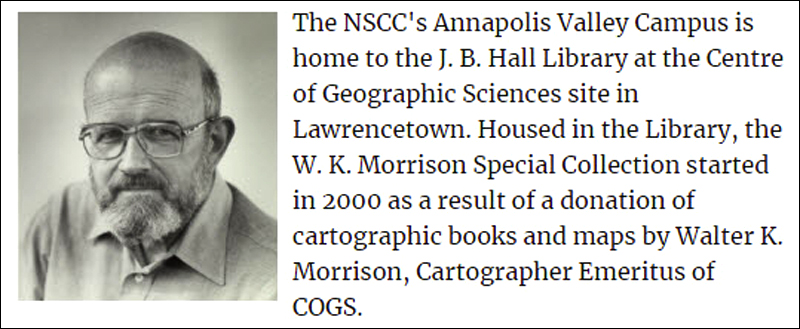
On Friday, I went to COGS to drop off a couple of library books. The building was deserted, and COVID protocols were in place. I did manage to spend time in the Board Room to look at the maps from the W.K.Morrison Special Collection. Walter joined the NSLSI as a Cartography instructor in 1966. He retired in 1985.

I had the opportunity to look closely at the eighteenth century nautical charts of DesBarres’ Atlantic Neptune, as well as the Herbert Moll map 1736-45 that shows the location of Annapolis Royal.

Perhaps for the first time, I fully appreciated the geographic content, the workmanship and creativity in design. Cartography is a wonderful combination of both scientific and artistic endeavour.

Ancestral Landscape of Sikniktuk

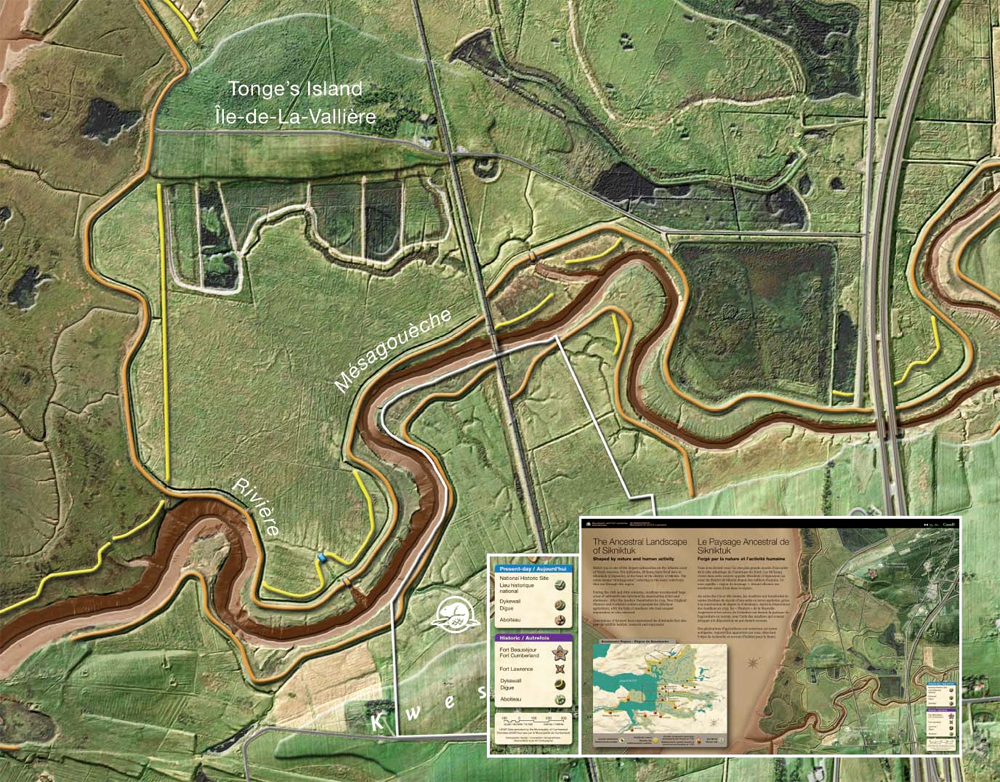
On the ramp leading to the Library, outside the AV Room, there is a stunning modern day exhibit of the maps by Marcel Morin, Lost Art Cartography. Maps include Wines of Nova Scotia, Landscape of Grand Pre, the Ancestral Landscape of Sikniktuk and the eighteenth century trade at Beaubassin.

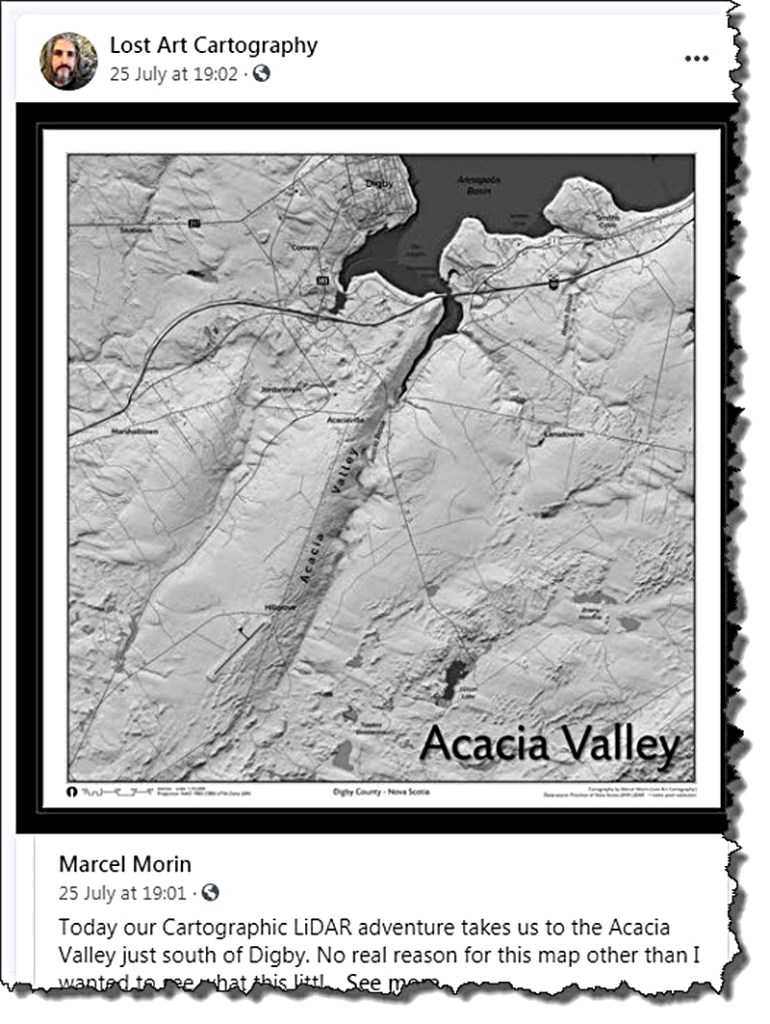
In these maps, Morin adds three dimensional representation of topography derived from LIDAR. Again, a modern example of scientific and artistic integration. Morin is a graduate of the COGS Cartography program, living in the Annapolis Valley.


ACRONYMS

In the late afternoon, I joined John Wightman for a beer. We talked about the story behind the different acronyms.

COGS: College of Geographic Sciences

This was invented in 1986 to replace NSLSI. With the formation of the NSCC, it became the Centre of Geographic Sciences. John liked the concept of cogs in a wheel. The different disciplines working together to drive forward an engine or machine. Again, the combination of artistic design, science and the enabling technology.

CANMAP

Another JFW invention. It stands for Canadian Numerical Mapping Applications. This suggests the use of computer technology, a focus on applied science, and a uniquely Canadian perspective. CANMAP has traditionally supported student graduation awards at COGS.

AGRG: Applied Geomatics Research Group

AGRG is located at the Middleton site of the Annapolis Valley NSCC campus. Again the acronym suggests a focus on applied science, using Geomatics technology, undertaken by a group of researchers.

These acronyms reflect the values and interests of a community of individuals, based in rural Nova Scotia, Lawrencetown. There are , of course, many side stories. For example, the establishment of a similar program, modelled on the COGS curriculum in Indonesia. Or the relationship between COGS and the Environmental Systems Research Institute (ESRI) in California.

Postscript.

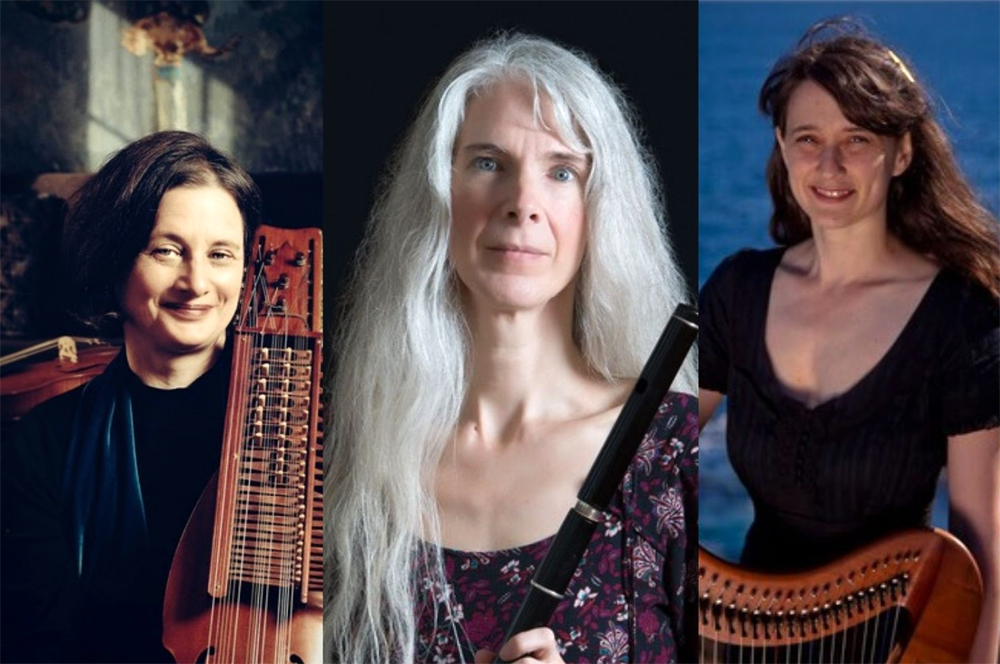
Last night, Heather and I enjoyed listening to the nyckelharpa at the Dawn Oman Art Gallery in Bridgetown. Presented by the Harpaflojt Trio.

Acknowledgements

John Wightman for his memories of NSLSI and COGS. David Raymond for encouraging a closer look at the WK Morrison Special Collection. Edward and Heather for their ongoing support.

VISIT COGS ! Preferably, once the students and faculty have returned in September. Check out the Story of COGS web site.

Posted in biographical sketch

Musique Royale

On Saturday, we hope to attend the Musique Royale concert by the Harpaflojt Trio at the Dawn Oman Art Gallery in Bridgetown.

It will be the third performance weekend in a row. Last weekend, it was Lisa Huyer and ‘Lief Forever’. Supporting musicians included Shelly Wallace, Mike Donnelly, Michael Robertson, Ray Devries and Patrick O’Brien.

From the Lisa Huyer collection of songs, I was impressed by the way each told a story about living in a place, within a community, in these challenging times.

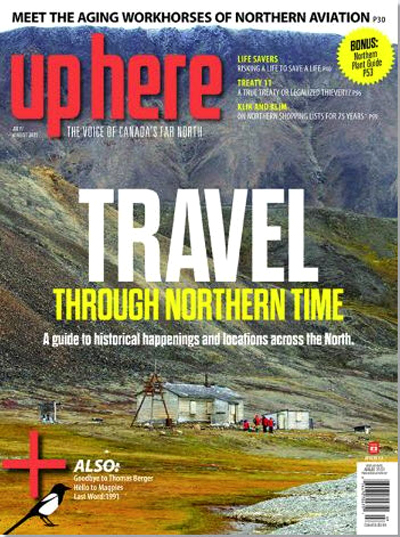
As usual, because of Dawn’s connection to the North, I had the opportunity to catch up on back issues of ‘Up Here’ magazine with articles on the Yukon, Northwest Territories and Nunavut.

Afterwards, we headed to New Glasgow. Returning home, the sun was deep orange because of the smoke from the fires in the West. We took our usual route. Turning off Highway #102 at exit #10, passed Mill Village, MacPhees Corner, Cheese Factory Corner, Rawdon Gold Mines, Brooklyn before joining Highway #101 at exit 5, Windsor. On this route, there are long stretches of road where you can see the hills ahead of you, as you pass through the rural landscape.

Unlike the politicians who want to twin the #100 series highways, I like it the way it is.

Today, I received two gifts.

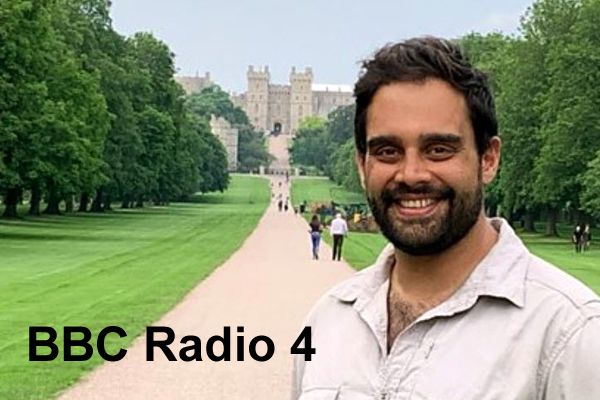
From my brother, a link to a Radio 4 broadcast on Windsor Great Park. From Frank Fox, the book by Jay Appleton ‘The Experience of Landscape’. My weekend listening and reading.

Postscript

From Brain Pickings, July 28, 2021, Beatrix Potter: A Life in Nature, by Linda Lear.

Acknowledgements

Dawn and Scott for bringing live music to Bridgetown. The talented local musicians. Heather shared the spectacular drive. Edward added the graphics. Peter and Frank for the gifts.

References

Dawn Oman Art Gallery, Bridgetown.

Up Here magazine, www.up here.ca

Jay Appleton, 1975, The Experience of Landscape, John Wiley.

BBC Radio 4, Open Country Windsor Great Park (aired July 29, 2021).

Posted in Article Review

North and South

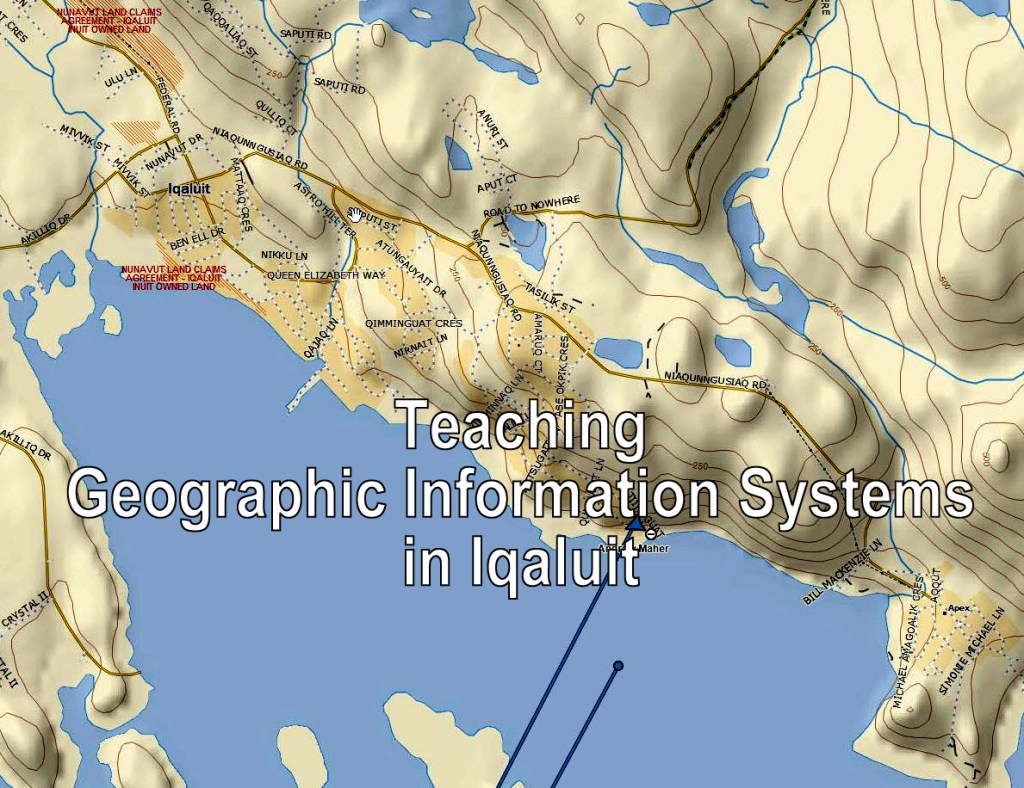
Julia, my daughter-in-law, sent me a link to an Esri Canada article on teaching GIS in Iqaluit. She makes a couple of excellent observations.

”I believe GIS and mapping can have a role in cultural reclamation and identity due to the power held by maps, as control over land and resources often begins with lines on a map … It would one day be my goal to integrate traditional Inuit knowledge (or IQ) into Esri mapping.”


From the South shore, Lunenburg Brian Arnott sent me to the latest issue of Harpers Magazine. It contains an essay by Leanne Shapton ‘Writ in Water’ on Roger Deakin’s indelible swims.

From Harper’s Magazine “Writ in Water”

Afterwards, I had to go to the bookshelf and find Deakin’s books:

Waterlog: A Swimmer’s Journey through Britain.
Notes from Walnut Tree Farm.

Shapton does a great job capturing the spirit of Deakin.

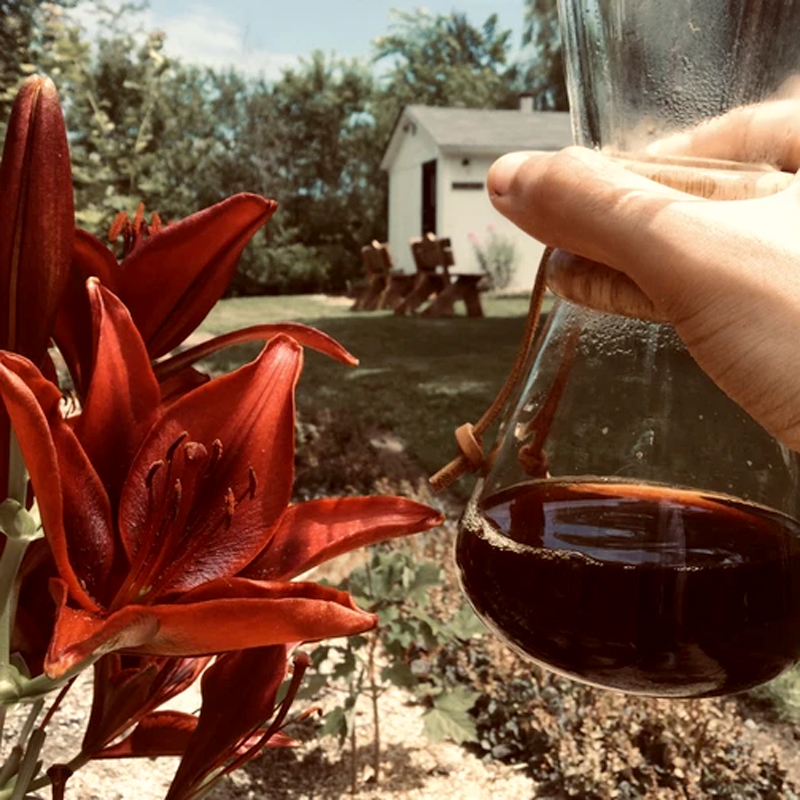
It is not often that a new enterprise comes to town. This week, we stopped at Brickbean Coffee Roaster. It is in Brickton on Highway #1. Josue Duff has opened a coffee roaster. Located in a beautiful garden, full of lilies. From the web site, you can order coffee beans from Mexico, Peru and Bolivia.

References

Esri Canada article. https://resources.esri.ca/education-and-research/adaptation-is-the-theme-for-nunavut-arctic-college-instructor-julia-landry

Leanne Shapton, 2021, Writ in Water. Harper’s Magazine, August. p.76.

Roger Deakin, 2000, Waterlog: a Swimmer’s Journey through Britain, Vintage Books.

Roger Deakin, 2009, Notes from Walnut Tree Farm, Penguin Books.

Brickbean Coffee Roaster website www.brickbean.ca

Acknowledgements

Thanks to Julia Landry and Brian Arnott for providing me with the North and South. Heather joined me at Brickbean and other travels. Edward added the graphics.

Posted in biographical sketch

Two Conversations

As part of my research on Historical GIS, I have been thinking about aerial photographs and satellite imagery of Nova Scotia. On the weekend, I went to talk to John Wightman in Bridgetown.

John has had several careers in his work life. He was Vice-Principal at NSLSI when they hired me to teach Scientific Computer Programming in 1980. John has had a long standing interest in the landscape and it’s geological structure. He reminded me that the Nova Scotia Department of Lands and Forests had taken aerial photographs of the provincial forest cover, every ten years. Likely since the 1950’s. He was also familiar with the work of the Canada Centre for Remote Sensing (CCRS) and their support of the LANDSAT series of satellites.

Given this background, it seems highly likely that we could document changes in the forest and agricultural landscape over the last ninety years. This would be a significant challenge for the total province, but we could sponsor a pilot project for a sub-region (eg. the Annapolis Valley).

Researching the availability of these images would take some time. However, the availability of imagery in combination with historical maps would give us the background story on landscape change.


My second conversation was online. In response to my recent blogs on maps and mapping, Sandra Barry sent me a poem by Elizabeth Bishop, ‘The Map’.

Sandra is a remarkable resource on the life and work of Bishop. Here is the poem, published in 1946 from the book, North and South.

THE MAP
 by Elizabeth Bishop
 
Land lies in water; it is shadowed green.
Shadows, or are they shallows, at its edges
showing the line of long sea-weeded ledges
where weeds hang to the simple blue from green.
Or does the land lean down to lift the sea from under,
drawing it unperturbed around itself?
Along the fine tan sandy shelf
is the land tugging at the sea from under?
 
The shadow of Newfoundland lies flat and still.
Labrador's yellow, where the moony Eskimo
has oiled it. We can stroke these lovely bays,
under a glass as if they were expected to blossom,
or as if to provide a clean cage for invisible fish.
The names of the seashore towns run out to sea,
the names of cities cross the neighboring mountains
--the printer here experiencing the same excitement
as when emotion too far exceeds its cause.
These peninsulas take the water between thumb and finger
like women feeling for the smoothness of yard-goods.
 
Mapped waters are more quiet than the land is,
lending the land their waves' own conformation:
and Norway's hare runs south in agitation,
profiles investigate the sea, where land is.
Are they assigned, or can the countries pick their colors?
--What suits the character of the native waters best.
Topography displays no favorites; North's as near as West.
More delicate than the historians' are the map-makers' colors.
 
(from North & South, 1946)

The appeal for me is the link between place, the cartographer’s craft and the poet’s sensibilities.

Two separate conversations, taking place, between Bridgetown and Middleton.

My hope is that COGS faculty and students believe it is worthwhile to develop an Historical GIS that incorporates both the early cartography and the subsequent image analysis.

Postscript

Tuesday evening, David Colville described a current student project that looks at the sand barrens ecosystem, using historical photography, in the Annapolis Valley. It is a collaboration with CARP. This fits well with my thinking. It covers the period 1930-2020.

Postscript

This weekend, we picked red currants, gooseberries and high bush blueberries. Lots of jams, jellies and desserts.

Acknowledgements

To John Wightman and Sandra Barry, both of whom, added to my initial story. David Colville provide current information on satellite imagery, and the student project. Edward Wedler added both his knowledge of remote sensing and technical skills.

References

Elizabeth Bishop,1946, North and South, (It includes the poem ‘The Map’).

Posted in Book Review, Opinion

Map Stories

If you want to discover stories about maps, a good starting point is the Library at COGS. Speak to the Librarian, Andrew Hannam. In my case, I recalled a book on the History of GIS. Instead, I found two other books.

Joan Dawson, The Mapmakers’ Legacy.
Anne Knowles, Placing History

The book by Dawson provided me with a context for the Church maps. Chapter 4, Natural Resources : minerals, wood and water, highlights the geology of Gesner and Dawson, as well as Church’s mineral map.

The second book, edited by Anne Knowles for Esri Press, contains essays in historical GIS.

Brian Donahue ‘Mapping husbandry in Concord: GIS as a tool for Environmental History’.
GIS mapping can help build a complex, productive engagement between people and the places they inhabit. It can pull together the layers of environmental history to inform how we care for our land today.” p.175.

Michael Goodchild ‘Combining space and time: new potential for temporal GIS’.
In short, the transition to object-oriented data modeling in GIS has solved some basic problems, allowing a rapid expansion of interest in the use of GIS to improve our understanding of historical and other time-dependent phenomena.” p.196.

While at COGS, I wanted to check out the Walter Morrison Map Collection.

Because of COVID, things were closed up, however I was able to find a listing of the maps online. I will have to return another day to take a closer look at the Church maps.

It remains remarkable that I can find these resources, locally available in Lawrencetown, and to find Cartographer Monica Lloyd responsible for the site.

The Church maps give us a picture of settlement in Nova Scotia from the mid-nineteenth century. What we need is a picture of the landscape from the pre-settlement (colonial) period to the twenty-first century (2021).

If we could look at landscape change, in Nova Scotia, in terms of forest cover, agricultural land use, mineral exploitation over time, we would have a better understanding of the impact of today’s land use management decisions.

What resources exist to map these changes? Within a historical GIS (see an upcoming blog post)?

Postscript

The Esri Press book was published 2008. What is the status of Historical GIS in 2021? We shall find out!

Acknowledgements

Andrew Hannam and Monica Loyd at COGS. David Raymond, Michael Goodchild and Brent Hall for their intellectual companionship. Edward Wedler added the graphics and links.

References

Joan Dawson, 2007, The Mapmakers’ Legacy. Nineteenth-century Nova Scotia through Maps, Nimbus Publishing.

Anne Knowles (Ed), 2008, Placing History. How maps, spatial data and GIS are changing historical scholarship, Esri Press.

The Walter Morrison Map Collection.

Posted in Book Review

Story Maps

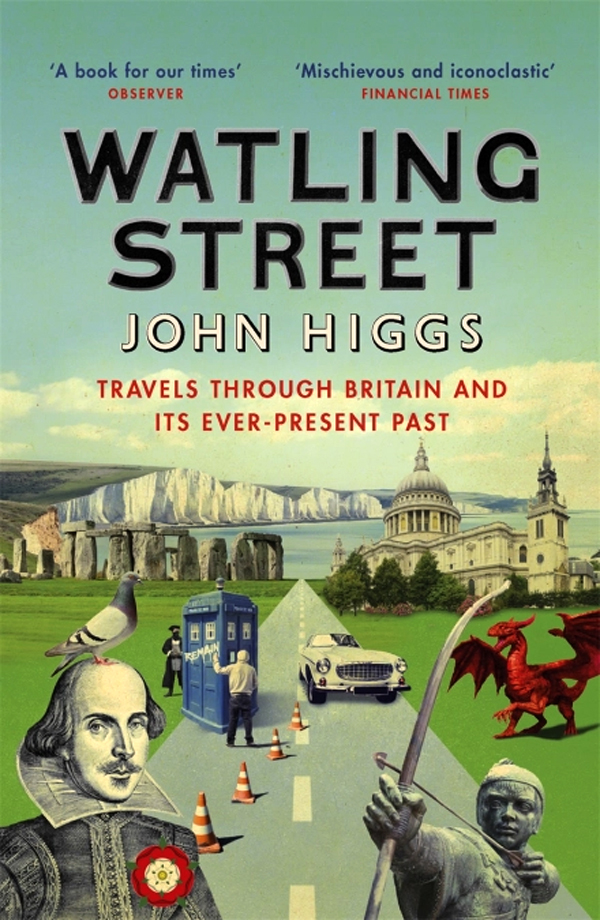
This weekend, we were away from the Valley at Pictou Lodge. It gave me the opportunity to read John Higgs’ book, Watling Street. Higgs uses the geography of Watling Street from Dover to Anglesey, stopping in Canterbury, St Albans and Rugby to tell the story of the British landscape

Watling Street is simultaneously mundane and extraordinary. It facilitates movement, which generates stories, which creates history.

At Western Park (Chapter 12), hé raises the Lloyd George question:

Who made 10,000 owners of the land and the rest of us trespassers in the land of our birth?” P.308.

Many who campaigned to leave the European Union did so because they want to ‘take their country back’“. There is one perspective from which the slogan becomes meaningful and one way it could be achieved.

When a new system to replace European farming subsidies is debated, the subject of land reform and a Land Value Tax may be finally be exposed to light.”

This presents a parallel to discussion in Nova Scotia about the definition and use of Crown Land.


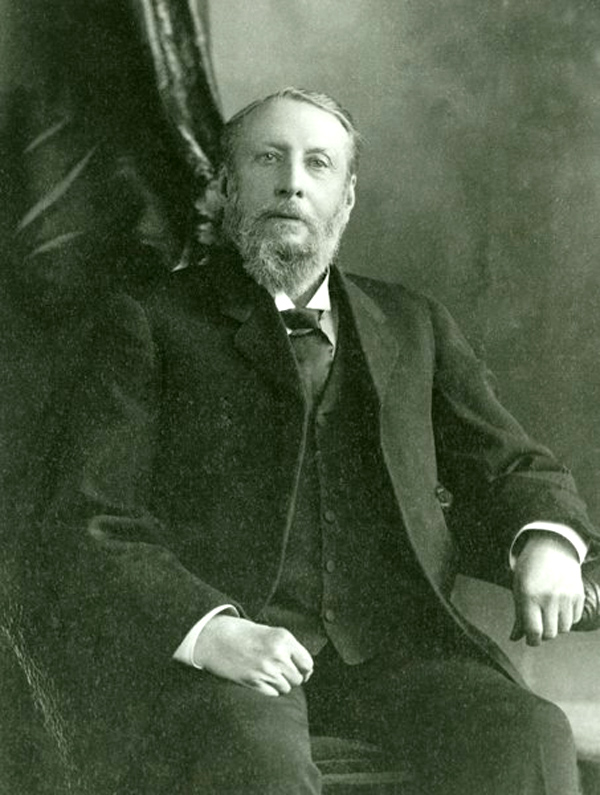
David Raymond sent me a paper by Charles Fergusson, published in the Dalhousie Review, on Ambrose F. Church, Map-Maker. Church published a series of topographical township maps between 1865-1888.

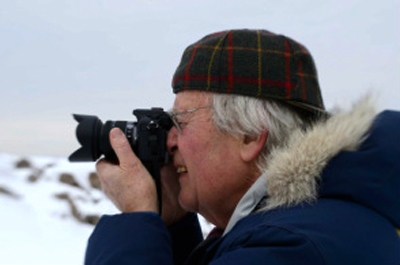
Photo of A.F. Church via https://www.mircs.ca/geogen/concept/

He forwarded an electronic copy of the Church map for Cumberland County, which I was able to display on my iMac. I had planned to visit Heather’s family farm (South Victoria and Streets Ridge).

My next step is to obtain a smaller subset of the Church map. Second, from David Raymond, his document for genealogists to add census data from that time period. This will form the basis of my next blog, entitled, Map Stories.

Acknowledgements

David Raymond for creating a digital copy of the Church maps, and for instructions on adding early census data. Heather and John Stewart have expressed an interest in the project. Edward added the graphics.

References

John Higgs, 2017, Watling Street: Travels through Britain and it’s ever-present past, Weidenfeld and Nicholson.

Charles Fergusson, Dalhousie Review, P.505-516, Ambrose F. Church: Map-Maker.

Posted in Book Review

Journey back in Time

Tuesday morning I went down to Smith’s Cove to visit David Raymond. David, like myself, had taught at the Centre of Geographic Sciences (COGS). In his case, in the Cartography program; in my case in the Department of Computer Programming. David has invited me to be a speaker at an event planned for Truro, August 14th. It is a workshop on the A.F. Church Historical Maps hosted by the Genealogical Association of Nova Scotia.

Clearly, I have much to catch up on, specifically the topic of Historical GIS. As I undertake my background research, I anticipate a series of blogs on the topic.

In Canada, it is hard to use the term GIS (Geographic Information System) without reference to Roger Tomlinson.

Roger was instrumental in the development of the Canada Geographic Information System (CGIS) initially designed to handle the Canada Land Inventory (CLI) for the federal government. Roger ran a consulting company, Tomlinson Associates from Ottawa. In the 1980’s, as COGS developed training programs in GIS, our paths crossed on many occasions. In the Maritimes, I recall the competition between the CARIS system from New Brunswick (Sam Masry and YC Lee), the STRINGS system used by MRMS in Amherst and the Arc/Info system from Esri in California.

There was a time when new COGS graduates were a pre-requisite for Esri systems as they were installed across North America.

What was a GIS? It was computer software that managed geographic data, portrayed on maps as points, lines and polygons, their associated attributes, as well as imagery (e.g. aerial photographs and satellite imagery). It allowed for a wide range of analyses of both the geography and the related attributes.

COGS was well positioned, with access to survey science, photogrammetry, remote sensing, cartography, planning as well as computer programming.

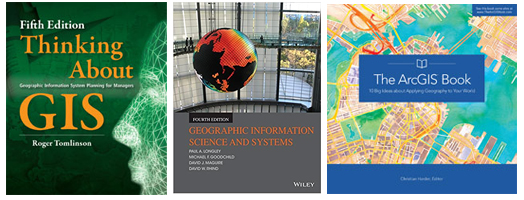
For a more recent view, I have pulled from my bookshelves three seminal texts.

  1. Roger Tomlinson, 2013, Thinking about GIS: Geographic Information System Planning for Managers (5th. Edition), Esri Press.
  2. Paul Longley, Michael Goodchild, David Maguire, and David Rhind, 2015, Geographic Information Science and Systems, (4th. Edition), Wiley.
  3. Christian Harder (Ed.), 2015, The ArcGIS book: 10 Big Ideas about applying Geography to your world, Esri Press.

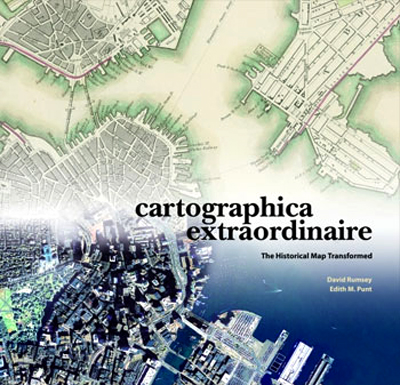
David Raymond lent me his copy of ‘Cartographica Extraordinaire’ The Historical Map Transformed by David Rumsey and Edith Punt. Punt was a Cartography graduate from COGS. She works for Esri in Redlands, California.

From the back cover,

Extraordinary is the value of this book as a gateway into the Rumsey web site – the chronological listing of all illustrations in the book is carefully referenced to the digital collection on the Internet where users can select their own details”.

David Woodward, Arthur Robinson Professor of Geography Emeritus, University of Wisconsin- Madison,

David Rumsey and Edith Punt, 2004, Cartographica Extraordinaire: The Historical Map Transformed, Esri Press.

Postscript

Please note my references are all before 2015. There have been many new developments in the last six years. Time for more research.

Just returned from the Lawrencetown library, John Higgs’ book, Watling Street, has arrived from the University of Alberta. Travels through Britain and its ever-present past. Recommended by Peter Maher.

Acknowledgements

Thanks to David Raymond for sharing his knowledge and expertise. Edward added the graphics. Edward was Remote Sensing instructor at COGS, contemporary with David and myself.

Posted in Article Review

Through the Lens

Visiting Dick Groot’s exhibition last weekend made me realize that each of us sees the world through a particular lens (see his website). Whether it is photography, painting or writing, we capture a particular personal perspective.

This observation was confirmed for me, when I received a couple of emails from Europe. As someone born in England after the Second World War, I left the country in 1969 to undertake graduate work in Canada. This has shaped my lens.

From my old school friend, Andrew Ronay, I received a notice from the Royal Horticultural Society Garden at Wisley. RHS Hilltop at Wisley calls itself the ‘Home of Gardening Science’. I was impressed by the opportunity to both read and listen for more information on this venture.

RHS Garden at Wisley

Later in the week, Peter, my brother sent me a link to Radio 4, Guide Books with Damian Barr, Episode 3 ‘On Nature with Helen MacDonald and Melissa Harrison’ broadcast in the UK on Tuesday, June 29th at 11:30 am. The series of three episodes is subtitled ‘Books to help us navigate everyday life’.

These two emails illustrated a couple of perspectives on my own lens. The RHS email reminded me of the gardening culture in the UK. The Radio 4 program was a fond reminder of some of the best of BBC programming.

Meanwhile home in Nova Scotia, we are busy gardening; harvesting rhubarb and red currants; producing jams for the Winter months.

Postscript

How are our youthful memories of the English or Dutch landscape translated into our perception of the Canadian landscape? Or the class Society of mid-Twentieth century Europe into present day Canada ? They have shaped the lens.

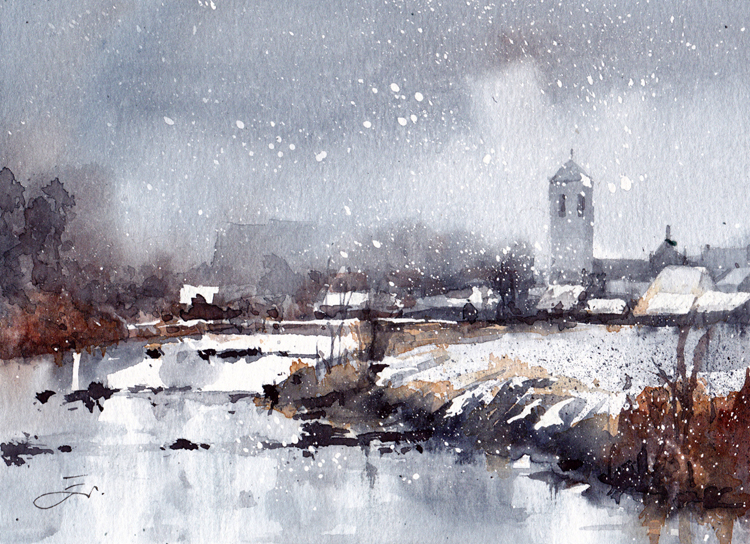
Watercolour by Nova Scotia artist, Edward Wedler. Spoordonk in Brabant, Netherlands.

Acknowledgements

To Andrew and Peter for keeping in touch. Heather for the recipes and jam making. Edward brings his artistic lens to the blog.

References

Special Welcome to RHS Hilltop – the Home of Gardening Science.

Radio 4, Guide Books with Damian Barr, Episode 3 On Nature with Helen MacDonald and Melissa Harrison.