Posted in New thinking

Mapping Art

Edward Wedler and I were both instructors at COGS in the 1980s. Edward was teaching Remote Sensing. I was teaching GIS. Eventually, the uncertainty of contract employment forced us to move on. Edward and his wife, Anne, purchased The Inside Story in Greenwood. Heather and I disappeared, with family, to Indonesia, California and beyond. And yet, we still managed to keep in touch.

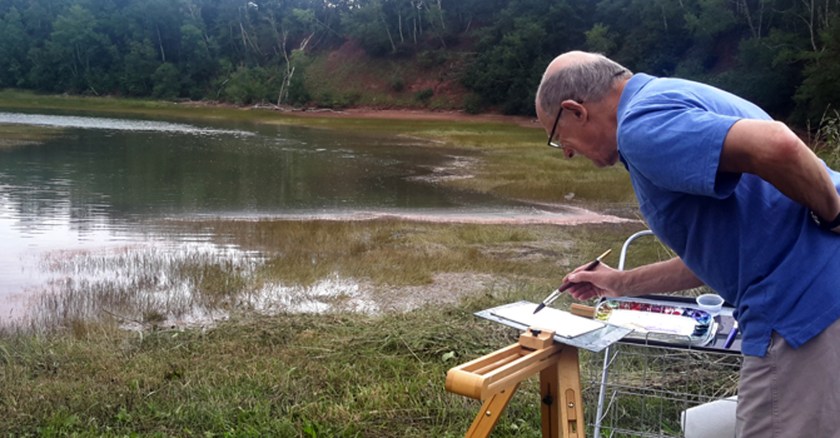
20191014_132759Edward and Anne both have a passion for Plein Air Art. This takes place in Nova Scotia from Spring to Fall and Florida in the Winter.

With the changing technologies, Edward has kept on top of the new online mapping tools. This allows him to map the location of Plein Air sites. Currently, he is trying to engage COGS in the links between Google and his online Plein Air maps. Again, opening up the possibility of collaboration between the college and the community.

Edward and Anne belong to six plein air art groups; three in Nova Scotia. Each year Edward publishes “paint-out” locations (50+ sites) for the season (PAAAV and PAAHRM).PAAAV_2020schedule copy

He has also created a map at tinyurl.com/PleinAirMap to keep artists, art-lovers and tourists connected — locally, nationally and internationally. map_PAAAVHe uses Google products as these are more readily accessible to him and to the art community. The map currently has 5,000+ map views. Google also has loose connections between its many Google Drive products (eg Sheets, Forms, Calendars, Maps) that lend themselves to exciting R&D opportunities for an Innovation Hub. He feels that, with greater community college collaboration, students would gain by technical exposure to and training with Google Maps and related tools. The community would gain through local, shared incubator-projects in an Innovation Hub.  The Hub would gain by scaling locally-developed solutions and building intellectual property.

banner_lostArtCartographyMapping Art can also be seen as the Art of Cartography. There is an excellent local example in the Valley. Marcel Morin, COGS graduate, has established the business, Lost Art Cartography.

For myself, mapping the landscape is fundamental to any decisions related to land use. It continues to astound me that the Municipality of Annapolis County does not avail itself of the resources at COGS to make ‘evidence-based’ decisions on land use planning in the county, on behalf of its citizens. This is relevant to Forestry, Agriculture and any climate change strategy.

Yet another reason for the ‘community’ to be actively involved in the research and development agenda at the Innovation Hub in Lawrencetown (I noticed today that we are seeing the framework for the new multi-storey structure). The clock is ticking……..

Footnote

In retirement, many elders find their passion in the arts, science or a combination of the two. Edward and I appear to be examples of this growing trend.

Acknowledgements

Edward for his passion for both art and technology.

References

Plein Air painting sites.
Marcel Morin. Lost Art Cartography.

Posted in Event Review

Artistic Riches

This week, between snow squalls, we have been winter pruning in the orchard.
During the squalls, I had the chance to check out a couple of links suggested by Gregory Heming. Under the auspices of the Oberlin Project.banner_oberlinProject David Orr has been building links between Oberlin College and the community. This might be a potential model for the link between NSCC Annapolis campus and the Municipality of Annapolis County. The second link was Paul Kingsnorth and the Dark Mountain Project.banner_mountain“The writers from whom Dark Mountain has taken inspiration are grounded in a sense of place and time. In the deep time of geology and myth, in the rooted relations to the place of a tree or the navigational feel for place of a migrant bird.”

My second theme is children’s books.books_pocketNsummer Sandra Barry forwarded to me an event notice, featuring Rita Wilson and Emma FitzGerald ‘A Pocket of Time: the poetic childhood of Elizabeth Bishop’. In the latest issue of Grapevine (March 5-19), there is a short review of Sheree Fitch, new children’s book ‘Summer Feet’.

This takes us to Sunday afternoon.person_fogoBoysNgeoffButler I had the opportunity to attend the Geoff Butler celebration at the Kings Theatre. It was a full house. The first half included a short film by Tim Wilson ‘Return to Fogo Island‘; Butler’s birthplace. The photography was breath-taking. This was followed by a longer documentary by Devin Fraser ‘Off the beaten track’ a biography of Geoff Butler, with a backdrop of Fogo Island and Granville Ferry, with readings from his works.

For me, the highlight was the opportunity to pick up Butler’s new book, ‘Lullabies for Seniors’.bookCover_lullabiesForSeniors The book includes forty-six lullabies, from ‘At the Tiller’ to Wherever the wind blows’. Each lullaby has a painting and a musical score.
From Butler’s Introduction,

“For the paintings in this project, ‘Lullabies for Seniors’, I have depicted character types at various stages of napping. The images, and the accompanying lyrics, refer to the seniors’ walk in life, be it their former employment, activity or interest. Thus, while the rendering of seniors provides the surface imagery of the paintings, the underlying meaning relates to commentary on various things going on in the world at large’. P.6.

Finally, Edward forwarded to me a link to a TED talk, ’When local news dies so does democracy?’ by Chuck Plunkett.

This may be a good reason for a blog on ’Artistic Riches’ in the region.
And its emphasis on a ‘sense of place and time’.

Acknowledgements

Gregory Heming for the new links. Sandra Barry for information on all things Elizabeth Bishop. Edward Wedler for the TED link and his graphics.
Geoff Butler for his wonderful combination of art, writing and music. Plus a great title for a book.

References

Rita Wilson and Emma Fitzgerald. 2020. A Pocket of Time: the poetic childhood of Elizabeth Bishop. Nimbus Publishing.
Sheree Fitch. 2020. Summer Feet. Nimbus Publishing.
Tim Wilson. 2010 Film Return to Fogo Island.
Geoff Butler. 2020. Lullabies for Seniors. Self-published.
The Dark Mountain Project. dark-mountain.net
The Oberlin Project.
TED talk. When local news dies so does democracy. By Chuck Plunkett.

Posted in biographical sketch

Other Lives

Last weekend, there was a report by the CBC about a group of Nova Scotians in Digby County who drove a car off a wharf. The video was posted on the Internet.carOffWharf Afterwards, there was an interview with a psychiatrist about narcissistic behaviour fostered by Facebook and other social media tools.

This caused me some grief, as I thought about writing ‘yet another blog’.
Is ‘blogging’ just another form of self-indulgence ? How do we control, what arrives in the email stream ? Some arrives unsolicited from the technology providers. However, I had the following ‘ah-ha’ moment. We have the pre-Internet and post-Internet generations.

Since leaving Canada over forty years ago, Heather and I have lived in about twenty different towns/communities. Mainly in Canada, but also the United States and Indonesia. This month, out of the blue, I received emails from Newfoundland and England. We left St Johns in 1976. I left England for Canada in 1969.

The St Johns connection reminded me of my time teaching in the Department of Geography at Memorial University. The last project was a census atlas of St. Johns and Newfoundland.

The England connection reminded me of my time at IBM(UK): commuting into the City. Playing cricket on weekends in the Summer; playing rugby on weekends in the Winter.

Imagine, if I received emails from each of those twenty different towns/communities. How would access to that information network influence my day to day life here? Normally, when one leaves a community the linkages disappear with time. Today, with the Internet, it is possible to be in ‘many places at the same time’.

Of course, this contemplation begs another question, posed by a business associate:

“Why do you keep changing jobs (locations)?”

bookCover_charlesDickensALifeFrom England, an old school friend, excellent cricketer and sitar player, Viram Jasani, mentioned that he is writing an autobiographical novel. This week, I finished reading Jane Smiley’s biography of Charles Dickens. I will recommend it to Viram. Maria Popova and Anne Lamont have some tips too.

Acknowledgements

Thanks to Mark Shrimpton in St Johns and Viram Jasani in England. Their emails generated good memories. Edward Wedler applied his graphics skills from Florida. Heather for her ongoing support.

References
Jane Smiley. 2002. Charles Dickens: a life. Penguin Books.
Maria Popova. Brain Pickings Mid-week pick-me-up. Wednesday, March 4,2020.
Anne Lamott. Bird by Bird: Some Instructions on Writing and Life. Penguin Random House.

Posted in Opinion

Community Interests

The antithesis of Corporate Interests might be Community Interests. Although we don’t necessarily need to make such a distinction. What examples of Community Interests exist in Annapolis County? Last weekend, the Nova Scotia Extinction Rebellion hosted a gathering on Natural Climate Solutions at the Bridgetown Library. Topics, as part of their Forestry Self-education Series, included tax incentives for private woodlots owners, land buying clubs, land trusts, and community gardens. What mechanisms exist at the municipal level to support these community interests? What mechanisms exist at the provincial level?

bookCover_doughnut EconomicsIn response to my previous blog post, I did receive feedback on transportation solutions. This included other parts of Nova Scotia; e.g. Community Wheels in Chester or the Trans County Transportation Society in the Valley. Or from England, the link to Connected Places Catapult.

Other feedback was the reference to Doughnut Economics by Katie Raworth (see the Guardian Review by Richard Toye, June 8, 2017)

“What if we started economics not with its long-established theories, but with humanity’s long-term goals, and then sought out the economic thinking that would enable us to achieve them ?”

One approach could be for the ‘community’ college to solicit from the community a suite of topics for a public education series. This might cover many domains: forestry, transportation, agriculture, climate change, doughnut economics, citizen science, mapping.

Could COGS work with the Municipality to research different rural transportation solutions?

Could COGS provide online maps of the Valley showing recent changes in land use (e.g. through forest harvesting, agricultural planting)?

Acknowledgements

Nina Newington for hosting the gathering in Bridgetown, Rick Ketcheson for his thoughts on doughnut economics, Andrew Ronay for the England link, Brian Arnott for the view from Lunenburg.Edward Wedler for the added graphics and links.

References
Connected Places Catapult
Katie Rowarth. 2017.Doughnut Economics. Chelsea Green Publishing.

Posted in Opinion

Corporate Interests

This week, I have had two meetings with local politicians: Stephen McNeil on Monday and Gregory Heming on Tuesday. My general intent was to make the case for citizen input into the planned Innovation Hub at COGS in Lawrencetown.

mcNeilandHemming
Premier Stephen McNeil (left), Councillor Gregory Heming (right)

For the meeting with McNeil, I took the 8:11am bus to Middleton, had a half-hour meeting, then bussed and walked home by lunchtime. For the meeting with Heming, I drove to Annapolis Royal, had a one-hour meeting at the Sissiboo Cafe, again returning home for lunch.sissibooAnnapolisRoyal

From the two meetings, I gained the impression that the focus of the Innovation Hub would be on corporate, business interests. This realization coincided with my recent discovery (see previous blog post) of Powe’s book Towards a Canada of Light.

He offers three meditations.

First meditation: In a Communication State
Second meditation: Alternative Current
Third meditation: Towards a Canada of Light

From the book, the following quotations seemed relevant.

“ We can see the corporate state of mind, conditioned by financial structures and their compulsions of time, appears to have lost its soul-root in the imagination. What I mean by this is the loss of the ability to sympathize with suffering and confusion, weakness and fear – that awful fear that may stall the movements of spirit and mind – to feel for people and what they do and can’t do … “ p100.

“So in Canada, without a visionary inkling, a breakthrough, we will be without strangeness, little more than another greedy place …” p.101.

There is much more to the book. It was pure happenstance that I was reading it this week. Many of his ideas apply equally well, today, to Canada, and Annapolis County, Nova Scotia.

Acknowledgements

To Stephen McNeil and Gregory Heming for agreeing to meet with me on the subject of citizen input to the Innovation Hub in Lawrencetown. Edward Wedler for his graphics input.

Reference

B.W.Powe. 2006. Towards a Canada of Light. Thomas Allen Publishers.

Posted in New thinking

The Bus Experiment: Day 2

My previous blog described Heather Stewart’s experience of the Kings Transit system. It generated significant interest. Heather had more comments after Friday. I will try to summarize them below.map_eastWestBuses
1) if you decide to come home early from your meeting in Annapolis Royal, you are restricted to a two hour time window because the buses run every two hours.

2) the bus schedule in Annapolis Royal is different if you are heading east or west.
For example:
4E Champlain Seniors, Guardian Drugs, Wharf and Farmers Market, Annapolis Royal Fire Department, Granville Family Services.

4W Granville Family Services, Foodland/SaveEasy, St. George St, Historic Gardens, Annapolis  Community Health Centre, Champlain Seniors.

How do you know where the bus stops are located ? Do residents know where the bus stops are ? Are they marked? Are there any bus shelters?

3) on the bus, you are subject to the behaviour of the other passengers, who may be experiencing personal issues. If you drive your own car, then you are in your own bubble.

Another observation is that the bus travels on Hwy #1.  If you live on Hwy #201, there are limited number of bridges over the Annapolis River. e.g. Lawrencetown, Paradise, Bridgetown, Annapolis Royal. Also, what service is available if you live on the Bay of Fundy Shore?

In response to my earlier blog, I received the following  Guardian link to the situation in England. There, too, there are limited bus routes in rural areas.logo_arrivaClick

Could we not adapt the ArrivaClick application to suit the geography of  Annapolis County? Sounds like an excellent project for the COGS Innovation Hub.

bookCover_towardsACanadaOfLightThis weekend, we stopped in Truro on our way to New Glasgow. At the NovelTea Bookstore Cafe, I picked up, for $5.00, B.W.Powe’s book Towards a Canada of Light. At the end he offers seven Coda. Here are three:

May the ability to see a future keep us bold.

May the ability to perceive patterns that are yet to be fully realized keep us directed in our hearts and minds.

May the ability to communicate and face facts, and yet to dream new dreams and to imagine fuller lives, give us the sweet strength we need.

Acknowledgements

Heather for braving the unknowns of rural  bus travel in Annapolis County. To Peter Maher for the Guardian link. Edward for finding the time to add graphics.

Reference

L Hanley, “When the Bus Ride to Your Destination is Just a Click Away” TheGuardian.com, 19 Feb 2020.
B.W.Powe. 2006. Towards a Canada of Light. Thomas Allen Publishers.


Posted in New thinking

The Bus Experiment

Today, we had a good opportunity to conduct the ‘bus experiment’.banner_kingsTransit Heather had a full day Buddhist retreat in Annapolis Royal. With early morning temperatures of -20C, she walked from our house on Hwy#201 in Paradise to the CRIA gas station in Lawrencetown. She caught the 3W bus to Bridgetown. In Bridgetown, she changed to the 4W bus, and continued on to Annapolis Royal. This evening, she will catch the 4E bus at the Annapolis Royal Fire Department at 5:31 pm, I will pick her up at CRIA around 6:11 pm.

The purpose of the experiment is to see the world through a different lens. Not from a car, bicycle or on foot, but rather through public transit.

r2gTrekIn my conversations with Edward Wedler, this relates back to the time when we decided to walk from Yarmouth to Georgetown, PEI, as part of our Road to Georgetown Trek. Many things have changed since those days.

Later, talking to Ed Symons at COGS, as part of his community mapping research, he is producing Kings Transit maps. Think of the value of adding the senior (citizen) experience to these maps. Ed’s students are working on a number of other sectors: food, forestry, culture, First Nations, community services and climate change. All of them can benefit from community (citizen) input.

At COGS, there has been a migration of staff from AGRG Middleton to Lawrencetown. From the outside, this appears to be a recognition of project-based learning. It will be interesting to see whether this corporate directive is reflected in the business plan for the new Innovation Hub (read this blog post). Rather than driven by business needs, the hub could be driven by the needs of the rural community and then to develop a geographic technology-related solution for these communities. The solutions can be transferred, and scaled, to other non-urban geographies. Use the intelligence of rural citizens in these communities to drive the design process right from project inception.

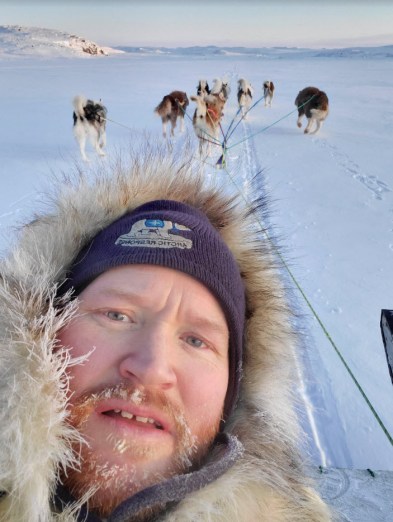
I hope on our return from Iqaluit (end of April) we will be able to review a business plan for the Innovation Hub, which reflects both our geographic reality and our citizens. Meanwhile, until we head North, we shall continue to ‘ride the buses’.

bookCover_maureenToday, I received a second book from my brother Peter. It is called ‘Maureen’ and is a collection of historic photographs, commemorating the life of my younger sister; thus, indirectly, our lives too.

Acknowledgements

Heather for her enthusiastic embrace of the bus fieldwork. Edward for fond memories of the Road to Georgetown. David Colville and Ed Symons for conversations on community mapping at COGS. Peter for another treasure from our common past.

References
Peter Maher. 2020. Maureen. Self-published.

Posted in biographical sketch, Book Review

A Place, A Time

Today, by chance, I received a book from my brother Peter on my 75th birthday. It is called ‘A Place’.bookCover_place_2It shows thirteen pairs of images from Whitton (Middlesex, England).
On the left-hand page, a historic photograph and text explanation; on the right, an impressionist painting of the same location, today. Beautifully designed and published as a limited edition.

Yesterday, I was tidying up some papers in the basement. From 2004, I found two proposals.

1) Developing the ‘Centre of Rural Living’ concept at the Annapolis Valley campus, Nova Scotia Community College.

2) Model for Rural Development and Community Capacity Building. ‘ Applied Geomatics Innovation Cluster’. NSCC, WVDA, Annapolis and Digby Counties, NS.

Here we are sixteen years later. Sounds like an Innovation Hub to me!

Last week, Logan, my grandson living in Peterborough, Ontario sent me his world map.map_polarCanadian I reciprocated with photographs of two maps from my study. Polar Knowledge Canada and The Earth from Space, signed by Tom van Sant, from California days, 12/12/90.

bookCover_seasVoiceWith the storms, I have been catching up with my reading, especially the work of David Adams Richards. In Harry Thurston’s book The Sea’s Voice: An Anthology of Atlantic Canadian Nature Writing, I found ‘Land’ from David Suzuki’s When the Wild Comes Leaping Up. It describes the back to the land movement in the Miramichi region of New Brunswick. As Thurston says:

“In all of his writing, Richards casts an uncompromising but compassionate eye on his subject, as he does in this essay about going back to the land”. P.232.

Acknowledgements

Peter Maher for his historical research and artist’s eye. Logan Root-Maher for cartographic enthusiasm. Edward Wedler for his artist’s eye and graphics skills.

References

Peter Maher. 2020. A Place. Editions La Liberté. Clermont-L’Herault.
Harry Thurston. 2005. The Sea’s Voice: An Anthology of Atlantic Canadian Nature Writing. Nimbus Publishing.
David Suzuki (Ed). 2002. When the Wild Comes Leaping Up. Douglas & McIntyre Ltd.

Posted in Opinion

A Community Brains Trust

This week, I have been researching the concept of an Innovation Hub in Lawrencetown. Within the NSCC context, we have two examples: Centre for Ocean Ventures and Entrepreneurship (COVE) in Dartmouth and the Pictou Innovation Hub.banner_COVE The difference at COGS is that we have a specialized suite of technologies: Geomatics or Geographic Sciences, and we live in a more rural environment. (This rural environment provides a likely explanation for the residency component).

banner_pictouInnovationCentre
Pictou Innovation Centre

One of the characteristics of a rural environment is that it attracts a wide range of retired talent from across the country and beyond and those who have rejected the more urban lifestyle.

To reflect the diversity of knowledge and experience available to the Innovation Hub, my suggestion is that we need a community brains trust. This group could include:

  • current faculty/ research scientists
  • retired faculty/ research scientists
  • local business leaders
  • community members who have chosen Annapolis County
  • rural residents
  • members of the ‘creative rural economy’ (see CRE, for example)

We should not be exclusive. I can imagine GIS business interests in both California and Ontario. There are also supporters living outside of rural Nova Scotia, who would want to see an alternative model of community engagement succeed.

Check out the business interests at COVE and the Pictou Innovation Hub.
Can we imagine a similar suite of business interests in Lawrencetown?
Or does the rural setting bring forward a different relationship to land and life?

bookCover_landAndLifeI found the following quotation from Carl Sauer in Land and Life: A Selection from the Writings of Carl Ortwin Sauer. From ‘The Education of a Geographer’ (1956).

“We are aware that what we do will determine for good or evil the lives of those who will come after us. And therefore, we geographers, least of all, can fail to think on the place of man in nature, of the whole of ecology. Man’s intervention in and disturbance of the organic and inorganic world has become so accelerated that we may be tempted to escape from the present into a future in which technology has mastery over all matter, and thus promises forgiveness and redemption. But will it? Is that our fated way? Is that the sort of world we want?” p.404.

Reference
Carl Ortwin Sauer. From ‘The Education of a Geographer’ 1956. University of California Press.

Acknowledgements

Wayne St-Amour provided the links to COVE and the Pictou Innovation Hub.
Brian Arnott has discussed the importance of trust in the community context.
Heather has shared the joys of dog walking, as well as taking care of feeding the birds.
Edward Wedler did his enthusiastic bit with the graphics.

Posted in biographical sketch

The Electronic Cottage

banner_stantonSolarWe live in changing times. This week, Nova Scotia Power inspected the solar panels on our roof. As part of the installation by Stanton Solar Power, they installed a monitoring application on my Samsung mobile phone. This allows us to monitor the solar power, by panel, by time of day. It also gives us control of the system. So I have moved from a mobile phone for emergency purposes to another application and device in the cottage.

Our method of communication is also changing. For example, Ed Symons has converted my blog into a podcast. Every week, I receive an email from Emergence magazine. This week, it included a podcast interview with Richard Powers, author of The Overstory (see blog, January 20th).

Tuesday, Heather and I planned an experiment. We would attend AquaFit at the Fundy YMCA in Cornwallis. We would drive to Bridgetown and catch the 8 am 4W bus to Cornwallis. Our interest was the accessibility and convenience of the Kings Transit bus service. Before heading to Bridgetown, I called the YMCA to register for the class. Only to learn that the pool was closed, and will be out of commission for another week. Oh well, try again later.

bookCover_earthInMindFrom the bookshelf, I selected David Orr’s Earth in Mind: On Education, Environment and the Human Prospect. It ends with this quotation from Scott Momaday:

“Once in his life a man….ought to give himself up to a particular landscape in his experience, to look at it from as many angles as he can, to wonder about it, to dwell upon it. He ought to imagine that he touches it with his hands at every season and listen to the sounds that are made upon it. He ought to imagine the creatures there and all the faintest motions of the wind. He ought to recollect the glory of noon and all the colours of the dawn and dusk. (p.83)

Acknowledgements

Neil Stanton for his good work on solar power. Ed Symons and Edward Wedler for technical support.

References

Emergence Magazine. Podcast. Kinship, Community and Consciousness: Interview with Richard Powers. February 4th. 2020.

David W. Orr. 1994. Earth in Mind. On Education, Environment and the Human Prospect. Island Press.

Scott Momaday. 1993. The Way to Rainy Mountain. University of New Mexico Press.
Original work published 1969.